 |
 |
| Welcome back to What I’m Hearing, where I’m prepping for Saturday’s LIVE episode of The Town at the Super Bowl in Vegas. Bloomberg’s Lucas Shaw and a very cool surprise guest will join me at 3 p.m. at the Endeavor/TKO Lounge. WIH members can click here to request access.
More events: Lauren Sherman, our fashion expert, also hosted a Puck Private Dinner this week with Instagram in New York. According to Lauren, turnout was great and only one person cried. I’ll do more dinners soon. Email alexandra@puck.news if you’re interested in co-hosting or sponsoring.
More Super Bowl: Don’t forget to reply with your best guess for CBS’s Live + Same Day viewership before Sunday at 3 p.m. PT. Closest guess without going over will win status-defining Puck merch. My official prediction: 123.1 million. (Yes, I’m going big.)
As always, if you were forwarded this email, click here to become a Puck member. And send me ideas or news tips by replying.
Let’s begin… |
| Thursday Thoughts (Disney Edition)… |
|
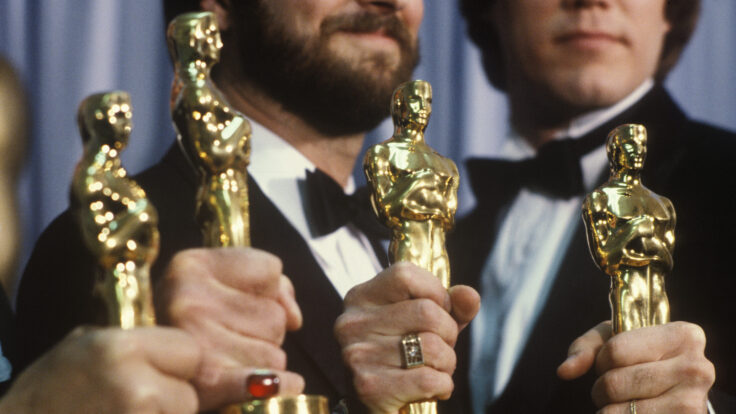
- Casting aside the new casting Oscar: Everyone’s cheering the long-overdue addition of an Oscar for best achievement in casting. But when that category debuts at the 2026 show, it almost certainly won’t be included on the ABC telecast. The Academy’s lucrative broadcast deal with Disney specifically prevents additional categories from being added to the already-bloated show, per three informed sources. Oscars producers could bump another category, of course, but good luck breaking that news to the sound or costume design branches. Most likely, casting directors will have to settle for a dreaded pre-show or commercial break presentation, a scenario that the Academy amusingly sidestepped in today’s announcement, which reads: “The specifics of the award’s presentation will be determined by the Academy’s Board of Governors and its administrative leadership at a future date.”
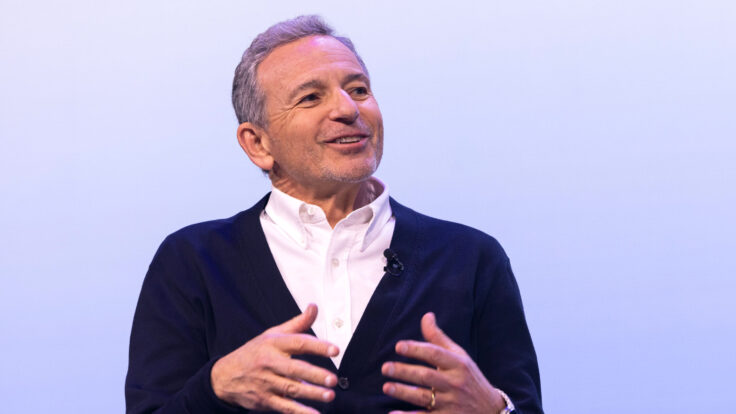
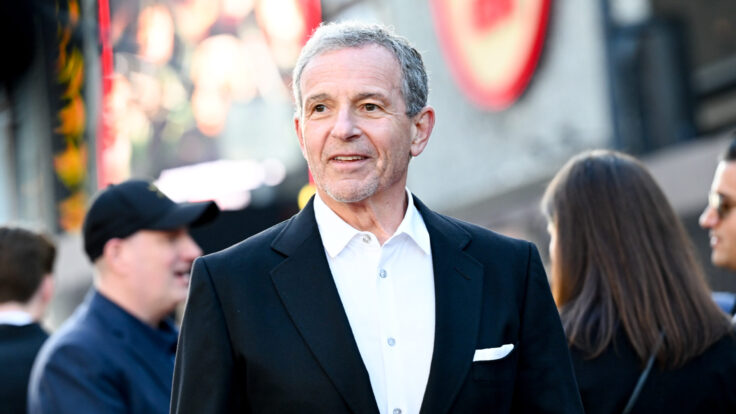
- Bob and Tim’s Epic Adventure: Bob Iger did a lot of things right on yesterday’s crucial earnings call, the last before April’s shareholder showdown with Nelson Peltz and Blackwells: the .45 cents a share dividend; the follow-through on his plans to slash $7.5 billion; Moana 2 and the Taylor Swift movie. Today, my new Puck colleague John Ourand launched his private email about the sports business, The Varsity, with an analysis of Disney’s much-discussed joint venture with Fox and Warner Discovery for a sports super-streamer. (Check it out here.) It’s a fascinating gambit from three companies desperate to somehow re-create the cable bundle, but I’m reserving full judgment until the most important detail—the cost to consumers—is known.The most heartening move has gotta be Iger’s push into interactive entertainment via a deal with Epic Games. Disney has failed at games almost as spectacularly as it has failed at making an edible churro at the Florida parks. So myself and others have been pushing Iger to go beyond licensing and either buy a big game publisher (probably not doable given the current debt situation) or team with a games powerhouse. This $1.5 billion investment includes developing content around Fortnite, which fits the Disney franchise model. And it’s miles ahead of Bob Chapek’s ill-fated Metaverse committee, one of the low-key dumbest initiatives of the Chapek era. Disney has actually been a pioneer in interactive technology—Pixar created the USD file format that’s been called the “HTML of the Metaverse,” as investor/thinker Matthew Ball has noted—but Tim Sweeney and his Epic team just do games so much better than Disney; now, Iger hopes, they’ll mutually benefit.
- Behind Disney’s TSwift reveal: Iger wanted big announcements for yesterday’s earnings call, and he paid big prices to get them. Disney execs Dana Walden and Joe Earley were locked in a bidding war with Netflix and Universal for streaming rights to Taylor Swift: The Eras Tour—until Iger decided to take the film off the table, paying the Swift family more than $75 million to stream it on Disney+, according to two sources familiar. (Disney declined to comment; interestingly, I’m told that Austin Swift, Taylor’s brother, took a lead role in the negotiation, along with her management team.) For those keeping score, Swift’s AMC Theatres deal gave her more than half the box office for the self-financed film, which grossed $261 million worldwide. Then it did well on PVOD via Universal, and now it generated another fat check from Disney+. After her tour, Swift is still set to direct an original film for Disney’s Searchlight division.
- Mo Moana: At the same time, Iger really wanted to announce Moana 2, which has been refashioned from a Disney+ series into a theatrical feature. Only problem was, Dwayne Johnson’s deal had to be redone to account for the change in format before the announcement, a fact that Ari Emanuel and his WME team leveraged to get the star both a $15 million up-front fee and elevated box office bonuses, per one source. (Johnson’s already getting $20 million plus bonuses for the live-action Moana, which will now be bumped from its summer 2025 release date.)
- Bob sics his pit bull on Elon: With Elon Musk vowing legal jihad on Iger and backing Gina Carano’s suit over her Mandalorian firing for incendiary tweets, Disney has enlisted its usual hardball litigator, Dan Petrocelli (with Molly Lens), Puck’s Eriq Gardner reports. If Elon makes good on his threat to pepper “woke” Disney with lawsuits, he’s gonna buy Dan a new beach house.
|
| Now let’s break down a fascinating talent deal… |
 |
| Ryan Coogler’s 25-Year Plan |
| Is the ‘Black Panther’ director’s new deal with Warner Bros.—wherein the copyright for his next project, with Michael B. Jordan, will revert back to him after 25 years—part of a new ownership trend in Hollywood? Or did Coolger just pitch the right executives at the right time? |
|
|
|
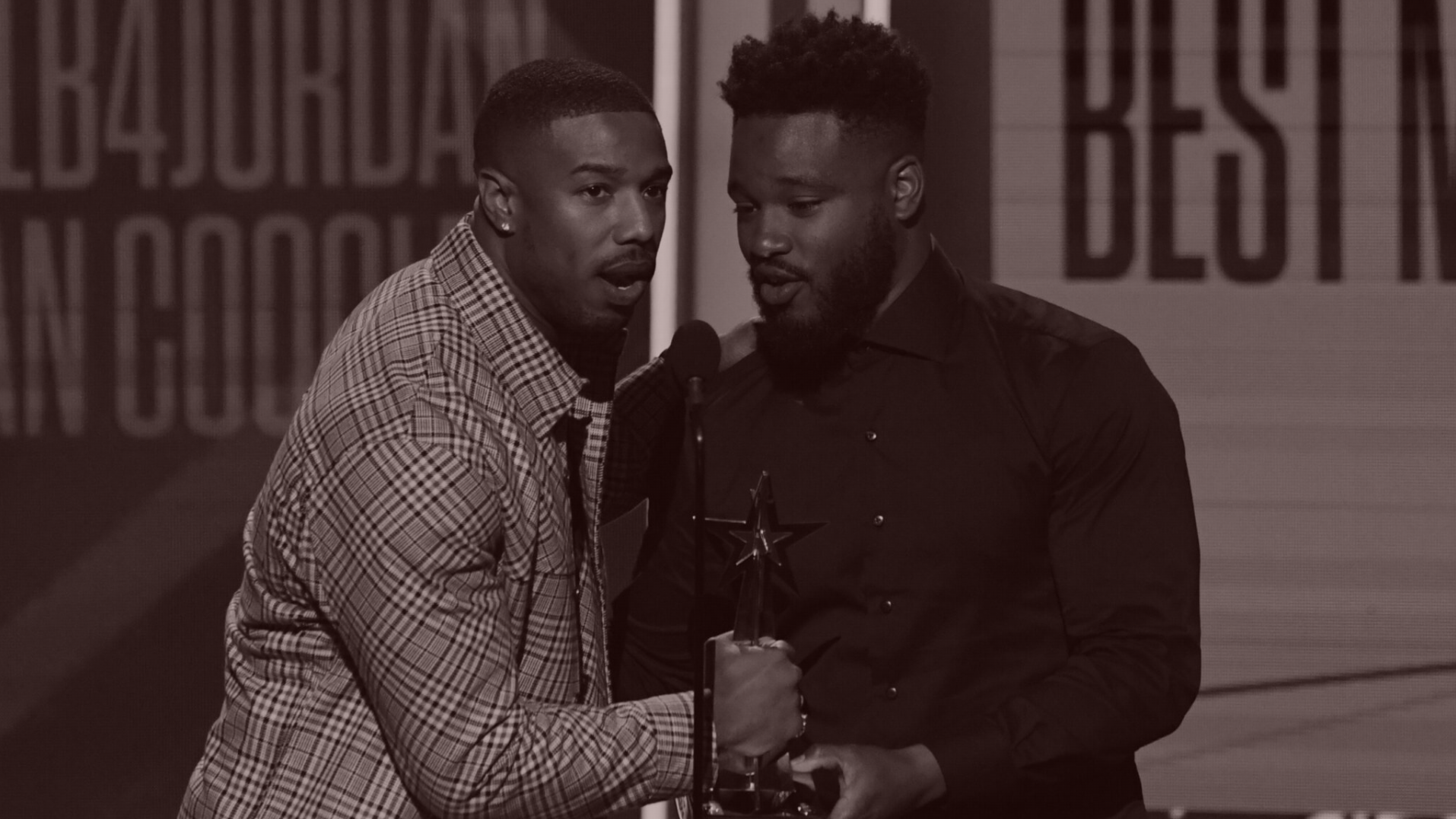
| Ryan Coogler managed to anger a decent swath of film studio business affairs executives in recent weeks. This is usually a good sign for talent, at least in the short term. It means he got something the studios don’t ever give.If you missed it, the Black Panther and Creed filmmaker has been shopping a project with Michael B. Jordan, his frequent collaborator. It’s a period genre film, supposedly with vampires, or the undead, or something, and I’m told Jordan will play twins—similar to what Tom Hardy did in that 2015 movie Legend. With the help of Coogler’s and Jordan’s publicists, the trades hyped this as one of those “hot packages” that sparked a “bidding frenzy.” On Wednesday, Warner Bros. landed the project for a little over $75 million.
I’m less interested in the money—good for Coogler and Jordan, the rare A-level filmmaker and star tandem who are both under 40—though it’s nice to see an original project generate that level of interest from theatrical distributors. What I am interested in, however, was barely mentioned in the news coverage: Coogler’s ability to secure ownership of the film as part of his deal. It’s a ways off—according to two sources, the copyright will revert to Coogler and his Proxima Media after 25 years—but the key fact is: In the late 2040s, Coogler or his heirs will own the movie. |
| A MESSAGE FROM OUR SPONSOR |
 |
| “FOR YOUR CONSIDERATION – LAST WEEK TONIGHT with John Oliver”.Features John Oliver’s hilarious and expertly honed perspective on today’s pressing political, social, and cultural issues, plus lesser-reported topics that inform and entertain. PGA Nominated for Outstanding Producer of Live Entertainment, Variety, Sketch, Standup & Talk Television. LAST WEEK TONIGHT is now streaming on Max.
|
|
|
| This term was apparently very important to Coogler—and a dealbreaker for several bidders. He told studios it was a personal thing; he wanted to know that he’ll eventually have this asset to give to his kids. (His rep declined to comment.) But it’s also potentially very lucrative, and something studios—which, after all, are valued largely on their libraries—absolutely avoid.Let’s say a well-known library film generates $3 million or $4 million per year via TV and streaming licenses, electronic sell-through, and other revenue. (I’m generalizing.) A top filmmaker might get 10 percent or 20 percent of this ancillary revenue, depending on his or her deal. But if the filmmaker owns the film and then farms it out to a studio to license for, let’s say, a 20 percent distribution fee, he or she keeps 80 percent of that revenue. And then, potentially, the filmmaker can sell it someday for a windfall. Obviously a film will generate less revenue in year 25 than it does in year two or three, but some old films still throw off surprising cash. That’s why studios draw a line in the sand on ownership.
Streamers, of course, care a bit less about this because they are less concerned with downstream revenue. A filmmaker might be able to sell a movie to an Amazon or Apple as a so-called “one picture license” for five years and then get it back. But when negotiating with a traditional studio, talent reps assume the studio will demand to own it.
There are exceptions, of course—usually for talent who bring outside money to the table. Mel Gibson made hundreds of millions of dollars by self-financing The Passion of the Christ. M. Night Shyamalan and Matthew Vaughn own or co-own some of their films. Andrew MacDonald, producer of the original 2002 zombie hit 28 Days Later, recently got the movie back from Disney’s Searchlight division and promptly sold it to Sony, along with a new sequel, 28 Years Later, that will be made with Danny Boyle and Alex Garland directing and writing, respectively, and Peter Rice, the executive behind the original at Searchlight, producing. MacDonald owned the rights, so he could move the old movie and the new project to a new studio.
Quentin Tarantino famously has either a 20-year or 25-year reversion in his directing deals, a function of his bankability and the legacy of his arrangements with Miramax and then The Weinstein Co. He actually got both Kill Bill and Jackie Brown back this year, I’m told, and Lionsgate distributes them for a fee. So even though Sony was the sole financier of Once Upon a Time in Hollywood, the precedent was there for the studio head, Tom Rothman, to hold his nose and agree to the same reversion. I’m pretty confident in saying Rothman would never do it otherwise, and indeed, I’m told he initially wanted the Coogler project but balked at the ownership demand. (Sony declined to comment.) |
|
|
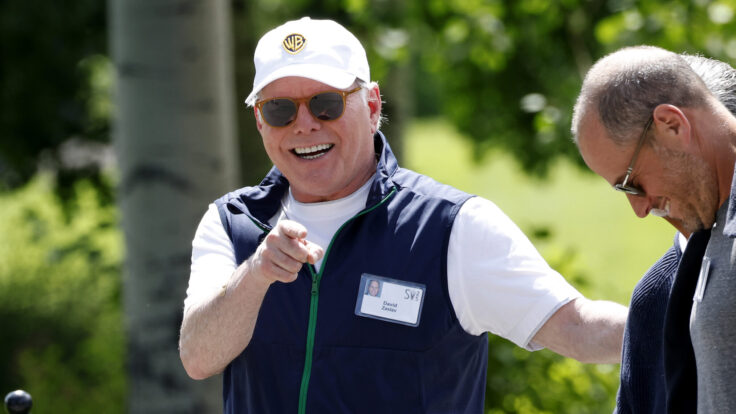
| Back when Tarantino was shopping Once Upon a Time, Warner Bros. executives were nervous about giving him ownership because they were terrified that Chris Nolan would demand the same. Turns out, Nolan doesn’t actually want to own his movies—at least he hasn’t demanded that so far. But that’s the obvious fear. It’s fine to grant ownership when a filmmaker brings money, but Coogler’s team wanted to eventually own the film even though the studio paid to make it—and also is paying him handsomely for his services. (In addition, Coogler’s team first asked for the rights to revert in eight or 10 years, only settling for 25 later in the negotiation process.)Some studios rightly see this as a dangerous precedent. After all, as I said, the true value of films is realized in studio libraries that can be monetized for decades and decades. Is it reckless for Warner Bros. film heads Mike De Luca and Pam Abdy to give that away—even after a quarter-century? Rivals say it fits a pattern of splashy short-term announcements—stuff like the Tom Cruise deal that basically amounts to giving him an office and some money; the Paul Thomas Anderson project with Leo DiCaprio; the Lord of the Rings and Harry Potter franchise extensions—designed to lure an eventual suitor to buy Warner Bros. Discovery. Similarly, when De Luca and Abdy ran MGM, they announced project after project with prestige filmmakers designed not to eventually make money, but instead to convince some big company to buy the studio. It worked, and Amazon bit for $8.5 billion. Now, the skeptics argue, they’re doing the same thing with Warners. And they have a boss, David Zaslav, who either doesn’t realize that giving away pieces of the library could damage the long-term business, or he realizes and doesn’t care. After all, will any of the Warners executives be around in five years, much less 25?
The flipside, of course, is that Warners got the Coogler movie and the rival studios… didn’t. Sour grapes often turn into accusations of irresponsible dealmaking. But still, if Sony gave ownership to Tarantino (and I assume he will get it on his new project, The Movie Critic), and now Warners is doing it for Coogler, is this officially a trend? I’m sure there are others that I don’t know about. This generation of filmmakers might value ownership more than, say, the first-dollar gross or cash-break even or box office bonuses that previously fueled filmmaker wealth. Every studio is trying to figure out how to compete with streamers to lure top filmmakers. Maybe ownership will become a bigger thing. Or maybe this is just a case of Coogler pitching the right executives at the right time with the right project. |
|
|
| See you Sunday,
MattCorrection: The talent agency is IAG, not AIG, which is an insurance company. Apologies for the error on Sunday.
Got a question, comment, complaint, or a Taylor Swift-related Super Bowl prediction? Email me at Matt@puck.news or call/text me at 310-804-3198. |
|
|
|
| FOUR STORIES WE’RE TALKING ABOUT |
 |
|
 |
|
 |
| Estée in Distress |
| Can America’s most prestigious beauty conglomerate get with the times? |
| RACHEL STRUGATZ |
|
 |
| Culp Fiction |
| Chronicling the final days of the GE empire. |
| $(story4_author) |
|
|
|
|
|
 |
|
|
| Need help? Review our FAQs
page or contact
us for assistance. For brand partnerships, email ads@puck.news. |
| You received this email because you signed up to receive emails from Puck, or as part of your Puck account associated with . To stop receiving this newsletter and/or manage all your email preferences, click here. |
| Puck is published by Heat Media LLC. 227 W 17th St New York, NY 10011. |
|
|
|