 |
|
Welcome back to What I’m Hearing, delayed from Thursday night to Friday morning due to a complete creative overhaul and skyrocketing production overages. Apologies!
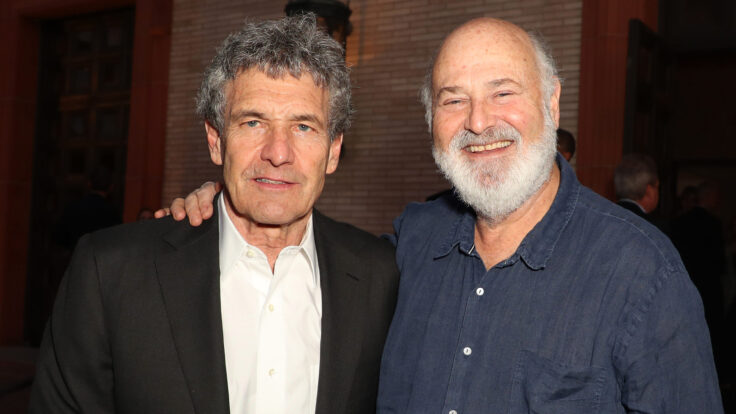
Events P.S.A.: Wednesday night I hosted the first of my new off-the-record Leadership Series receptions in L.A. with Tendo Nagenda, producer and former Netflix and Disney film executive. Thanks to everyone who came out for a fun evening, thanks to Manatt and Max for sponsoring, and thanks to the team at Puck for producing a great event. We’ll do more of these.
More: Focus Features is hosting a screening of The Holdovers, the new Alexander Payne movie, exclusively for Puck members in New York on Nov. 2. Signups are limited, so click here if you’d like to attend.
As always, if you were forwarded this email, click here to join Puck.
Let’s begin…
|
|
|
- Disney vs. Charter: The Aftermath: We now know the new cost of a massive carriage fight with Disney: It’s 320,000 subscribers, the number Charter said this morning that it lost in the third quarter. Which is way more than the same period last year, but honestly, not that many! Considering ESPN, the most popular cable channel, was blacked out during the start of the college football season, I expected more. That number should actually terrify Paramount Global, NBC Universal, and the other network owners locked in carriage negotiations.
- Class divide at SAG-AFTRA: Last night’s open letter from about 4,000 actors telling SAG-AFTRA’s negotiating committee that they “would rather stay on strike than take a bad deal” was similar to the June letter pushing the union to go on strike… except for some curiously absent names. No Meryl Streep, who signed that first letter, or Jennifer Lawrence, Joaquin Phoenix, Quinta Brunson, Constance Wu, Glenn Close, David Duchovny, Kevin Bacon, Rami Malek, Patton Oswalt, Sarah Polley, Parker Posey, Eva Longoria, Elliot Page, and more. Those are just the omissions I noticed. Perhaps the stars will add their names, or they weren’t told about this letter, which was organized by strike captains to get in front of another planned letter urging the leadership to make a deal. Or maybe the omissions are further evidence of the split between higher-earning actors, some of whom have been pushing the union to get back to work, and the rank-and-file, many of whom are more amenable to staying on strike.
- More SAG drama: CAA C.E.O. Bryan Lourd showed up at the SAG-AFTRA negotiations on Tuesday, but it didn’t go great. Per a source familiar, the union had the super-agent help explain why the actors are asking for higher basic wage increases than what the Writers Guild accepted. But that’s an argument the studio negotiators have heard many times before; they didn’t really need to be agented. I’m also hearing about other agents and lawyers getting more involved, especially in the backchanneling between meetings. Is any of this actually helping?
- Speaking of agencies: Paradigm finally settled its three-year legal battle with former TV agent Debbee Klein, who sued in 2020 claiming she was improperly laid off and owed $2 million. Remember, that was the suit where Klein accused Paradigm C.E.O. Sam Gores of using company money to hire prostitutes (which he denied), and Gores called Klein an “abusive, brazen and repugnant person.” Agents! Sadly, the case moved to private arbitration so we never saw what else they called each other, and neither side is commenting on the settlement.
- Box office over/under: So Universal paid $400 million for Exorcist rights and gave the first movie a prime early October release date—only to see it flop. But Five Nights at Freddy’s, based on the popular horror game, gets a less desirable Halloween weekend debut, it’s day-and-date on Peacock… and it’s still tracking in the low $50 million range. That sounds high given the terrible reviews, so I’ll take the under.
|
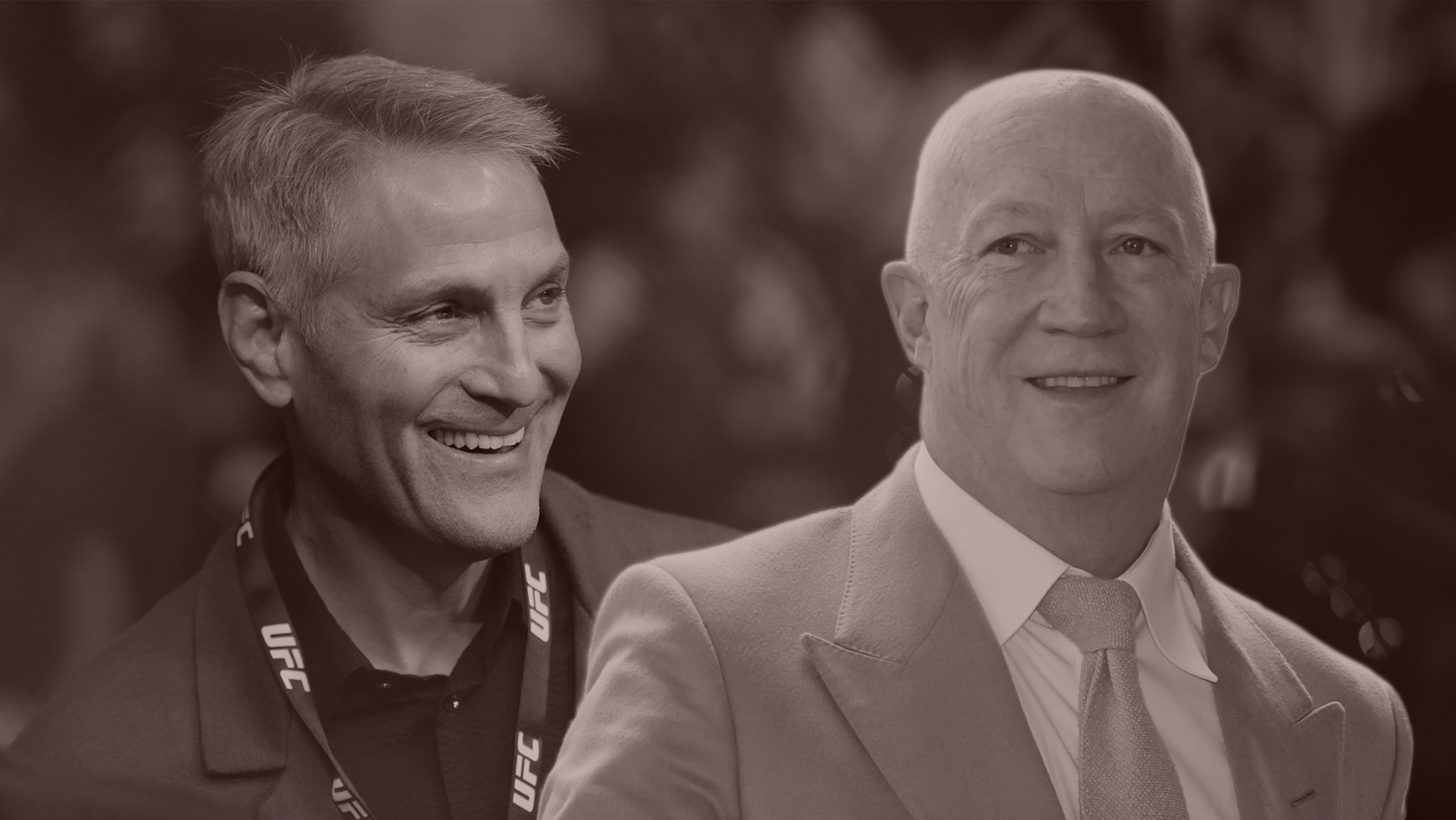 |
| The Best-Laid Plans of Ari and Bryan |
| Amid the labor strikes and diminishing Hollywood economics, Ari Emanuel’s Endeavor may go private and Bryan Lourd’s CAA is dealing with twin scandals—a series of events that have forced the super-agent arch-rivals to press pause on their coronations. |
|
|
|
| Earlier this week, I was chatting with a pretty veteran CAA agent who was trying to convince me how disgusting it was that rivals WME and UTA had been calling clients to ask if they were still comfortable with their representatives. He was referring, of course, to the fallout from CAA motion picture co-head Maha Dakhil’s online posts suggesting Israel’s response to the Hamas attack was “genocide,” which drew outrage around town and led to her demotion. By Tuesday, Aaron Sorkin had defected from CAA to WME, citing Dakhil’s comments, and the chum was officially in the water, with sharks attempting to execute that time-honored Hollywood tradition of leveraging a rival’s perceived weakness. The Dakhil crisis, after all, is CAA’s first truly vulnerable moment since the “lawless midnight raid” of 2015, when a big chunk of its comedy group bailed for UTA. And the controversy has come on the heels of Julia Ormond’s bombshell lawsuit claiming that the agency’s leaders had “enabled’ sexual abuse by Harvey Weinstein, an allegation they deny.
Bryan Lourd, Richard Lovett, and Kevin Huvane assured their many eye-rolling employees at a town hall on Wednesday that things are great and oh, by the way, don’t post offensive stuff online. But they’ve also been working hard to methodically reassure upset clients and head off other potential defectors. One lost piece of business is a blip; two, three, four is a potential exodus. I’m told they also quietly parted ways this week with an assistant in the music department who spouted antisemitic comments on her social feeds. Still, my CAA contact continued, apparently clutching his pearls, “it’s embarrassing, taking advantage of a war to win business.”
Gross, maybe, but pretty normal, honestly, and it was amusing that anyone at CAA would complain about poachers. Theirs is the agency most built on poaching, going all the way back to Michael Ovitz, and often during times of perceived weakness. Back in 2016, when he was still at CAA, Michael Kives helped leverage those photos of Endeavor C.E.O. Ari Emanuel meeting with president-elect (and then-client) Donald Trump to eventually steal away Seth MacFarlane, a major anti-Trumper. In 2005, CAA and the others were all over William Morris president Dave Wirtschafter’s clients after he was quoted calling Sarah Michelle Gellar “nothing at all” in a New Yorker profile. CAA once poached a hot client from an agent friend of mine while she was on maternity leave. Finding an in—any in—and making even a happy talent un-happy is kinda the CAA way. Being good at it is often what separates the signers from the servicers.
Anyway, my point is not to bash CAA, it’s to show that these agencies are hungry, and they’re hungry because they’re vulnerable. Nearly six months of debilitating strikes have taken huge bites out of their businesses, with all of them doing layoffs and Emanuel saying his company is losing $25 million a month. UTA just laid off a group of minor agents and gave a pretty major one (I won’t be a jerk and name him) a couple months to find a new home.
Even post-strike, they’re all bracing for a major downturn in the content economy. The diversified Big 3 agencies are certainly better positioned to ride out the storm than the smaller shops, some of which have been floated by Peak TV and will likely consolidate further or go away.
But for CAA and Lourd, who was recently named C.E.O., this was supposed to be a time of coronation, not crisis. He finally got a billionaire to buy him, or at least to buy out TPG’s majority share of CAA, and it’s a sexy luxury goods billionaire, who happens to be married to CAA client Salma Hayek, and he valued a talent agency at a seemingly ludicrous-sounding $7 billion. Lourd and partners are getting fat checks, of course, but it’s hard to proudly wear a crown when he’s got agents upset that they won’t see a windfall from that deal—and now they won’t see much of anything this bonus season, thanks to the strikes. Plus, he’s got two company scandals, potential layoffs, and a lot of clients who are signed to what he pitches as the Tiffany of talent agencies but will increasingly be asking why their shows and movies aren’t happening. Not great. (Usual disclosures: WME represents Puck but not me personally; TPG is an investor in Puck.) |
|
|
| Over at WME, the agency owned by Endeavor, it’s an interesting experiment to ask an agent about this week’s twist in the company’s long, complicated financial trajectory: Ari’s announcement on Wednesday that Endeavor may sell itself. You’ll probably get the equivalent of a shrug emoji, meaning nobody there knows quite what to make of anything anymore—or, perhaps more importantly, how it impacts them. One agent I talked to yesterday said he’s stopped paying attention.
Emanuel, its trash-talking C.E.O., has been pouting publicly and privately over his stock price for months now, so it shouldn’t be that surprising that Endeavor is exploring the dreaded “strategic alternatives,” which could mean a sale of all or part of the company less than three years after going public. Silver Lake Management, Ari’s sugar daddy for more than a decade and owner of 71 percent of Endeavor voting shares, quickly put out its own statement saying it is “working toward making a proposal to take Endeavor private.” There’s no guarantee that anything will happen, but to most observers the message was clear. “We see the take-private as the most likely outcome assuming a fair proposal,” Evercore analysts wrote in a note to clients.
In some ways, the forced actions here seem like a rebuke of the entire Endeavor thesis, which has been to leverage billions from Silver Lake and others to hoover up any available business remotely related to sports or entertainment, then package them with a bow and the Ari Gold f-you attitude for the public markets to celebrate. WWE alongside WME? Sure! Celebrity stylists and art fairs? OK! Professional Bull Riders? What’s that again? Uh, definitely! The total would be greater than the sum of the parts, all made more valuable by the “Endeavor Flywheel” of glamour and celebrity.
But… Endeavor went public at $24 a share in April 2021 only after it failed once and took on majority ownership of UFC, the asset that the market did seem to care about. And after hitting a high of $35 early last year, the stock was down to just $17.75 on Wednesday before the Silver Lake announcement—and not for lack of substantial, borderline desperate efforts to juice it.
Ari and Endeavor president/C.O.O. Mark Shapiro paid off debt and dropped the company’s leverage significantly. In the process, they convinced a Hong Kong investment firm to pay $1.25 billion for the IMG Academy training school and its orbit of abusive football dads. After its fight with the Writers Guild over conflicts of interest, Endeavor offloaded 80 percent of the production company Endeavor Content (now called Fifth Season) to Korea’s CJ ENM. When Endeavor finally bought WWE this year, it created TKO, a separate company, to house the UFC and wrestling, thinking that had to spark the stocks of both entities. Instead, shares of EDR and TKO have dropped from pre-acquisition WWE numbers. TKO on Wednesday was worth almost $14 billion, yet Endeavor, which owns 51 percent of TKO, was valued at just $8.5 billion.
Do the math, and that puts a paltry, borderline offensive valuation on the other assets Ari has spent a decade collecting—only about four times the “enterprise value EBITDA,” the metric often used to determine the fair value of a company. “That is a remarkably low multiple for attractive, highly-differentiated and well-run assets,” Citi wrote yesterday in a note to clients. Those analysts value Endeavor at $30 per share—$19 for the stake in TKO and $11 for the remaining assets. Jeffries, the investment bank, has a $41 price target. You can almost hear Ari swearing into his phone: What the f– do I gotta DO here?!?
So the market either doesn’t understand Endeavor, or it’s punishing Ari for three uncertainties: The size of the in-the-works rights deals for UFC and WWE Raw; the possibility that Saudi money will compete with and eventually minimize UFC, as has been suggested; and the fact that Endeavor is generating a lot of cash and investors don’t quite know what Ari plans to do with it. He says he bid for the PGA Tour, but that can’t happen, right?
Still, the WME diss is especially bizarre. Last month, it seemed Ari was rightly holding out hope that the $7 billion valuation of CAA would immediately float Endeavor’s boat. After all, CAA after its 2022 acquisition of ICM Partners is bigger than WME, but not that much bigger. And UTA got a hefty multiple last summer when it sold a stake to Swedish investor EQT. But, alas, no bump for WME. “I actually don’t expect it to be 15 times [earnings] because that’s the private market. It shouldn’t be one and a half times,” Emanuel said earlier this month. “Give me six [times revenue]. I got kids to feed.” |
| What’s In It For Silver Lake? |
|
| I’m sure you’re as worried about Ari’s kids going hungry as I am. But the problem, of course, for Emanuel, Shapiro, and Egon Durban, the Silver Lake co-C.E.O. and chair of Endeavor, is that none of their whining matters. Executives love to complain about their low valuations, but the only way to move the market is to move the market. And now, having failed at that, Durban has lost patience. After the news broke that Ari was considering a take-private and Silver Lake was game, the Endeavor stock shot up about 23 percent to close at more than $22—almost back to where it started yet still below where Emanuel, Shapiro, and even casual observers think it should be.
So what’s the upshot here? Could WME be sold to LVMH or Walmart or the Saudis or anyone besides Silver Lake? Probably not. Emanuel definitely doesn’t want that—and, I’m told, neither does Durban. But… what happens if Silver Lake crunches the numbers and lowballs Endeavor? Or ends up making no offer at all? Endeavor would need to stay public and likely begin selling stuff off, maybe Bull Riding or the events-staging business, per the Jeffries analyst note. Or maybe Ari would make a bid for other sports assets or even UTA, trying to leapfrog WME over CAA, though antitrust regulators might have a word about that. Regardless, the path to monetization for the agents and others at WME that were dreaming of a $50 stock price is probably bumpier today; in fact, nobody seems to know what the actual path looks like. They do, however, seem to trust that Ari will figure it out.
Emanuel can probably count on Durban to deliver, as he has since 2012, when Silver Lake first bought a 31 percent stake in WME. In some ways, Durban is the John Malone to Ari’s David Zaslav, the financial enabler of his meteoric rise from scrappy talent agent to legitimate mogul. (And unlike Zaz, Ari is a founder and builder, rather than a manager of assets.) Durban probably perked up when he saw that TPG got out of CAA with about $2 billion in profit after first investing way back in 2010. Maybe a private Endeavor is a better path to that kind of windfall for Silver Lake. Or maybe, once this fraught moment in entertainment passes and the overall economic environment improves, Ari will have a more compelling story to tell investors, one that properly values a pretty impressive set of assets, and he can try to take the whole thing public all over again. |
|
|
See you Sunday,
Matt
Got a question, comment, complaint, or a decent cider recipe? Email me at Matt@puck.news or call/text me at 310-804-3198. |
|
|
|
| FOUR STORIES WE’RE TALKING ABOUT |
 |
|
 |
|
 |
| SVB Confessions |
| A former executive on the bank’s unorthodox culture. |
| WILLIAM D. COHAN |
|
 |
|
|
|
|
|
 |
|
|
|
Need help? Review our FAQs
page or contact
us for assistance. For brand partnerships, email ads@puck.news.
|
|
You received this email because you signed up to receive emails from Puck, or as part of your Puck account associated with . To stop receiving this newsletter and/or manage all your email preferences, click here.
|
|
Puck is published by Heat Media LLC. 227 W 17th St New York, NY 10011.
|
|
|
|