 |
| Welcome back to What I’m Hearing, and a happy Mother’s Day weekend to all the moms.
Best Strike Sign Contest: Remember to send me your submission by Friday (tomorrow) at 5 p.m. I’ve received hundreds so far; most are funny, some are very funny, a few are inspired. On Sunday, I’ll pick my 7 favorites and put them to a vote of WIH readers. Then, next Thursday, I’ll crown the Best Strike Sign and give out the Puck merch. Good luck!
Inner Circle event: Puck contributor and labor law expert Jonathan Handel and I are doing an off-the-record call with Inner Circle members Friday at 1 p.m. Pacific. Join us. And if you’re not an Inner Circle member, you can upgrade here.
And as always, if you’ve been forwarded this email (you know who you are), become a card-carrying Puck member here. |
|
|
- CAA’s New Suitor Has an Inside Connection: French billionaire François-Henri Pinault has set his sights on the talent behemoth CAA. I’m told by two sources that Pinault, chairman and C.E.O. of the luxury fashion group Kering, has approached TPG, the private equity firm, about buying out its stake. Pinault, of course, is also the husband of actress and CAA client Salma Hayek-Pinault, so that would work out nicely.
Remember, TPG first invested in CAA back in 2010 and became the majority owner in 2014—an eternity in private equity years. But TPG has received other incoming calls about CAA over the years, and, as recently as 2021, it chose to stay the course, moving the agency and its roster of everyone from Tom Cruise to Jenna Ortega from an expiring fund to a new one. Kering, home to brands like Gucci, Yves Saint Laurent and Balenciaga, could make for a fitting home for CAA and its roster of glamorous stars. Plus, it might relieve CAA from the pressure to grow and eventually go public. Maybe the Pinaults can chat with CAA managing director Bryan Lourd next week in Cannes, where Kering hosts its annual Women in Motion event during the film festival. Reps for TPG and CAA declined to comment. (Usual disclosure: TPG is also an investor in Puck.)
- Why did Liz Murdoch fire Stacey Snider?: No, Stacey Snider didn’t “step down” from running Sister, the U.K.-based production studio she launched with Elisabeth Murdoch and Jane Featherstone. Snider was fired—and pretty abruptly, per sources, with the usual producing deal cushion. It was such a surprise to the former Fox and Universal studio chief, her team and those who do business with her, that Snider was actually participating in an upcoming Wall Street Journal profile about the company at the time she was canned.The question is why? Sister posted a $18.6 million loss last year, which the company blamed on Covid, but Murdoch’s spending probably played a key role there. The company bought into Richard Bacon’s unscripted TV shingle Yes Yes; Ron’s Gone Wrong animation company Locksmith; and, weirdly, a big stake in Koko, a London music venue favored by Prince and Madonna. With 92-year-old Rupert Murdoch becoming more frail lately, Liz also might be looking to assimilate Sister into the family business, as she did with Shine, while she and her siblings expect to go to war over succession. (A Sister rep declined to comment and a rep for Murdoch did not respond.)
- Where Elon and Linda bonded: A television company’s head of monetization bailing on the eve of the upfronts? Brutal. But NBCUniversal ads chief Linda Yaccarino’s impending move to become the C.E.O. of Twitter wasn’t a surprise to anyone who attended Stream USA, the annual pre-upfronts retreat thrown by WPP C.E.O. Marc Reed at the Silverado resort in Napa. On Tuesday, Reed interviewed Elon Musk at the off-the-record event, per a source who attended, and that was followed by an interview with Yaccarino. After lunch, Musk and Yaccarino were seen chatting incessantly. Clearly Elon convinced Linda that her relationships and selling strategies can overcome the toxicity of the platform since he bought it. Good luck!
- Guild rules, like diets, don’t apply in France: Martin Scorsese, Writers Guild member and credited screenwriter (with Eric Roth) of Killers of the Flower Moon, is headed to Cannes next week to promote the film’s release by Apple, a struck company. Why, again? Isn’t the WGA imploring members not to indulge these companies with the benefits of high-profile promotion?The apparent Cannes exception is just one example of the rampant confusion about what’s allowed and not allowed. All week I’ve heard from reps for directors who have been prevented by the WGA “hit squads” from fulfilling their guild-mandated duties on sets. Writer-producer Tony Gilroy (Andor) tried to adhere to the rules but basically threw up his hands and stepped away. Which is what the WGA wants, of course; more shut downs equals more leverage. So for now, chaos is the new norm.
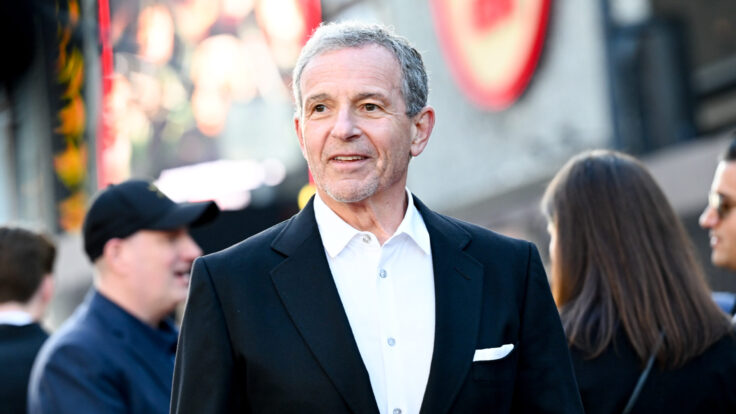
- Disney earnings quiz: Why in the world did C.E.O. Bob Iger lead his investor call yesterday with a bizarre digression to “congratulate Universal for the tremendous success of Super Mario Bros.”?a. To light a not-so-subtle fire under his own animation divisions, which most recently delivered duds such as Strange World and Lightyear.
b. To butter up Comcast C.E.O. Brian Roberts ahead of what will likely be a contentious negotiation to buy the rest of Hulu, which Iger apparently wants to keep now.
c. To evangelize the notion that family audiences are back in theaters as he preps two movies that he really needs to perform well: The Little Mermaid and Elemental.
d. He’s secretly trying to steal Mario producer Chris Meledandri.
e. He’s just really proud of them.
Probably e, right?
- Speaking of Disney: That Bob vs. Bob book proposal I mentioned last month just sold preemptively to William Morrow, the HarperCollins imprint. The House of Mouse: Bob Iger and the Fight for the Soul of Disney, by Wall Street Journal beat reporter Robbie Whelan, is officially happening. “A lot of people say that Bob Iger is the most talented media executive of all time, but until now, no one has taken on the project of putting his legacy under a journalistic lens,” Whelan texted me today. Sounds like Iger will need to bring in former P.R. protector Zenia Mucha for this one.
- More Disney: No, Jimmy Kimmel won’t do his typically epic roast of the networks at the Disney Upfronts on Tuesday. For some reason, the trades are sitting on this news, as if there was a chance Kimmel would cross the likely WGA picket lines. “We wish!” an ABC source told me yesterday.
- Ava’s Warner Bros. split: I broke the news on Twitter today that Warner Bros. Television declined to renew producer-director Ava DuVernay’s lucrative overall deal. I’m told Warners did make DuVernay an offer, it just wasn’t nearly what she got in 2018, during the heyday of rich overall deals. So DuVernay said no thanks and is said to be focusing on film.
- Will data be too far for DGA? The Directors Guild began studio negotiations this week and is said to be laser-focused on improving its streaming residual formulas—a key focus because whatever the union achieves will likely set a pattern for SAG-AFTRA and the Writers Guild, whenever those negotiations restart (Labor Day? Christmas?). All three guilds are looking for an overlay to the streaming residual formula that would add a success metric so that hits would pay more. On linear TV, residuals depend on the number of reruns or on the license fee from sales into ancillary markets.Can the DGA break through streamers’ resistance to sharing the necessary data for a success-driven formula? Don’t get your hopes up. A knowledgeable source close to the situation is pessimistic, saying “I don’t think it’s going to happen.” With only a month of bargaining scheduled before the actors’ talks start, we’ll (probably) know soon. –Jonathan Handel
Now for an undercovered angle on the strike… |
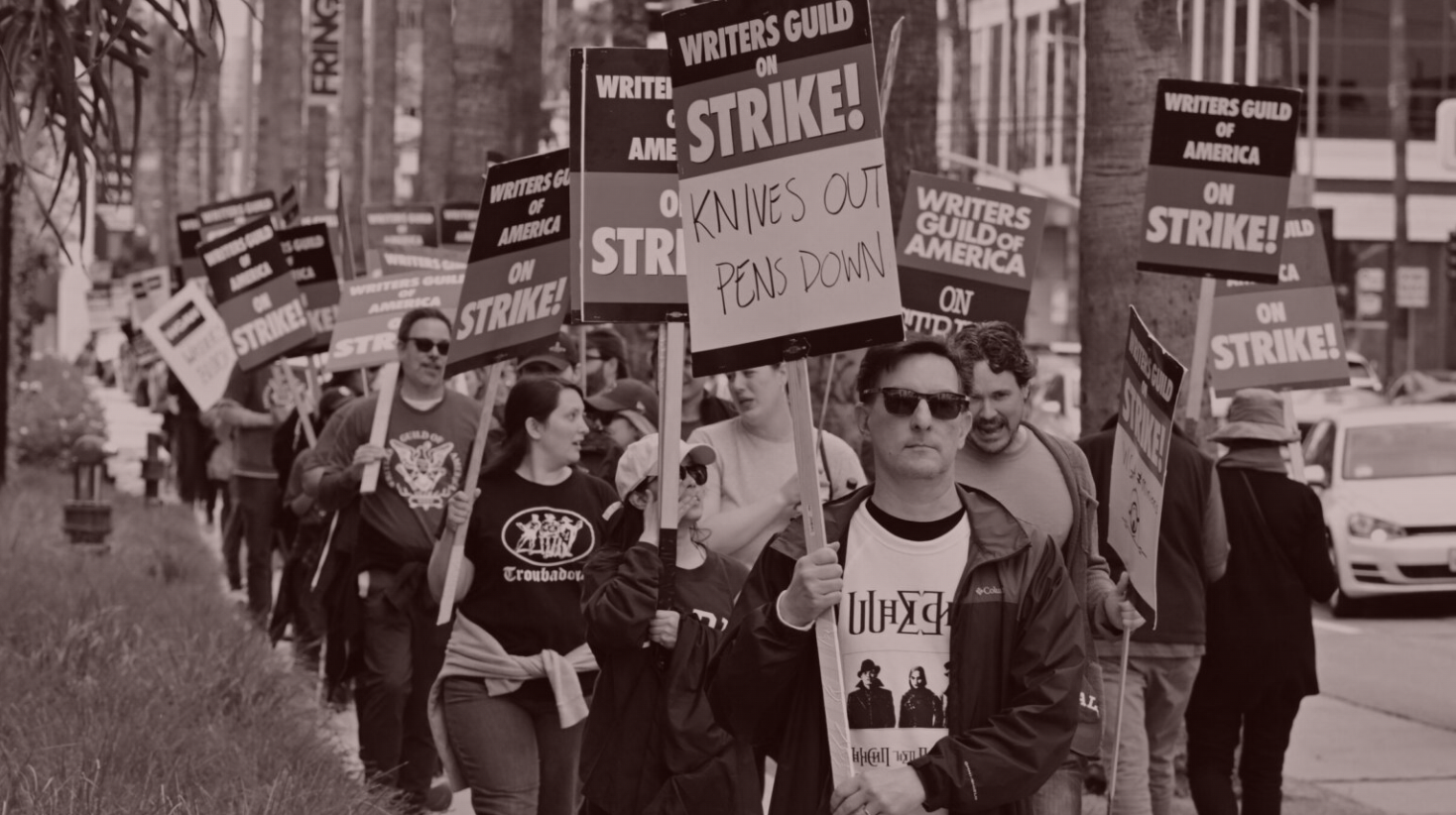 |
| Can the Striking Writers Avoid Class Warfare? |
| The class divide between the haves and have-nots of Hollywood writers has not yet been an issue in this labor stand-off. But, if history—and past comments by Todd Phillips and Aaron Sorkin—is a guide, it likely will soon enough. |
|
|
|
| Back in the early days of the Hollywood Reporter Roundtable series, before social media really took off and any deviation from a publicist narrative led to a million aggregator headlines, people would often speak their minds on those panels. I remember co-moderating one such gathering of six screenwriters, in 2010, at the old Capital Grille in the Beverly Center.
It got heated. Todd Phillips, who had just come off a contentious writing credit dispute over Robert Downey Jr.’s contributions to Due Date, alternatively referred to the WGA as the “Whiners Guild” and an “obnoxious organization.” He then revealed he was part of the nine percent of the union who had voted against the 2007-08 strike. Why? “Autoworkers don’t have agents,” Phillips said to the group, which happened to include John Wells, who at the time was the president of the guild he was trashing. “We, as writers, we have agents who should be negotiating our deal, and if we want three cents more on our DVDs—or whatever the hell they were fighting for last year—let my agent figure that part out. Let him fight for it.”
Phillips wasn’t done. “I’m not worried about residual checks; I have an agent who makes deals for me, and that’s how it works,” he said. “If you’re a writer in demand, you get residual checks. I don’t believe the eighth writer on TV shows necessarily deserves to.”
Yeah… I remember thinking there would be immediate pushback to that; after all, I had covered that 2007-08 strike, and while I knew some high-earning writers were skeptical of a shutdown that mostly benefited the low-earners, very few said so publicly. And Phillips, who had famously bet on himself and made more than $150 million on The Hangover franchise, seemed to be questioning the basic value of a union in protecting those less fortunate than him. But Aaron Sorkin, who was invited that day for The Social Network, which would soon win him the Oscar, quickly said he also voted against the strike and that, while he’s “a union guy,” he agreed with Phillips “100 percent.” As Sorkin put it: “A union makes sense when people have more power as a group than they do as individuals. I have considerably more power as an individual than as a member of that group, and I am forced to be a member of that union in order to work.”
Sorkin, remember, had collaborated for years with Wells on The West Wing, yet he had more to say about the guild that his former colleague, sitting right next to him, was running: “Moreover, because the vast majority of the members of that union are not employed, frankly, the union—the Writers Guild—works best as an organization not to protect writers from management but to protect people who want to be writers from people who already are.” He later continued: “If you want to get the extra 3 cents, write better. Your agent will get it for you. Let the markets work.” |
| ‘Who Really Benefits Here?’ |
|
| Strong words, for sure, and Wells, if I recall correctly, was clearly annoyed but stayed calm—maybe that’s why he’s been so successful as a producer—addressing Phillips and Sorkin by saying, “The union attempts to help those writers not at this table.” Awkward. My co-moderator, Stephen Galloway, moved to the next topic.
Now, that was 2010, not today, where the issues in this WGA strike are somewhat different and, at least in the WGA’s view, go way beyond money to more existential threats to the profession of screenwriting. Only 2.15 percent of members said “no” in this strike authorization vote, and I haven’t seen a single member of any guild publicly question the wisdom of the current walkout. At least not yet. I reached out to both Phillips and Sorkin to see if they feel differently this time around; Phillips’ publicist, Nicole Caruso, didn’t respond, and Sorkin’s rep sent me a statement from him saying, “I stand shoulder to shoulder with every member of the WGA.”
I bring up these guys’ past comments not to shame them but to evidence a point I made yesterday on The Town: The class divide between the haves and have-nots of Hollywood writers has so far not been an issue in this labor stand-off. But, if history is a guide, it likely will. I got some pushback for that, as if I was endorsing class warfare. I’m not, but the sentiment was there in 2007-08 and it is certainly out there now. Maybe not in such stark terms, and certainly not in public, but I’ve heard a version of the “Who really benefits here?” argument from people on both the studio and talent side of the Hollywood battleground—agents, lawyers, and yes, one or two WGA writers. It manifests in the conversation about overscale wages—the pay that writers negotiate beyond guild minimums—in the practical realities of a union with such income and employment disparity, and in conversations about what it means to be a working screenwriter. It also shows just how complex the issues are in this seemingly long-term labor fight, and it will only get more pronounced as it drags on.
The WGA is a weird union. It’s got this tiny, 1 percent group of Oscar-winners and phenomenally wealthy showrunners—the Sorkins and Phillipses, plus those name-brand showrunners. Then there’s the rank-and-file section of working writers and multi-hyphenates, most of whom make a great living but have felt the squeeze of the Streaming Wars in fewer TV episodes, shorter orders, mini-rooms and such. Then there’s the vast group of either the underemployed or those not working at all, and for the most part, the guild represents the interests of that bottom group. SAG-AFTRA and, to a lesser extent, the DGA, are similar.
That’s a good thing, if you believe in the power of unions to help maintain a middle class in this industry. But… that does require the continued buy-in of those at the very top and even those middle-top earners, the ones dutifully walking the picket lines even though they have the most to lose in this strike. It’s fine now, in Week 2, but… in Week 22? Week 42? They’re not wealthy, and the studios will target their livelihoods by canceling deals and killing projects. Those working writers have more to lose than in the previous strike because, for the most part, overscale wages and producing fees have gone way up in the past decade. First-look deals that once paid $1 million to $2 million are now often $5 million to $10 million. Weekly quotes have gone up too—for those who work, albeit usually on fewer-episode seasons. That’s fuel for division.
“The fact of the matter is that for many, many members of the Writers Guild, being on strike represented a career step up,” Sorkin continued during the roundtable. “They weren’t unemployed, [but] they could now say they’re on strike. There was an odd camaraderie to it. I kept reading these articles that were cringe-worthy about how much fun people were having on the picket line. Meanwhile, the members of the 19 different craft unions who work on television series, who work on a movie, who are union wage-earners—their unions make sense—who are the principal wage-earners for their families, they’re out of work.”
Again, I’m definitely not endorsing that narrative. I just know that as this strike drags on, it will become a test of the perseverance for the writers who have fulfilled their dream of becoming Hollywood success stories—and a big hurdle for the Writers Guild, either stated or unstated. |
|
|
| See you Sunday,
Matt
Got a question, comment, complaint, or room in your Lakers-Warriors box? Email me at Matt@puck.news or call/text me at 310-804-3198. |
|
|
|
| FOUR STORIES WE’RE TALKING ABOUT |
 |
| Lazard Times |
| Can Wall Street’s most enigmatic firm rise again? |
| WILLIAM D. COHAN |
|
 |
| Tucker & Elon |
| Notes on Carlson’s pivot to social video. |
| TINA NGUYEN |
|
 |
|
 |
| Debt Ceiling Soaps |
| Xi and Putin are spinning the bejeezus out of the debt ceiling crisis. |
| JULIA IOFFE |
|
|
|
|
|
 |
|
|
| Need help? Review our FAQs
page or contact
us for assistance. For brand partnerships, email ads@puck.news. |
|
| Puck is published by Heat Media LLC. 227 W 17th St New York, NY 10011. |
|
|
|