Welcome back to What I’m Hearing, hope your Juneteenth was nice. Tonight I’m bringing back The Mail Room, my periodic reader Q&A column. Thanks to those who sent queries. I tried to respond only where I have something to offer: the Bond movie director search, the Saw franchise sale, what’s up with the The Batman sequel, and Apple’s post- F1 theatrical ambitions, among them.
P.S.A.: Monday’s WIH will arrive on Sunday so Puck can squeeze in one last drop of F.Y.C. advertising before Emmy voting ends on Monday. Adjust your calendars accordingly!
Discussed in this issue: Jon Feltheimer, Blake Lively, Lena Waithe, Linda McNamara, Tim Cook, Carmen Carpenter, James Gunn, Jason Blum, Mark Burg, Broderick Johnson, David Zaslav, Denis Villeneuve, Edward Berger, Timothée Chalamet, Zack Van Amburg, Jamie Erlicht, Natalie Portman, Shari Redstone, Chris Pratt, Laura Wasser, Dana Walden, Oren Koules, Brad Pitt, Matt Dentler, Matt Reeves, and… the Tom Cruise Oscar conundrum.
Still not a Puck member? Just click here. Got a news tip or an idea for me? Just reply to this email or message me on Signal at 310-804-3198.
Let’s begin…
|
- Trump offers a compromise… will Paramount?: Did you actually watch the full video of Trump talking about David Ellison yesterday? Yes, the president called Ellison “great” and said he’d do a “great job” with Paramount, but this is not a full-throated endorsement of the sale that some have suggested. Trump immediately linked Ellison and the Skydance deal to a long 60 Minutes rant, suggesting that in his mind, the settlement of a personal beef is indeed connected to the F.C.C.’s approval of the sale. Which is exactly what terrifies the Paramount board of directors: Trump settles the CBS case, F.C.C. chair Brendan Carr quickly approves the deal, Shari Redstone gets paid, then the lawsuits and, they fear, criminal “bribery” investigations begin.For that reason, sources told me this week that Paramount is holding firm on its $15 million offer to settle the matter. They see that as the same as what Disney paid to end the ABC News case, and a better approximation of the cost to take the case to trial—both defenses to any bribery claim. That’s despite the Trump team having come down significantly in recent days, per sources. Trump was at $49 million, then $35 million last week (a mix of $25 million in cash and $10 million in ads on CBS and legal fees), then as low as $25 million this week, I’m told, with an expectation that Paramount would up its offer, since the board agreed to mediation in the first place. Regardless, at least so far, Paramount hasn’t increased its number, so the impasse drags on, and an entire studio remains in limbo. (Paramount declined to comment.)
- Box office over/under: Disney/Pixar’s Elio and Sony’s 28 Years Later have been all over the place in tracking. For Elio, I’ll take the under on $28 million, and for 28 Years, I’ll take the over on $34 million, based on an average of numbers I’ve seen.
|
|
Okay, let’s get to the questions…
|
|
|
|
With the first half of 2025 nearly behind us, let’s open up my inbox for reader questions on everything from the 007 director bake-off and why Warner Bros. didn’t win the Matrix auction, to Baldoni-Lively aftershocks and Tom Cruise’s honorary Oscar.
|
|
|
|
It’s been a while since I’ve answered reader questions, so earlier this week I threw out the request in this space and—gulp—on Twitter/X. As usual, I got some super-smart questions, so I’ve polled my sources and offered some of my own insights to answer them below. I’ve edited the questions lightly for clarity.
|
|
|
The 007 Director Meetings & Blumhouse’s Deal
|
So who’s gonna direct the first post-Broccoli Bond movie for Amazon?
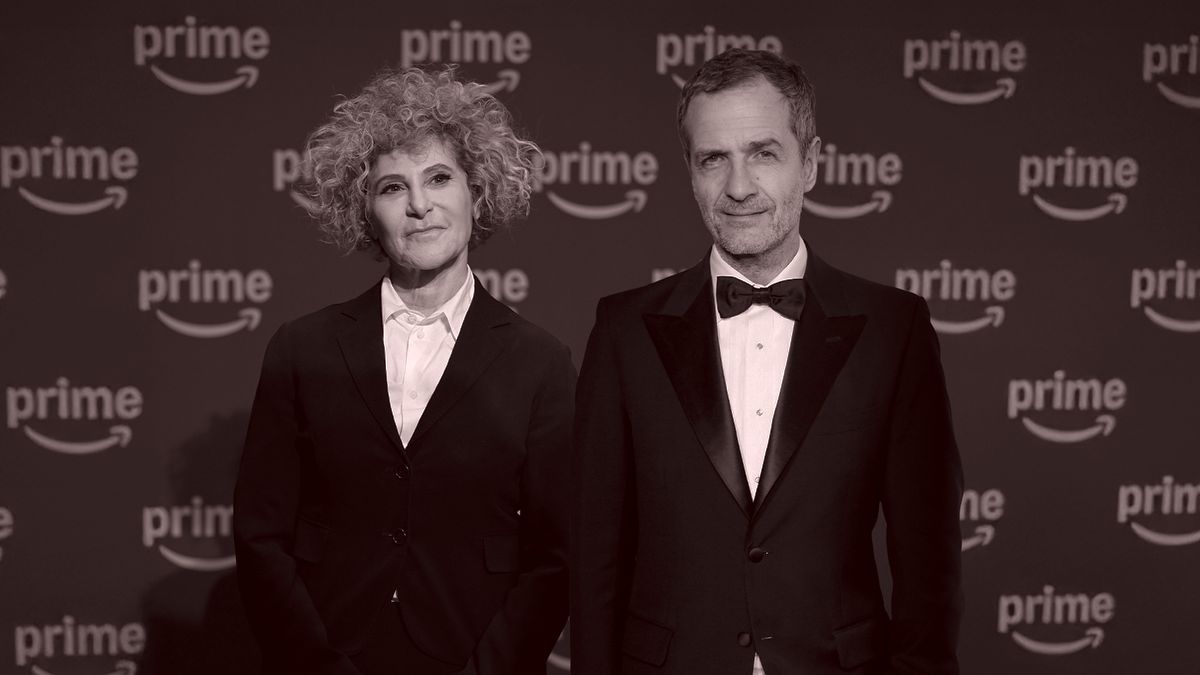
The meetings are happening right now, actually. In the nearly three months since I first reported that David Heyman and Amy Pascal would be the lead Bond producers, the duo has set get-togethers with several filmmakers vying to make that all-important first film of the post- Broccoli era. Edward Berger ( Conclave, All Quiet on the Western Front) has already pitched, per two sources familiar. Denis Villeneuve ( Dune, Arrival) is set to offer his take, as are Certified British People Edgar Wright ( Baby Driver, and this fall’s The Running Man); Jonathan Nolan (TV’s Westworld and Fallout); and Paul King ( Paddington, Wonka), who has a long relationship with Heyman. Alfonso Cuarón ( Gravity, Harry Potter 3), who also has a strong Heyman relationship and has talked about making a Bond film, recently took himself out of consideration, per these same sources.
The new Amazon brain trust—Heyman, Pascal, and top executives Mike Hopkins and Courtenay Valenti—plan to set the director this summer, then get the script written, then cast the next Bond. Though obviously the filmmakers’ thoughts on 007, and who might play him, will come up in the meetings—most of which are taking place at Heyman’s house in London. If they filmed these pitches and aired them on Prime Video, I’m betting they would likely rate higher in the U.K. than most of the actual programming on the service.
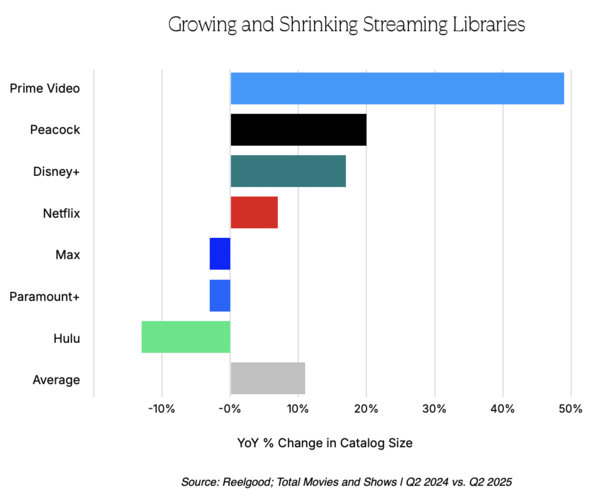
Seems like there is less to watch on Hulu and Max these days. Am I wrong?
You’re not wrong. The much-discussed Hollywood recession has coincided with a massive purge of shows and movies from certain platforms. Max has lost a bunch of Discovery programming, which makes sense given its recent admission that 1000-lb Roomies and other lowbrow reality wasn’t very popular. But the decline at Hulu is surprising, given its sister platform Disney+ actually added content over the past year. Some recent data:
|
|
Yay for Prime Video, which far outpaced rivals. Between the bolstering of its library, adding the NBA this fall, and the recent push to make a lot more movies, Amazon is at least playing to win the streaming wars.”
How is Blumhouse buying the Saw franchise? Doesn’t Lionsgate own it?
No. Lionsgate, which has released all 10 incredibly lucrative Saw movies, likes to claim the franchise, especially as it seeks a sale. But the deal announced this week is way more complicated. The so-called mini-major studio doesn’t control Saw, even though it technically owns the copyright on all but the first film. Producers Mark Burg and Oren Koules (Two and a Half Men) actually financed the first Saw and have stewarded the franchise together, with control being shared 50-50 between him and Burg. That last part turned out to be a problem because the two partners can’t stand each other and haven’t spoken in more than a year. Yeah…
Lionsgate has the right to continue releasing Saw movies in the U.S. forever. So the way it has worked is that Burg and Koules have developed and paid for the films, and Lionsgate reimburses them for the production cost (with caps) and pays to release and market the movies. Then the two sides split the profits in all corridors about 50-50 (with deductions for certain fees), and small variations on specific films. Given the low cost of the movies, that turned out to be an incredibly lucrative deal for the producers.
|
|
|
|
A MESSAGE FROM OUR SPONSOR
|
|
For 50 seasons, “Saturday Night Live” has been more than
television – it’s a comedy engine. By launching the careers of legends and delivering era-defining satire, SNL consistently captures and shapes American pop culture. From “Live from New York...” to its indelible mark on politics and entertainment, its enduring relevance after half a century is a testament to an irreverent format and the speed and creativity of television’s most talented craftspeople. For Your Emmy Consideration in all eligible categories including “Outstanding Scripted Variety Series” and “Outstanding Variety Special (Live).”
|
|
|
|
Since the first Saw grossed $100 million in 2004 on a $1.2 million budget—prompting film critic David Edelstein to coin the term “torture porn,” still one of my favorites—the franchise has generated about $1.2 billion in theaters alone, on a total production spend of less than $100 million. Add in hundreds of millions more in home video revenue and you understand why Blumhouse and others wanted a piece of this franchise, even 10 movies in.
CAA has been trying to sell the Burg and Koules stakes in Saw for more than a year, but any deal was complicated by the Lionsgate rights. At the same time, as the partners’ relationship further frayed, they couldn’t agree on a path for Saw 11. Koules is said to have lined up talent but couldn’t get Burg’s sign-off; another source says the uncertainty around the sale process contributed to the stalled development. Regardless, Lionsgate C.E.O. Jon Feltheimer became increasingly frustrated, and he had been talking with Blumhouse’s Jason Blum about doing more together after their partnership on a Blair Witch reboot. Blumhouse has been trying to own more of its I.P. as it eyes a potential sale of its own down the line.
After some unsubtle nudging from Feltheimer, the producers empowered CAA’s Bryan Lourd and Carmen Carpenter of CAA Evolution, its merchant bank, to split the rights between rights management company Content Partners for the library—with Burg retaining a 50 percent sharing arrangement with Content Partners—and, for future movies, Blumhouse, which now includes as a principal James Wan, who directed the first Saw. Got that?
The deal was supposed to close in early January, but Burg repeatedly got cold feet, and he and others held up the transaction with new demands, according to three sources. At least four major law firms—Eisner; Willkie Farr & Gallagher; Latham & Watkins, and Paul Hastings—billed tons of time on this deal, which fell apart and was reconstituted “about 45 times,” one source involved told me. Good for everyone in getting it done, but the process sounds like torture porn to me. (Reps for Lionsgate, Blumhouse, CAA, Burg, and Koules all declined to comment beyond the press release.)
|
Batman Questions & Lena Waithe’s Fold
|
Have you heard about any issues between James Gunn and Matt Reeves? What’s really going on with The Batman: Part II?
I’m told Reeves is set to deliver his script for The Batman: Part II on Monday—not a moment too soon for DC and Warner Bros. The DC co-heads, Gunn and Peter Safran, initially expected the script more than a year ago. It’s now been three years since Reeves’ first Batman reboot with Robert Pattinson grossed nearly $800 million and prompted the swift announcement of a sequel. So yeah, the executives are frustrated at the delay, all the way up to Warner Discovery C.E.O. David Zaslav—who, if everything goes perfectly, won’t get a new movie based on his most valuable piece of I.P. until October 1, 2027, nearly five and a half years into his tenure at the company.
But… issues? Rumors have circulated that DC was ready to move on from Reeves if he didn’t write faster. But he’s a notoriously slow filmmaker—the first The Batman script took forever, as well—and he had some personal issues to deal with. Gunn has pretty consistently made supportive comments about Reeves, including in an interview released today. “People should get off Matt’s nuts because it’s like, let the guy write the screenplay in the amount of time he needs to write it.”
Crushed nuts or not, the question is whether that delayed 2027 release date will hold. A Warners source told me they’re still planning on a shoot beginning in January, after Pattinson finishes Dune 3, which would provide enough time to keep the date. That’s if the script and preproduction process go smoothly from here. So we’ll see…
What’s going on with Lena Waithe? Firing her employees, shutting down her production company?
Some will likely point to this week’s wind-down of Waithe’s Hillman Grad label and the firing of its staff as evidence that Hollywood is retreating even further from celebrated diverse voices. Maybe. But honestly, the content recession is punishing most creator-driven production companies. Amazon and then Warner Bros. Television got into business with Waithe based on the success of The Chi and her breakout role in Master of None, and not a ton came of the relationships. Her WBTV overall deal just expired, so she’s returning to being a writer-producer, and Waithe still has The Chi going into Season 8 on Paramount+.
If you were producing a pilot of a sitcom, would you go straight to YouTube or pitch it to traditional outlets?
Honestly, that’s a good question. Sitcoms are a very specific genre—half-hour, non-serialized, often multicamera. YouTube still can’t rival TV or streaming for both fast monetization ( i.e., production costs paid by a studio, guaranteed money up front for talent, and, hopefully, more cash in success) or curation. Broadcast networks only offer a handful of new shows each year, which puts a big spotlight on them. And say what you will about the soul-crushing scroll on Netflix, but the service is professionally curated and good at serving that content to the viewers most likely to enjoy it. “Well-produced half hours still belong with the biggest possible linear audience,” a top TV agent texted me when I asked what he thought. “So, if I were aiming to produce a sitcom, which implies a non-serialized, multicamera show, I’d still go to broadcast.”
But honestly, fighting for one of 10 or so available comedy slots on the broadcast schedule is now a viable business only for an elite few. For me, Wannabe Sitcom Producer, putting a really funny—and, in my case, cheap—show on YouTube is a better strategy to find at least some audience, and it could lead to big upside in success. Namely: ownership, instant accessibility, and full creative control. Especially if my show is aimed at a young demo and someone else is paying the production cost, I’d probably experiment with YouTube.
Now that Justin Baldoni’s claims against Blake Lively have largely been thrown out of court, do you think her brand business will fully recover?
No.
|
The Apple Theatrical Riddle
|
|
Will F1’s box office performance determine whether Apple gives movies full theatrical releases, or has this already been decided?
Apple has exactly zero wide theatrical releases planned after F1 opens on June 27 globally via Warner Bros., and everything I’ve heard points to a wait-and-see attitude toward theaters. Spike Lee’s Highest 2 Lowest is getting a token limited release in late August, via A24, ahead of its Apple TV+ debut two weeks later, despite starring Denzel Washington. A smaller romantic drama, All of You, will debut exclusively on Apple TV+ in late September. After that, nothing is dated for 2026, including Matchbox, a Skydance-produced adaptation of the Mattel cars with John Cena, which is in postproduction; Mayday, a Ryan Reynolds survivalist thriller; and a Peanuts animated film—all bigger-budgeted movies that a year ago might have gone to theaters.
We know why the about-face: A few embarrassing flops like Argylle and Fly Me to the Moon prompted a retreat to streaming on Wolfs, with Brad Pitt and George Clooney. Since then, Apple has directed everything to the service, including commercial films with stars like Miles Teller and Anya Taylor-Joy (The Gorge) and Natalie Portman and John Krasinski (Fountain of Youth), while pointing to the $200 million-plus F1 as its big theatrical bet.
|
|
|
|
A MESSAGE FROM OUR SPONSOR
|
|
For 50 seasons, “Saturday Night Live” has been more than television – it’s a comedy engine. By launching the careers of legends and delivering era-defining satire, SNL consistently captures and shapes American pop culture. From “Live from New York...” to its indelible mark on politics and entertainment, its enduring relevance after half a century is a testament to an irreverent format and the speed and creativity of television’s most talented craftspeople. For Your Emmy Consideration in all eligible categories including “Outstanding Scripted Variety Series” and “Outstanding Variety Special (Live).”
|
|
|
|
Never mind that the real problem with Apple’s film initiative isn’t necessarily the quality of the product but the inability to market properly. The L.A.-based entertainment unit doesn’t control its marketing spend, which caused title after title to receive far less attention from Cupertino than, say, a new version of AirPods. Regardless, in a recent 4,000-word Variety story ostensibly about its film strategy, neither Zack Van Amburg nor Jamie Erlicht, the two television executives who together run the content division, mentioned any plans for theaters after F1. And Matt Dentler, who runs the film unit, was not quoted at all.
So if F1 underperforms—tracking has it at about a $40 million domestic debut, which would be criticized as low if Apple were treated like a traditional studio—I’d bet it’s the last big wide release in theaters for a while. Maybe even until UAP, the F1 follow-up about UFOs from director Joe Kosinski and producer Jerry Bruckheimer. Which would be a shame, because if Apple pulls out of multiplexes, and Netflix continues its all-out war on theaters, Amazon would remain the only streaming company that has any interest in the theatrical experience.
Disney and Comcast are sitting on tons of I.P. they never touch. Do they do research on them, or have they just forgotten the treasure trove?
All the traditional studios have executives whose jobs include combing through the libraries for adaptable material. The problem isn’t studios forgetting their assets—though maybe they do underestimate the commercial appeal of certain aging properties. Instead, the issue is that adapting old I.P. isn’t as easy as feeding the scripts into ChatGPT. Finding “the way in,” as DC’s James Gunn recently said about Batman, is always the challenge. “It’s gotta have a reason for being,” one prominent studio producer responded when I asked why every piece of Disney I.P. wasn’t in active development.
Reruns of Gunsmoke, for instance, are doing well on streaming. Would a new version of the Western perform? Probably not. I know NBCUniversal has toyed around with a modern take on Columbo, the 1970s detective series. But the job of development executives is often to make I.P. rehashes feel fresh, like the Kathy Bates reboot of Matlock does for CBS viewers. It’s tough because audiences increasingly can sniff out I.P. for I.P.’s sake. Yes, I’m looking at you, Karate Kid: Legends.
|
Disney Succession, The V.R. Deal & Cruise’s Oscar
|
Do you think there’s any chance that Dana Walden, Alan Bergman, or any of the internal candidates for Disney C.E.O. formally pulls out of the process and throws his or her support behind another candidate, like in a political campaign?
No.
Why in the world didn’t Warner Bros. buy the Village Roadshow library in bankruptcy, rather than let Alcon get it for $418 million? Those movies are more valuable when all the rights are united under one roof.
Short answer: I don’t think Warners couldn’t afford it. Not with everything going on at the debt-saddled parent company. It’s actually a fitting snapshot of where Warner Bros. Discovery is right now.
As I wrote right before Village Roadshow entered bankruptcy, the longtime financier and partner on more than 100 Warners movies was gonna fetch a decent price in bankruptcy. It’s got one of the most partner-friendly co-finance agreements in town, a deal that produced everything from The Matrix to Joker to Ocean’s Eleven, often with Village Roadshow owning 50 percent of the title. The V.R. library alone is said to throw off more than $50 million a year in revenue, and with the rights united, Warners could do basically whatever it wanted without dealing with a partner.
So how did Alcon Media Group get this? Remember, V.R. had the right to opt in to certain Warners movies, but its move into developing its own projects—plus a nasty legal war with W.B. over its decision to send The Matrix Resurrections to HBO Max during the pandemic—left the company cash-strapped. So much so that in 2023, after V.R. had opted in to Timothée Chalamet’s Wonka, it couldn’t fund the investment. So it found a partner in Alcon, the production-finance outfit backed by FedEx founder Fred Smith.
Warners was furious. Knowing that V.R. had problems, it had hoped to escape having a co-financier on a movie its data showed would be a winner. The studio tried to wriggle out of the deal, but Alcon co-C.E.O.s Broderick Johnson and Andrew Kosove (and then-Village Roadshow C.E.O. Steve Mosko) held Warners to the contract.
So Alcon, which hasn’t been that active in recent years (save for the Chris Pratt Garfield reboot that my kid thought was hilarious), got a foot in the door of Village Roadshow on Wonka, then pounced when the assets hit bankruptcy, outbidding Warners and another suitor, Content Partners. For Warner Discovery and Zaslav, this is exactly the kind of investment the company isn’t making—a big outlay of cash now that would generate outsize revenue only over time. Zaz doesn’t have the luxury of those kinds of deals when he’s trying to save the company by splitting it up.
The fight isn’t over, of course. Alcon is also in position to get the derivative rights to the library, meaning the sequels, prequels, and TV adaptation rights for the movies (with W.B as a co-financier). But Warners would contest that win, setting up a hearing later this summer. And the arbitration over Matrix 4 continues. Roadshow has been found liable for breach of contract, reportedly to the tune of $125 million, but several aspects remain. There’s also a big fee that must be paid to Content Partners, and unresolved third-party claims. But Alcon will almost certainly emerge with this major asset, which will be a thorn in the side of whoever ends up owning Warner Bros., if and when Zaslav sells.
Now that the Academy is giving Tom Cruise an honorary Oscar, they’ll probably at least acknowledge the alleged abuses of Scientology during the ceremony, right?
No.
|
See you Sunday,
Matt
Today’s issue was created with research assistance from Julia Alexander and Maya Tribbitt.
Got a question, comment, complaint, or your own Bond pitch? Email me at Matt@puck.news or call/text me at 310-804-3198.
|
|
|
Need help? Review our FAQ page or contact us for assistance. For brand partnerships, email ads@puck.news.
You received this email because you signed up to receive emails from Puck, or as part of your Puck account associated with . To stop receiving this newsletter and/or manage all your email preferences, click here.
|
|
Puck is published by Heat Media LLC. 107 Greenwich St, New York, NY 10006
|
|
|
|