Hello and welcome back to the Tuesday edition of What I’m Hearing, helmed by Eriq
Gardner. Tonight, just when you thought the Blake Lively–Justin Baldoni case had “settled,” Eriq analyzes yesterday’s contentious hearing and the possibility that a new lawsuit will be filed. Plus, how Disney is manhandling Trump’s F.C.C. chair in the station license battle, and a WWE text snafu could become a piledriver to the head in its shareholder litigation.
All yours, Eriq (and send him tips at
Eriq@puck.news).
Not a Puck member yet? Never too late. Just click
here.
Discussed in this issue:
Josh D’Amaro, Justin Baldoni, Clarence Thomas, Daniel Suhr, Lewis Liman, Ari Emanuel, Blake Lively, Nick Khan, John Roberts, Jimmy Kimmel, Vince McMahon, Donald Trump, Brendan Carr, Judi Zamos, Alan Dershowitz, Judith Sheindlin,
and more. |
|
|
|
A MESSAGE FROM OUR SPONSOR |
“Sarah Snook’s terrifying thriller is an absolute pleasure to watch. This extraordinarily tight drama knits all its threads
together brilliantly.” |
“A gripping thriller. Sarah Snook pulls you right in. Michael Peña radiates sensitivity and weariness. Abby Elliott’s emotional
range, and rawness, matches that of Sarah Snook – and the same can be said of Sophia Lillis.” |
“Fanning and Snook are incredibly charismatic on screen together and both deliver powerful performances” |
All episodes of ALL HER FAULT are streaming now, only on Peacock. |
|
|
|

| Eriq Gardner
|
|
- Blake’s next lawsuit?: At
Monday’s hearing between the dueling camps representing Blake Lively and Justin Baldoni, one could almost sympathize with Judge Lewis Liman. He’s been asked to resolve Lively’s unusual post-settlement damages claim with little precedent to guide him, no clear procedural roadmap—and, perhaps most importantly, no jury.
As we all know, Lively elected not to go to trial with her claim that the It Ends With Us producers
retaliated against her after she reported alleged sexual harassment during production. Instead, she settled, and is now seeking attorneys’ fees, treble damages, and punitive damages under California’s relatively new, #MeToo-adjacent, anti-retaliation statute. Lawmakers designed that statute to protect individuals who make good-faith complaints from being punished through retaliatory defamation litigation. Lively’s theory here is that Baldoni’s defamation claim—the one Liman dismissed early in
the case—triggered those protections.
Yet the statute presents a series of questions that were never fully litigated. Did Lively make her complaints in good faith? Was Baldoni’s lawsuit frivolous? Who bears the burden of proving those points? Lively’s lawyers argue that Liman effectively resolved most of those issues when he dismissed Baldoni’s claims, leaving only the calculation of damages. Baldoni’s team counters that the record is too thin to support that conclusion because the case
never reached trial.
Liman appears to be leaning in Baldoni’s direction. Yes, he’s reserving his judgment, but at Monday’s doctrine-heavy hearing, he repeatedly flagged constitutional wrinkles. Notably, Liman raised what he viewed as a possible Seventh Amendment problem: Sure, he spent considerable time acknowledging California’s interest in protecting harassment complainants, but if Lively is seeking monetary damages, where does the constitutional right to jury trial go? “I don’t think
states can get around this so easily,” Liman observed.
Perhaps the most revealing moment came when Liman floated another path. Several times, he suggested that Lively could pursue relief under California Civil Code Section 47.1 as a stand-alone cause of action. In other words, if she wants damages, she may need to file a new lawsuit in California and prove her entitlement there. That approach would more closely resemble the way anti-SLAPP fee-shifting disputes sometimes play
out—and it would neatly sidestep the constitutional headaches troubling the court. If I had to guess, that’s where we may be headed. The question is whether Lively has any appetite for a sequel.
More…: The dynamic between the parties at Monday’s hearing is worth noting. Often you’ll see cordiality win out in these disputes, but these two sides couldn’t be farther from each other—literally. Even in the hallway before the hearing began, they kept their distance. The Baldoni
camp seemed much happier, like it was a high school reunion. I walked over to the Lively side and there was extreme iciness. Meanwhile, the YouTubers were their own gang, yukking it up in the middle. - Free legal advice for WWE’s Nick Khan…: If you want to have a secret conversation that won’t someday surface in court, maybe don’t text your buddy, in this case Vince McMahon, one word—“Langis”— as WWE president Nick Khan
did during 2023 merger discussions with Endeavor and UFC that resulted in TKO. And when McMahon responds, “What the blue hell is ‘Langis’” don’t reply, “Read it backwards,” and then both continue the sensitive conversation on Signal, the private messaging app.
Do that, and a judge may infer that the bad stuff is true. Such is the unhappy posture for WWE. A Delaware chancellor, two weeks before trial in a shareholder lawsuit
alleging that the WWE was undersold and after examining the destruction of Signal messages at a time when everyone was supposed to be preserving evidence, ruled that he would draw a series of adverse inferences. Among them: that eventual TKO C.E.O. Ari Emanuel promised McMahon a post-sale role in the company, that an offer to indemnify McMahon from his
legal troubles played a role in the deal, and that McMahon then steered WWE into Emanuel’s hands and away from other bidders.
That doesn’t mean shareholders challenging the TKO transaction are guaranteed to win at trial. But it sure makes their path easier. - Did Dersh win over a Supreme?: I’ve never been a media-law doomer, but I do know some insiders are watching Alan Dershowitz’s petition to the Supreme Court, where he is
inviting the justices to revisit the free-speech standards of New York Times v. Sullivan. Dershowitz is trying to revive his libel case against CNN, which he says misrepresented his comments when he was on Trump’s defense team during the president’s 2020 impeachment trial. A lower court found that he couldn’t show actual malice. But the justices have now discussed the petition at several private conferences and keep relisting it—a sign, at minimum, that one of them may
be writing a dissent from denial of cert.
Still, if the justices ever formally take up an invitation to tackle libel standards, my bet is that it happens only after some lower federal appellate court says the hell with precedent and forces their hand. Which is why another case bears watching, too—one involving “Judge Judy” Sheindlin and the Menendez brothers.
You may remember that Sheindlin sued the parent company of In Touch Weekly after
the magazine reported that she had appeared in a true-crime docuseries about the brothers, who were sentenced to life in prison for murdering their parents. The article quoted Judge Judy as saying the trial was “rigged” and that the L.A. Superior Court judge should have recused himself. The problem: Sheindlin never said any of that. The reporter had confused her with an alternate juror named Judi Zamos, who was interviewed in the docuseries.
A simple mixup, perhaps. And a
federal judge accepted the tabloid’s argument that Sheindlin couldn’t show actual malice, notwithstanding her contention that the magazine’s “shallow reporting, cursory editing, and little or no fact-checking” amounted to recklessness. But it ain’t over. The 83-year-old Sheindlin is now taking the fight to the 11th Circuit.
|
|
|
|
And now, the Disney-Carr cage fight… |
|
|
|
The F.C.C. chairman is forcing a showdown with Disney over its D.E.I. policies—seemingly a
thin pretext for punishing ABC News. But Carr, usually a savvy operator, has an unusually weak hand. And Disney’s lawyers have figured out exactly how to exploit it. |
|
|
|
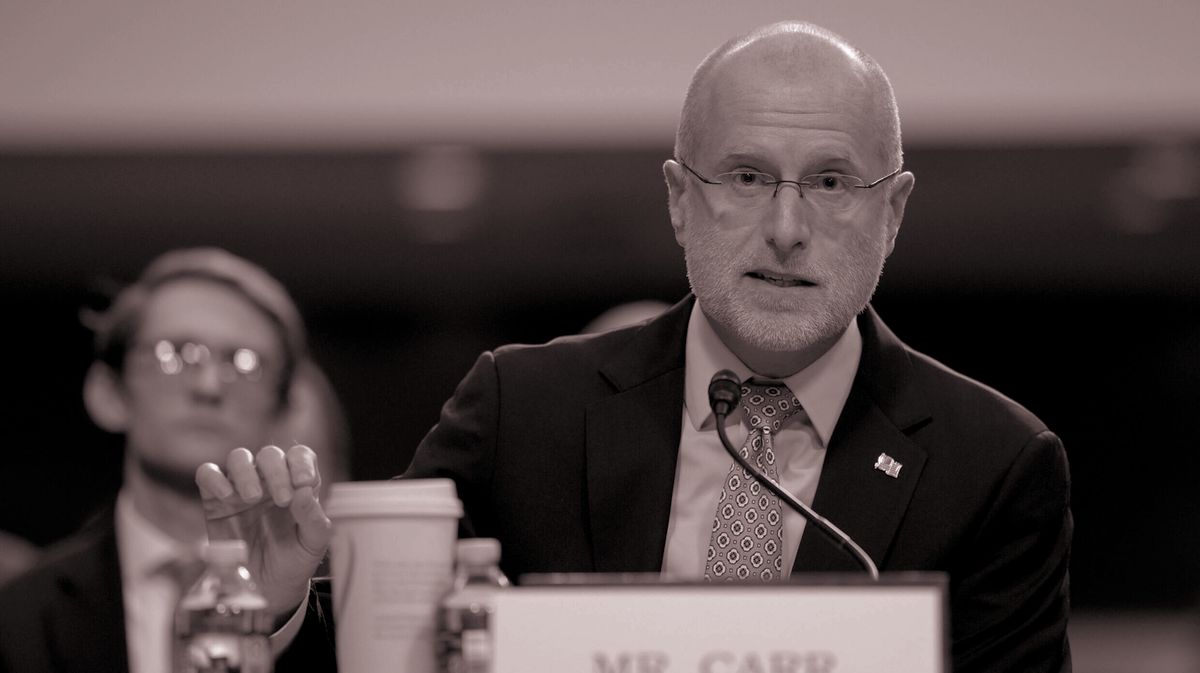
Brendan Carr insists he’s not trying to pressure Disney into firing Jimmy
Kimmel or otherwise meddle in ABC’s editorial decisions. As the F.C.C. chairman explained on CNBC this past week, around the time Disney grudgingly filed to renew its broadcast licenses years before they were set to expire, the issue was whether ABC’s stations were operating in the public interest. In Carr’s view, discriminatory D.E.I. policies cannot meet that standard. “Ultimately,” Carr said, “if the facts show that Disney was discriminating against people based on race or gender,
that could be a real problem with respect to their ability to continue to hold a license.”
Fine. Take him at his word. Assume there is no pretext—assume, even, that Disney has implemented precisely the sort of D.E.I. initiatives that Carr finds objectionable. Disney would still enter any courtroom fight as a heavy favorite. |
|
|
|
A MESSAGE FROM OUR SPONSOR |
“Keke Palmer Is Brilliant in Peacock’s Chaotically Fun Horror Comedy ‘The ‘Burbs’” |
“Because of the performances of Keke Palmer and the fantastic supporting cast, we’re all in on The ‘Burbs” |
“A fun watch that nails the tone of the original while still standing confidently on its own” |
All episodes of THE 'BURBS are streaming now, only on Peacock. |
|
|
|
In fact, it’s difficult to believe that a savvy operator like Carr doesn’t understand the weakness of his
hand. The reason is not simply the First Amendment, though that obstacle looms large enough. The deeper problem for Carr is that the F.C.C. has never formally declared the D.E.I. programs unlawful. Nor has the agency conducted notice-and-comment rulemaking on such a theory, or built the administrative record required to support the position Carr seems eager to advance.
Disney’s filings drive that point home. They also take aim at the F.C.C.’s resurrection of a long-dormant early-renewal
mechanism. Yes, the agency has a rule allowing early call-ups when doing so is “essential” to an investigation. But Section 309(k) of the Communications Act still measures renewal eligibility by a station’s performance “during the preceding license term,” not through a midstream ideological audit conducted years before expiration. Nor can the F.C.C. realistically grant renewal now anyway. So what, exactly, is Carr accomplishing here, other than inviting a court to conclude that the agency acted
arbitrarily and capriciously? Not much. |
Of course, there’s a reason why federal agencies have to explain their rules before meting out
punishments. In 2011, the Supreme Court rebuked the F.C.C. for trying to penalize broadcasters over expletives on live awards shows and brief nudity on programs like NYPD Blue. The justices didn’t say the F.C.C. lacked the authority to police indecency—but they did make clear that the agency had to tell broadcasters what was forbidden beforehand. The opinion was
unanimous, drawing votes not only from the Court’s liberals, but also from John Roberts and Clarence Thomas. To this day, the F.C.C. has never fully resolved the uncertainty that the case exposed.
So if Carr truly wants to punish broadcasters over D.E.I., he’d better do his homework first. Just consider what happened last week in Thakur v. Trump, just days before the F.C.C. set the deadline for Disney’s accelerated renewals: The Ninth Circuit sided with University of California researchers whose federal grants had been terminated under anti-D.E.I. executive orders, concluding that the plaintiffs were likely to succeed on claims that federal agencies acted unlawfully.
That case is hardly an outlier. During Trump’s second term, federal judges have repeatedly scrutinized efforts to use
anti-D.E.I. directives to disrupt health, education, and environmental-justice programs. The pattern is hard to miss. Whatever political appeal these campaigns may have, courts want to see more than executive irritation and ideological disagreement. They want legal authority. So far, Carr hasn’t shown much of it.
And Disney C.E.O. Josh D’Amaro’s lawyers have been smart. What really stands out about their objection, in fact, is how fluently it speaks the language
of modern conservative jurisprudence. First, there’s the administrative law critique—catnip for Federalist Society judges who have spent years cutting federal agencies down to size. But Disney’s First Amendment argument is equally telling. What recent Supreme Court case does the company lean on for the proposition that government officials cannot use regulatory leverage to coerce private speech? National Rifle Association v. Vullo, the decision that struck down New York’s effort to
pressure banks and insurers into severing ties with the N.R.A.
The message could hardly be clearer: Disney is presenting itself as a Brett Kavanaugh–approved N.R.A. with mouse ears. D’Amaro is on a war footing if this goes to court. Meanwhile, Carr has somehow achieved the difficult feat of making Disney look like the aggrieved conservative plaintiff. |
Going to Disneyland… or Court
|
The public has until June 29 to weigh in on Disney’s license renewals. Expect at least a few petitions to
deny them, perhaps led by Daniel Suhr’s Center for American Rights, advancing the usual grievances: D.E.I., alleged media bias, maybe even some oddball complaint stemming from ABC’s upcoming Knicks–Spurs telecast. Disney will then have an opportunity to respond.
The larger mystery is what comes next. It’s unlikely the F.C.C. would aggressively pursue license revocation. But the possibility of Carr simply backing away seems only slightly more plausible. The real
question is how long he intends to keep this proceeding hanging over Disney’s head. He could leave the renewal applications pending while continuing the D.E.I. investigation, or designate a narrower issue for a hearing. The latter course would move Disney closer to obtaining the sort of agency action that can be challenged in court, which may be precisely what Carr wants to avoid. Better, perhaps, to preserve the leverage that comes from uncertainty, scrutiny, and the ever-present possibility of
regulatory action.
Yet Disney increasingly looks like it wants to force this fight onto judicial terrain. The company’s recent moves—including its petition to shield The View from investigation under equal-time political rules—suggest a deliberate effort to create a path to court. The first battle may not concern the merits at all. Instead, it may focus on whether the F.C.C. has done enough to create a reviewable controversy. Only later would a court reach the deeper
questions Disney wants answered. Litigation can be slow. But Disney’s objective is straightforward: Get Carr’s foot off Mickey Mouse’s neck. |
Thanks, Eriq. Really interesting. I’ll see you all back here on Thursday.
Matt |
|
|
|
Puck founding partner Matt Belloni takes you inside the business of Hollywood, using exclusive reporting and insight to explain
the backstories on everything from Marvel movies to the streaming wars. |
|
|
|
Ace media reporter Dylan Byers brings readers into the C-suite as he chronicles the biggest stories in the industry: the future
of cable news in the streaming era, the transformation of legacy publishers, the tech giants remaking the market, and all the egos involved. |
|
|
|
Need help? Review our
FAQ page or contact us for assistance. For brand partnerships, email ads@puck.news.
You received this email because you signed up to receive emails from Puck, or as part of your Puck account associated with {{customer.email}}. To stop receiving this newsletter and/or manage all your email preferences, click here. |
Puck is published by Heat Media LLC. 107 Greenwich St., New York, NY 10006 |
|
|
|
|