Welcome back to What I’m Hearing, opting out of both the TV upfronts and Cannes this year, and not
regretting it at all.
Speaking of ghosting, I missed my invite to the party CAA agent Maha Dakhil threw last week for Mike De Luca and Pam Abdy and their Warner Bros. staff to celebrate their big 2025 at the box office and the Oscars. Which does beg the question: At what point must studio heads stop celebrating their previous year’s successes? Is this like Larry David’s rule about not wishing someone Happy New
Year after January 7? It’s May, after all, and this year’s Warners slate has been… fine. No shade to Mike and Pam—I’ll also let anyone throw me a party—but I’m guessing the Dakhil festivities had less to do with last year and more to do with Warners’ upcoming slate, which includes Digger, starring her biggest client, Tom Cruise, and The End of Oak Street, produced by her husband.
Anyway, tonight it’s the answer to the question we’ve all been
asked by relatives back home: Who actually won the Blake v. Baldoni case?
Programming note: This week on The Town, Lucas Shaw and I parsed Disney’s latest F.C.C. war, Blake Lively attorney Michael Gottlieb broke down the Baldoni “settlement,” and Subway Takes host Kareem Rahma explained the monetization hierarchy from TikTok to YouTube.
Subscribe here and here.
Not a Puck member yet? Just click here. Got a news tip or an idea for me?
Just reply to this email, text me, or message me on Signal at 310-804-3198.
Discussed in this issue: Blake Lively, Josh D’Amaro, Patrick Whitesell, Vin Diesel, Scott Rudin, Alan Ritchson, McKay Coppins, Lloyd Braun, Sarah Bremner, Casey Wasserman, Noah Oppenheim, Seth Meyers,
Justin Baldoni, Lewis Liman, Sigrid McCawley, Ryan Reynolds, Nick Shapiro, Kevin Hart, Adam Silver, Reese Witherspoon, Sheryl Sandberg, Ted Turner, Bryan Burrough, Rupert Murdoch, Jeffrey Katzenberg, and… Prognosis: Negative.
But first… |
Who Won the Week: Nobody, really
|
But… a few honorable mentions: |
-
Vin Diesel, who hasn’t appeared in a non-Fast/Furious movie since 2020’s Bloodshot, will now executive produce four TV shows set in the Fast universe, he announced today.
- Alan Ritchson, who joined the $2 million-per-episode club after his second renegotiation on Reacher led to its renewal for a fifth season by Prime Video, per two sources close to the deal.
- Scott Rudin, the supposedly canceled producer, who scored two Tony nominations for Little Bear Ridge Road and Death of a Salesman, which is demanding top ticket prices. Countdown to a Netflix development deal…
|
Speaking of development deals…: The Incredible Story of the Cartel Olympics, that insane
Atlantic article by McKay Coppins about a manager/producer’s effort to get a journalist to confirm a Mexican athlete’s wild tale so he can option it… has now been optioned. Prologue, the indie studio founded by Lloyd Braun, Sarah Bremner, and Noah Oppenheim, has made
Cartel Olympics its first project out of a first-look deal with The Atlantic announced back in December.
And apropos of nothing…: Endeavor co-founder Patrick Whitesell is no longer among the bidders for the sports/talent agency formerly known as Wasserman. Whitesell is still trying to align himself with a private equity bidder, but he’s not currently part of the sale process. |
Quote of the Week (Seth Meyers at the NBCU upfronts
edition)…
|
Second runner-up: “NBC has the Emmys this year. Well, we’re airing
them.”
Runner-up: “NBC is turning 100 years old this year. Which means right now, it’s watching CBS.” |
|
|
|
A MESSAGE FROM OUR SPONSOR |
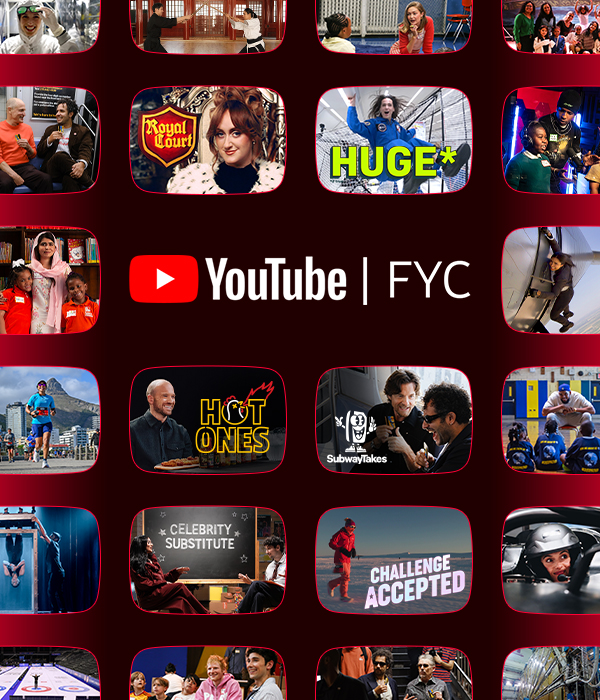
Puck sponsors include YouTube, presenting six Primetime Emmy®-eligible series.
HOT ONES •
CHALLENGE ACCEPTED • ROYAL COURT SUBWAYTAKES WITH KAREEM RAHMA • CELEBRITY SUBSTITUTE • HUGE* IF TRUE
Only on YouTube: Sean Evans, Brittany Broski, Kareem Rahma, Julian Shapiro-Barnum, Michelle Khare, and Cleo Abram are producing today's 'must see TV' for millions of viewers around the world. And now, they're on the Primetime Emmy®
ballot for your consideration, too.
Television has a new home. Catch all six series now, streaming on YouTube.
|
|
|
|
Winner!: “Comcast actually made a bid [for WBD] too, but no one thought we were actually gonna get
it. It was kind of like that one friend who always pretends to reach for his wallet after the check comes. ‘No no, Comcast, you can get it next time, bud.’”
CBS jab honorable mention: “They’re so in the pocket for Trump that I heard, next year, Survivor is in the Strait of Hormuz.” |
110 million
Ad-supported premium streaming subscriptions in the U.S., more than double
the 53 million two years ago. [Antenna]
16 percent
Year over year increase in gross domestic box office through today (though still down about 25 percent from pre-pandemic numbers). [Comscore]
137.5 million
Streams for Michael Jackson’s solo catalog the week following Michael’s release in the U.S., up 146 percent from his previous career high of 55.9 million streams—which was set the previous week.
[Luminate/Billboard]
44 percent
Share of Americans 55 and over who consume at least one podcast monthly, up from 38 percent last year.
[Edison Research/Bloomberg]
59 percent
Share of Gen Z viewers who actively subscribe and unsubscribe to streaming platforms to watch a single title. [IGN/Dentsu]
21 million
Subscribers to Crunchyroll, Sony’s anime streaming service, up nearly 25 percent in the past year.
[Sony/WSJ]
Now here’s Eriq Gardner with a special Monday appearance to dissect the Baldoni settlement… |
|
|
|
Lively’s lawyers say the It Ends With Us settlement is just the preface to another battle to recover attorneys’ fees, treble damages, and potentially punitive awards, too. But will a Manhattan judge really apply an untested California law to a conflict on a New Jersey film set? |
|
|
|
I’ve seen plenty of cases settle on the eve of trial. But none quite like Blake Lively v.
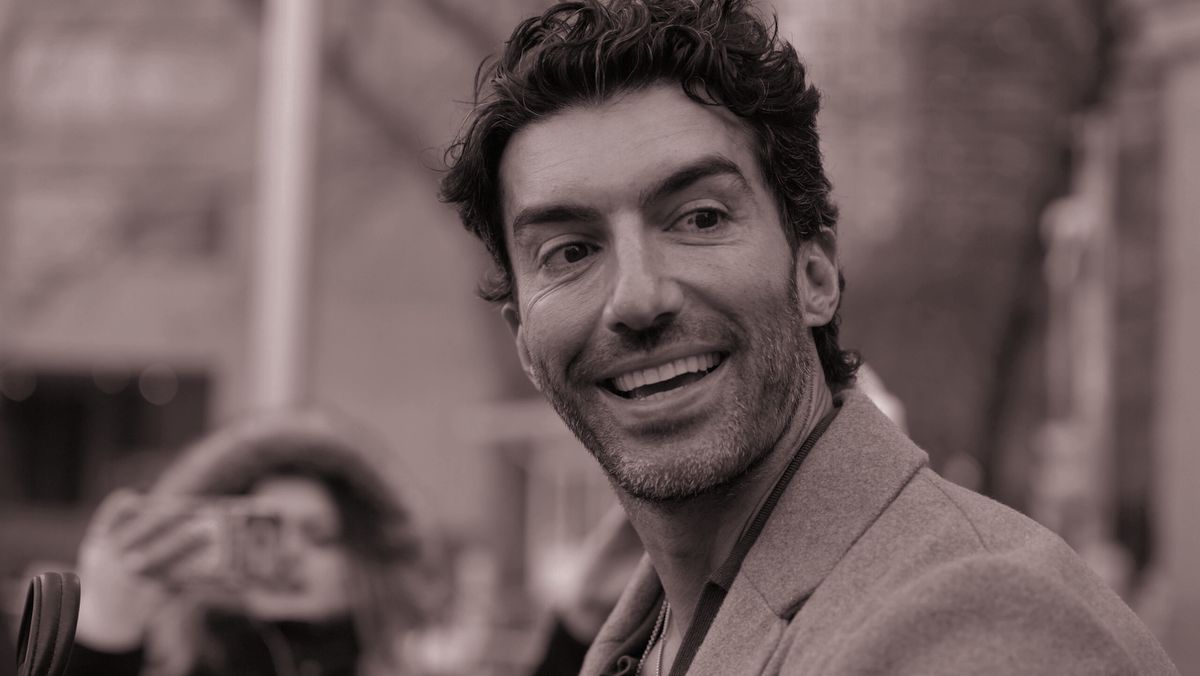
Justin Baldoni, where a deal to end the lawsuit ostensibly about a post-It Ends With Us smear campaign instantly metastasized into a second narrative war over the settlement itself—whether money changed hands, who blinked, and who walked away most wounded. I questioned the wisdom of this litigation from the start, but after Lively sacrificed so much to get this far—turning over documents, enduring discovery, dragging friends and colleagues into the blast radius—it was
strange to witness her getting cold feet two weeks before trial. She may assert otherwise, but that’s my read, at least: Baldoni has come away from the settlement with the upper hand.
Lively’s reps still claim she has a plausible path to emerging victorious in Judge Lewis Liman’s courtroom. But much depends on what she’s now asking of him. Lively’s legal team is hinging much of the remaining case on how the settlement has preserved her ability to win money from
California Civil Code § 47.1, also known as California’s Protecting Survivors from Weaponized Defamation Lawsuits Act, the state’s relatively new #MeToo-era privilege. The statute grants those who report sexual misconduct and then face retaliatory defamation suits the ability to recover attorneys’ fees, treble damages, and potentially punitive awards, too.
In other words, Lively is effectively placing a large bet on a legal theory that has yet to be meaningfully tested. So this week, I
spent time going back and forth with her legal team, including Boies Schiller partner Sigrid McCawley, pressing them on what exactly they are trying to accomplish, why they made this gamble, and why they nonetheless view the outcome as a victory. I can’t say they persuaded me, but their explanation is worth hearing. |
Whatever happens from here, McCawley told me, the effort was worthwhile. “The goal was really to expose this
horrific online retaliation campaign that came as a result of a woman standing up for herself and others in the workplace,” she said. “So that has been done. That has been accomplished.”
Actually, I found this the least persuasive part of the argument. Yes, there were revelations buried in the unsealed summary judgment exhibits, but there was never any full presentation of what those documents supposedly proved—no cross-examination, no narrative construction, no real contextualization.
That’s what trials are for. Indeed, it’s what Judge Liman himself emphasized when weighing the dueling summary judgment motions.
And if the evidence were truly as devastating as advertised, why not put it in front of a jury? McCawley declined to discuss the settlement deliberations, citing mediation privilege and the need to protect those communications. Fair enough. But one must inevitably conclude that Lively’s team weighed the risks of a trial and saw enough potential downside ahead to
seek another path. There’s no shame in that decision. Still, it’s hard to spin abandoning the trial they demanded as an unequivocal triumph.
Nevertheless, McCawley agreed with my assessment that Lively had essentially taken the narrower case that Liman left standing—remember, he tossed many of the sexual-harassment claims on technical grounds while allowing a retaliation-focused trial to proceed—and repackaged it into a § 47.1 motion, which likewise centers on retaliatory
litigation and speech. “It streamlines it,” McCawley told me.
I can see some logic there. The move sidesteps a few thornier defenses—like whether Baldoni’s camp
had motives beyond retaliation for its public messaging—and perhaps spares both Lively and husband Ryan Reynolds some deeply uncomfortable hours on the witness stand. Instead of relitigating the entire It Ends With Us production saga, the focus shifts squarely to whether Baldoni’s side should face consequences for initiating legal action against her.
The problem, as I see it, is that the § 47.1 gambit would have been stronger had Lively actually gone
through with the trial. The California statute requires, among other things, that the underlying complaint of sexual misconduct be made without malice—in other words, that Lively had a reasonable basis for raising concerns about what happened on set, rather than using those allegations as leverage to seize creative control of the film. But by settling before trial, there was never any factual finding on that central dispute. Nor was there any meaningful assessment of damages, which makes the
request for trebled compensatory damages and a punitive award feel, at least for now, somewhat aspirational.
McCawley’s response was essentially that trials aren’t always necessary for fee-shifting statutes to bite. She pointed to anti-SLAPP proceedings, where prevailing parties routinely recover fees without a jury verdict, and floated the possibility of an evidentiary hearing to resolve any lingering factual disputes—a sort of mini-trial by another name. She also directed me to a
notable line in the parties’ joint settlement statement, where they acknowledged that Lively, with respect to her workplace complaints, “deserved to be heard.” McCawley argued that this language itself supports the idea that Lively had a reasonable basis for speaking up. |
|
|
|
A MESSAGE FROM OUR SPONSOR |
Puck sponsors include YouTube, presenting six Primetime Emmy®-eligible series.
HOT ONES •
CHALLENGE ACCEPTED • ROYAL COURT SUBWAYTAKES WITH KAREEM RAHMA • CELEBRITY SUBSTITUTE • HUGE* IF TRUE
Only on YouTube: Sean Evans, Brittany Broski, Kareem Rahma, Julian Shapiro-Barnum, Michelle Khare, and Cleo Abram are producing today's 'must see TV' for millions of viewers around the world. And now, they're on the Primetime Emmy®
ballot for your consideration, too.
Television has a new home. Catch all six series now, streaming on YouTube.
|
|
|
|
Maybe. But again, this remains an untested statute, and there’s simply no clear precedent for how Judge Liman will approach it. The first time he encountered § 47.1, he effectively punted, telling Lively that she could
pursue the issue later if she wished. Now she’s making it the centerpiece of her strategy—without anyone really knowing how the law operates in practice, or whether it ultimately operates here at all. (On Monday, after Lively’s lawyers requested further briefing, the judge told the parties he didn’t need it at this time.)
That’s because there are still substantial threshold questions lurking beneath the surface. A New York federal judge asked to apply a California retaliation statute to
fallout stemming from a New Jersey film shoot could easily conclude the law doesn’t reach that far. Liman’s own prior rulings offer a mixed scorecard on the jurisdictional front. And for the true legal nerds: There’s the very real possibility that § 47.1 collides with the Noerr-Pennington doctrine, which broadly protects petitioning activity—including, potentially, the act of filing a defamation lawsuit like the one Baldoni tried. Imagine the irony if this entire saga ends not with a sweeping
#MeToo victory, but with a court declaring California’s new survivor-protection statute unconstitutional. |
But perhaps the strangest aspect of the settlement—and certainly the least remarked upon—has been the
agreement barring either side from appealing Judge Liman’s forthcoming ruling. What exactly was the point of that? McCawley’s answer was essentially prophylactic: No appeals means no prolonged chase for the money. Fine. But Lively’s co-counsel Michael Gottlieb recently told Matt Belloni on The Town that “this litigation has
never been principally about the cash.”
So if it’s not the money, why lock yourselves out of appellate review? My prediction: Liman awards Lively some portion of her fees tied to defending against Baldoni’s claims in the case’s early stages, while rejecting the more ambitious asks—trebled damages, punitive damages, the truly eye-watering numbers. Even that outcome, however, would hardly seem to justify the tens of millions reportedly burned on this legal crusade. And if things go
worse—if Liman not only pares back the recovery but concludes that § 47.1 runs afoul of constitutional protections—are we really supposed to believe that Lively’s team wouldn’t wish to appeal? Do you think they’d watch California’s shiny new #MeToo statute get blown up and simply move on?
Nick Shapiro, who handles P.R. for Lively’s camp, jumped in at that point in the conversation with the political argument. Consider the optics, he said: What if Baldoni, the self-styled
male feminist, became the man who helped strip legal protections from women who report misconduct? “How do you think that’s going to go over?” he asked.
It’s a fair enough point as pressure campaigns go, but it’s not a legal argument. And the quietly damning thing about that exchange is what it reveals about the bind Lively’s team now finds itself in: After two-plus years of insisting this was about accountability, facts, and what actually happened on that New Jersey set, their clearest
path forward runs not through a courtroom, but the court of public opinion. Which is, of course, exactly where this whole thing started. |
Add Kevin Hart’s Hartbeat to the list of celebrity-fronted production companies that likely
won’t survive the collapse of Peak TV. [Bloomberg]
Are you an out-of-work screenwriter taking gigs helping A.I. models understand how humans think and act? If not, you might be soon.
[Wired]
Now that the Writers Guild’s own staff has ended its labor standoff, the only logical move is to reduce jobs by 20 to 30 percent, just like the studios did after the WGA walked out.
[L.A. Times]
Someone please make the secret 43-year-old Larry David script. [N.Y. Times]
Adam Silver extracted
$76 billion from media partners for an NBA product with many problems. [Atlantic]
Reese Witherspoon, Sheryl Sandberg, and the “girlbossification” of A.I.
[The Cut]
“I thought about killing him.” On the occasion of Ted Turner’s death, revisit Kim Masters and Bryan Burrough’s epic 1997 Vanity Fair piece on the mogul’s feud with Rupert Murdoch.
[VF] |
My Thursday assessment of Josh D’Amaro’s first Disney earnings call and
mission statement drew some interesting responses…
“Surprising to see you so positive on Josh’s corporate-speak mishegas. ‘One Disney’ sounds like something the trust-fall facilitator would say at a midlevel retreat, not a real strategy.” —A former Disney executive
“How long have we been talking about the super-app for everything Disney? Wasn’t that Go.com??” —A longtime Disney executive
“This is amazing in that it misunderstands both engineering and
product. Just because you want to get people into a 360-degree app doesn’t mean that they want to do it, or that it meets their needs from a UX standpoint. Separately, Disney+ remains a video player with only the most modest algorithmic or insights-driven merchandising and was built on the inferior [MLB Advanced Media] tech stack. The cost and complexity of transforming it into something else—if that’s even possible—is enormous. Even then, what’s the product vision? Oh right, see above.” —A
non-Disney executive |
About a month from release, Universal’s ‘Disclosure Day’ has an awareness problem, according to the
latest early tracking chart from The Quorum… |
Correction: Chris Rock was replaced by Nate Bargatze as a judge of
the Lego-building contest at Katzenberg’s WNDR conference. Apologies.
Have a great week,
Matt
Maya Tribbitt contributed research for this issue.
Got a question, comment, complaint, or a Byron Allen–themed listicle for BuzzFeed? Email me at Matt@puck.news or call/text me at 310-804-3198. |
|
|
|
Puck fashion correspondent Lauren Sherman and a rotating cast of industry insiders take you deep behind the scenes of
this multitrillion-dollar biz, from creative director switcheroos to M&A drama, D.T.C. downfalls, and magazine mishaps. Fashion People is an extension of Line Sheet, Lauren’s private email for Puck, where she tracks what’s happening beyond the press releases in fashion, beauty, and media. New episodes publish every Tuesday and Friday. |
|
|
|
Ace media reporter Dylan Byers brings readers into the C-suite as he chronicles the biggest stories in the industry: the future
of cable news in the streaming era, the transformation of legacy publishers, the tech giants remaking the market, and all the egos involved. |
|
|
|
Need help? Review our
FAQ page or contact us for assistance. For brand partnerships, email ads@puck.news.
You received this email because you signed up to receive emails from Puck, or as part of your Puck account associated with {{customer.email}}. To stop receiving this newsletter and/or manage all your email preferences, click here. |
Puck is published by Heat Media LLC. 107 Greenwich St., New York, NY 10006 |
|
|
|
|