 |
|
Welcome back to What I’m Hearing. I’m still on vacation, coming at you from the WiFi-enabled Vista Lodge of my undisclosed mountain retreat.
I’m trying to stay away from non-Olympics news, but readers know I love writing about Yellowstone and Taylor Sheridan, and TV Line reported today that Michelle Pfeiffer and Kurt Russell are starring in a new “spin-off.” The story left a few WIH readers confused because there was no mention of the original Yellowstone cast, and it was unclear if Russell is stepping in for the supposed Matthew McConaughey role. So, to clarify:
- Pfeiffer is indeed nearing a deal to star in a Sheridan show tentatively titled The Madison that will likely (but not for sure) be connected to Yellowstone. Russell is interested but not close to a deal; he’s got a potential conflict with season 2 of Monarch: Legacy of Monsters.
- That’s a separate show from the planned Costner-free Yellowstone follow-up series that will pick up where Sheridan leaves off in the final batch of episodes premiering in November, and it will indeed feature Yellowstone O.G. stars Cole Hauser, Kelly Reilly, and Luke Grimes, whose deals are nearly done.
- The confusion likely stems from Pfeiffer at one point being interested in the follow-up show, but now she’s doing The Madison. McConaughey’s involvement in the follow-up was never a sure thing, and at this point I’m told he’s probably out.
|
| OK then! Now I’ll go back to the pool and turn things over to Eriq Gardner, who’s got insights into today’s NFL Sunday Ticket shocker, the Venu sports streamer, and the Hamptons’ least discreet party host, Fanatics C.E.O. Michael Rubin…. |
|
|
- Venu’s life and death foretold…: Everyone’s fixated on the legal scuffle over Warner Discovery’s failed bid to match Amazon for NBA rights, but another sports broadcasting brouhaha is heating up. I’m referring to FuboTV’s lawsuit over Venu (née Spulu), ticketed for a crucial evidentiary hearing in New York federal court next week. Fubo wants to block Disney, WBD, and Fox from launching their joint streamer. The hearing’s lineup includes 21 live witnesses, with U.S. District Judge Margaret Garnett also set to hear taped depositions from top execs including Disney C.E.O. Bob Iger, Fox Corp. C.O.O. John Nallen, and ESPN chief Jimmy Pitaro.
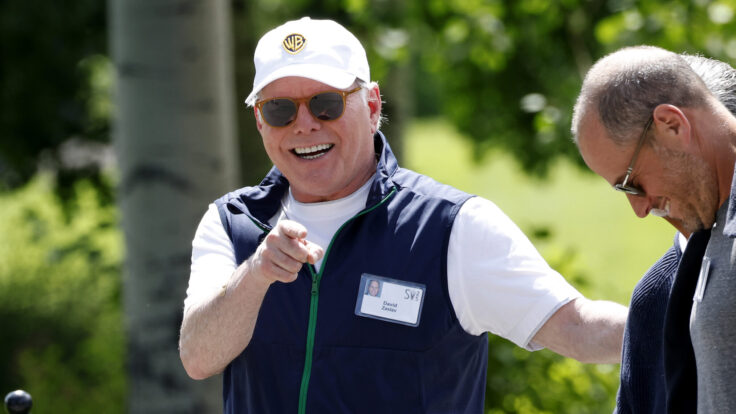
The courtroom drama promises to be revealing, and might even illuminate how Disney and Fox reacted when WBD C.E.O. David Zaslav lost those NBA rights, which significantly devalues his contribution to the venture (and which, of course, was a big reason why NBCUniversal agreed to pay $2.45 billion a year for a version of the current WBD package). Already, new details about the operational structure of Venu are pouring into the public record. For instance, a firewall has been set up to stop Disney, Fox, and WBD from sharing competitively sensitive information as they each negotiate with leagues.
Additionally, the partners have agreed that Venu—which will cost $42.99 a month—will not host exclusive content. And here’s the kicker: Venu isn’t here for the long haul. The streamer is designed to die. “Venu is finite, with a nine-year term,” the defendants tell the judge.
- Real lawyers of Beverly Hills: The criminal trial against Tom Girardi kicks off this Tuesday. Familiar to Bravo fans and members of the California Bar alike, Erika Jayne’s ex faces serious charges of embezzling settlement funds meant for clients, some of whom suffered the tragic loss of loved ones in a plane crash. Girardi, once a towering figure in California legal and political circles, is now 85 and possibly suffering from dementia, and his mental fitness became a major plotline in pretrial proceedings (and in recent seasons of Real Housewives of Beverly Hills), even eclipsing the question of Girardi’s main defense. His lawyer, Charles Snyder, unsuccessfully pleaded for more time to prepare, leaving observers to speculate about the defense’s approach.
But from what I gather, Girardi’s strategy may involve downplaying the commingling of personal and professional funds, arguing there were no direct falsehoods to clients, while also employing a classic defense tactic: blaming a colleague. Specifically, Snyder points to Chris Kamon, the C.F.O. of Girardi’s old law firm, who is facing charges of his own. Snyder suggests it was Kamon who cooked the books and committed covert thefts, all while a cognitively impaired Girardi was kept in the dark about his firm’s inner workings. This defense hinges on finding truly open-minded jurors, so the voir dire process will certainly dissect their familiarity with The Real Housewives.
|
|
|
| We’re in the midst of a particularly legally charged era in sports, from Warner Bros. Discovery sparring with the NBA over TV contracts to trading card companies embroiled in rights battles. To wit: This week, NCAA lawyers proposed a hefty $2.8 billion settlement, plus TV revenue, to compensate college athletes who were previously restricted from endorsements. Meanwhile, a federal court found that a $335 million settlement for MMA fighters was insufficient, setting the stage for a trial later this year as fighters claim that UFC’s acquisitions of rivals like the World Fighter Alliance, World Extreme Cagefighting, Pride, and Strikeforce suppressed their earnings. Bottom line: There are a lot of big legal judgments being handed down these days.
The biggest drama, of course, centers on the recent $4.7 billion that a jury decided the NFL should pay for allegedly violating antitrust laws by selling its Sunday Ticket package at an inflated price—a monumental penalty that came under scrutiny. Today, Judge Philip Gutierrez scrapped the verdict. The NFL claimed a “runaway jury” overlooked expert testimony and misapplied economic models, resulting in a supposed $191.26 per subscription “overcharge.” The judge agreed, making the stunning determination in a huge 16-page order (read here) that the damages award was not based on “evidence and reasonable inferences” but rather something more akin to “guesswork or speculation.”
But there’s more to this situation I want to underscore. It wasn’t just the staggering sum that was significant, but the revolutionary conclusion that league owners conspired to fix prices. The jury’s remarkable verdict had the potential to reshape the economics of sports broadcasting by discouraging a league-wide pooling of rights in favor of intraleague competitiveness, perhaps meaning a greater number of smaller deals with more licensors. The verdict could also have incentivized further lawsuits, including, potentially, one against the NBA over its recently inked deals.
That still might happen, but in today’s order, Judge Gutierrez was less than impressed with the two economists that the class action lawyers put forward at trial. In particular, Dr. Daniel Rascher testified about an alternative model that operated like college sports, where individual teams or divisions licensed rights to broadcast games. The judge struggled to figure out how exactly this would work and whether it was truly feasible. Ultimately, the judge decided that the jury should never have heard from Rascher, and that his necessary exclusion makes it “impossible for a jury to determine on a class-wide basis that Sunday Ticket subscribers would have indeed paid less in the absence of Defendants’ anticompetitive conduct.”
So, what’s next? Of course, a high-stakes appeal is inevitable. Meanwhile, despite the setback for plaintiffs, don’t be surprised to see new litigation targeting the NFL’s more recent Sunday Ticket deal with YouTube TV. Over the last few weeks, I’ve learned that the plaintiff lawyers were awaiting Judge Gutierrez’s final judgment. Now, there’s no holding back, and these class action lawyers may attempt to dig into the offensive playbook, if merely to strengthen their position in any upcoming settlement discussions. And should new cases arise alleging conspiracies among league owners over TV rights, it’s clear that plaintiff lawyers will need to think much harder about the economic models and experts they employ. |
|
|
| Earlier this week, I learned of a particularly newsworthy development in another high-stakes legal game—the one that Fanatics C.E.O. Michael Rubin has been playing as he builds his sports merchandising empire. Rubin, of course, is perhaps best known outside the industry for his annual, celebrity-stuffed “white party” in the Hamptons. In the sports business, however, he’s better known for his aggressive business practices, such as snatching away Topps’ exclusive baseball card licensing deal with the MLB, forcing Michael Eisner to sell the company to Fanatics. More recently, Rubin did essentially the same thing with the NFL Players Association and collectibles company Panini… except Panini fought back.
On Tuesday, a verdict came down from a secret arbitration, finding the NFL Players Association in breach of contract and ordering the union to pay $7.8 million to Panini. Although neither Fanatics nor Rubin were parties in this arbitration, Panini also hired none other than David Boies to pursue a sweeping antitrust and tortious interference case against Fanatics in federal court. The arbitrators, led by the famed Kenneth Feinberg, found no evidence of collusion, but did say that Fanatics took aggressive steps to reduce its rival’s competitiveness, such as poaching employees, making acquisitions, and signing promising quarterbacks not yet in the league to exclusive contracts. It’s a major setback for Rubin as he fights claims that he’s trying to monopolize the market. (In a separate case on Monday, Fanatics also faced questions at a federal appeals court about Rubin poaching a former executive who had a non-compete deal with DraftKings.)
This whole Panini drama kicked off back in 2021, when Fanatics muscled in to replace the Italian conglomerate as the NFLPA’s go-to partner for trading cards. At the time, Fanatics cut a deal with the NFLPA for the right to feature players’ names and images while Panini still had five years left on its contract. But under the watch of Lloyd Howell, the NFLPA’s executive director, the association ditched Panini, citing the exodus of Panini’s brain trust to Fanatics—a move Panini was none too pleased about, igniting a year-long brawl culminating in a three-day hearing before an arbitration panel.
The final ruling (read it here) concluded that the NFLPA’s termination is indeed invalid. Thanks to the decision, Panini has been awarded $7.8 million for the NFLPA’s breach. This is a stunner for a couple of reasons. For one, it’s usually the unions shaking the tree, making noise about labor rights or pushing for reform. But here, the NFLPA found itself on the defensive, slammed with claims that it was merely puppeteering for Fanatics. Panini insisted Rubin was the mastermind behind axing its contract prematurely.
This clash should catch the eye of the wider entertainment industry, thanks to a quirky clause in the Panini/NFLPA licensing contract that allowed for termination over major shifts in the Italian company’s executive suite. This obscure stipulation became the heart of the dispute, with Panini arguing that the termination was just a pretext, and that Fanatics shouldn’t reap any rewards from its executive raid. The arbitration sought to nail down what exactly counts as a “material change,” while also deciding who gets to mint those coveted football cards.
The arbitrators concluded that Panini didn’t “suffer” executive management losses that qualified as a material change because of the steps it took to retain talent and because the defections weren’t high-level enough in the context of a 10-year deal worth hundreds of millions of dollars. The arbitrators also didn’t see harm to the NFLPA, which had responded to the case by demanding Panini pay the union more than $171 million for continuing to produce cards over the union’s objection.
I spoke to Boies over the phone about the outcome. Later, he emailed, “The unanimous decision of the arbitrators confirms what we have said from the beginning: The NFLPA’s termination of its contract with Panini violated its legal obligation to Panini, its moral obligation to fans and collectors, and its fiduciary duties to its members.” Further, Boies said: “The PA’s actions cost its members millions of dollars in damages and lost royalties. The damages would have been many times greater except for Panini’s commitment to protecting fans and collectors, and the players themselves, by continuing to supply cards despite the PA’s purported termination.” (A spokesperson for the NFLPA declined to comment.) |
|
|
Interesting stuff, thanks Eriq. I’ll be back on Monday.
Matt
Got a question, comment, complaint, or sports league you want to sue? Email me at Matt@puck.news or call/text me at 310-804-3198. |
|
|
|
| FOUR STORIES WE’RE TALKING ABOUT |
 |
| TV News Tremors |
| Uncovering the latest jolts to the cable news landscape. |
| DYLAN BYERS |
|
 |
|
 |
| A GE Micro-Scandal |
| Why former GE executives have it out for C.E.O. Larry Culp. |
| WILLIAM D. COHAN |
|
 |
| Harris’s Big Hire |
| A close look at Kamala’s pick to lead her campaign policy team. |
| JULIA IOFFE |
|
|
|
|
|
 |
|
|
|
Need help? Review our FAQs
page or contact
us for assistance. For brand partnerships, email ads@puck.news.
|
|
You received this email because you signed up to receive emails from Puck, or as part of your Puck account associated with . To stop receiving this newsletter and/or manage all your email preferences, click here.
|
|
Puck is published by Heat Media LLC. 227 W 17th St New York, NY 10011.
|
|
|
|