Welcome back to What I’m Hearing, which, you may notice, looks a little refreshed today. Much like your face, our private emails have been nipped and tucked for the new year. But unlike your plastic surgeon, we actually want constructive feedback. Just click here to take a short survey. One lucky participant will win a collector’s item Ariana Grande Wicked doll with the unfortunate Wicked.com porn website on the box. (I’m not joking; I’ve obtained a few, and I’m giving them as gifts to people on my “nice” list.)
Programming note: You may be circling back in the new year, but WIH will be up and running during the break. I’ll have my usual Villain and Hero of the Year issues, plus some surefire 2025 predictions, and whatever news justifies discussion. Email me if you’re bored of your family!
Holiday P.S.A.: Give WIH and the rest of Puck to that special someone. Just click here. Got a news tip or an idea for me? Just reply to this email or message me anonymously on Signal at 310-804-3198.
|
|
|
|
A MESSAGE FROM OUR SPONSOR
|
|
FOR YOUR CONSIDERATION: Max presents the HBO Original INDUSTRY. As Pierpoint looks to the
future and takes a big bet on ethical investing, Yasmin, Robert, and Eric find themselves front and center in the splashy IPO of Lumi, a green tech energy company. Since leaving Pierpoint, Harper is eager to get back into the addictive thrill of finance and finds an unlikely partner in Future Dawn portfolio manager Petra Koenig. Don't miss the series GQ calls “THE BEST SHOW ON TV”. Now streaming on MAX.
|
|
|
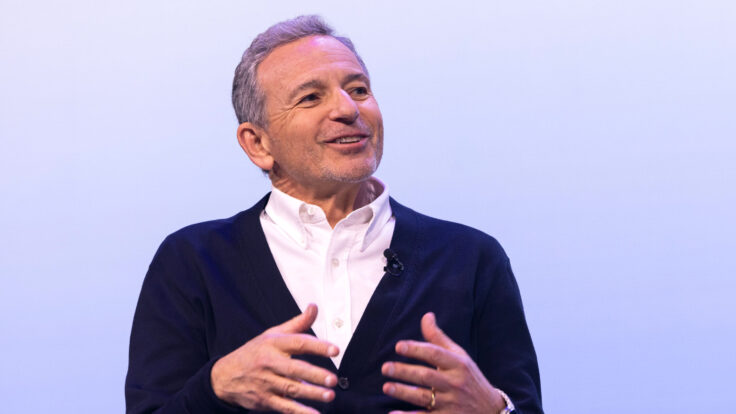
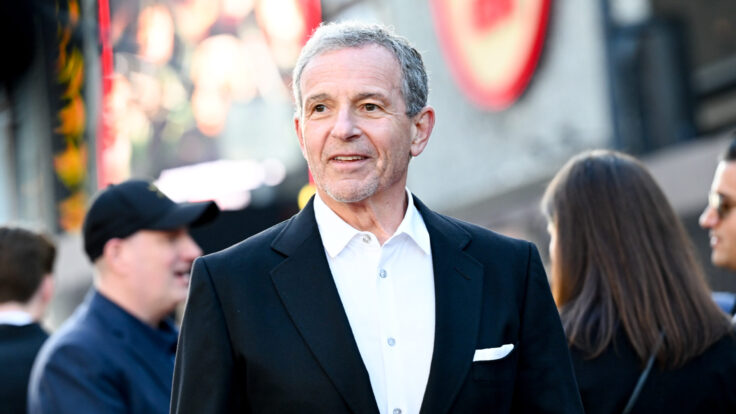
- Chapek walked so Iger could run: Man, if former Disney C.E.O. Bob Chapek had hair, he’d be pulling it out this week. Remember, Chapek’s demise began when he inflamed employees by publicly flip-flopping on a culture war issue, Florida’s “Don’t Say Gay” bill. And now, in just a few days, his predecessor/successor Bob Iger has agreed to pay Donald Trump $16 million to settle a very winnable defamation case and publicly defended the axing of a small transgender storyline from Win or Lose, a show produced by Pixar—the same Pixar whose employees called out Chapek for not staying “true” to Disney’s “values.” Regardless of whether Iger’s right to order the cuts—given the potentially harmful backlash, I think it’s a cynical but probably correct move—where’s the employee outrage now? Nothing public so far. Iger is truly Teflon.
More: I checked in with two sources at Pixar, one of whom told me the frustration there is very real, but they feel a lot less empowered to say anything, given the Trumpy political climate, the division’s more perilous financial situation, and the layoffs they endured earlier this year. Plus, Iger does get the benefit of his stature at the company. But for how long? Trump hasn’t even retaken office yet.
- Speaking of politics…: Is anyone else depressed that Barack Obama’s foray into Hollywood has taken a hard turn toward the hacky? Per a logline floating around town, the Obamas’ Higher Ground is attached to a Fox film project called Merry Ex-Mas, whose logline reads: “Santa Claus and Mrs. Claus are heading toward divorce court, including a custody battle over Christmas.” Yeah… So the 44th president, whose company mission statement declared it would be “creating content that inspires and encourages people to think differently about the world,” is now reduced to hoping a second-rate Disney label will greenlight a lame holiday rom-com that sounds like something John Goodman passed on in 1996? Got it.
- How to leave CAA before CAA leaves you: Many CAA agents who joined the company via the acquired ICM Partners kinda know they’re dead men (and women) walking. Two years after the transaction closed, with many of the desired clients already assimilated into the CAA Borg, rafts of the ICM crew are being fired, or pushed out, or are suddenly deciding they’ve always wanted to be managers. The content recession and the end of TV packaging certainly haven’t helped.
That’s why it’s interesting what happened this week with Doug Johnson, an ICMer who managed to turn the tables on the town’s most powerful agency and defect with a major client, Quinta Brunson. Per multiple sources, Johnson, a veteran manager turned agent, was being marginalized from Brunson, the Emmy-winning creator and star of Abbott Elementary. That’s a standard CAA move: Surround an agent’s hot client with a “team” of agency loyalists that effectively neuters the original agent, minimizing his or her responsibilities (and attributed commissions). The agent then becomes boxed out, weakened in clout and compensation—and, ultimately, expendable. All the major agencies practice a version of this move under the guise of “full service,” but CAA is almost certainly better at it than rivals.
Anyway, despite repping a top TV creator and actor (Brunson is, amazingly, still just 34), Johnson got the runaround on a new deal, a shitty bonus, and his name was even taken off some booking slips, per two sources. But rather than accept his fate, as many ICMers have done lately, last week he called Richard Weitz, co-president of rival WME, and negotiated a tentative deal for himself on the phone. Brunson then surprised her CAA “team” by following Johnson out the door. (CAA and WME declined to comment; usual disclosure: WME reps Puck but not me personally.)
- A Bananas Apple decision: Apple TV+ and the production outfit Fifth Season have gone tens of millions of dollars overbudget on the second season of Ben Stiller’s Severance. So naturally, they just signed up to work together again?!? And with David O. Russell, a filmmaker more monomaniacal and less fiscally responsible than Stiller. Amazing stuff. The famously crazy Russell, last seen punching Sony executive Sanford Panitch at a party, is set to direct and executive produce the fittingly titled drama series Bananas, with Oscar Isaac and Ana de Armas, from creator Carolina Paiz. It’s only a development deal, and Severance Season 2 is said to have turned out fine, despite the overages, but man, fool me once…
- Box office over/under: Paramount’s Sonic the Hedgehog 3 will almost certainly open bigger domestically than Disney’s Mufasa: The Lion King, but will Sonic beat the $58 million tracking? I’ll say yes, given the goodwill from the first two movies and the surprisingly strong reviews. I’ll also take the under on $50 million for Mufasa, which trended lower today after the weak reviews.
|
|
Now a look at a brewing box office dispute…
|
|
|
|
Deploying Dwayne Johnson’s ‘Red One’ to Prime Video after only 27 days has angered the theatrical industry and raised a pertinent question that will define this next hybrid era: Can Amazon leverage movie theaters more than theaters can leverage Amazon?
|
|
|
Question: Do you consider Amazon a friend or foe of movie theaters? Gotta be a friend, right? For most of this year, Prime Video and its studio division have been positioning themselves as a savior of sorts to the theatrical industry, with plans to release dozens of big-budget movies in cinemas over the next few years. Amazon certainly pitches its theater plans when it’s trying to lure projects from Netflix and other buyers. And if you talk to theater executives, they’re counting on Amazon’s ambitions to compensate for pullbacks elsewhere, particularly in non-“event” films.
But, man, Amazon is a huge question mark, one whose motives and ambitions will be a driving narrative of the movie business in 2025. Consider what’s going on with Red One. Amazon MGM Studios has been jumping up and down to declare the Dwayne Johnson- Chris Evans holiday movie the most viewed in the history of Prime Video. Not mentioned in those press releases: The $250 million Santa kidnapping extravaganza landed on the service just 27 days after a theatrical debut that was buoyed by a massive, $100 million marketing campaign. That’s a dream for a film studio, which can reap the benefit of the same ad spend to lure butts to seats and eyeballs to TV screens. But it’s a far more compressed window from multiplexes to subscription streaming than is typically tolerated by theaters. If Netflix, for instance, proposed such a release schedule for a wide release, the major chains would likely extend a double middle finger and refuse to play the movie.
Amazon distribution chief Kevin Wilson notified the big chains in advance of the short window on Red One. And, faced with a strike-hobbled slate of Hollywood fare, they agreed to take the film, which has so far grossed $94 million in North America—pretty poor, given its cost and the full-freight marketing. Despite acquiescing, however, the theater owners weren’t thrilled about this arrangement, per multiple sources, especially if it portends how Amazon will act in the future. Nor was Michael O’Leary, the head of the National Association of Theatre Owners, the lobbying group for exhibition. “I don’t think that is a sustainable model,” O’Leary told me this week. “I can tell you it’s not a sustainable model. It’s not one that we would support.”
Granted, Red One was in a somewhat unique situation. Originally greenlit for streaming, Amazon then followed industry sentiment and shifted toward theaters for big-budget titles. That meant a November 15 theatrical release, bypassing premium video-on-demand, and going direct to Prime Video on December 12, just in time for the Christmas deluge, putting it up against the Lindsay Lohan and Chad Michael Murray holiday dreck on Netflix, the Hallmark/Lifetime fire hose of Bulgaria-shot cheapo fare, and Elf on whichever platform will pay Warner Bros. some quick cash. Against this competition, Red One has been huge. Not a shock.
But it is a cheat, and a big pivot from what the traditional studios are doing. Universal, which was first to break the 45-day theatrical window during Covid, initially put movies on P.V.O.D. after 17 days, if they opened to less than $50 million (31 days for bigger movies), then to Peacock after 45 days. Now Uni typically holds movies a little longer, waiting 75 to 120 days before going to Peacock. Movies like Conclave from Focus, its specialty label, still arrive on Peacock after around 45 to 60 days.
Other studios use flexible formulas, usually based on how the films perform in theaters. Warner Bros.’ Beetlejuice Beetlejuice, a hit in the U.S., appeared on P.V.O.D. after 33 days, then landed on Max after 92 days. Horizon: An American Saga: Part One, which was, uh, not a hit, went to P.V.O.D. after just 19 days, but still waited 57 days to premiere on Max. Disney, for its bigger movies, maintains a 60-day theatrical window before sending movies to P.V.O.D. or S.V.O.D. platforms.
Disney is the biggest theatrical player, and it also doesn’t market any other windows until more than six weeks after the release in theaters. That’s key, because moviegoers who use Fandango or other ticketing platforms will sometimes be presented with an option to buy a seat at their local theater or a rental for the same movie when it’s available—often mere weeks or even days later. Given the ancillary costs and hassles of a theater experience, it basically begs for a cost-benefit analysis— How much do I really want to see this movie now?—that’s not great for theaters, of course.
Anyway, for O’Leary and the theater owners, there’s a big difference between P.V.O.D. (the higher-priced, individual film rentals) and electronic sell-through (iTunes and other film purchases)—both of which are premium offerings with relatively small reach—and the massive S.V.O.D. services, like Prime Video, which boasts more than 200 million customers worldwide, many of whom consider the platform “free” with Prime shipping. For that reason, sending a movie to Prime Video after 27 days is much different than even, say, offering it to P.V.O.D. after 17 days. “I had conversations last week with the folks at MGM-Amazon and have made it very clear that we understand the circumstances about Red One,” O’Leary told me. “But as an industry, we can’t support something like a 25-day window where it goes directly to a streaming service.” (Amazon declined to comment on those talks.)
|
|
Okay, but what, exactly, can the theaters do about this? After all, Amazon would argue that three weeks of exclusivity in theaters is better than zero weeks, and the $94 million Red One has generated domestically is money the theaters would forgo if they drew an arbitrary line in the sand. Most movies have all but exhausted their earning potential after four weekends in theaters, anyway. And even if not, Red One remained on 3,000 screens last weekend despite appearing on Prime Video, and it still generated $4.4 million in U.S. ticket sales. Would it have grossed more if it wasn’t available at home? Maybe. But probably not much more.
|
|
|
Courtenay Valenti, Amazon’s film chief, joined the traditional studios in preaching to the Times this week about how theatrical releases boost viewership on streaming. That’s true—and obvious, given the large marketing spends attached to the theater push. It’s why the industry—Netflix excepted, of course—has mostly retreated from the Covid-era strategy of making pricey movies for streaming only. But the shorter the window in theaters, the bigger that boost for streaming, and that’s what Valenti cares most about, right? Her incentive is to leverage the theaters for her actual business: a global streaming video service that ultimately allows Amazon to sell more toilet paper.
Interestingly, it’s also true that several titles this year, particularly kids’ movies, have held on in theaters despite being available at home—albeit on P.V.O.D., not S.V.O.D. Universal, in particular, notes that it saw little to no cannibalization on Twisters, Despicable Me 4, and The Wild Robot, all of which did decent business in theaters even while available to rent or own. At the same time, the P.V.O.D. window has accounted for $1.5 billion in consumer spend on Universal movies since the model was retooled during Covid, according to the studio. That money helps cushion the blow from flops and pay for more potential blockbusters… to play in theaters.
But that’s kinda not the point, at least not when it comes to the widely available S.V.O.D. platforms. Short windows may not cannibalize individual titles like Red One, but they train audiences to expect speedy delivery to the streamers, which in turn depresses demand for theatrical movies in toto. That was a general lesson of Netflix and all the Covid-era experimentation, and it’s why these non-Netflix studios are maintaining their longer S.V.O.D. windows for movies that have a shot at a theatrical audience. (I’m excluding tiny indies here… and don’t get me started on Lionsgate and its aggressive P.V.O.D. windowing.) Pay a high price for movies in theaters, pay a higher price for movies on demand a few weeks later, or pay only your S.V.O.D. subscription price when the movie arrives there way later: That seems to be a sweet spot compromise for meaningful theatrical releases that both sides can live with.
So, if Amazon attempts to pull a Red One move with Red Two: The Easter Bunny’s Revenge or another big-budget release, would the major theaters refuse to play it? “I do not believe that you are going to have great receptivity to a situation where you’re going straight to an S.V.O.D. after 25 days,” O’Leary told me, choosing his words carefully because he can’t speak for individual members. “I don't think that is going to be something that will work on a repeated basis. And I've conveyed that to the folks at MGM-Amazon.”
|
|
Oof. And remember, theater owners consider Amazon one of the good guys. At the CinemaCon convention earlier this year, Amazon MGM Studios put out a press release with Valenti saying that by 2027, she will release 14 to 16 movies a year that “demand to be seen in the theater.” That would more than triple the Amazon MGM theatrical output this year. Mike Hopkins and Jen Salke, the top Amazon content executives, are expected to attend CinemaCon in March, where Amazon MGM will present to theater owners for the first time and explain why the world’s largest digital retailer really cares about the brick-and-mortar theater experience. It’ll be interesting to see.
Apple, on the other hand, isn’t even pretending to care about movie theaters anymore. O’Leary still calls Apple a “partner,” though he’s as nervous as the rest of his members about this summer’s move to scrap the theatrical release for George Clooney and Brad Pitt’s Wolfs. “When decisions are made that impact the theatrical window after the movie is somewhere in the process, that’s not a positive and constructive way to move forward,” O’Leary told me. “So that has certainly been conveyed. But I also think that they are putting a lot of time and energy and resources into F1.” That’s true, but after that release via Warner Bros. next summer, what then?
Now that the Hollywood studios have, for the most part, reprioritized theaters (unless you’re Clint Eastwood), and Netflix has declared itself a platform for pricey TV movies (unless you’re Greta Gerwig), windowing remains the real battleground. Amazon hasn’t articulated its general theaters-to-Prime Video policy, but if the cheerleading for the Red One numbers is any indication, the strategy will be aggressively weighted toward using theaters to power streaming as quickly as possible.
For multiplex owners, the last thing you want is for the theatrical release to become a quasi-marketing play for streaming—something designed only to reimburse prints and advertising expenses and provide an imprimatur of “theatricality” in service of the home video release, like how film festivals and their fancy logos are leveraged by prestige movies to connote an aura of quality.
Amazon may be positioning itself as the friendly neighborhood streamer to the theater industry, but like Netflix and Apple, it ultimately cares only about its global streaming ambitions, not its ability to make money in a declining business. And that incentive isn’t changing, despite the “commitment” to the multiplex. The question is whether Amazon can leverage theaters to achieve its actual goals more than the theaters can leverage Amazon to serve theirs, and what victory looks like for both sides.
|
See you Monday,
Matt
Got a question, comment, complaint or the name of the voice coach that Jeffrey Katzenberg tried to hire for Joe Biden? Email me at Matt@puck.news or call/text me at 310-804-3198.
|
|
|
|
Hosted by Puck founding partner and Hollywood expert Matt Belloni and The Ringer’s Bill Simmons, covering breaking news and the inner workings of showbiz.
|
|
|
|
A professional-grade, insider-friendly tip sheet from John Ourand, the industry’s preeminent sports business journalist, covering the leagues, agencies, media deals, and the egos fueling it all.
|
|
|
Need help? Review our FAQ page or contact us for assistance. For brand partnerships, email ads@puck.news.
You received this email because you signed up to receive emails from Puck, or as part of your Puck account associated with . To stop receiving this newsletter and/or manage all your email preferences, click
here.
|
|
Puck is published by Heat Media LLC. 107 Greenwich St, New York, NY 10006
|
|
|
|



_01JF0D8JZS3Z6DKT6KQTVFQGHM.jpg "Industry")

_01JF0D8MND4PKG45Q58F76W0JZ.jpg "The Franchise")