Welcome back to What I’m Hearing, and happy Opening Day to the Dodgers, who might finally go 162-0
this season (until I just jinxed them).
Tonight, a look at the renewed push for a federal tax credit to stop the bleeding of film and TV production out of L.A. Plus: details on the Oscars’ big DTLA move, a Wasserman update, Disney’s bad (but not that bad) week, and what Brad Pitt is making on the Tarantino sequel.
Mentioned in this issue: Josh D’Amaro, Matthew Loeb, Brad Pitt,
Bob Iger, Jon Voight, Dana Walden, Donald Trump, Adam Schiff, Larry Ellison, Anne Hathaway, Noah Wyle, David Fincher, Karen Bass, Michael Eisner, Laura Friedman, Josh Kushner, Sylvester Stallone, Alan Bergman, Lin-Manuel
Miranda, Quentin Tarantino, and… a once-in-a-lifetime Disney vacation.
Not a Puck member yet? Just click here. Got a news tip or an idea for me? Just reply to this email, text me, or message me on Signal at 310-804-3198.
Let’s begin… |
- Oscars:
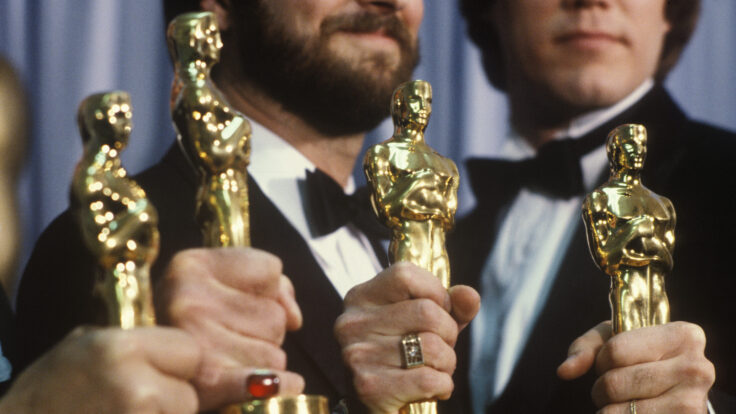
One shitty mall after another: Who’s excited for the Academy Awards’ big move to… the Peacock Theater in downtown L.A.? Home of the Emmys and, at various times, the BET Awards… the American Music Awards… the People’s Choice Awards… MTV’s VMAs… and the freakin’ ESPYs. So no, not special. By bailing in 2029 on the Dolby Theatre at Ovation Hollywood, the show’s home since 2002, the Academy is effectively trading one tacky mall for a slightly less tacky mall—more of a food court, actually, with
a Yard House and a Tom’s Watch Bar instead of the Sephora and Lids in Hollywood. (Though the Peacock name is expected to change as AEG leverages the Oscars to upsell naming rights… get that bid ready, Netflix, nothing would be funnier than “Welcome to the 101st Oscars, live on YouTube from the Netflix Tu-dum Theater at L.A. Live!”).
- More: Now that the Academy has ballooned to 11,000 members, there’s always a long waitlist to snag one of about
3,300 seats at the Dolby, meaning even people associated with nominated films are often shut out. The Peacock holds about 7,000, but the Academy and AEG plan to make it more intimate for the Oscars, so the expectation is that only about 1,000 more tickets will be available. Both the Governors Ball afterparty and the separate Governors Awards ceremony will likely be held at the adjacent JW Marriott hotel, I’m told. Not exactly glamorous, but again, neither is the Dolby complex, despite all those
drapes hiding the Hard Rock Cafe. And at least the Oscars aren’t relocating to the U.K. for a tax credit.
- Wasserman update: The bankers at Moelis have set a bid date in mid-April for those interested in purchasing the agency formerly known as Wasserman (a.k.a. “The Team”), with suitors getting detailed financials this weekend. Like I’ve said, this auction will be quicker than usual.
- Did D’Amaro dodge an A.I.
bullet?: The sighs of relief coming from Disney over the demise of its OpenAI/Sora deal certainly don’t match the “very bad week” narrative that has dominated the media. New C.E.O. Josh D’Amaro probably would’ve liked to see what the company’s $1 billion investment in the A.I. powerhouse might have turned into, but this deal felt rushed and conflicted from the beginning, the sign of an outgoing C.E.O., Bob Iger, wanting to leave a quick digital legacy while
also aligning with a company in which Josh Kushner’s Thrive Capital—where Iger served as an advisor before returning to Disney, and where he is expected to return shortly—is a major investor. Remember, this is the chaotic company whose Sora app initially enabled rampant copyright infringement, including of hundreds of Disney characters. And many Disney executives were skeptical about the guardrails that would be in place to prevent its I.P. from being perverted or otherwise
misused. Now, with Iger gone and OpenAI abandoning Sora, D’Amaro gets a clean slate to craft his own A.I. strategy for Disney.
- Speaking of Iger…: Congrats to Bob, who was named a “Disney Legend” today. Yes, it’ll be a little weird to see a C.E.O. honored at his own company’s fan convention this summer alongside talents like Anne Hathaway and Lin-Manuel Miranda. But we all kinda knew the guy who couldn’t walk away from
Disney the first time wasn’t gonna just disappear now. In fact, Bob was sitting with execs Dana Walden and Alan Bergman at a preview of The Greatest Showman in London tonight. And I doubt he could resist being awarded a title that was never bestowed upon Michael Eisner.
- Box office over/under: Two low-budget horror movies are opening, so let’s instead bet on the second weekend of
Project Hail Mary after its $81 million debut. Tracking has it at about $50 million, per Screendollars, a great hold. I’ll take the over.
|
Now, on to an existential issue… |
|
|
|
Can a federal tax credit for film and TV stem the exodus of productions to the U.K., where
incentives can reduce costs by a third? The U.S. senator from California tells me he’s got bipartisan support, but his plan almost certainly needs the Trump seal of approval… |
|
|
|
This latest federal tax incentive push seems like a total pipe dream, right? Even as individual states have
duked it out for decades for the privilege of stealing Hollywood productions, producers have been praying that the U.S. government would offer a layer of support to stack on top of state and local programs, finally leveling the international playing field. But federally, it’s actually been going in the opposite direction. Even the small Section 181 incentive, which allowed immediate deductions of $15 million to $20 million in production spend in certain cases, expired at the end of
2025.
So now, everyone in Hollywood just accepts that we’re more likely to bump into an industry friend at Heathrow than at Craig’s, and that big-budget studio movies are made mostly in the U.K., where an incentive can return more than 30 percent of the qualified spend, highly flexible and with no cap on the money available. Project Hail Mary, for instance, cost Amazon $248 million to make. But after the U.K. credits, the final net budget was $192 million, according to internal
data shared with me. And unlike in California, above-the-line expenses are eligible in the U.K.
That’s a big deal on a movie like, say, Netflix’s upcoming sequel to Once Upon a Time… in Hollywood, which was shot last year in California. Brad Pitt is making $40 million to star and produce, per several sources, director David Fincher is getting $20 million, and writer-producer Quentin Tarantino was paid more than $20 million for a
one-picture license to make the movie from his script. (Tarantino always retains ownership of his material.) That’s $80 million in above-the-line costs that Netflix couldn’t include in its qualified spend for its California rebate but could have if the film was shot in the U.K. It’s no wonder that in the nearly five years of writing What I’m Hearing, I’ve been waking up earlier and earlier. More than ever, it feels like everyone I need to talk to is on London time.
But lately,
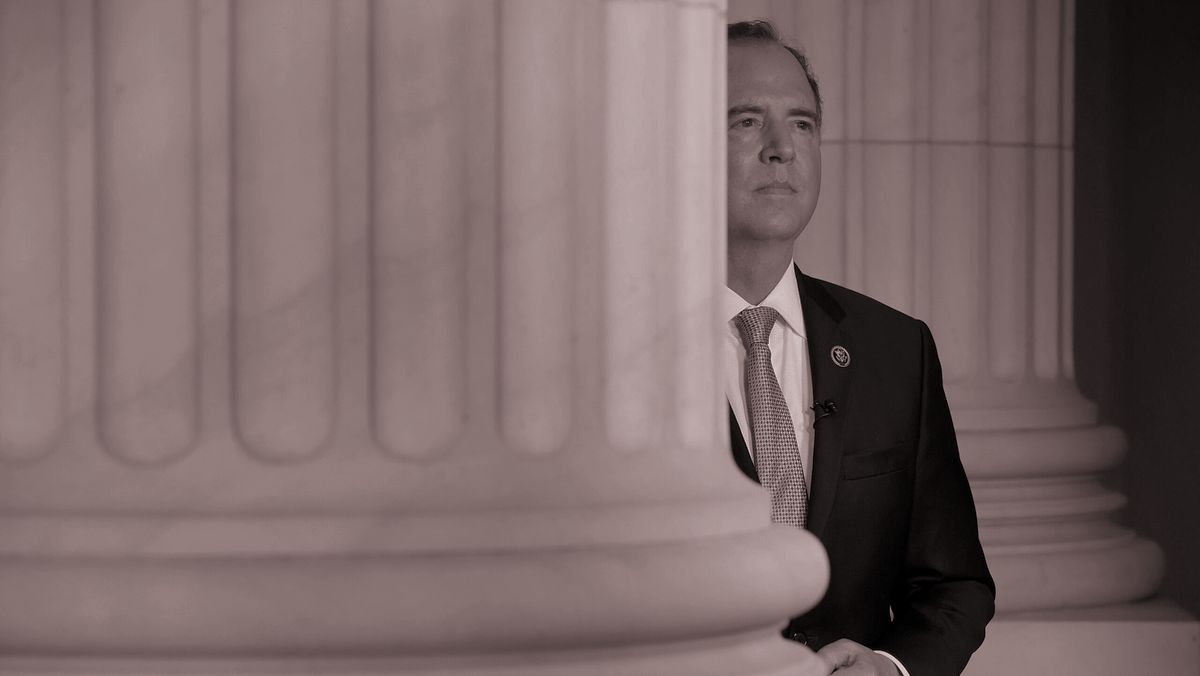
Sen. Adam Schiff and other local politicians have been pushing harder for that federal program on top of the California incentive, which was recently raised to $750 million per year. At a media event in Burbank last week, and in a follow-up appearance on The Town today, Schiff argued for a baseline 15 percent national credit that would be modeled on the
California program, which provides additional incentives for productions that relocate from elsewhere. That last part is great—stealing back some of what the U.K. has taken from the U.S.
It’s hard to know how much of this is lip service in response to the post-Peak TV content recession, the 2023 strikes, A.I., the Los Angeles fires, the affordability crisis… Pick your calamity that has befallen L.A. recently, they’ve all combined to light a fire under a political-executive class that
basically did nothing as the region’s signature industry went bye-bye. Even L.A. Mayor Karen Bass and the famously difficult local film office recently cut fees to film at Griffith Park, which is… nice, I guess, but won’t do much to keep or lure productions. Film incentives used to be super-unpopular politically, but the usual excuses for rejecting them—essentially, why should the government waste money on fancy movie stars?—are much less compelling when talking about an
industry that shed 42,000 local jobs between 2022 and 2024. Once considered elite and entitled, Hollywood is now a charity case.
Add in the hoopla around Donald Trump’s out-of-nowhere promise last fall of a “100 percent tariff” on foreign-made movies—not exactly a declaration of support for a federal incentive, but a sign that the president and his Hollywood “ambassadors” Jon Voight, Sylvester Stallone, et al., are at least
thinking about the issue. For that reason, I think, as well as the local economy troubles, a bunch of other advocacy groups, like the Coalition for American Production and FilmUSA, have joined the MPA and the Association of Film Commissioners International in getting more aggressive. At the AFCI “Studio Summit” conference this week in L.A., enthusiasm around the federal incentive was a hot topic, one attendee told me today. It would create a national floor, at least, instead of 40 different
lotteries in the various states that offer incentives. It would also allow states to compete more aggressively without as much fear of the incentives not paying for themselves in economic activity.
And Congress could structure the federal incentive to focus on workforce training or struggling locations—akin to other incentive programs that have boosted everything from agriculture to semiconductors to green energy. Framing this as an everywhere issue rather than a
Hollywood issue is not only accurate— all but 10 U.S. states have some kind of program—but much more likely to win fans in red states whose leaders often dine out on attacking Hollywood and its politics. |
Despite all this, the prospect of Republican lawmakers ultimately voting for a national film and TV incentive
still seems like a Hail Mary. When I asked three prominent players in the space if they thought a federal incentive would happen, each replied with a version of “highly unlikely” (not on the record, of course). “This has to be bipartisan,” Schiff told me today. “You really can’t do much of anything in the Senate or the House unless you have bipartisan support. So we’re really doing outreach and trying to be flexible in those terms.”
Maybe so, but Schiff’s hearing last week featured
exclusively Democrats and members of the Hollywood choir to whom he was preaching, including U.S. Representative Laura Friedman (Schiff’s replacement in the House when the Burbank congressman ran for Senate), The Pitt star/producer Noah Wyle, and Matthew Loeb of IATSE. “I think there is far more Republican interest in this,” Schiff insisted, telling me that several unnamed lawmakers wanted to attend but couldn’t make it. “What the
Republicans in Congress are basically telling us, though, is they’re waiting for the white smoke from the Vatican. They’re waiting for the presidential tweet saying that he’s supportive.”
Exactly. Until Trump says he’s into a federal credit, it won’t happen. (Schiff told me he’s fine if his name is not on the bill, given Trump’s hostility toward the senator.) Or it won’t happen at least until the Congress flips blue, which may or may not occur in November, and even then, Trump could stand
in the way. Schiff confirmed to me what I’d been hearing about the ongoing shadow lobbying effort: “The president’s own ambassadors to the industry, as I understand it, have been working with the Motion Picture Association to make the case to the president that the very best way to do this is a tax credit that will match what other countries are doing.”
So basically, the entire entertainment industry has to sit and wait around for the president to post his verdict on a potentially
existential issue on Truth Social. Which is probably exactly why Trump brought up the subject of runaway production last fall in the first place. |
Finally… Some fun
feedback…
|
An actor got déjà vu when I described a goal of Disney’s new C.E.O…
“You wrote: ‘Imagine if
D’Amaro can turn Disney+ into a home for not just movies and TV but other interactive elements like shopping, socializing, scrolling, and yes, gaming, all under the Disney brand halo—a real game changer.’ Imagine! Imagine if Josh can be so bold and innovative as to invent Disney.go.com circa 2005!” |
See you Monday,
Matt
Correction: Sam Mendes is directing Sony’s four
Beatles movies, of course, not Sam Raimi, as Kim mentioned on Monday (though many readers would seem to prefer a Raimi version!). Apologies.
Got a question, comment, complaint, or better names for Larry Ellison’s yacht than “The Trump Propagandist”? Email me at
Matt@puck.news or call/text me at 310-804-3198. |
|
|
|
Puck founding partner Matt Belloni takes you inside the business of Hollywood, using exclusive reporting and insight to explain
the backstories on everything from Marvel movies to the streaming wars. |
|
|
|
Ace media reporter Dylan Byers brings readers into the C-suite as he chronicles the biggest stories in the industry: the future
of cable news in the streaming era, the transformation of legacy publishers, the tech giants remaking the market, and all the egos involved. |
|
|
|
Need help? Review our
FAQ page or contact us for assistance. For brand partnerships, email ads@puck.news.
You received this email because you signed up to receive emails from Puck, or as part of your Puck account associated with {{customer.email}}. To stop receiving this newsletter and/or manage all your email preferences, click here. |
Puck is published by Heat Media LLC. 107 Greenwich St., New York, NY 10006 |
|
|
|
|