Welcome back to What I’m Hearing...
Happy MLK day. Thanks to those who asked about the whereabouts of Sunday’s email. A holiday weekend! Remember, my emails come just twice a week, and I respect your inbox. If you want to manage how often you get other emails from Puck, you can easily change your settings here.
Discussed in today’s email: Daniel Kaluuya, Mark Pedowitz, Channing Dungey, Bob Chapek, Dawn Hudson, Joss Whedon, Nina Tassler, Taylor Sheridan, Dick Wolf, and an A-lister’s “life strategist.”
Sponsored by MGM & United Artists 
Who Won the Week: Gary Barber
The Scream executive producer (and one of the great Hollywood assholes) successfully engineered a franchise reboot with a $35 million opening after extricating the title from the ashes of the Weinstein Co. bankruptcy.
The Star and the ‘Life Strategist’
What’s up with Daniel Kaluuya? The Oscar-winning British actor has raised a few eyebrows lately through his association with a guru named Heir Holiness. She’s a self-described “life strategist” and founder and “Head Mistress” for “The International Alma Mater, Blessed University,” which teaches “spiritual self-sufficiency as a foundation for excellence in life and business.”
On her LinkedIn page—which is… quite something—Holiness now lists herself as “Personal Manager for Daniel Kaluuya,” and sources say she was a major presence during the recent production of Nope, the new Jordan Peele movie for Universal. According to one source close to the shoot, several people there were concerned by her behavior. (Kaluuya and Universal declined to comment. Holiness didn’t return my email.)
The Oscars Haven’t Figured Out Their Vaccine Policy
Speaking of Kaluuya, who won his Oscar for last year’s Judas and the Black Messiah, if tradition holds he’ll be invited to present at this year’s ceremony. But the Academy hasn’t yet decided if there will be a vaccine mandate for presenters or anyone else in attendance.
It does seem likely. The City of L.A. is requiring vaccination cards for indoor events, a policy that likely won’t change by March 28. And, of course, it would send a nice message to the world if the entire room was vaccinated and boosted.
But a source at the Academy told me that they anticipate issues with a few likely attendees. (The Academy declined to comment.) Besides potentially scaring away some stars, a vaccine requirement could also implicate nominees who either aren’t present or appear remotely as potentially anti-vaxx. On the other side, there are likely many stars who won’t attend if there isn’t a mandate. I don’t envy the situation that Academy C.E.O. Dawn Hudson is in here.
Quote of the Week
“I yelled, and sometimes you had to yell.”
–Joss Whedon, not helping himself much in a New York interview about allegations of abusive behavior on Buffy, his affairs with actresses, and fights with Justice League actors Gal Gadot (“English is not her first language”) and Ray Fisher (a “malevolent force”).
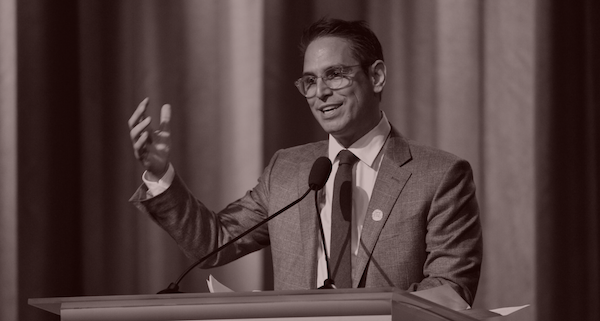
It’s amazing that the linear network lasted as long as it did. But in this Peak TV era, it’s worth analyzing how the growth of streaming necessarily comes with contraction elsewhere, and, most importantly, who wins and who loses in the process. For months, Greg Berlanti and his WME agents braced for the inevitable. As the producer of CW shows like Arrow and All American, Berlanti knew the network was for sale, so when the news finally broke on Jan. 5, he wasn’t blindsided. But he wasn’t exactly thrilled, either. Berlanti has built a half-billion-dollar business at that network—with, at one point, an insane-sounding ten series on the air or greenlit there. His current $400 million-plus deal with Warner Bros. Television, signed in 2018, was premised in part on placing shows at the CW, which is co-owned by Warner Bros. and CBS. Berlanti is part of a group of writer-producers—Josh Schwartz and Stephanie Savage, Julie Plec, Kevin Williamson, etc.—who have made fortunes shepherding young adult and genre series onto a unique and lucrative conveyor belt through the TV business.
In 15 years, the CW has never made a dime. Its genius, and why CBS’ Nina Tassler and Warner Bros.’ Bruce Rosenblum smashed together UPN and The WB, was as a launch pad for shows, produced by their studios, that could then be licensed around the world (and later to streaming outlets) for huge profits. Those ancillary checks funded the whole party, allowing Berlanti and his company’s leader, Sarah Schechter, to become the most prolific TV producers of their generation, and The CW’s C.E.O., Mark Pedowitz, to ignore cratering linear ratings and greenlight tons of money-making series that you and I never watch. Did you know there’s a Dynasty reboot that is now in its fifth season? I didn’t until I googled “bad CW shows.” (I don’t recommend doing this.)
Like everything in Hollywood these days, though, the CW business model was amazing until it wasn’t. WarnerMedia and ViacomCBS realized waaaay later than they should have—which is a theme you might recognize from last week’s email on the Yellowstone streaming debacle—that selling off shows probably wasn’t a winning long-term strategy. So its Netflix deal ended, WBTV and CBS Studios began producing for their own platforms (HBO Max and Paramount+), and now there’s really no need to own a linear network that loses $100 million a year on its own, according to the Journal.
So Nextstar, a big CW affiliate owner, or whoever else ends up buying the network, will probably pare it down, age-up its target audience, and milk it as long as the broadcast business exists. After all, there’s still good money in political spots and carriage fees, and the CW’s digital business is actually growing. As for the content, there’s nothing stopping the new owner from simply continuing the current plan, albeit without the vertical integration that made the model so potent.
But even if there are programming commitments in the sale, as expected, the CW will probably pivot to an older, more news and politics-oriented demo. That would mean a lot fewer WB and CBS shows, and a new round of winners and losers. For producers like Berlanti, it’s a major shift with big ramifications, especially for three groups.
ADVERTISEMENT 
MGM Studios and United Artists Releasing present NO TIME TO DIE starring Daniel Craig, who concludes his five-film portrayal of James Bond in NO TIME TO DIE. Joining forces with his MI6 team and a new generation of agents, Bond faces the highest stakes of his espionage career and emotionally explores the sacrifices of heroism. You can watch NO TIME TO DIE everywhere you rent movies. For Your Consideration in all categories including Best Picture of the Year.
The Platforms
At first glance, it’s pretty obvious who wins in a CW sale: WarnerMedia and ViacomCBS, which are both desperate for cash to compete with Netflix. Warner’s outgoing owner, AT&T, is saddled with debt, and ViacomCBS’ Shari Redstone has been unloading assets like Television City in L.A., Black Rock in New York, and Simon & Schuster—pretty much everything except the Paramount lot and Tony Romo. A CW sale could fetch $1 billion, say analysts, and Redstone’s cut could buy a bunch more Taylor Sheridan shows and Paw Patrol movies for Paramount+.
In fact, all the streaming services win here, or at least that’s the conventional wisdom around town. Y.A. and superhero shows already perform well with younger streaming customers, and now these outlets, especially HBO Max, can build this audience with more first-run series, rather than dumps of CW reruns.
Sure, but that seems a bit short-sighted to me. The open secret at streamers is that linear reruns generally perform well, in part because viewers already know what they are. You may never have watched Berlanti’s Riverdale or Batwoman, but you’ve heard of them because they have been marketed by the CW and covered in the media. For that reason, you ascribe higher value to those shows. This is true across all of broadcast. The success of NBC’s canceled Manifest on Netflix was helped by people, like me, who were familiar with the show because it had been plugged incessantly during NFL games. That wasn’t enough to get me to actually watch on NBC, but when it popped up on Netflix, I clicked.
Take away The CW and Riverdale is just a weird Archie Comics adaptation with ridiculously good-looking people. Maybe it would’ve found its audience anyway as an HBO Max original, but it would have been starting from scratch. The streamers do benefit from the probable demise of the CW—especially if they are airing shows they own. But for scripted originals, broadcast TV is now largely a commercial for streaming. So the streamers lose a little without that promotional platform.
The Creatives
No, I’m not worried about Greg Berlanti. The guy already produces a ton for non-CW outlets, like You for Netflix and The Flight Attendant and four others for HBO Max. He’ll still be the No. 1 supplier for Warner Bros. TV, with or without the CW, and the last thing HBO Max’s Casey Bloys or WBTV’s Channing Dungey wants to do is piss him off when his deal is up in 2023. Plus, younger-skewing shows—his specialty—are in more demand these days, not less.
In many ways, his current Warners deal anticipated this shift. His money is guaranteed, meaning he’s paid regardless of pickups, so he’s not dependent on greenlights. (Berlanti is already in bonuses, I’m told.) Plus, it allows him and Schechter to do a separate film deal at Netflix, where they’re developing a bunch of projects.
It’s the people lower in the hierarchy that should be concerned. Berlanti, with the possible exception of Dick Wolf, is the top employer of TV writers and producers, and he’s had full staffs scripting and producing five to seven 22-episode seasons for many of these CW shows. As everyone knows, the 22 episode season is going to TV Heaven along with Betty White and sweeps stunts. Streamers want 10 episode seasons—now they often push for 8 episodes—and most shows rarely last more than two or three cycles. So a Berlanti series that might have generated 110 episodes over five seasons on The CW could now be a 30 episode show on Netflix or HBO Max. Berlanti, with his volume of output, is fine, but the writers of those individual shows might lose.
This isn’t a new issue. The Writers Guild and others have been strategizing how to change the economics of TV to account for fewer episodes that cost more to produce. So far the guilds haven’t figured it out, and the streamers are happy to take advantage of that inaction.
ADVERTISEMENT 
The Next Generation
The CW, with lower stakes, has always been an incubator of new talent, including Berlanti himself, who was a writer on Dawson’s Creek and found himself running the show at age 28. But shorter and fewer seasons curtails that traditional apprentice system, wherein someone, like a writer’s assistant or a camera operator on Season 1, would become a writer or co-E.P. by Season 7, earning credits they then take to other shows. These days, many creatives get stuck at the entry level and simply migrate from show to show at the same level. This is happening all over town, and it’s why people feel squeezed, even amid the unprecedented number of productions.
It’s the same with directing opportunities. Supergirl star Melissa Benoist probably doesn’t get the chance to direct an episode if her show only goes two or three short seasons. But she directed in Season 5 on the CW. Those opportunities happen a lot in later seasons of hit shows, potentially launching new careers. With shorter runs, those opportunities are necessarily limited.
Don’t cry for the CW. In retrospect, it’s kinda amazing that a linear TV network targeting the same 18-34 year old audience that has gone completely online lasted as long as this one did. But in this Peak TV era, it’s worth analyzing how the growth in streaming comes with contraction elsewhere, and, most importantly, who wins and loses in that shift.
My Reading List
The Feedback
Some interesting reactions to my Thursday column about Disney C.E.O. Bob Chapek’s “focus on the audience” memo. A couple here:
“Thank you for calling B.S. on Chapek. He has squeezed every last dollar out of parks visitors, now he's trying to do the same with streaming. He just can't figure out how.” –an executive
“Chapek's focus on ‘audience’ is not unique to entertainment. Using the ‘audience’ as an excuse to justify business models is straight out of the MBA handbook.” –a professor
“I do think there is some truth to the fact that media and entertainment companies need to focus on audience. They've basically been B2B businesses for most of the modern era (certainly that's how Chapek grew up in the business). Now they all have direct-to-consumer relationships—in streaming and retail/ecommerce. If they were genuinely audience oriented, they would be way better at marketing and bundling products in ways that stoke demand.” –another executive
Have a great (short) week, Matt
Corrections: Two misspellings in Thursday’s email. Apologies to Trader Joe’s Tikka Masala and to the late Bernie Mac.
Got a question, comment, complaint, or some self-help advice? Email me at Matt@puck.news or call/text me at 310-804-3198.
FOUR STORIES WE'RE TALKING ABOUT 
The Disney C.E.O.'s “relentless focus on our audience” is generating a lot of chatter, but, as always, there's an alternative motive. MATTHEW BELLONI 
Is Washington losing its luster to the media-content machine? Plus: Ted Cruz’s apology tour and the return of Beto O’Rourke. PETER HAMBY 
Some thoughts on whether Netflix is trying to steal ESPN’s playbook, and Axios’ turning point. Plus some other dish. DYLAN BYERS 
What’s really going on between Wall Street’s blockchain envy, bonus season at Goldman, and Larry Fink’s god complex. WILLIAM D. COHAN 
You received this message because you signed up to receive emails from Puck.
Was this email forwarded to you?
Sent to {{customer.email}}
Puck is published by Heat Media LLC.
For support, just reply to this e-mail. For brand partnerships, email ads@puck.news |


SHARE