Hello and welcome back to What I’m Hearing...
Greetings from Cave Creek, Arizona, where I’m kicking off Thanksgiving week.
As always, I’m Matt Belloni, a former entertainment lawyer and editorial director of The Hollywood Reporter. My private emails come on Thursdays and Sundays to members of Puck, our new company covering the centers of power and influence. Sign up here, or gift a membership to your husband (or your work husband).
Discussed in today’s email: Kevin Ulrich, Quentin Tarantino, Michael Lombardo, Rupert Murdoch, Carolyn Strauss, Bill Kramer, J. Smith Cameron, John Stankey, and The Jews.
Sponsored by Amazon Studios 
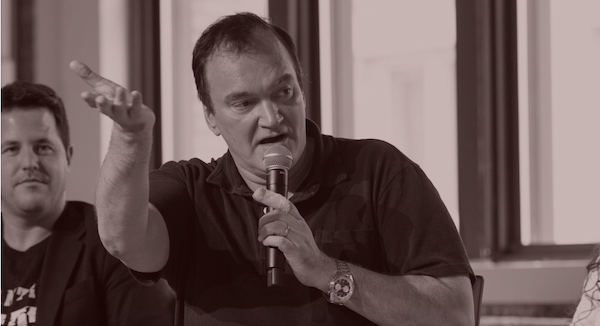
One of the country’s most respected copyright experts has joined the Tarantino legal team as the battle with Miramax over script NFTs accelerates. The battle between Quentin Tarantino and Miramax over script NFTs is shaping up as one of the most closely-watched in entertainment legal circles. Studio execs are just wrapping their heads around the potential value of movie memorabilia in the digital ecosystem. Last thing they want is actors or producers—or, god forbid, the writers—profiting in this burgeoning space.
If you missed it, Miramax, now run by C.E.O. Bill Block and jointly owned by a Qatari media company and ViacomCBS, sued Tarantino on Tuesday claiming he’s not entitled to sell “non-fungible tokens” of his handwritten Pulp Fiction script pages because Miramax owns the copyright and NFTs aren’t included in the “reserved rights” he negotiated back in the early ‘90s. The complaint, by a six-litigator team at Proskauer Rose, alleges breach of contract, copyright infringement, trademark infringement, and unfair competition.
I’m skeptical about this case because Tarantino specifically held onto the right to “publish” his screenplay. When his team negotiated the deal (agent Mike Simpson and lawyer Carlos Goodman are still with Tarantino today), they were consciously positioning him as an auteur filmmaker whose fans would potentially buy copies of his screenplays, like for Scorsese, Woody Allen and others. Which, over the years, they have, without Miramax objecting. To me, NFTs are just digital publishing.
Now it seems attorney and professor David Nimmer agrees, and I’m told he has joined the Tarantino legal team, alongside lead litigator Bryan Freedman. Nimmer is a big deal, one of the country’s most respected copyright experts, particularly in the entertainment context. He and his late father Melville Nimmer literally wrote the book, Nimmer on Copyright, that is taught in law schools and is probably the most-cited secondary source on copyright law. Given that NFTs are so new, I can see why Nimmer would be interested in this case.
Curiously, Miramax isn’t asking the court for an injunction preventing Tarantino from going forward with his token sales. So my guess is that this entire suit is an attempt to negotiate a piece of those deals in a settlement. But Tarantino is famously stubborn and has deep pockets, so let’s see how far this dispute goes.
ADVERTISEMENT
Amazon Studios presents A HERO, from Asghar Farhadi, writer/director of the Academy Award®-winning films A Separation and The Salesman. A HERO follows the story of Rahim – a man in jail for a debt he can’t repay. When a plan to erase his debt goes awry, he unexpectedly gains unwelcome notoriety and must reckon with a misunderstanding that has spiraled out of control. A HERO is Iran’s selection for Best International Feature Film. The Hollywood Reporter raves it’s "one of the best films of the year." 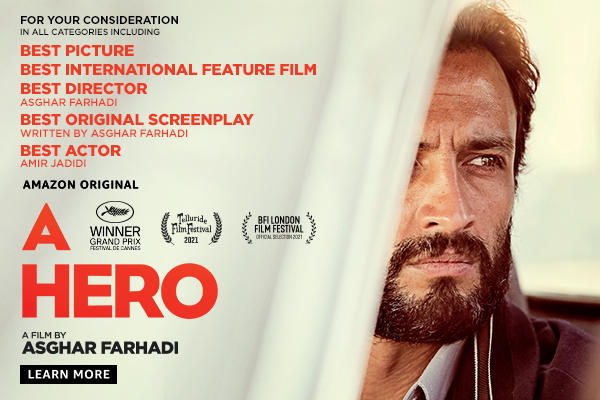
A HERO is in theaters January 7th, and streaming January 21st on Prime Video.
Who Won the Week: Adele It’s a given that 30 will debut at No. 1, and her spectacularly produced CBS special out-rated the Oscars. But her biggest flex might be convincing Spotify to disable its shuffle function so her album is heard as intended.
MGM’s Hedge Funder Chairman Is a Producer Now, Apparently
You’ll be forgiven for doing a spit take during the credits for House of Gucci. Yes, that’s Kevin Ulrich’s name among the executive producers of Ridley Scott’s new murder melodrama.
It’s the first producing credit for the longtime MGM board chairman and C.E.O. of Anchorage Capital, the New York hedge fund that stands to make about $2 billion if the $8.5 billion sale to Amazon closes early next year, as anticipated. Studio chairmen typically don’t take personal credits, so what, exactly, did Ulrich do to earn his title?
A rep for Ulrich notes that he was part of the team that helped set the film up at MGM. So, he performed a duty that every studio chairman performs? Maybe he now considers himself one of the film’s financiers, who get credits all the time (see Bron Studios C.E.O. Aaron Gilbert and investor Jason Cloth on Gucci, for example). And sure, back in the day, Harvey Weinstein was usually credited on his movies, and smaller units like New Line would give credits to execs. But again, Ulrich is a chairman, not a division head.
Maybe it’s a “savior” credit for greenlighting a film that others wouldn’t. The Gucci project bounced around for years at several studios, in many incarnations (there was a version with Angelina Jolie and Leo DiCaprio at one point, and Megan Ellison has an E.P. credit for what MGM says was her contributions to an earlier iteration).
Or maybe it’s just an old-fashioned vanity credit. After all, Ulrich spent a decade in Hollywood—he should get something besides his $2 billion check.
Quote of the Week:
“It is crucial that conservatives play an active, forceful role in that debate, but that will not happen if President Trump stays focused on the past. The past is the past, and the country is now in a contest to define the future.”
– Rupert Murdoch, in a rare rebuke of Trump’s election lies, perhaps signaling a Succession-style shift in tone at Fox News.
ADVERTISEMENT 
Academy Museum Donors: What About the Jews?
Among the gripes about L.A.’s new Academy Museum is the pretty noticeable downplaying of the movie industry’s founding fathers—the “moguls,” the mostly Eastern European Jews who are the reason “Hollywood” is located in Los Angeles in the first place. Visitors are treated to lavish displays on Spike Lee, Hayao Miyazaki and Pedro Almodovar, but see much more muted (and far less flattering) mentions of transformational figures like Louis B. Mayer, Adolph Zukor, or the Warner brothers, not to mention the stars of the so-called Golden Age.
The private grumbling has begun to spill into the press, and it’s certainly a topic of frustration among some older, Jewish Academy members I’ve spoken to, especially on the Bel Air circuit. (My Jewish mother, who is definitely not on the Bel Air circuit, also shook her head in disapproval when I told her about the controversy.) Now I’m told a few of those angry members are withholding financial donations in protest, refusing to give money to a museum they believe is denying its heritage.
I chatted with Museum director Bill Kramer about this topic last week, and he was very aware of the criticism. “We hear that, and we take that note very seriously,” Kramer told me. “As with any segment of our history, we don’t want to erase. We have been in active conversation with concerned members of the community about upcoming exhibitions and programming that speak to these concerns.” Hence the Dec. 10 symposium, Vienna in Hollywood: The Influence and Impact of Austrians on the Hollywood Film Industry, 1920s to 2020s.
Kramer knows that with a nearly $500 million price tag, the museum can’t really afford to alienate donors of any religion, especially one so entrenched in Hollywood. He has launched an ambitious $22 million fundraising effort for fiscal 2021-2022—and he’s already 80 percent there, I’m told, thanks to the first of what will be an annual gala that raised $11 million in September. The museum is finalizing the sale of naming rights for “pillars” on the property at $1 million a pop, and it has signed up more than 19,000 museum “members” since opening, averaging 200 a week. He says if donors are withholding money, he hasn’t noticed the hit yet.
“There Can Only Be So Many Winners”: A Chat About the Past, Present, and Uncertain Future of HBO
If I have to tell you that author James Andrew Miller has a new book about HBO, you should probably unsubscribe from this email. Jim is a friend of What I’m Hearing… who wrote for me at T.H.R. and whose previous oral histories of Saturday Night Live, ESPN and CAA occupy major shelf space at What I'm Hearing H.Q. In Tinderbox, out on Tuesday, he uses 750 interviews to trace the history of Home Box Office from its 1971 origin in the brain of cable mogul Charles Dolan all the way to its pending spinoff from AT&T to Discovery, with all the programming dramas and executive intrigue in between. We talked about the past, present and future of HBO on Thursday; our condensed and edited chat is below…
Matt Belloni: It’s crazy how many different ways HBO’s ownership could have gone. Before selling to AT&T in 2016, Time Warner C.E.O. Jeff Bewkes was talking to Bob Iger at Disney, and, ironically, David Zaslav at Discovery. Rupert Murdoch made a hostile run at it. If Bewkes didn’t sell to AT&T, what do you think was the most likely alternative scenario for HBO and the Time Warner assets?
James Andrew Miller: From 2014 on, when Murdoch comes after Time Warner and Bewkes is able to beat it back, he went to the board and they said, “We’re OK now.” And he said, “No, we’re not, because we still don’t have an answer to the question of how we are going to compete with Netflix,” given that 50 percent of their operation was funded by Turner, which is a linear television operation. So the [cable] bundle becomes a cancer on Time Warner. They clearly had to merge or get taken over. And there’s not a long list [of potential acquirers,] given its size. You have Apple, Verizon, AT&T, maybe Amazon. Maybe, in a long shot, Facebook would be interested. But it’s not like there were 30 entities. Apple was interested in HBO, but it didn’t want Turner. Who wants to deal with the bundle?
In the book, Bewkes takes a shot at the “malpractice” committed on Time Warner by AT&T’s management. Do you really believe Jeff thought AT&T would come in and keep all his people and operate the business largely as it was?
Without a doubt. If you look at the DOJ testimony [when the U.S. government tried to block the AT&T deal], it wasn’t about saying AT&T can run HBO and Warner Bros. better than a management team that, by all accounts, was running things pretty well.
But it’s like what AT&T’s John Stankey said, they paid a premium for an asset and had a strategy to do something with it. They believed that if they had been given time to execute on that strategy—I don’t agree with them, by the way—they would have been able to create a lot more value. Do you think Stankey recognizes now that the Time Warner plan was destined to fail?
You gotta give Stankey credit for being able to pivot [and orchestrate a spinoff to Discovery] once he realized they weren’t going to be able to succeed the way that he and Randall [Stephenson, AT&T’s former C.E.O.] wanted. It’s admirable.
I’m a little less favorable than you are. I think the AT&T people exhibited a level of arrogance in believing they knew how to operate these assets—
But that goes back to my earlier point, Matt. That’s exactly right. Apple could have bought Time Warner for the change they found in the cushions of their couch. But [Apple C.E.O.] Tim Cook was disciplined enough to say, “We do certain things. We don’t think we know how to do other things. Our investors want us to stick to what we do best.” He had guardrails up. Stankey thought the opposite: “Vertical integration? We can handle that. We know how to do that.” It wound up being a lot tougher than he thought.
Knowing the HBO culture as you do, and knowing David Zaslav as you do, what do you think Zaslav’s biggest surprise and challenge will be when he takes over HBO and the Warner assets?
I think it comes down to this: How involved is David Zaslav, as an individual, going to be in this company? There are many different potential models. He’s obviously been spending a lot of time with [CAA’s] Bryan Lourd and [Endeavor’s] Ari Emanuel, and he’s been trying to engage himself with the creative community in a profound way. There are a lot of people who would be doing something different. That doesn’t mean what he’s doing is wrong. It just means he’s setting himself up to be the power in all areas. If somebody goes to Toby [Emmerich, who runs Warner Bros.’ film studio] or Casey [Bloys, who runs HBO], and they say no, David has to realize that the person might be calling him then, because he has made himself accessible, and he’s made it known that he wants to be involved creatively. That can be pretty tough when you’re also trying to run the entire company. [His challenge is,] how is he going to be able to run the company while also giving a sense of autonomy to people on the front lines?
Yeah, being “talent-friendly” doesn’t mean being friends with the talent, it means giving them what they want, and that’s when it becomes very difficult for someone like him.
Absolutely.
Everyone is asking me, of course, “Who comes off the best in the book? Who comes across as the biggest asshole?” What would you say if asked that?
My books are sometimes like a Rorschach test. I’ve heard, “You really destroyed him” and “You were so nice to him” about the same person! I try to capture 360 degrees of people. No one is perfect, and no one is incapable of making mistakes. Look at someone like Carolyn Strauss [a career HBO executive who served as entertainment president for 10 months until she was ousted in 2008 and became a successful producer]. She is someone I hold in high regard and is someone who I don’t think got enough attention on the positive side, who had a difficult departure on the negative side. I try to be fair, I’m not out to take anyone down.
Michael Lombardo, the former top programmer, comes across pretty poorly. I only interacted with him a little bit, but I never saw how he is often portrayed in the book: How intimidating and petty and vindictive he could be. Do you agree with that assessment?
People who know Mike Lombardo know that his friends swear by him, he’s been an incredible friend to many people, he was around HBO a long time. Did he undergo a metamorphosis when he got the top programming job? According to everyone I spoke to, absolutely. Was it difficult for him? Yes. And did he make it difficult for others at times? Absolutely. He had a very unhealthy dynamic with [then-HBO C.E.O. Richard Plepler,] and as a result, there was a trickle-down [effect,] and he misplaced a lot of frustration onto other people.
You talked to 618 sources. I didn’t even realize Chuck Dolan was still alive. Who wouldn’t talk to you?
Dennis Miller [who hosted a weekly HBO talk show from 1994-2002] said no. I’ve interviewed him for other books but his HBO show left a bad taste in his mouth, I guess.
How real were Time Warner’s 2006 discussions about buying Netflix?
I have no reason to believe that Reed [Hastings, Netflix’s co-founder] would have sold. They had a clear idea of what they were going to become, and it was huge. And this was 2005, 2006, Time Warner had just dragged its investors through a nearly $100 billion write-off called AOL. It was the largest disaster in American merger history. Do you want to be the one to stand up and say, “By the way, we still want to double down on this internet thing because this thing called Netflix, we think that’s going to be the next big thing?” And then if you did that, Brian Roberts [of Comcast] and John Malone [of Liberty Media] and all of your cable partners that literally feed you, they’re going to say, “Oh, you’re gonna desert us? OK fine, we’re going to punish you, and it’s gonna hurt.”
So you believe there was no way for HBO to stop Netflix in those early years.
No.
I agree. And the best example is also in your book: There was no way for the movie studios and the linear networks to stop HBO in the ‘70s.
Exactly. In some ways, Netflix played by the same playbook that HBO did decades earlier. The investors who were investing in Netflix didn’t care if they made a profit. Time Warner was making 1,000 times more money, even up until recently. But Time Warner had to deliver earnings.
What’s the most surprising thing in the book?
It’s how touch-and-go HBO has been over its history. Time Inc. almost hit the delete button several times. And take VHS. HBO’s big thing was uncensored, uncut movies. Now everyone could go to Blockbuster on the corner without a subscription fee. And yet somehow they would claw their way out. When John From Cincinnati went on, everyone said the magic was gone, then came Girls and Veep and Thrones and all these other shows. The question is, can they continue to do that in these next three or four pivotal years?
And you believe these next few years, when the pecking order of global streaming services is determined, will dictate the next 20, 30 years?
At least the next decade, without a doubt. There can only be so many winners. I don’t believe you will have an ecosystem that looks anything like today. You know, Discovery [even combined with Warner Media] has a scale problem, so who knows if that will survive?
My Reading List
The Feedback
Everyone has an opinion about Netflix’s “ratings,” so my Thursday analysis of the new Top 10 methodology generated spirited responses.
“You've narrowed the issue to engagement metrics—for good reason, given your audience. But let's be clear about what we really want: customer acquisition costs, lifetime value, and clear reporting of net subscriber adds and churn, by country.” –An executive
“It’s amusing that some people are cheering Netflix’s move toward ‘transparency.’ This is not transparency, it’s just more breadcrumbs to keep everyone from crying starvation. And this isn’t an act of generosity on Netflix’s part. Every single movement on this issue has been the result of public pressure and backroom negotiations. We must not waver in this fight.” –An agent
“Not sure why Netflix reports to the media. Their ratings are their business. While we want transparency, we are not entitled to it.” –Another agent
Here’s an interesting response to my item last Sunday about Britney Spears’ lawyer Mathew Rosengart…
“I think you’re missing the point about Britney and her ‘savior.’ This is not a prize fight with a winner or loser, this is a life-changing decision for someone with severe mental illness (and one with almost unlimited means; i.e. she doesn’t have to hear the word ‘no’). So, given her unique circumstances, the real question is how long can Britney actually live without strong supervision? Granted, the supervision does not have to be her father, but writing as someone with experience with loved ones with this type of mental illness, and with experience with the unique living circumstances of big stars, I’m afraid that I don’t think she will live that much longer. So maybe her lawyer won this one particular fight, but this fight is really just a blip in the larger picture of her life.” –Position withheld
And Finally…
A couple people flagged my use on Thursday of the tired “open the kimono” metaphor for Netflix ratings, specifically noting its sexist and racist history. Thanks for calling me out, I should’ve known better and won’t be using it again.
See you on Friday this week, have a great Thanksgiving, Matt
Got a question, comment, complaint, or a good plane movie rec? Email me at Matt@puck.news or call/text me at 310-804-3198.
FOUR STORIES WE'RE TALKING ABOUT 
Netflix is finally, subtly lifting the veil on its ultra secretive streaming data—in a way that benefits Netflix, of course. MATTHEW BELLONI 
Backlashes against racial progress are as American as apple pie. But C.R.T. has unleashed a new torrent of grievances. BARATUNDE THURSTON 
... doubling down on Hulu? Yes, Hulu. Plus: Could Joe Scarborough be the next loose-in-the-saddle talent to put the screws to MSNBC? DYLAN BYERS 
An insider look at the questions transfixing Wall Street this week. Among them: What does Larry Culp really want from GE? WILLIAM D. COHAN 
You received this message because you signed up to receive emails from Puck.
Was this email forwarded to you?
Sent to {{customer.email}}
Puck is published by Heat Media LLC.
For support, just reply to this e-mail. For brand partnerships, email ads@puck.news |


SHARE