Welcome back to What I’m Hearing...
This holiday season, forget the Wally’s basket and give a membership to Puck, our new media company covering power and influence in Hollywood, Silicon Valley, Washington and Wall Street.
Sponsored by Amazon Studios 
Thursday Thoughts…
Today and Sunday are Disney days at What I’m Hearing HQ, and not just because I went to agent Richard Weitz’s Make-a-Wish fundraiser on Tuesday at Disneyland and got stuck on three separate broken-down rides. (The gory details are on my Instagram; follow at @mattbelloni.) And congrats to Richard and his daughter Demi on a fantastic event that raised nearly $3 million.
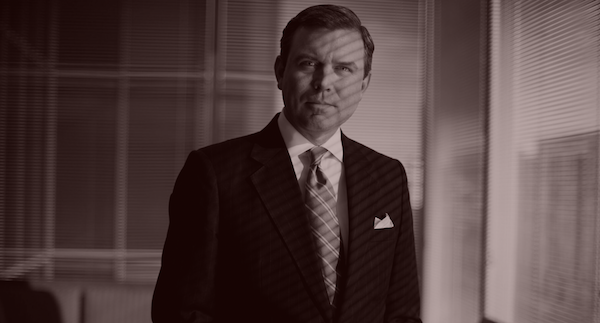
It’s not an accident that Bob Chapek picked Geoff Morrell, a former Republican operative, when so many of Disney’s battles will be waged on the political and regulatory stage. I didn’t see her at the Disneyland event, but outgoing communications chief Zenia Mucha was there, while other top execs (including both Bobs, Chapek and Iger), were supporting Steven Spielberg that night at the West Side Story L.A. premiere.
Geoff Morrell wasn’t at either event, but he was a hot topic of conversation. Chapek surprised a few insiders by selecting Morrell, a former spokesperson for the U.S. military under George W. Bush who has spent the past decade flacking for oil and gas giant BP, as Mucha’s replacement. Well, quasi-replacement; his job, “chief corporate officer,” is a new, larger role overseeing communications, public policy, lobbying, and social responsibility. Chapek and Morrell will still probably hire a traditional comms chief.
Morrell wasn’t Mucha’s choice, I’m told—yet another example of Chapek blazing his own path since taking over for Iger as C.E.O. in early 2020. And he has almost zero knowledge of, or experience in, entertainment, unless you count his early career at ABC News or an acting gig in the 1998 Samuel L. Jackson-Kevin Spacey thriller The Negotiator. (Thank god for YouTube.) In decision after decision, Chapek seems to be leaning away from Disney’s roots as an entertainment company and toward a more corporatized, integrated, and bottom-line focused enterprise. No shame; that’s who he is.
Morell called me today to introduce himself. He didn’t want to do an interview but he was pleasant and chatty. I found someone who’s known him for years who says he’s perfectly Chapek—professional, competent, corporate, maybe kinda boring, definitely down-the-middle. “Preppy” and “straight out of an ‘80s movie,” this friend said. Very different than the fiery Mucha, who for 19 years has protected Iger and the company by screaming at the media, and threatening, and cracking jokes, sometimes all on the same phone call. Morell posted a missive on LinkedIn, where he is active, citing Chapek’s change-agent narrative as his reason for moving from Deepwater Horizon to Disney, and from London to L.A. “That’s what drew me to this new job—another industry evolving, another company transforming itself,” he wrote. “And the man leading that transformation clearly doesn’t shy away from a challenge.”
It’s not an accident that Chapek picked a former Republican operative—Mucha’s background, too; she worked for New York’s Gov. George Pataki—and expanded his purview to Disney’s D.C. operation. So many of the company’s battles will be waged on the political and regulatory stage as Disney competes more directly with the tech giants. That Washington office is expected to expand significantly. And on the political front, it’s crucial to the company’s future that Disney remain a non-politicized entertainment brand in a cultural climate where it’s increasingly impossible to remain neutral. Good luck to him on that front.
ADVERTISEMENT
Amazon Studios presents BEING THE RICARDOS. Writer/Director Aaron Sorkin examines one production week of I Love Lucy— from table readthrough taping — as Lucille Ball (Nicole Kidman) and Desi Arnaz (Javier Bardem) face personal and professional crises that threaten their show, careers, and marriage. Featuring J.K. Simmons, Nina Arianda, Alia Shawkat, Tony Hale, Jake Lacy, Linda Lavin, Ronny Cox, and John Rubinstein. 
BEING THE RICARDOS is in theaters December 10th, and streaming January 21st on Prime Video.
Marvel’s Miracle Man at a Crossroads, Part 1: Fatigue Factor
It’s hard not to see Spider-Man: No Way Home as one of the biggest flexes in the history of the movie business. Think about what happened here. A major studio, Sony Pictures, had so badly managed its most valuable piece of I.P. that in 2015, chairman Tom Rothman agreed to do the unthinkable: Share the character, let another studio produce its Spider-Man movies, and allow Spidey to appear in that studio’s own movies for free. And not just any studio, it was Disney’s Marvel unit, which had embarrassed Sony and the rest of Hollywood with an unprecedented run of hyper-profitable and flywheel-friendly blockbusters based on “lesser” comic book characters like Thor and Ant-Man. The indignity.
Then, once the first two movies, Homecoming (2017) and Far from Home (2019), reinvigorated the franchise, Disney tightened the vice on Rothman’s nuts, eventually forcing Sony to give up 25 percent of the profits to keep Marvel involved on a third movie, No Way Home (Dec. 17). That film, which incorporates Disney’s characters, like Doctor Strange, and opens the door to the “multiverse” with past Spideys, could become the first billion-dollar grosser of the pandemic era. Nothing has opened to $100 million domestic since Star Wars: The Rise of Skywalker in Dec. 2019, and No Way Home is tracking to hit $150 million (though Sony is lowballing in the media). According to multiple sources, there’s a deal for a fourth Marvel-produced movie that will star Tom Holland, and it’s already quietly in development.
That’s what Kevin Feige has accomplished here, just in case anyone has doubts about who is the most important employee at the Walt Disney Company. The Marvel Studios president has now presided over the Marvel Miracle for 13 years now—24 of his own movies and three of Sony’s, and not an outright flop among them. Since wresting control of the unit from Ike Perlmutter in 2015, Feige has established his own culture and ramped up output, which can be three to four films a year, plus multiple Disney+ series. Despite that, Marvel’s product has remained impervious to the usual franchise fatigue that has plagued every other property in the blockbuster era. It’s really unbelievable. Yet… it can’t go on forever, can it? The Marvel Miracle must end, or at least slow down, right?
ADVERTISEMENT 
There’s no film “comp” for Marvel. But back in 2019, I asked Alan Horn, then Disney’s film chief and ostensibly Feige’s boss, whether Marvel movies might someday perform like American Idol, a dominant, multi-night cultural juggernaut that simply runs its course, scales back and becomes ordinary. “The answer is no,” Horn told me. “If the film has a compelling storyline, if it has heart and humor, two things that I insist on, and it’s terrifically well executed, I think there is an audience. But who knows?”
The “Who knows” was doing a lot in that response. Horn didn’t know because Marvel has performed like nothing in the history of film. The laws of economics (and physics) suggest that can’t last forever, and Horn knew it. It’s inevitable. Feige has been reading about fatigue for a decade, but these days, Disney is really testing the parameters in a way that could accelerate that decline. The slate was pushed back a bit thanks to Covid delays, but let’s take a brief look at the Marvel output after Spider-Man: No Way Home. There’s Doctor Strange in the Multiverse of Madness (May 6), then Thor 4 (July 8), then both Ms. Marvel and She-Hulk on Disney + (late 2022), Black Panther 2 (Nov. 11), a Guardians of the Galaxy Holiday Special on D+ (Holiday 2022), The Marvels (Feb. 17, 2023), Guardians of the Galaxy 3 (May 5, 2023), Ant-Man 3 (July 28, 2023), then undated reboots of Fantastic Four and Blade, plus Captain America 4 and Deadpool 3 in theaters, and Moon Knight and Secret Invasion on D+. Whew.
That’s just what’s been revealed for the next couple years. Internally, the timeline goes way longer, I’m told. And this doesn’t include additional Spider-Man movies, or Sony’s Spidey spinoff pics, like Morbius or Venom 3, or animated Into the Spider-Verse sequels. Plus, wait until Feige gets his hands on Fox’s X-Men property.
Yes, I know, that’s what modern film studio release calendars look like, and nobody gets fired for packing a slate with superhero sequels. As Covid turns theaters into blockbuster-only domains, it’s going to get worse. Plus, the mandate from Disney C.E.O. Bob Chapek is to pack Disney+ with franchise spinoffs, and that’s exactly what Feige is doing with these low-episode limited series like Loki and Falcon and the Winter Soldier. But in doing so, Marvel has gone from a special-occasion franchise to an omnipresent force that is essentially always on. Not even the NFL does that. At some point, there must be a cost to that strategy.
Is franchise fatigue why Eternals has been underperforming? Covid has played a role, obviously, and fan reaction to the Chloe Zhao film, which is longer and more contemplative than typical Marvel fare, wasn’t great. But what if Eternals was the only Marvel film this year? And what if there wasn’t also a Jeremy Renner Hawkeye show on D+ at the same time that Eternals was in theaters? I’m guessing Eternals would have been a huge event, which would have translated into much higher box office. Instead, it came two months after Shang-Chi, another stand-alone character-introduction movie that ended up doing better than Eternals. You can stack with Spider-Man, but not with an unproven property.
This isn’t just a Disney issue, of course. All studios are facing fatigue issues as they stretch their franchises to the breaking point. And everyone (especially Sony, which now needs Disney’s Marvel success to fuel its own) benefits from a healthy theatrical business that Marvel helps make possible.
But diminishing returns seems like an inescapable, uh, endgame for Marvel, especially if quality control becomes an issue and lower box office means there are fewer megahits to mine for the spin-offs. I’m not suggesting that Marvel is in trouble. Far from it. But if I were betting Marvel as a stock, I’d wonder if it hasn’t hit its peak.
On Sunday, I’ll get into how Kevin Feige is running Marvel these days. The deals, the culture, and more.
And Finally, More Disney…
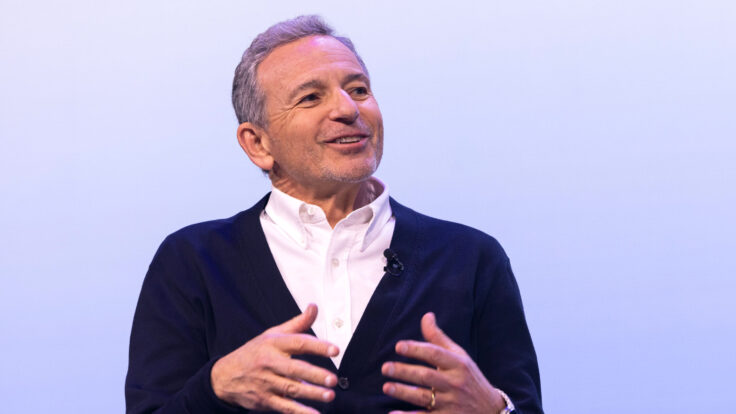
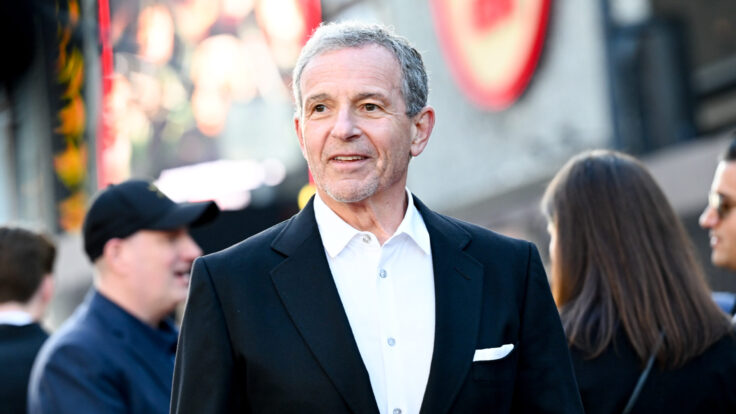
You may have seen that Bob Iger’s farewell tour stopped at Disney-owned KABC Channel 7 in Los Angeles this morning; the one-time weatherman in Ithaca, NY, couldn’t resist his last chance to present the forecast. But over on Channel 5, KTLA anchors also couldn’t resist making fun of their rivals, with Sam Rubin and team pointing out that the KABC broadcast cut off the top part of Iger’s head, right before Iger suggested there might be “frost” at the beach this Saturday.
The giddy video is here.
See you Sunday, Matt
Correction: I misspelled actor Joshua Malina’s name in Sunday’s email. To apologize to Josh, I’ll link to his “Cancel Mel Gibson” column again.
Got a question, comment, complaint, or a funny Bob Iger story? Email me at Matt@puck.news or call/text me at 310-804-3198.
FOUR STORIES WE'RE TALKING ABOUT 
Diminishing returns seem inescapable, especially if lower box office results in fewer megahits. Has Marvel passed its peak? MATT BELLONI 
Putin has imposed himself on the news cycle—and the White House—with plenty of tricks up his sleeve. JULIA IOFFE 
The existential crisis of cable news extends beyond the firing of Chris Cuomo and the exit of Rachel Maddow. DYLAN BYERS 
“The Ax” was once an influential figure on Wall Street, before Eliot Spitzer put the kibosh on the research industrial complex... WILLIAM D. COHAN 
You received this message because you signed up to receive emails from Puck.
Was this email forwarded to you?
Sent to {{customer.email}}
Puck is published by Heat Media LLC.
For support, just reply to this e-mail. For brand partnerships, email ads@puck.news |


SHARE