Welcome back to What I’m Hearing...
Happy Sunday from What I’m Hearing H.Q.
Still time to win Boss of the Year by gifting your team a Puck membership. Remember, you get access to me and a bunch of other authors covering the inside conversation in Hollywood, Silicon Valley, Washington and Wall Street.
Discussed in today’s email: Amy Pascal, Bill Simmons, Kevin Feige, Lou Taylor, Tendo Nagenda, Irving Azoff, LeBron James, Jody Gerson, Charles Harder, and the worst animated movie ever.
Sponsored by Amazon Studios 
Who Won the Week: It’s too obvious (cough….Kevin Feige….cough). So let’s move right to….
Quote of the Week “I threw a sandwich at him.”
-Amy Pascal, the Spider-Man: No Way Home producer and former Sony Pictures chair, describing her initial reaction, in 2014, when Marvel Studios’ Feige dared to suggest that Marvel make the next Spider-Man movie for Sony. No Way Home, the third film in the Disney-Sony partnership, just opened to a stunning $253 million domestic and $587 million worldwide box office, the third biggest opening ever, and without China.
A few more takeaways from the incredible Spider-Man box office….
More: I talked the future of Spider-Man movies with Kim Masters on The Business. Listen here.
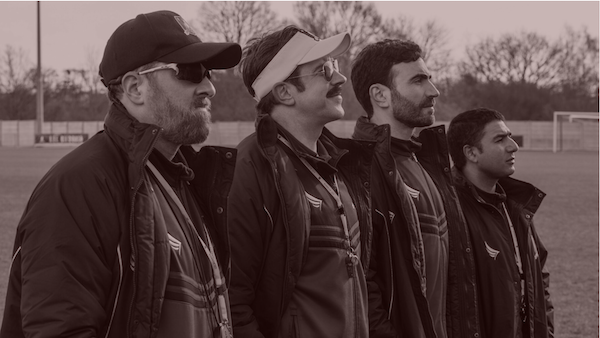
A year-end analysis of what’s working for the various streamers, what the metrics actually mean, and what we still don’t know. Netflix’s decision in November to release more “ratings” data has sparked a big question: Will others follow? I’m not an oracle, but if I were overseeing a streaming platform with, say, 50 million or so customers (roughly the size of both NBCUniversal’s Peacock and ViacomCBS’ Paramount+), there’s no obvious win in disclosing that kind of comprehensive information.
That’s why many companies have instead relied on nonspecific data anecdotes—boasts, really. “Most-viewed launch weekend by an adult-skewing animated comedy!” “Top Spanish-language drama series in non-Spanish dominated territories!” That kind of thing. While not explicitly revealing exactly how many people watched Godzilla vs Kong, for example, these boasts can serve as jumping off points for analysis.
Beyond P.R., what does the bragging actually say about streaming success in 2021? How about failures? And the tougher question: What’s actually working? Here are four key takeaways.
Apple, Billie Eilish, and ‘Referral Value’
ADVERTISEMENT
Prime Video presents the Amazon Original comedy series WITH LOVE, written and created by Gloria Calderón Kellett, and follows the Diaz siblings, Lily and Jorge, who are both on a mission to find love and purpose. Each of the five episodes, set during a different holiday throughout the year, follows Lily, Jorge Jr. and the Diaz family over the course of 12 months as they experience the highs and lows of life during some of the most heightened days of the year. 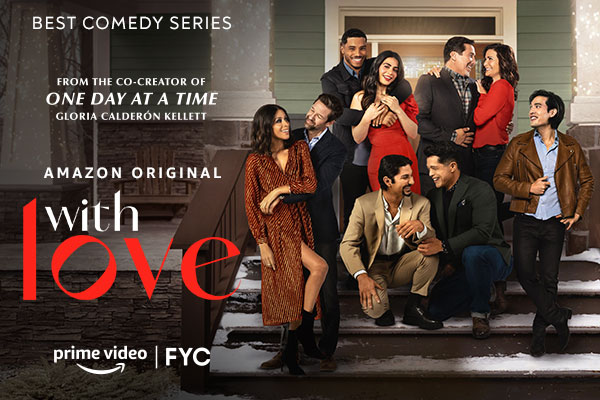
WITH LOVE is awards eligible and available on December 17th at ConsiderAmazon.com.

Assessing Spidey's mega-success and a revealing conversation with sports media mogul Bill Simmons. Regular readers know that I sometimes use this space to chat with people doing interesting things. So when I saw that Bill Simmons’ Music Box documentary series was renewed by HBO on Thursday, I asked if he’d talk to me about music docs, which I know are uniquely difficult to make. The ESPN alum doesn’t do much press outside his popular podcast for The Ringer, the media company he sold last year to Spotify for a reported $250 million. (I know it’s popular because when I’ve appeared on his show, I’ve received texts from half my college friends.) We chatted about his success in this tough genre, which streamers need to merge, and the possibility of a Patriots vs Tom Brady Super Bowl. I edited this down.
Matt Belloni: You produced the popular 30 for 30 doc series when you were at ESPN. And Music Box, with films on subjects like Alanis Morrisette, DMX, Woodstock ’99, and Kenny G, feels similar. What’s the approach?
Bill Simmons: With 30 for 30, we went a little more modern, which I think really helped us. Same with Music Box. We wanted six films that complemented each other, that could be watched by people in their 20s and older, and even someone like my [teenage] daughter, which is why the Alanis pic was such an important idea for us.
Between this series and Ringer shows like The Rewatchables podcast, you’re good at tapping into 90s moments in a way that people who are now of-age can look at with new eyes.
It started with the Eagles doc [in 2013]. I was trying to figure out, Why is this the one that works? So I watched a lot of music docs. A lot of them were too sprawling, the people were too old, the band was always involved, so you could never tell how authentic it was. We try to answer a single question in each one. For instance, Woodstock ‘99 is about: What the fuck happened that weekend?
Music docs are so tough to make good. The artists and labels have a lot of sway because they control the music. You either work with them or you don’t use the music and go the adversarial route. How did you get this done? I did notice that Mark Cimino and Jody Gerson at Universal Music are credited producers.
They’re more than credited producers. They were huge believers in the project and it doesn’t happen without them. It’s not just dealing with artists, you’re dealing with labels, music publishers, managers and gatekeepers and agents. Most people want editorial control.
Right. Plus, you see people like Taylor Swift and Billie Eilish selling “documentary” projects to streaming services for $20 million.
That wasn’t happening when we started in 2018. This was part of my pitch to [then-HBO C.E.O. Richard] Plepler. Our doc on Andre the Giant had done really well and I felt like I had a window to pitch them on something. The Joe Paternomovie came out [in 2018], and I said, “What’s the point of doing a movie like that?” They have to spend like $25 million, and they get 2 hours out of it, and then it’s gone. If you look at 30 for 30 or the O.J. doc, it’s incredible I.P. and the price range was so much lower. For the money on Paterno, we could create a doc series. You get six straight weeks, then you get multiple seasons, and then you get a library. Made sense. We didn’t realize the whole market [for music docs] would skyrocket. All of a sudden, the Billie Eilish doc is selling for $25 million, Taylor Swift selling for $20 million.
Tough to compete.
I feel like we got in right under the wire. We call those “docu-mercials.” I thought the Billie Eilish one was pretty good, but she was still involved, and that’s a tough tightrope to walk.
Do you pay the artists?
No. We say you can do something and get paid and it disappears, or you can do something like this that has the potential to be great and help you more in the long term.
Or someone like Kenny G, whose episode was super interesting, is maybe reconsidered in a new light.
Yes. I talked to [manager] Irving Azoff about the Eagles documentary, and he was telling me about how big an impact it had on their concert sales, their library. How it engaged a whole new group of fans. I didn’t even like the Eagles before that doc, and after I made an Eagles playlist. Like with Alanis and my daughter, you’re creating a new fan.
Let’s talk about Alanis. She participated in the film and is interviewed by director Penny Lane, but then she publicly disavowed it. I watched it, there was some stuff about how her band members treated women, but I can’t figure out why she was so mad. What’s the backstory?
I can’t give the whole backstory, but I will say she was involved in the process with a huge interview, a really good interview. At some point, she became a little disillusioned with the direction the film was going. It was a bummer because I think the film we made is really good.
HBO Documentaries, under Sheila Nevins, had a reputation for a type of doc–a little snobby maybe, and there were usually certain auspices. What you’re doing is more populist, and the major streamers seem to be going in this direction with docs. Do you see this as a big trend or is it just that more people are interested in this format?
I don’t think it’s a shift. I think they’re making more documentaries than they’ve ever made before. The amazing thing about 2021 is how many good filmmakers there are now. Back in 2007 [with 30 for 30], there just weren’t that many great ones. It reminds me a little of the NBA right now. There’s a new generation of stars, but the older stars are able to play longer. LeBron’s in year 19 and he’s still good. This league has like 50, 55 really good players. I see that with documentary filmmakers.
Who’s your dream subject for music?
Fleetwood Mac. Stevie Nicks and Lindsey Buckingham is the best idea. I don’t mind saying it publicly because it will never happen. There’s a lot of artists that have great stories but don’t want to see it on screen. Big stars say, What’s in it for me? And that’s fair.
I think there’s a whole genre of content just based on how famous people lived pre-internet. We’re now in a world where half the population is pre-internet and half is post internet, and they perceive the world very differently. Part of the appeal of this Lakers show that HBO is doing (Winning Time, about the 1980s team) is just about the lifestyle of the NBA before social media and the internet. The fact that James Worthy could get arrested for soliciting a prostitute in Houston and then play in a game that night…
It was definitely a more interesting league. I can’t imagine if that had happened during the Twitter era.
The Ringer is a great success story of the podcast era, and you were in early in transitioning from writing to audio. But you’re owned by Spotify now. So what’s the growth plan?
We got bought and the pandemic happened 10 days later. Our job is: How do we grow sports and culture and all the things we care about? I wanted to grow, I wanted to add more behind-the-scenes people. That’s why I sold. We weren’t shopping the company. We never hired a banker. We plan to use Spotify resources to stay two or three steps ahead. We’ve been bringing in a ton of talent, and we probably don’t get enough credit for that.
Was the pandemic good or bad for listenership?
It didn’t really affect it. The only thing was March, April, May, there was nothing going on. Everything shut down. When there’s nothing going on, it gets a little weird.
Jam Session, my favorite gossip podcast, was pretty grim. They were talking about the good old days when you’d see celebrities at the Malibu Starbucks. What will happen to your brain if there is a Patriots-Tom Brady Super Bowl?
I’ll root for the Pats. I actually predicted this at the start of the season. Everyone thought I was doing a bit. Rooting against Brady is fundamentally difficult for everyone that roots for the Pats. But if Ben and JLo can get back together, then anything’s possible.
You’re smart about media and have a good perspective on Hollywood. Any predictions for 2022?
I think some of these smaller streamers have to merge with each other. It’s become professional wrestling. WWE is like Disney, Netflix, Amazon and Apple, and Apple barely belongs. I don’t know how the others will be able to compete. It’s like you have the Yankees, Red Sox, Dodgers, Giants, but there’s no salary cap and no luxury tax. How do you compete with that? Netflix can just hire whoever they want. They took Tendo [Nagenda, a top film executive] from Bob Iger. They can do whatever they want. Some of [the other streamers] are gonna have to team up. That’s kinda what we love about Hollywood: Terrible mergers at the worst possible time.
If there weren’t bad mergers, what books would Jim Miller have to write??
I think HBO is probably in the best spot because the quality of their stuff is so good. I am completely biased because we have our show there. But they’re just on an unbelievable run. Remember when Thrones ended and everyone was like, “What’s HBO gonna do now??”
I’ll admit, when I turn on the TV, I’m going to the HBO Max app first, a lot more than the others.
I’ll always go to Netflix to see what’s trending. But it’s on less and less. HBO Max has done a really nice job of doing something that we didn’t think was possible. HBO Max was super confusing, super clunky. They fucked up almost all of it. When they were launching, people didn’t even know if they had it or not. But now I actually get what HBO Max is. Sex Lives of College Girls, which is a really good show, I don’t know if that’s an HBO show. That is an HBO Max show.
Oh totally. But I think they need to rename the service and have HBO live within a larger branded offering. Because I think there is still a lot of brand confusion.
A hundred percent. It’s hilarious; that was such an easy fix. They should have just made Cinemax the HBO Max [part]. You go to HBO for HBO and then Cinemax for all the digital [only] stuff. I think it would have made more sense. Or just call it something completely different, like Arrow.
Well, if they called it Cinemax, people might think it was soft-core porn.
Maybe they’d be more likely to go there! It’s funny to watch these streamers try to create their brands. HBO Max has done a good job because I feel like I know what an HBO Max show is. Apple has basically said, Our brand is we’re gonna completely overpay for every project we have and spend an incredible amount of money, and that’s our brand. Which is fine. Great. Netflix is like, “We’re following the algorithm to the bitter end. Our stock is over $600, so we’re doing the right thing.” I get that. I still haven’t figured out what Amazon is. What is Amazon?
Well, I know what they say they are, which is: We’ve pivoted from doing niche shows and movies that bring a brand halo to the retail product, to doing more populist, big tent, all-audience movies and shows. The wins for them are Borat 2, which they bought, and shows like The Boys.
Okay. You kinda semi-talked me into that. We haven’t mentioned Paramount+ yet, and I think it’s incredibly important because I enjoy The Challenge and Beverly Hills, 90210 reruns. They check a lot of my boxes. I have no idea why Yellowstone isn’t on there.
I could explain it to you but it would take a half hour.
It’s the dumbest thing, maybe of all time. I leave you with one last prediction: 2022 could be the year of Pluto. Lots of good stuff happening over there. 90210 channel. There’s an MLB channel where they show old This Week in Baseballs. Johnny Carson. There’s something there.
ADVERTISEMENT 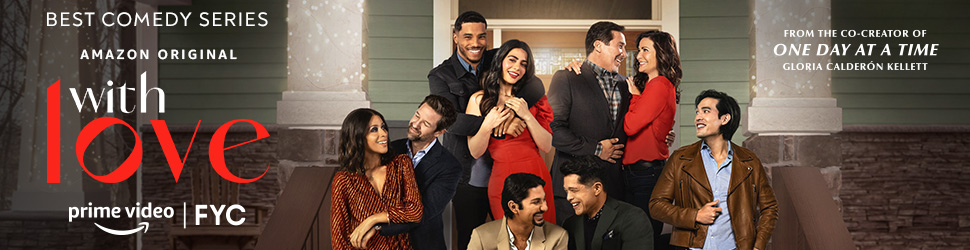
My Reading List
The Feedback
A correction from Thursday’s email: Sylvester Stallone wrote and starred in Rocky but didn’t direct the movie (he did direct a few of the sequels). Apologies to the late John Avildsen. But my error prompted this inspirational email response from a screenwriter. Sly has told this story many times, so you’ve probably heard it. But if not, it’s still great, so I thought I’d share the response in its entirety:
Just for the record, no complaint or anything, but Stallone didn't write, direct and star in Rocky. He did write and star. The story of how that happened is a really good testament to believing in yourself. Stallone in the mid-70s was considered a failed actor, The Lords of Flatbush was it for him. But he wrote Rocky, and he pushed it.
When the day came someone wanted it, he was three months in arrears on his rent and 10 days away from an eviction notice, with no money to move elsewhere. They offered him $350K for the script. He said he wanted to star and they said no. So he told them he'd take half price for the script up front, do the role for SAG scale, against 5 percent of the gross. Nobody saw the script as becoming the movie it did, because the Three Rules of Hollywood are Nobody. Knows. Anything. And then they went and made it, and released it, and someone who disliked boxing as much as my then-wife did went to see it and was standing and cheering at the end, and she wanted to see it again the next night of opening weekend—and she wasn't the only one like that.
Nobody. Knows. Anything. But Sly knew what my late friend/teacher the great Billy Wilder told me: You're only willing to succeed to the degree you're willing to fail. And, if you don't believe in what you're doing, why should anyone else? — A writer
And Finally… We’re all in our holiday bunkers for the next two weeks, but I’ll be publishing W.I.H. on the normal Thursday and Sunday schedule. Send me your nominations for Heroes and Villains of the year, the most interesting deals, biggest tantrums, and other fun year-end stuff.
See you Thursday, Matt
Got a question, comment, complaint, or an animated movie that you think is possibly worse than my kid’s new obsession, Ron’s Gone Wrong? Email me at Matt@puck.news or call/text me at 310-804-3198.
FOUR STORIES WE'RE TALKING ABOUT 
A year-end analysis of what’s working for the various streamers, what the metrics actually mean, and what we still don’t know. JULIA ALEXANDER 
Without a friend in Washington, Russia’s president returns to his usual methods—and threats of violence—to put NATO off balance. JULIA IOFFE 
The recall election of Chesa Boudin is pitting tech’s billionaires against one another—and forcing the city to look itself in the mirror. TEDDY SCHLEIFER 
Notes on the next fiscal crisis, Gorman’s return-to-office pivot, meme SPAC mania, and a ‘Succession’ shout-out. WILLIAM D. COHAN 
You received this message because you signed up to receive emails from Puck.
Was this email forwarded to you?
Sent to {{customer.email}}
Puck is published by Heat Media LLC.
For support, just reply to this e-mail. For brand partnerships, email ads@puck.news |


SHARE