Welcome back to What I'm Hearing...
Hello and happy Succession Sunday to all.
Reminder: My emails are for members of Puck, the new media company focused on the power centers of Hollywood, Silicon Valley, Washington, and Wall Street. If this email has been forwarded to you, you can sign up for a membership here. (Yes, we have group subscriptions, just email fritz@puck.news for details.) Thanks.
But first…
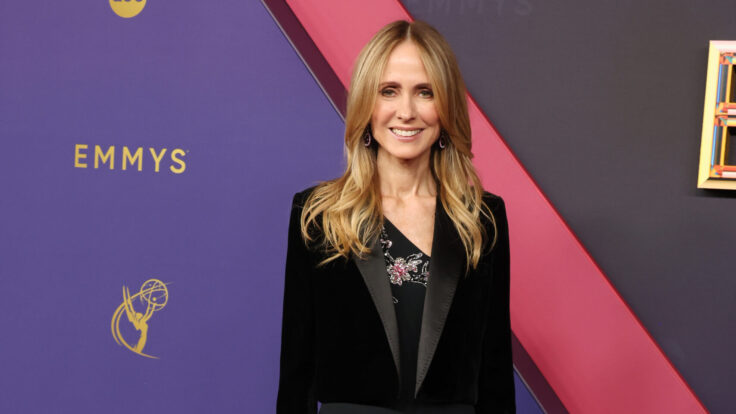
Who Won the Week: Donna Langley–It’s a double-win for the Universal film chief. Her Halloween Kills not only opened to $50 million (on a $23 million budget) despite being available on streaming, but the movie also caused Peacock to shoot to No. 1 on Apple’s app download rankings, something that hasn’t happened since the Olympics.
Now back to the Chappelle controversy…
Sponsored by Amazon Prime Video 
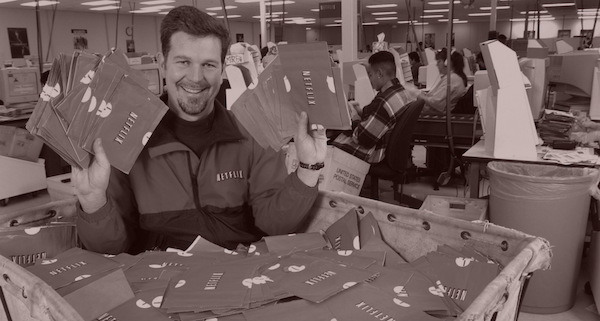
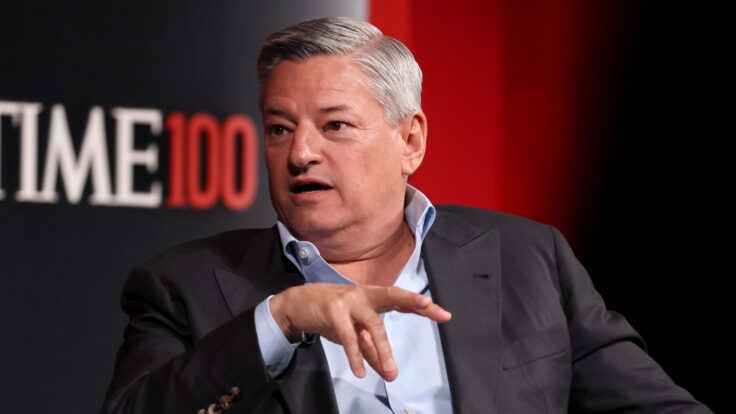
From the beginning, Reed Hastings has operated Netflix like his employees are part of a small family in a quiet Silicon Valley utopia. But with the Chappelle flap, it doesn’t appear that comms strategy is tenable any longer. Netflix co-C.E.O. Ted Sarandos has taken most of the heat for Dave Chappelle’s anti-L.G.B.T.Q.+ special, The Closer. But an underrated aspect of this communications and employee relations disaster actually takes its root in the business philosophy of the company’s other co-C.E.O., Reed Hastings.
From the beginning, Hastings has operated Netflix like his employees are part of a small family in a quiet Silicon Valley utopia. It’s all in his management advice book from last year: Everyone’s an adult here, he says. Direct and brutal honesty is rewarded. “Sunshine” your problems so everyone knows about them … and can learn. Give employees access to their colleagues’ salary information and strategy documents, just tell them not to get jealous or competitive. And company communications—even on controversial topics or with sensitive information—should be delivered directly to staff with the expectation that they not be shared outside the company. We trust you, so you trust us.
That’s nice, especially for a company that also uses data as a sledgehammer and fires people so often it’s become an internal joke. But it doesn’t appear that Hastings’ comms strategy is tenable any longer. Or at least there will be consequences for clinging to it, as Netflix saw last week with the Chappelle flap. A media darling suddenly found its employee uprising on the front page of The New York Times, with a digital walkout forthcoming. And who knows what’s next?
Netflix now has more than 12,000 employees in dozens of countries, and many of its decisions are bound to be unpopular with vast swaths of them. It has grown so large, and become so siloed and faceless in every other aspect of its operation—especially during the pandemic, when everyone’s solo at home—that it sort of needs to grow up, itself, and, in my opinion, start treating its employees like, well, employees.
That happened to its Valley peers, too, as early employees at Google and Facebook have said. I’m no business school professor, but it seems like a naïve pipe dream for a massive organization to expect its angry employees to refrain from acting out in response to something like the ham-fisted defense of Chappelle. And this is why so many in Hollywood were laughing when the whole thing blew up. Netflix was operating like this was an internal issue; everyone else knew this was both internal and external, and it was playing horribly in both arenas.
Most large media and entertainment companies, when they communicate with employees on controversial subjects that are being covered in the press, usually also send the correspondence to journalists. After all, the emails or town hall presentations likely will leak anyway, so you might as well control the timing of the messaging and get ahead of any potential backlash, right?
Netflix doesn’t do that; it’s just not the Hastings way. And for much of its existence, that strategy helped build a culture of trust: to the point where correspondence on past controversies, like the 13 Reasons Why copycat suicides and the uproar over racy images of children used to promote the documentary Cuties, never leaked.
But now Netflix’s internal memos do leak, as did a financial breakdown of Chappelle’s show, for which the alleged leaker was fired. The company is past that inflection point. The strategy made a bad situation worse. Sarandos’ first memo, sent on a Thursday to higher-level employees, stated his general belief that hateful content doesn’t inspire real-world violence. He then followed up on Monday with a second memo to all employees, which was designed to respond to specific questions and articulate a more detailed defense of the special by comparing it—bizarrely—to violent, first-person video games which, he said, have proliferated despite lower crime rates in some countries.
A clumsily worded statement internally was made markedly worse externally when that second memo leaked to the press days after it was sent; it played as Sarandos “doubling down” on an objectionable rationale, rather than simply explaining to a larger group of employees what he was thinking, as was intended. The same thing happened when three employees were suspended for attending a managers’ meeting without permission. Of course that leaked, and it looked like retaliation for criticism, rather than a separate policy violation. (Those employees were soon reinstated.) The bottom line: Netflix could have controlled this situation a lot better if it realized it wasn’t just communicating internally, but externally too, as befitting a $280 billion company.
ADVERTISEMENT
Amazon Studios presents ENCOUNTER, starring Riz Ahmed and Octavia Spencer. A decorated Marine goes on a rescue mission to save his two young sons from an unhuman threat. As their journey takes them in increasingly dangerous directions, the boys will need to leave their childhoods behind. Variety calls ENCOUNTER "a tightly orchestrated, genre-defying road thriller." 
ENCOUNTER is in theaters December 3rd, and streaming December 10th on Amazon Prime Video.
This extends to Netflix’s P.R. strategy in general. Its global communications chief, Rachel Whetstone, who I’m told played a large role in the Chappelle comms strategy, is known for rarely talking to journalists, and almost never on the record. (Whetstone came to Netflix after stints at Facebook, Google and Uber; she replaced Jonathan Friedland, who, if you remember, resigned in 2018 after he used the N-word in a meeting.) The company is currently without a U.S. comms leader after Richard Siklos stepped down last month.
Netflix prefers to let talent speak for themselves when it comes to the content on the service, but in this situation, Chappelle probably wasn’t the best advocate for himself, as he proved when he told a crowd at the Hollywood Bowl that he was “loving” being canceled. The rest of the response seemed like it came from a company so used to a fawning news media that it dramatically underestimated how this would all play out.
I’m certainly not telling Reed Hastings how to run his company. He’s done pretty well disrupting the entire entertainment industry on his own. And Netflix isn’t alone among tech companies with communications issues, of course. (Facebook has got to be loving every Chappelle headline. ) But the inflection point has been reached, and the Netflix backlash will probably be worse next time it faces something controversial—which it will, of course, and probably soon. Whatever it is will likely become another major scandal if handled the same way.
Quote of the Week “This is a petty and vindictive move. It is actually an insult to the industry.” –Joey Berlin, the Critics Choice Awards president, calling out the Hollywood Foreign Press Association for announcing what I tipped last week—that Golden Globes will be given out, even without an NBC telecast, on the usual first Sunday in January. That’s the same night that the Critics Choice show had (vindictively?) staked out on the CW to steal the Globes’ audience.
“We Want to Be Disney”: Maverick Carter Is a Buyer Now
Much has been made lately in Hollywood, and on Wall Street, of the value of talent-based production companies. That’s partly because former Disney executive Kevin Mayer has been running around with $2 billion of Blackstone’s money, trying to purchase and roll up these entities. Add to that the eyebrow-raising $900 million value ascribed to Reese Witherspoon’s Hello Sunshine shingle this summer when she sold to Mayer’s group—even though, as I attempted to explain at the time, the price tag wasn’t really $900 million.
It’s a sign of the times that the very famous person’s mantra has morphed from What’s my quote? to What’s my valuation?.
Maverick Carter, C.E.O. of SpringHill Entertainment—the entertainment, marketing, and activism company fronted by N.B.A. superstar and very famous person LeBron James—has been at the center of much of that chatter. So when I saw the news on Thursday that Springhill had rebuffed sale offers and raised another round of funding that valued the L.A.-based company at around $725 million, I figured I’d give him a call to chat about it.
Carter, 41, grew up with James in northeast Ohio and, since launching SpringHill in 2008, has grown the company to 141 employees, with revenue of about $100 million expected in the next year. SpringHill is a producer for hire (NBC’s The Wall, Netflix’s Self Made miniseries) and owns a few formats (HBO’s The Shop talk show, which is excellent, and More Than an Athlete on ESPN). But it’s also got that extra stuff that is so attractive to investors these days. Its creative agency, The Robot Company, helps blue chip conglomerates like GM and JPMorgan Chase; it runs the athlete-focused product and media brand Uninterrupted; and an activism division has launched initiatives like the More Than a Vote registration drive that made a difference in Georgia in 2020. In James, it also has a 6’9’’ megaphone that can be deployed to market these projects to 150 million followers on Instagram and Twitter alone, just as he did with Space Jam: A New Legacy this summer.
At a time when legacy media companies are trying desperately (and usually failing) to appeal to younger, more diverse audiences, SpringHill has a clear vision “at the center of the empowerment space,” Carter says, with a workforce that is half women and two-thirds people of color. The new minority investment—from Gary Cardinale’s RedBird Capital, John Henry and Tom Werner’s Fenway Sports Group, Nike and Fortnite creator Epic Games, with Carter and James maintaining their majority ownership and operational control—gives SpringHill an enviable valuation. But those numbers don’t mean much for Carter’s day-to-day job, and he seemed uninterested in the attention they get.
“I know the articles and the headlines like to focus on the valuation,” Carter told me from New York. “But we don’t think of it like that. We are building a company, and this is the next step, with the right partners. This [money] will allow us to do strategic M&A, finance projects, buy I.P., pour gasoline on our aspirations for this company and what it can do.”
The funding round—and the doors that will likely open via those strategic investors—means that, at least for now, SpringHill is a buyer, not a seller, a strategy that led to Carter passing on a deal with Mayer’s group. “We did meet with them a little bit,” Carter said. “I have a lot of respect for Kevin and Tom Staggs and what they are building. We wanted to go this direction, but I wish them the best.”
If there’s any skepticism in Hollywood about SpringHill, it’s focused on whether the company can continue to thrive once James, 36, ends his hoops career. Ex-athletes tend not to command the cultural conversation like they do when they’re playing. “That’s a silly question,” Carter responded when I asked about this. “If anything, LeBron will be more engaged in what the company is doing [when he retires from basketball].” The goal, of course, is to use this time to grow SpringHill into a company with a stronger brand, reputation, and track record that is separate and distinct from James’ appeal as a sports star.
After all, there aren’t many rooms James, Carter and financial advisor Paul Wachter can’t get into these days, but that might not last forever. Carter and chief content officer Jamal Henderson want shows on multiple networks and streamers; they want to finance and produce films; and with Epic as an investor, they want to become a digital player.
“We want to be part of the metaverse, and they’re out there creating the metaverse,” Carter said when I asked why they brought in Epic. He’s referring, of course, to the theory that the next front in media will be a digital environment where everything from movies to music to social media and e-commerce will exist side-by-side in one “meta” digital experience. LeBron spent some time in Fortnite this summer, and Carter sees the potential. “It’s where everything is going,” he said.
I couldn’t think of an exact comp for what Carter and his team have built, and are trying to build, so I asked what the next five, ten or twenty years might look like.
“We want to be Disney,” Carter said unironically. Really? “We’re ambitious, we’re aiming high.”
So, like a LeBron theme park? I asked.
He laughed. “No.”
ADVERTISEMENT 
My Reading List
Wage gains, weekends off, benefit contributions, diversity initiatives, and potty breaks guaranteed: Sounds like the down-to-the-wire strike threat worked for I.A.T.S.E. [L.A.T.]
Netflix: Kindly please stop talking about Dave Chappelle and look at these amazing Squid Game numbers: 133 million starts, and two-thirds finished the whole thing. [Bloomberg]
More Squid Game: Disney launches its own ambitious Asian local production initiative, and everyone gets excited by how cheap these foreign shows are to make. [CNBC]
Scientific proof: Fame makes you an unhappy person. [The Atlantic]
Katie Couric has always loved seeing her name in the headlines, but this firebomb-everyone book strategy might be backfiring. [WaPo]
The Netflix awards campaign infantry has marched into Pacific Palisades, taking over the lease at the Bay Theater in its ongoing effort to convince neighborhood Academy members they aren’t voting for TV movies. [L.A.T.]
Watch and listen…
I was on CNN’s Reliable Sources this morning talking with Brian Stelter about the Chappelle controversy (link here), and I discussed it at length with Kim Masters on The Business (here) and Peter Hamby on Puck’s The Powers That Be (here).
Barbra Streisand Had Some Notes on Her Academy Museum Sign
This might be the most Barbra Streisand story ever told, so prepare to forward this email to your mother.
Like most $500 million showplace cultural institutions, the new Academy Museum in Los Angeles features a design by heralded Italian architect Renzo Piano and a meticulous interior layout by Renzo Piano Building Workshop. Every inch of this place is scrupulously thought out, from the views of the Hollywood sign on the open-air event deck to the exposed concrete ceilings of the refurbished May Co. building.
That intentionality also applies to the fonts and colors of the donor names sprinkled liberally throughout the museum: The Spielberg Family Gallery, the Dolby Family Terrace, Roddenberry Lane; some big names paid big money (well into the seven figures, I’m told) for the privilege of slapping their names on part of Hollywood’s new temple to itself. The museum even sold pillars for $1 million a pop.
Yet Piano’s team designed the signage to be muted, mostly white-on-white with only slightly raised lettering and no special lighting. When cruising the collection, your eye glides right past most of the names, which is probably the point. (Katzenberg lucked out; his family gallery signage pops because it happens to sit on part of an orange mural.)
The donors were all shown their signage in advance of the opening in late September. And while I’m told there was a little grumbling about the lack of visibility—these are Hollywood people, after all, so everyone knows the value of a good credit—the building design is by a Pritzker Prize-winning architect, so who’s to argue, right? Everyone signed off.
Well, everyone except one. Barbra Streisand, namesake donor of the BARBRA STREISAND BRIDGE, which connects the fifth floor of the museum building to the event deck with those stunning views, didn’t love how her sign looked, so she asked for some changes to the metallic lettering and background. And, as anyone who has worked with the famously-meticulous filmmaker-singer-star over the past 60 years knows, Babs usually gets what she wants. So the museum scrambled to change the signage to make her happy, and now the BARBRA STREISAND BRIDGE is indeed slightly more legible to the casual eye. No shame, of course; this is why Barbra is Barbra, and if I donated that kind of money, I’d probably demand a police siren and one of those movie premiere searchlights pointed at my name.
A museum spokesperson confirmed the sign spat but wouldn’t say Streisand was the complainer, and Barbra’s rep asked me to email her the question and then didn’t respond. “All named space donors were sent renderings of their signage and confirmed their approval in writing,” the museum rep emailed me. “In one instance, a donor felt their signage needed to be slightly adjusted, so we worked with them to make adjustments prior to opening. This involved frosting glass behind the signage to stabilize the contrast between the letters and their background (light was hitting the letters in such a way that they became less legible at certain times of day). This issue was quickly resolved and to our knowledge all our donors are pleased.”
Streisand was so pleased, in fact, that she posted this lovely shot on Instagram and fed the image (with a quote about how “bridges connect us”) to People magazine. Fantastic. Congrats to all involved. 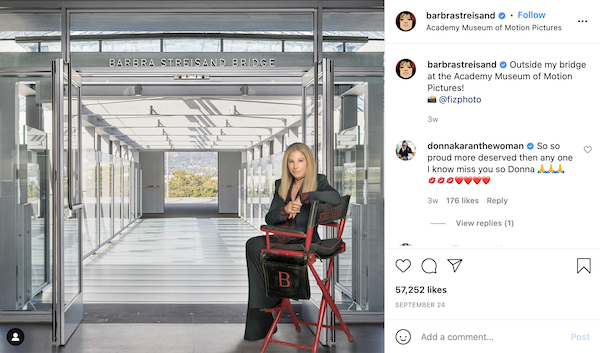
The Feedback Some interesting responses to my Thursday analysis of Netflix’s Chappelle fiasco. Rather than include a bunch of short comments, here’s one longer one that illuminates a nuance of corporate communications strategy that I missed…
“The origin of this problem from a P.R. standpoint isn’t how Netflix is handling this specific incident, but how they conditioned their employees, the media, and stakeholders on what to expect of them: That they are progressive, and tolerant, and will always side that way. It’s easy to do that when all it requires is sending out a tweet, or an internal email, or making a donation. But when they actually aren't willing to make substantive decisions/trade-offs that reflect that promise, it leads to a disaster like this. Of course the media and their employees are critiquing; they are surprised because Netflix taught them to expect they would never air content like this. Netflix wanted to be perceived [a certain way] but didn’t realize you actually have to live up to it. This is what happens when you create a brand/image that you like but that doesn’t actually reflect your policies, what’s good for your business, or your actual decision-making.”–a publicist
And this thoughtful note came in response to my item last Sunday on the Academy’s new “Inclusion Standards” form, which requires film producers to categorize and report the diversity of their cast and crew to be eligible for a best picture Oscar…
“I filled out those ‘diversity forms’ for an Oscar submission recently … and it felt disrespectful and dismissive for me to categorize my cast and crew as having some qualifying value because of their skin color, ethnicity, or gender. (I refused to answer any sexual preference questions about them, as I find that absolutely none of my or anyone else’s business.) What feels disrespectful to me as the director/producer and to them as actors and crew members, is that they were hired because they were deemed to be the best for the job. Sure, we had a lot of females, those with different skin colors, and backgrounds, but to then reduce them to some morphology stripped them of all the skills, temperament, and work ethic that caused them to be hired. They weren’t hired for their skin color, gender, or heritage—they were hired because they were good at what they do. While I understand the effort the Academy is trying to make, I think it belittles the hard work people put in to be hired to begin with.”–a filmmaker
And Finally…
Last Sunday, I implored the What I’m Hearing… community to help me identify the anonymous rich guy who financed and then abruptly un-financed Mark Gill’s independent film distributor Solstice Studios, causing it to wind down right after it shoots a Ben Affleck movie. Thanks to a well-informed tipster and my Signal account, I think I’ve figured it out. I’m not 100 percent certain, and the brothers (brothers!) haven’t returned my call to confirm, so I won’t include their names here. But if you care, just email or text me and I’ll tell you.
Have a great week, Matt
Got a question, comment, complaint, or an extra adult-sized Paw Patrol costume lying around? Email me at Matt@puck.news or call/text me at 310-804-3198.
FOUR STORIES WE'RE TALKING ABOUT 
Bob Chapek has asked some of his closest deputies to explore the strategic rationale for potentially decoupling from the sports network. DYLAN BYERS 
Glenn Youngkin is within a few points of becoming the first Republican statewide office-holder in 12 years. But he’s still obligated to genuflect to the Trump base. PETER HAMBY 
The streamer's rationale for defending Chappelle’s transphobic routine has deepened an internal crisis that is not going away. MATTHEW BELLONI 
Most financial projections are rosy, as Wall Street well knows. But winning the case may prove more troublesome than having opened it at all. WILLIAM D. COHAN 
You received this message because you signed up to receive emails from Puck.
Was this email forwarded to you?
Sent to {{customer.email}}
Puck is published by Heat Media LLC.
For support, just reply to this e-mail. For brand partnerships, email ads@puck.news |


SHARE