Hello, and welcome back to What I'm Hearing...
For those new here, I’m Matt Belloni, a former entertainment lawyer and editor of The Hollywood Reporter. This email is part of Puck, our new journalist-owned media company focusing on the power centers of Hollywood, Silicon Valley, Washington, and Wall Street. If this email was forwarded to you, you can sign up for a membership here. (Yes, we have group subscriptions, just email fritz@puck.news for details.) Thanks again for your support.
Some Thursday Thoughts…
I’m not much of a gambler, but if I were….
I’d guess there’s a 25 percent chance of an I.A.T.S.E. strike shutting down Hollywood on Monday. I have no inside information on this one, but I still believe both sides want a deal, and the studio people I talk to are terrified of a shutdown just as productions are coming back.
I’d also bet good money that the Broccolis will finally authorize a James Bond TV series or a new video game. They need to. Have you seen those exit numbers on No Time to Die? Just 20 percent of opening weekend audience was under 25, compared to 41 percent for Spectre in 2015. Yikes. This franchise will grow old and die unless young people are given a reason to care. And that means a streaming show or a modern video game, pronto.
Another number to monitor: Amazon just renewed Jack Ryan for Season 4. What’s the over-under on how many showrunners John Krasinski will blow through during the life of the series? Four? Five?
Also...
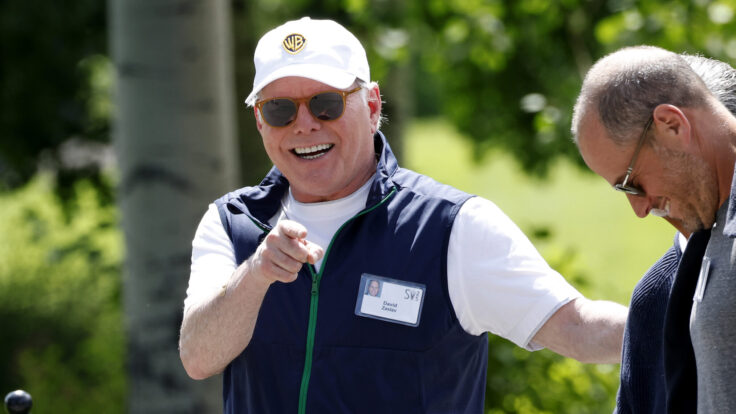
For those monitoring who’s in (and not in) the inner circle of incoming Warner Bros. Discovery chief David Zaslav these days, here’s who his team lined up for secondary interviews in this month’s highly choreographed Vanity Fair profile: Nancy Pelosi, Steven Spielberg, Oprah Winfrey, John McEnroe, Rich Gelfond, Hon. Richard Berman… and Joy Behar.
Sponsored by Amazon Prime Video 
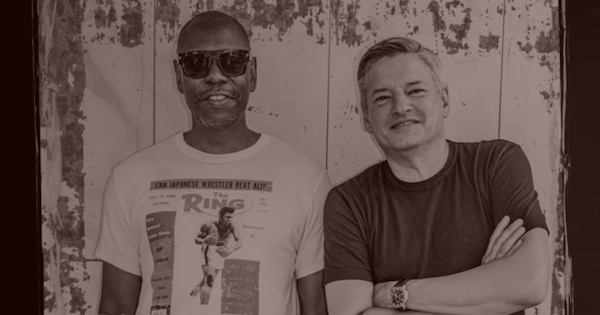
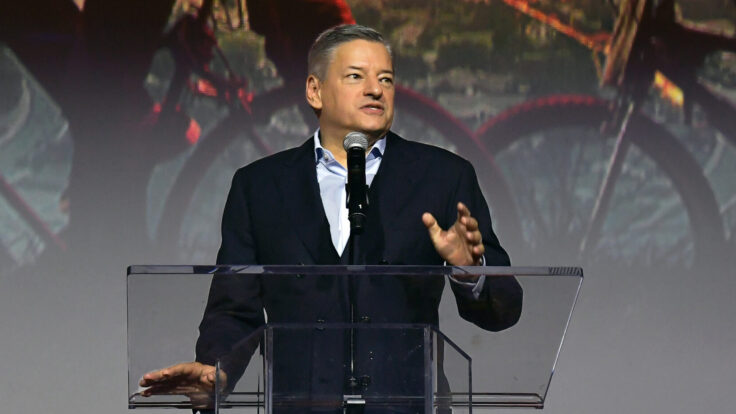
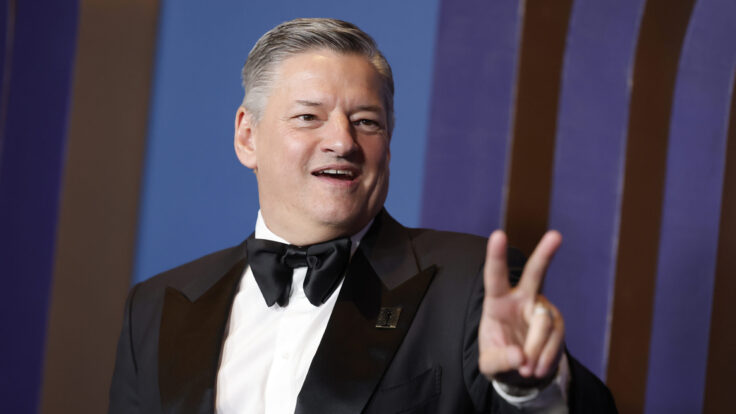
Netflix’s economic rationale for defending Chappelle’s transphobic routine has deepened an internal crisis that is not going away. When I texted Hollywood executives and comms pros this week about how the streamer is managing the controversy, a consensus emerged: Good policy, horrible P.R. The last time I was at Ted Sarandos’ house, in late summer 2020 to interview him and wife Nicole Avant for a Town and Country magazine profile, I took a moment to peruse the bookshelves of the sitting room. Next to framed pics of the Netflix co-C.E.O. with various Democratic politicians sat book after book by and about comedy legends: Carl Reiner, Jerry Seinfeld, Richard Pryor, Tina Fey, Judd Apatow, Steve Martin, and so on. A veritable library of comedians.
“Ted is a huge comedy fan,” Jimmy Kimmel told me for the profile. That was an understatement. Sarandos is a student of comedy; he knows the history and worships the gods. It took Netflix only a couple years to corner the market on A-list stand-up specials, doling out eight-figure deals to stars like Amy Schumer and Kevin Hart, destroying the dominance that HBO and Comedy Central had built over decades. Sarandos considers guys like Will Arnett and Ricky Gervais his personal friends. When I asked him to name a mentor type that he admires, he cited Lorne Michaels alongside Norman Lear. A dinner party at the Sarandos house might include past guests Chris Rock, Adam Sandler, Jeff Garlin, or Tiffany Haddish—or perhaps even one of Ted’s favorites, Dave Chappelle.
So of course Sarandos is standing by Chappelle, despite the furor over the new special, The Closer, which is basically 72 minutes of ad hominem attacks on the transgender community, in particular, and L.G.B.T.Q.+ people, in general. For Sarandos, this is personal. He believes in the stand-up mantra, that good comedy often—and perhaps even necessarily—pushes boundaries, makes people uncomfortable, and sometimes stokes anger. The alternative scenario—a world of comedy by committee, or censorship for hurt feelings—would have neutered some of the greats he loves, like George Carlin or Eddie Murphy or Joan Rivers.
The Sarandos mantra has been good for Netflix, and it also happens to make business sense in this case—in the cold, algorithmic, big-picture sense that has become the hallmark of Netflix’s Hollywood strategy. But we’ll get to that in a second.
First, have you actually watched The Closer? I did, and… wow, it’s really hateful. I consider myself an average Chappelle fan; he’s often brilliant, and I’ve enjoyed his past specials despite the bizarre fixation on trans people. But this isn’t just a couple transphobic jokes. The entire set seems engineered not merely to push boundaries, but rather to attack. It’s beyond doubling-down; he’s seeing how far he can go, and judging by his comments at his Hollywood Bowl show last Friday, he seems delighted by the outrage.
I’ve spoken to people at Netflix who say that they predicted this firestorm was coming. But the better question is, How could you not? Some insiders were counting the days until Closer was condemned by advocacy groups like GLAAD—which has now happened multiple times, of course, with some calling for it to be taken down. Dear White People co-showrunner Jaclyn Moore said she’s “done” with Netflix; media outlets that usually fawn over the company have been pumping out negative coverage; three openly-critical employees were suspended and then reinstated after outcry; and, at last count, more than 1,000 of Sarandos’ own staffers are planning a “digital walkout” to protest the special and Sarandos’ defense of it. This is now an official Problem for Netflix.
Mine isn’t the voice you want to read on why Chappelle’s words are so harmful, and I won’t repeat the slurs and cringe-worthy punchlines here, so I’d recommend checking out poet Saeed Jones in GQ; Parker Molloy’s Substack, The Present Age; or author/tweeter Mark Harris, for a good sense of why this is such a big deal. Roxanne Gay put it nicely: “This is a faded simulacrum of the once-great comedian, who now uses his significant platform to air grievances against the great many people he holds in contempt, while deftly avoiding any accountability. If we don’t like his routine, we are the problem, not him.”
ADVERTISEMENT
Amazon Studios presents ANNETTE, directed by Leos Carax. Henry (Adam Driver) is a stand-up comedian who falls in love with Ann (Marion Cotillard), a world-renowned opera singer. With the birth of their first child Annette, a mysterious girl with an exceptional gift, their lives are changed forever. Directed by Leos Carax. New York Magazine raves, “This astoundingly beautiful picture will stand the test of time.” 
ANNETTE is streaming now on Amazon Prime Video.
Netflix has to back its talent here, right? Especially a controversial, high-profile piece of talent like Dave Chappelle. Sure, there’s the slippery slope argument: If Chappelle isn’t OK, what’s next? But it’s also because standing by talent is a mission-critical business strategy for Netflix, more so than for most media companies. Since Netflix launched originals in 2013, Sarandos has screamed “more freedom” to the creative community. That’s not always true, as many producers will gripe over drinks, but this concept has been a key differentiator in helping Netflix disrupt traditional television.
Streaming isn’t just on-demand TV, the Sarandos argument goes, it’s different and better. Digital delivery frees Netflix from broadcast TV’s “decency” standards; its newness eliminates the content guardrails of established brands like Disney or CBS, allowing “Netflix” to stand for something different for everyone, even those who like more extreme content; and its pure-play video business offers more opportunity to stretch creative boundaries than at multi-agenda conglomerates like AT&T or Comcast. Subscribers now expect volume, diversity, and, yes, button-pushing. Wall Street loves it too. Like the old HBO slogan, It’s not TV, it’s Netflix… and Netflix is more than TV.
Preaching that mantra has essentially been Sarandos’ job for a decade now, and he’s very good at it. The only reason Hollywood opened its arms to a ruthless tech company designed to kill the traditional entertainment business was because it was perceived from the beginning as a talent-friendly operation. Sure, Netflix has censored content before, notably Hasan Minhaj’s show in Saudi Arabia, and a suicide scene in 13 Reasons Why. But both those decisions furthered the business objectives of Netflix.
By contrast, taking down Chappelle’s special probably would have severed Netflix’s relationship with him, threatened its ability to lure other comics, and angered talent in general over the question of Who’s next? It also would have set a precedent that Netflix would battle over future controversial projects. Well, you took down Chappelle, so…
This can be true despite the ham-fisted and tone-deaf manner in which Netflix has gone about communicating its Chappelle defense. Oh man, who’s advising Sarandos on this stuff? The strategy makes Disney’s spiteful response to Scarlett Johansson’s lawsuit look like a Master Class in public relations. (A Netflix rep declined to discuss the communications strategy.)
Let’s start with that first memo that Sarandos sent to higher-level staff last Thursday, wherein he justified the special, essentially, by saying it’s popular. Chappelle is a big star, Netflix has a long relationship with him, his shows perform really well, and we’re a platform for all types of content, so we’re sorry if you’re offended. It was very Facebook-y in nature, a Silicon Valley-style, college libertarian defense of the “marketplace of ideas,” and popularity as an arbiter of appropriateness. Chappelle = engagement, and engagement is good for Netflix, so who cares if the content is irresponsible? Not a great look for a video service that is supposedly highly curated. It’s similar to how Spotify reacts whenever Joe Rogan, its biggest podcast star, says something abhorrent: He’s popular, we are just the platform, and what an incredible business we’ve got going!
Netflix insiders were quick to counter that argument, leaking to Bloomberg that The Closer cost about $24 million, much more than the average hour of Netflix programming. Chappelle certainly isn’t as “efficient” as Squid Game, they seemed to imply, but the big takeaway is that usually tight-lipped Netflix employees are pissed enough to leak both the financial information and Sarandos’ employee communications. The internal anger is widespread.
“We don't allow titles on Netflix that are designed to incite hate or violence, and we don't believe The Closer crosses that line,” Sarandos wrote in that first memo. OK, that’s a reasonable standard, although it’s hard to apply to actual content. I’d argue that Chappelle’s obsession with trans people exhibits a desire to at least encourage hate. “I’m going all the way,” he warns the audience when a few groans are heard during an early joke. “It gets worse,” he declares later. “Oh buddy, I’m in trouble now,” he says, mocking those who might be offended. Even under the loosened standards for stand-up comedy—and the standards definitely are looser than, say, a scripted show or a movie—this is deliberately over the top.
But then Sarandos sent a second memo, this one to all employees, and it got weird. “While some employees disagree, we have a strong belief that content on screen doesn’t directly translate to real-world harm,” he wrote. Then he waded into the violent content debate that has been raging since Oliver Stone’s Natural Born Killers, noting that crime rates have gone down in many countries while the popularity of first-person shooter video games has gone up. “Adults can watch violence, assault and abuse—or enjoy shocking stand-up comedy—without it causing them to harm others,” he wrote.
ADVERTISEMENT 
Partly because Netflix is now so dominant, and partly because the company and Sarandos himself are usually the subject of such promotional media coverage, others in Hollywood seem to be savoring this controversy. Yes, everyone is terrible, but there’s also some genuine schadenfreude at work here. Netflix has positioned itself as more progressive and more transparent than its Hollywood rivals. They’re enlightened, even, taking leadership positions on things like the boycott of the Golden Globes over diversity issues, and allowing employees to access company-wide salary information and encouraging them to “sunshine” their problems in the name of openness.
Now it finds itself battling progressive activists, the trans community, the media, and some of its own employees, all while trying to serve its business agenda in a competitive environment. It’s not an easy highwire to walk, and we’ll see what Sarandos really thinks about this issue when his buddy Chappelle’s deal comes up for renewal. For now, I think this fight probably ends with Netflix agreeing to add a content warning on the front of The Closer, stating clearly what the company stands for and encouraging viewers to seek information on L.G.B.T.Q.+ and trans rights organizations.
That move would present its own slippery slope (which other specials might need a similar warning?), and Chappelle might not love it, but it would at least send the message that Netflix knows this particular piece of content did cross a line, even if it’s a line Sarandos would like to pretend doesn’t exist.
See you Sunday with a fun and (I hope) informative newsmaker interview, Matt
Got a question, comment, complaint, or an extra Xanax for tonight’s Dodgers-Giants game? Email me at Matt@puck.news or call/text me at 310-804-3198.
FOUR STORIES WE'RE TALKING ABOUT 
Welcome to the future of ESPN in the digital era: star-studded, simulcast, and potentially positioned to compete with streaming. MATTHEW BELLONI 
Glenn Youngkin is within a few points of becoming the first Republican statewide office-holder in 12 years. But he’s still obligated to genuflect to the Trump base. PETER HAMBY 
Despite coverage suggesting the contrary, Facebook is not facing an existential crisis, and Frances Haugen is far from Facebook's worst nightmare. DYLAN BYERS 
Most financial projections are rosy, as Wall Street well knows. But winning the case may prove more troublesome than having opened it at all. WILLIAM D. COHAN 
You received this message because you signed up to receive emails from Puck.
Was this email forwarded to you?
Sent to {{customer.email}}
Puck is published by Heat Media LLC.
For support, just reply to this e-mail. For brand partnerships, email ads@puck.news |


SHARE