Welcome back to What I’m Hearing...
First, a big welcome to the newest Puck author, Eriq Gardner. For those who didn’t see the news in Axios, Eriq is simply the best writer and reporter covering the intersection of media and law. I worked with him for many years at The Hollywood Reporter (he was my first hire back in 2006!), so I’m thrilled he’s decided to join our new company.
When he starts at the end of the month, Eriq will cover the broad legal landscape at this critical moment—analyzing everything from Big Tech antitrust issues to digital actors and NFTs. He’ll contribute to What I’m Hearing (I’m not going anywhere; this will still be primarily a space for my writing and reporting) and the Puck website and podcast, before expanding his purview in exciting ways. I’ll soon be offering ways to get direct updates from Eriq, and I encourage you to sign-up. After all, he will probably know you’ve been sued before you do.
Welcome, Eriq! He chatted about the move with Above the Law here. More Puck news is percolating, so watch this space.
Sponsored by Amazon Studios 
Thursday Thoughts…
Woody Allen Is Officially Huge in China
China is just trolling Hollywood now, right? There’s still no release date for Spider-Man: No Way Home, even though the last Spider-Man grossed $200 million there. Yet a big congrats to Woody Allen, whose A Rainy Day in New York—yes, that Rainy Day in New York, the radioactive film that was completed in 2018; abandoned by Amazon Studios amid the molestation accusations from Allen’s daughter, Dylan Farrow; denounced by its stars; opened in Europe in 2019; and quietly dumped in six U.S. theaters in 2020 (selling a reported 300 tickets)—has now, in 2022, secured a coveted China release. It’s a first for the 86-year old director.
I’m guessing the inclusion has more to do with star Timothée Chalamet, whose Dune just grossed $30 million in China. But the newly-crowned world’s largest movie market is nonetheless a coup for Allen, who has been unable to recruit starry casts or find U.S. distribution for his movies amid the sexual abuse claims (which he has denied). Incidentally, Rainy Day is still available to watch in the U.S. on Amazon Prime Video, despite the company’s public falling out with Allen and the settlement of a nasty $68 million lawsuit. The film was uploaded via Prime Video Direct, which anyone can use, by U.K.-based Signature Entertainment, the movie’s distributor.
Speaking of China…
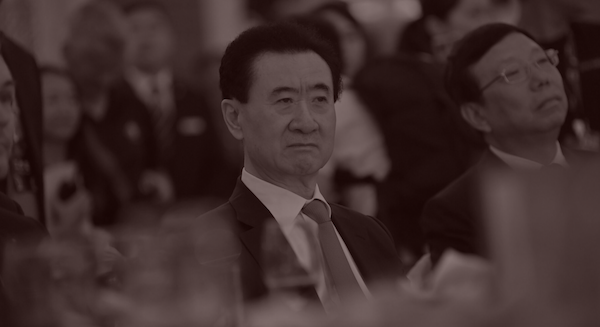
A candid conversation about China’s cultural imperialism, the rise and fall of Wang Jianlin, and how Beijing learned to beat Hollywood at its own game. One of the biggest business bungles of the 2010s might be how badly Hollywood got played by China. It’s downright embarrassing. An industry full of people with supposedly acute bullshit detectors pinned its hopes on a repressive government that offered no reason to be trusted, and business tactics designed to extract the knowledge needed to clone the product and dethrone its originator. Everyone went along with it, seeing only potential dollar signs.
Remember that big welcome-mat event at LACMA in Oct. 2016 for Dalian Wanda C.E.O. Wang Jianlin? It was a Who’s Who of well-dressed sycophants, with L.A. mayor Eric Garcetti and Academy president Cheryl Boone Isaacs fawning over China’s then-richest man—a real estate developer who called himself “The Chairman,” like he was Frank Sinatra, and had embarked on an $8 billion shopping spree for AMC Theaters, Legendary Entertainment, and Dick Clark Productions. Wang threw $20 million at the Academy Museum, shuttled Leo DiCaprio and Nicole Kidman to his Qingdao sound stages, paid a former Academy president, Hawk Koch, more than $300,000 a year to hunt for movie projects that might win him an Oscar, and posed for the cover of The Hollywood Reporter. (I’m not blameless here, either.)
Then he was gone, an entirely predictable victim of a change in the government’s whims. And now, five years later, China is both the world’s second-largest economy and a huge problem for Hollywood. Western television and streaming services are banned. The government scrapped the Dick Clark deal, other investments went poof, Wanda divested AMC, and it is still trying to unload Legendary. Wang, who helped China’s movie screen count rise to about 75,000 (nearly double the 40,000 in the U.S.), has been marginalized in his country, much like tech mogul Jack Ma and actress Fan Bingbing. And the government—shocker—has shifted its priorities toward its own film industry, leaving out most Hollywood productions entirely.
Gone are the days when most U.S. tentpoles could count on nine-figure China grosses. These days, only a few big-budget movies get in, with maddeningly little rhyme or reason behind the decisions, which are now made by the country’s propaganda unit. Spider-Man: No Way Home? No way is right. Black Widow? She’s D.O.A. China’s film quota and revenue split—negotiated back in 2012 by then-V.P. Joe Biden—have become a cruel joke, with America, in general, and Hollywood, in particular, as its obvious butt.
It’s a perplexing issue that isn’t unique to entertainment: The China market is too big to ignore but its tactics invariably lead to concessions and disappointment, if not outright failure. (Not to mention the human rights issues.) This has been happening since Michael Eisner was dealing with the fallout of Martin Scorsese’s Tibet saga Kundun in the ‘90s.
I was thinking about these issues when I saw that Erich Schwartzel of The Wall Street Journal had a new book coming out Feb. 8 on the exact subject. Erich is a smart reporter who covers the entertainment business and has made several trips to China, so I asked if I could read Red Carpet: Hollywood, China and the Global Battle for Cultural Supremacy and chat. A trimmed and edited version of our conversation is here:
Matt Belloni: If you were advising a U.S. film studio now, how would you recommend it deal with China?
Erich Schwartzel: It’s the hardest it’s ever been. I hear some people saying, “Look at the global number that Spider-Man is at without being released in China [$1.6 billion].” But surely Sony thought it would get in and make several hundred million dollars. You could make the argument that there’s too much uncertainty there to deal with, but I still think the market is too big to ignore. Especially for companies like Universal and Disney that have broader holdings in the country. We’re going to be stuck here for a while, but I can’t imagine blockbusters being greenlit with a giant zero in the China column.
It’s the uncertainty that drives people crazy. As you recount in the book with Transformers and other franchises, there are things studios could always do to increase the odds of China accepting a film. Those strategies don’t work any more.
No, they don’t. And in retrospect, why did we ever think they would? The pandering got so obvious. And it came as a surprise to people that Chinese audiences would want to see Chinese movies? As Chinese movies got better, often with the help of American talent, the box office started to shift. Now we’re in this moment where the Chinese government is making it hard to do business there, but the Chinese audience is not showing up for American movies either.
Do you think this shift is divorced from the geo-political issues or are the heightened tensions between China and the U.S. to blame for the rejection of American movies?
It’s completely tied to it. Any time tensions are ratcheted up, anyone in the bureaucracy starts exercising caution. No one wants to be the bureaucrat that crosses the line. [Tokyo-based] Sony would take its name off its movies when tensions were high between China and Japan.
Presumably, a lot of people in China would like to see Spider-Man: No Way Home. Why did that not get in? The top people at Disney don’t believe it’s because parts of Mulan were shot in the region where Uighur Muslims are being detained. After all, Disney’s Encanto just got a China release.
It’s impossible to know. Traditionally, these movies are accepted because they do so well for the Chinese economy. The government is now depriving their home theaters of revenue. A movie that big might have been held because [officials] want to keep the balance of Chinese movies. But that’s not a problem here, either.
I had forgotten that Biden was so involved in increasing the quota when he was V.P. How much does this administration care about getting Hollywood movies into China?
It doesn’t seem like it’s been at the top of the priority list. I don’t sense any movement on renegotiating that quota. At this point, they’re just trying to get movies back in at all. It doesn’t feel like Biden is a friend to Hollywood in making it a top concern. In fact, even though Hollywood people lean toward supporting Biden, when I talked to people who have business in China, they would often privately admit that China was one thing Trump got right.
Which aspect?
The unfair playing field. All the disparity between doing business there and doing business anywhere else.
ADVERTISEMENT Amazon Studios presents THE TENDER BAR. From director George Clooney and based on the memoir, THE TENDER BAR follows an aspiring writer (Tye Sheridan) pursuing his romantic and professional dreams. From a stool in his uncle’s (Ben Affleck) bar, he learns what it means to grow up from a colorful group of local characters. Now nominated for a SAG Award for Best Supporting Actor Ben Affleck. Chicago Sun-Times raves "Ben Affleck delivers one of the finest performances of his career." 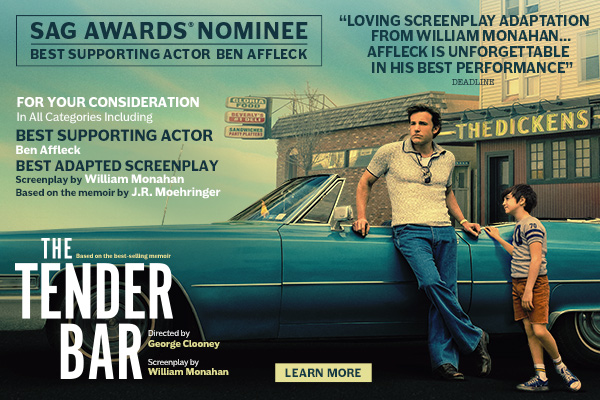
THE TENDER BAR is streaming now on Prime Video.
Part of the fun of your book are the crazy examples of Hollywood’s self-censorship to avoid angering China. There’s the Doctor Strange character The Ancient One, which was changed from Tibetan to Celtic and played by Tilda Swinton. Or the Transformers movie where the Chinese military saves the day. And, of course, the uproar over the shadowed glimpse of Jamie Foxx’s penis in Django Unchained, which led to the movie being accepted for release and then un-accepted. What’s your favorite egregious example?
Jamie Foxx’s penis was both self-censorship and then actual censorship, despite [producers] pouring over the shadowing in that scene. Red Dawn (2012) looks more and more absurd by the day. Think about what went into that situation. The film had already been shot with actors that played Chinese villains, and then they were turned into North Korean ones. The irony, of course, is that several years later, no one would have made them North Korean because they’d be worried about getting hacked.
Yeah, where can you be villainous these days?
This isn’t a censorship example, but I just saw The 355. It’s pretty obvious that Fan Bingbing has been green-screened into the final product. It becomes a game when you’re watching the film, if you know she wasn’t there for filming because she was in government custody. The use of a body double is very clear. A lot of shots of the back of her head.
And that film hasn’t even gotten a China release!
The climactic shootout takes place in Shanghai. There’s a scene where Fan Bingbing is nursing her fellow agents back to health using Chinese herbs. The Chinese police run in to restore order. It’s a textbook example of what studios either have to do or feel they have to do when they set a scene in China. The police have to restore order immediately.
The era of Chinese investment in Hollywood ended in 2017, and it was clear the Chinese film industry was studying the U.S. the whole time to create their own. Do you agree Hollywood got played?
It was obvious to anyone who was paying attention that this was the plan all along. Even in the ‘90s, there were ways the Chinese were using their investments to learn how to do it themselves. That was turbocharged with Xi Jinping. So yes, they did. Who wins, I don’t know. But there was a complacency and arrogance that American movies would always be the default entertainment for the world.
The win, obviously, is a Chinese movie that travels around the globe, which we haven’t seen yet.
It’s actually a cruel reminder of how successful Korea has been recently. Parasite and Squid Game and K-Pop is exactly what the Chinese officials want. But China would never make Squid Game.
ADVERTISEMENT 
The Winter Olympics next month are being received much differently in the global community than the 2008 Summer Games in Beijing, which had a “coming out” narrative for China. President Bush attended, the media coverage was mostly positive. Even without Covid, the U.S. probably wouldn’t have sent diplomats this time, and there’s so much more attention on the Uighur issue and human rights.
2008 had the element of surprise, like, woah, this is not the China that a lot of Americans thought they knew. Now sponsors are wrapped up in controversy about supporting these Games. They’re essentially learning what Hollywood learned two decades ago. If you want to do business here, there’s going to be concessions, and there’s going to be questions from customers and lawmakers in the U.S.
Some people might not know that China’s propaganda film, The Battle at Lake Changjin, is the highest-grossing global movie of 2021–the first time it hasn’t been a U.S. movie in the modern era. Why was it so successful?
They’ve done a fantastic job of putting the pill in the peanut butter with these propaganda movies. More recently, especially since the Russo brothers and other Hollywood folks helped them with Wolf Warrior 2, they’ve been able to keep the core propaganda film and surround it with better action, music, directing, choreography. And the government has controls in place to make sure these movies do well. Like, “Hey, Matt, we’d really love it if you took all your employees to see this movie on Friday afternoon.” Also, these movies are meeting the moment. In parts of China, there’s a strong feeling of national pride and China rising to a higher station. Much like Americans have flocked to these kinds of movies at certain moments.
So, where do you see opportunities for American entertainment companies doing business there?
I wonder if theme parks are the safer bets. You’re not the majority owner, you can set it up and run it. You don’t have to worry about a message that gets you in trouble, like with a movie.
Obviously, the U.S. streaming services would love to be in China, but that’s not happening. Do you see it changing?
No, not with the Chinese streaming market being as robust as it is. Maybe some licensing deals, where a Netflix show could get into the country, but not Netflix as a service. They don’t want something that would compete with Tencent or Alibaba.
The comments by investor and Warriors part-owner Chamath Palihapitiya the other day showed how thin the tightrope is with China. Plenty of people believe the entertainment industry shouldn’t be kowtowing to a government with this poor of a human rights record. How should studios balance the social and political imperatives with the business imperatives?
It’s funny: for the book, I talked to studio executives who were in these roles dealing with China, and now some of them are not, and what they say changes after they leave that job. Now they say things like, “Man, they’ve got us cornered.” And, “I made so many decisions based on what I thought communist party officials would be angry about.” I don’t know how this ends. If I was running a studio, it would be almost impossible to figure out what to do.
Bonus Giveaway: The first 10 What I’m Hearing subscribers to email I’M A PUCK MEMBER to penguinpressmarketing@penguinrandomhouse.com will win a free copy of Erich’s book, Red Carpet. Good luck, and thanks to Penguin Press for the freebies.
Correction: I mistakenly wrote Nina Tassler’s name when I meant Nancy Tellem in Sunday’s email about the CW. Both were big CBS executives but only Tellem was involved in the creation of the CW. (Les Moonves and Barry Meyer also weren’t mentioned.) Apologies and credit where it’s due.
See you Sunday, Matt
Got a question, comment, complaint, or a book for me to give away? Email me at Matt@puck.news or call/text me at 310-804-3198.
FOUR STORIES WE'RE TALKING ABOUT 
It's amazing in retrospect that the CW lasted as long as it did. Here's who wins, and who loses, in the streaming era sale. MATTHEW BELLONI 
King’s legacy has become a political choose-your-own-adventure for those who don't want civil rights to progress any further. JULIA IOFFE 
How a peace offering from Phil Spencer, Microsoft’s gaming chief, led Activision’s Bobby Kotick to a $69 billion deal. DYLAN BYERS 
One lawyer’s quest for ten thousand pages of documents surrounding the F.B.I.’s investigation of the now-deceased predator. WILLIAM D. COHAN 
You received this message because you signed up to receive emails from Puck.
Was this email forwarded to you?
Sent to {{customer.email}}
Puck is published by Heat Media LLC.
For support, just reply to this e-mail. For brand partnerships, email ads@puck.news |


SHARE