Welcome back to What I’m Hearing...
Happy Super Bowl Sunday from L.A., a few hours earlier than usual.
Before we start, some Puck news: We’ve launched events! The first of our Puck Private Dinner series—an intimate, salon-style, invite-only, and off-the-record gathering for industry leaders—took place on Thursday at Jason and Lauren Blum’s house in L.A. Big thanks to the Blums for co-hosting with me, and thanks to the inaugural group of leaders who attended from companies such as Disney, Netflix, Hello Sunshine, Universal, Blumhouse, and The Blacklist. We’ll do more of these with different co-hosts, so watch this space for details.
Also, there’s still time to enter my Super Bowl ratings contest. Respond to this email with your best guess of the total audience, including NBC and Peacock, as reported by Nielsen/NBC. Reply by kickoff today, and the closest guess without going over will win a status-defining Puck tote bag. Good luck!
Discussed in today’s email: Kevin Spacey, Eminem, Roger Goodell, Bob Chapek, Mary J. Blige, Dawn Hudson, Chris Miller, Ye, David Young, and the Bonnie and Clyde of Bitcoin.
Who Won the Week: Bill Lawrence
Who says nine-figure overall deals are dead? The Ted Lasso showrunner scored one this week, a five year re-up with Warner Bros. TV that also allows his agency, ICM Partners, to bank a major commission before its acquisition by CAA becomes official.

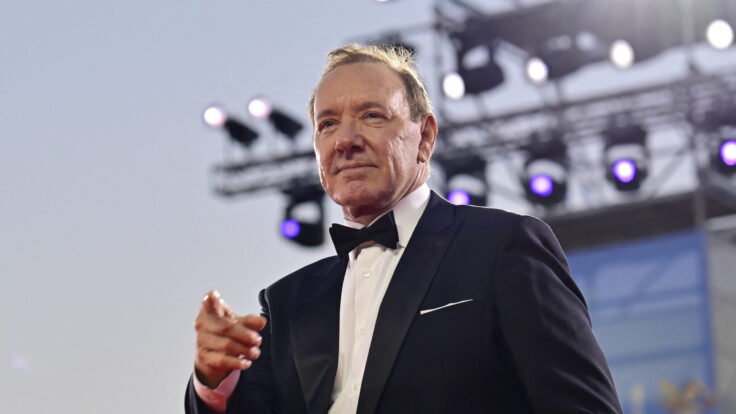
Whatta guy! You’d think that Kevin Spacey couldn’t sink lower. Think again! The disgraced Oscar winner, who in recent years has appeared only in bizarre Christmas videos and an arbitration ruling that he must pay $31 million for imploding the final season of House of Cards, is now using the legal system to harass a Variety reporter—and even hold him in contempt of court. What a guy.
Adam Vary is the reporter. He previously worked for Buzzfeed, where he authored the 2017 article in which actor Adam Rapp accused Spacey of preying on him as a young man. The story sparked a wave of accusers to come forward and marked a key moment in the burgeoning #MeToo movement. Spacey’s career soon disappeared like Keyser Soze.
Tellingly, Spacey never sued Buzzfeed. But Rapp later sued Spacey, claiming the sexual assault caused him severe emotional and psychological damage. That civil case is heading toward trial in federal court in New York, and as part of his defense, Spacey has now targeted Vary. The writer received 29 separate document demands and sat for a 7-hour deposition in December. Spacey’s lawyers say that Vary’s communications with Rapp and their pre-article friendship are relevant to determining Rapp’s credibility and the veracity of his claims.
OK, that’s fine, litigate the case, but Spacey is now demanding another onerous deposition and a raft of documents related to the reporting and writing of the article. Jean-Paul Jassy, Vary’s lawyer, insists those materials are clearly protected under the strong reporter shield law in California, where Vary lives, and I agree. This feels to me like Spacey is using the Rapp case to exact a small piece of revenge on the guy who wrote the article that exposed his alleged bad behavior. It’s “an abusive and harassing vendetta against a non-party,” Jassy wrote in a recent court filing.
Spacey has now asked a California court to hold Vary in contempt for refusing to comply, and on Friday, the judge in L.A. took the matter under advisement. A decision is likely coming soon.
Quote of the Week
“Larry Jackson offered me $100 million to put Donda on Apple, but I ain’t never got a meeting with Tim Cook.”
—Ye (aka Kanye West), apparently claiming at the Friday premiere of his Netflix documentary that Apple’s global creative director wanted to pay nine-figures for exclusive rights to his album, but he declined because the company’s C.E.O. wouldn’t sit down with him.
Runner up: “Super Bowl weekend in LA and you can feel the whole city crackling with mild interest.”—Chris Miller, The Afterparty showrunner, in a tweet.
Now, my colleague Eriq Gardner has an exclusive backstage look at the clash over the Super Bowl halftime show, which offers a rare glimpse into the NFL’s legal and P.R. playbook for managing its image….
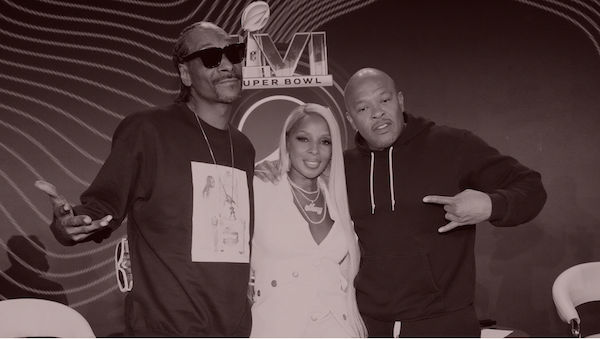
A behind-the-scenes clash over the Super Bowl halftime show is a case study in the N.F.L.’s effort to protect its brand through a draconian playbook. As Dr. Dre and Eminem have learned, Republicans buy League Pass too. Super Bowl LVI in Los Angeles will showcase the National Football League as a study in contrasts: a rich and powerful organization that’s flying as high as ever, and yet one that is both beset with culture problems and intensely image-conscious. That tension can lead to some questionable calls that some might deem insulting.
Take the halftime performances by Dr. Dre, Snoop Dogg, Eminem, Mary J. Blige, and Kendrick Lamar. Historically, Super Bowls have offered artists exposure and marketing opportunities that far outweigh the surprisingly modest paycheck. But the NFL didn’t just get these hip-hop stars to perform for free. In fact, this year it’s costing Dre money, even though he’s got no new album or tour to promote. I’m told that the hip-hop legend and Beats Electronics mogul, who is from Los Angeles, has put up most of the $7 million budget himself and bought an extra SoFi Stadium box for friends to watch. He ostensibly recognizes the once-in-a-lifetime opportunity to take the stage before the world’s largest audience.
But it hasn’t exactly been an easy ride. In the weeks leading up to the Super Bowl, Dre has gone back and forth with league officials about the lyrics and content of the songs that he could perform onstage. And it goes beyond curse words. A source close to the artist complained that Dre was being “disgustingly censored.” How? The league apparently didn’t want its premier event to turn into a divisive culture war moment. In particular, I’m told, N.F.L. representatives indicated to Dre during rehearsals that they weren’t comfortable with a lyric from his signature 1999 hit, Still D.R.E., which states that he’s “still not loving police.”
That line harkens to Dre’s time as leader of N.W.A., when the seminal hip-hop group released the controversial song, Fuck Tha Police. At one point, the NFL told Dre he couldn’t say the line at all, but as of this writing, Dre is optimistic that “police” might make the cut of “accepted” lyrics. Meanwhile, the league nixed a plan by Eminem to kneel, Colin Kaepernick-style. Organizers also flagged something that Snoop Dogg was set to wear as possibly appearing gang-related. (Asked about new limitations placed on halftime performers, a spokesperson for the league did not respond.)
Perhaps brazen, but when you’re running up the score as the NFL has, with 75 of the 100 most-watched TV broadcasts this past year, you can get away with a lot, including demanding that music stars known for speaking their minds (including one whose documentary was titled The Defiant Ones) do nothing controversial. Commissioner Roger Goodell guards the league’s reputation zealously and effectively, so if it feels like the league is constantly teetering on the edge of going too far, there’s probably a reason for that. The stakes are very high, and the playbook for preserving mass appeal is always complicated. Super Bowl LVI in Los Angeles will showcase the National Football League as a study in contrasts: a rich and powerful organization that’s flying as high as ever, and yet one that is both beset with culture problems and intensely image-conscious. That tension can lead to some questionable calls that some might deem insulting.
Take the halftime performances by Dr. Dre, Snoop Dogg, Eminem, Mary J. Blige, and Kendrick Lamar. Historically, Super Bowls have offered artists exposure and marketing opportunities that far outweigh the surprisingly modest paycheck. But the NFL didn’t just get these hip-hop stars to perform for free. In fact, this year it’s costing Dre money, even though he’s got no new album or tour to promote. I’m told that the hip-hop legend and Beats Electronics mogul, who is from Los Angeles, has put up most of the $7 million budget himself and bought an extra SoFi Stadium box for friends to watch. He ostensibly recognizes the once-in-a-lifetime opportunity to take the stage before the world’s largest audience.
But it hasn’t exactly been an easy ride. In the weeks leading up to the Super Bowl, Dre has gone back and forth with league officials about the lyrics and content of the songs that he could perform onstage. And it goes beyond curse words. A source close to the artist complained that Dre was being “disgustingly censored.” How? The league apparently didn’t want its premier event to turn into a divisive culture war moment. In particular, I’m told, N.F.L. representatives indicated to Dre during rehearsals that they weren’t comfortable with a lyric from his signature 1999 hit, Still D.R.E., which states that he’s “still not loving police.”
That line harkens to Dre’s time as leader of N.W.A., when the seminal hip-hop group released the controversial song, Fuck Tha Police. At one point, the NFL told Dre he couldn’t say the line at all, but as of this writing, Dre is optimistic that “police” might make the cut of “accepted” lyrics. Meanwhile, the league nixed a plan by Eminem to kneel, Colin Kaepernick-style. Organizers also flagged something that Snoop Dogg was set to wear as possibly appearing gang-related. (Asked about new limitations placed on halftime performers, a spokesperson for the league did not respond.)
Perhaps brazen, but when you’re running up the score as the NFL has, with 75 of the 100 most-watched TV broadcasts this past year, you can get away with a lot, including demanding that music stars known for speaking their minds (including one whose documentary was titled The Defiant Ones) do nothing controversial. Commissioner Roger Goodell guards the league’s reputation zealously and effectively, so if it feels like the league is constantly teetering on the edge of going too far, there’s probably a reason for that. The stakes are very high, and the playbook for preserving mass appeal is always complicated.
A behind-the-scenes clash over the Super Bowl halftime show is a case study in the N.F.L.’s effort to protect its brand through a draconian playbook. As Dr. Dre and Eminem have learned, Republicans buy League Pass too. I’ll admit I nearly did a spit-take when I saw the Academy will not require Covid vaccinations to attend the Oscars next month. After all, most film and TV productions now force people to be vaxxed; the SAG Awards and Critics Choice have a mandate; and, at least in L.A. County, you can’t even get into a movie theater without a vax card.
But the more I thought about it, I actually applaud the Academy. For once, it made a decision that is likely unpopular with its members but will almost certainly result in a better Oscars telecast. Remember, only about two thirds of Americans are vaccinated. That number’s probably much higher among Academy members and Oscar nominees, but even so, there are still many stars and filmmakers who aren’t—it’s just math. Allowing those people to attend the show after a negative test will result in more stars in the room and on the stage, plain and simple, and that’s pretty much all that people tune in to the Oscars to see. At a time when viewership has reached historical lows, this show needs every possible lure.
Before you invite me to a Robert Kennedy rally or book me on Joe Rogan, let me just say that I’m all for mandates on film and TV sets because a) it’s the right thing to do, and b) let’s face it, everyone is replaceable. But the Oscars can’t just replace a nominee or one of last year’s winners, who, by tradition, return to present the following year. Those are set by the voters. So the options are either to deny attendance and potentially eliminate a great moment of television from an unvaccinated winner, or drop the mandate. Academy leaders Dawn Hudson and David Rubin chose the latter, and unless stars refuse to attend because there’s no mandate—which, given the politics of the membership, is a real possibility, and would be another example of the Academy collectively shooting itself in the foot—it’s ultimately the better move.
Bonus: I discuss this topic with Kim Masters on this week’s The Business podcast (here), and the Oscar nominations in general with Peter Hamby on Puck’s The Powers That Be pod (here).
PODCAST 
My Reading List
Disney surprised more than a few people by adding 11.8 million Disney+ subscribers this quarter. That, plus a revenue jump at the theme parks that came with gauging—sorry, upcharging—guests for the faster line passes that were previously free, led to a changed narrative for C.E.O. Bob Chapek. To shed some light on how Chapek goosed the streaming numbers, I asked analyst Julia Alexander to dive deep into the data…
The Netflix doom-and-gloom narrative is likely shortsighted and apocryphal. But Disney’s recent streaming rejuvenation suggests some key factors that will dictate the winners and losers in this evolving streaming arms race. Netflix kicked off the current earnings season by kneeing all of Hollywood in the crotch. A subscriber miss, sure, but most troubling was the company’s projection of just 2.5 million new customers in the next quarter. The company’s stock tumbled, and it dragged down with it Disney, ViacomCBS and the other entertainment companies that have bet their futures on the streaming revolution. But then, not two weeks later, Disney surprised Wall Street on Wednesday by reporting the addition of nearly 12 million subscribers to Disney+, sending its stock price flying.
I don’t buy the sky-is-falling theory with Netflix, which now boasts 222 million subscribers worldwide. And, in fact, I think the more relevant question to ask right now is why Disney did so well in adding subscribers during this quarter. To understand what’s really going on, we have to acknowledge what helped Disney reach its current total of 130 million subscribers, or 196 million with Hulu and ESPN+ included. Everyone in the industry is trying to determine the growth trajectory for the next few years, and elucidating Disney’s growth trajectory can act as a guiding light.
Three key areas help understand Disney’s success. First, Disney+’s huge numbers in India, Singapore, and Indonesia come from a combination of exclusive sports offerings via its HotStar unit, hyper in-demand localized content, and a notable lack of reliance on the Disney brand. Second, more than half of new Disney+ subscribers don’t have children, according to the company, which highlights the importance of general entertainment programming on the service. Third, the bundle of Disney+, Hulu, and ESPN+ is working. Or at least it appears to be working, which is just as important for Wall Street right now.
The Feedback
Lots of messages this week, especially in response to my analysis of Matrix Resurrections financier Village Roadshow’s bombshell lawsuit against Warner Bros. (One person just sent me a gif of a flaming dumpster floating down a river.) Some responses to that and other items:
I wrote on Thursday that the Writers Guild is pushing the D.O.J. to block CAA buying ICM Partners, while executive director David Young is still celebrating eliminating packaging fees and curtailing agency ownership of content at 20 percent…
Finally… No movie tracking chart this week. Instead, my prediction: Rams 27, Bengals 24
Have a great week, Matt
Got a question, comment, complaint, or a last-minute spot in your SoFi box? Email me at Matt@puck.news or call/text me at 310-804-3198.
FOUR STORIES WE'RE TALKING ABOUT 
The suit could dramatically reconfigure the relationship between studios and their partners in the streaming age. MATTHEW BELLONI 
A candid conversation with Dr. Andrey Sushentsov, a prominent Russian political scientist, about how Putin views the West. JULIA IOFFE 
With Republicans expected to retake the House in November, could Pelosi’s congressional seat become a family dynasty? THEODORE SCHLEIFER 
Notes on Diller’s decision to shutter some of his magazines, Fed porn, and Liars Poker war stories. WILLIAM D. COHAN 
You received this message because you signed up to receive emails from Puck.
Was this email forwarded to you?
Sent to {{customer.email}}
Interested in exploring our newsletter offerings?
Puck is published by Heat Media LLC.
For support, just reply to this e-mail. For brand partnerships, email ads@puck.news |





SHARE