Welcome back to What I’m Hearing...
Some big personal news today: Puck has teamed with The Ringer, the Spotify studio founded by Bill Simmons, to launch a new podcast called The Town. It expands on What I’m Hearing, with me and a rotating stable of experts discussing the biggest issues and most talked-about stories in Hollywood. The show debuts on Monday and we’ll be dropping two to four episodes per week, depending on the pace of news. 
The Town is available on all podcast platforms, sign up here if you’re on Spotify, here if you’re an Apple person, or go to wherever you get your podcasts.
SPONSORED BY 
Thursday Thoughts…
Now on to the deal of the week, and a subject of Hollywood fascination…
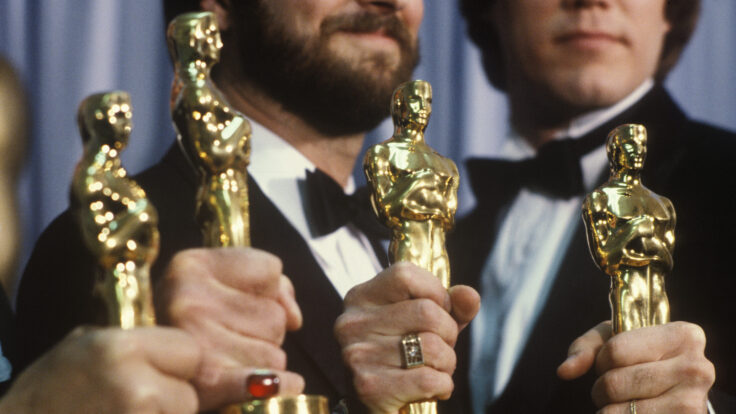
Inside Hollywood, A24 has always punched above its weight for an indie studio. Now the arty New York media brand is trading on its hipster ethos for $225 million in private equity cash—and, in this overheated market, why not? What are you hearing about A24? For the past five years, pretty much since the morning after Moonlight was awarded the most famous Oscar ever—well, not awarded it, then quickly awarded it with apologies—people in Hollywood have been asking that question about the independent studio behind the movie. And nearly everyone claimed to have the inside track. Apple was in negotiations, then Amazon was interested. Maybe Comcast? A supposed $3 billion asking price spilled into the trades, sparking mockery. Just last month, a prominent lawyer whispered to me that Apple was back with A24, doing its due diligence as part of an anticipated acquisition. The guy was sure it was happening.
Part of that was just normal industry gossip. But within Hollywood, A24 has always generated more chatter—and, at times, outright jealousy and anger—than you’d think for a decade-old company that has never released a movie that grossed more than $50 million domestically. For some reason, there’s been this aura around A24. It was Miramax in the ‘90s, minus the asshole brothers at the helm, and at a time when the actual Weinsteins, and much of the indie film business in general, was in a depressing freefall. A24 was where real artists—and New York-based artists, like the Safdie brothers (Uncut Gems), Greta Gerwig (Lady Bird), Sofia Coppola (On the Rocks) and Ari Aster (Hereditary, Midsommar)—wanted to work, and where they often made multiple films. I once bumped into Gerwig dining with boyfriend Noah Baumbach downstairs at the Polo Bar, and she was wearing an A24 hat.
Its leaders did zero press. Its movies and, later, TV shows—the boundary-pushing (Spring Breakers, HBO’s Euphoria), the young and insufferably hip (Zola, Eighth Grade), the awards-y (Room, Minari), and the Zeitgeisty (the Amy Winehouse documentary)—seemed curated by a Williamsburg mixologist. It spent less on Oscar campaigns than rivals and yet always seemed to pull off nominations and wins. Its social media created buzz among young people, and thus the impression—correct or incorrect—that A24 was somehow a meaningful commercial brand. Essentially, it was the cool NYU film school kids to Hollywood’s USC water polo bros. And everyone would rather hang with the cool kids, right?
Then this week A24 dropped the news, not via its irreverent Twitter feed but in a heavily lawyered press release, that it had raised $225 million in equity from investor Ken Fox and Stripes, his direct-to-consumer products company, with additional investors led by Neuberger Berman. The new money, offered in exchange for less than 10 percent of the company, gave A24 a suddenly skyrocketed valuation. Somehow, the cool kids are now worth $2.5 billion!? How did that happen?
ADVERTISEMENT Amazon Studios presents BEING THE RICARDOS. Now nominated for three Academy Awards for Best Actress Nicole Kidman, Actor Javier Bardem and Supporting Actor J.K. Simmons, along with 3 Critics Choice Awards, 2 BAFTA Awards, a WGA Award, and a PGA Award for Best Picture. Writer/director Aaron Sorkin’s behind-the-scenes drama is hailed by Deadline as "One of the best films of the year,” ABC News says “JK Simmons is sensational,” and Variety raves "Nicole Kidman and Javier Bardem play Lucille Ball and Desi Arnaz to wry perfection." 
BEING THE RICARDOS is streaming now on Prime Video.
First of all, they were never that cool. Behind the Park Slope branding and the $50 Joya candles on its website, A24 is a Midtown private equity play. Daniel Katz, the finance guy who ran Guggenheim’s film investment group, launched the company with his buddy David Fenkel, and creative executive John Hodges (who was bought out in 2018), with about $25 million of Guggenheim’s money. Investor Todd Boehly took A24 with him when he left Guggenheim to launch Eldridge, the entity behind film and TV companies like MRC and Dick Clark Productions. (Disclosure: Eldridge also backed The Hollywood Reporter when I worked there.) And while Stripes is the first new equity investor in A24, it has raised capital for production and growth several times, all from the usual banking suspects looking for margins, not Spirit Awards.
The A24 ethos, all the stuff I mentioned above, is actually part of a calculated move to reinvent the indie film widget for the modern, social media-driven era. There’s no secret sauce, so to speak, except maybe financial discipline, laser-focused targeting in both project selection and marketing—and, that rarest of Hollywood commodities, good taste. That’s why people in the film world don’t like them. (That and the persistent rumor that A24 juices its box office numbers with stunts like rolling in preview screenings and hosting filmmaker Q&As.) A24 is basically what the Oracle heiress Megan Ellison came to Hollywood to create with Annapurna but didn’t, in part because she spent so lavishly on fantastic movies that made no financial sense, ultimately necessitating a lifeline from her father.
Instead, A24 launched slowly with U.S. film distribution, picking up cheap projects that were all generally available in the market. Then they started making their own low-budget movies with Moonlight, and then slightly bigger genre plays. Some lost money, but most squeaked into the black, and a few, like Hereditary or Uncut Gems, resonated with young people or rode the awards wave to meaningful profits. Then they segued, as nearly all film companies do these days, into TV, owning certain projects (like Hulu’s Ramy) but mostly acting as a producer for hire, like on the smash hit Euphoria, which HBO developed.
Is that worth $2.5 billion? Why not? In this overheated market, those conversations usually start with “Well, if Hello Sunshine is worth $900 million, then…” But this isn’t a Reese Witherspoon situation. (And, as I’ve written, Hello Sunshine isn’t actually worth $900 million.) With about 125 films and TV shows in the library, A24 has actual assets. It’s not the MGM library, which is waaaay more commercial and is selling to Amazon for $8.5 billion, if the government approves the deal. And it's nowhere near Lionsgate, which has an enterprise value of $6.5 billion, and has released blockbusters like The Hunger Games and John Wick movies, produced TV hits like Mad Men and Orange Is the New Black, and owns Starz. A24 would love to claim just one of those long-tail hits.
A24 is a high-class singles business with great management, without any of the home runs that, say, Miramax’s Dimension genre unit delivered in the ‘90s and 2000s. Bigger-budget producers scoff at the smallness of the A24 assets, but there have been a lot of singles (as well as its share of flops). Its television business is growing, and investors like that because it is more predictable than film, though TV dramas are past their peak in terms of profit margins, and streamers usually cancel shows after only a few seasons these days.
Then there’s that brand. I’m a bit skeptical that any film distribution company besides Disney enjoys actual brand equity that causes audiences to see its logo and turn out. But for a certain audience, and to certain filmmakers, A24 is very meaningful. At a recent test screening, a source there told me, 45 percent of the attendees said they showed up mainly because they saw the A24 brand. That’s not nothing.
Obviously, theatrical distribution, in general, and indie films, in particular, aren’t exactly enviable endeavors these days, and who knows whether they will recover post-pandemic. So what is the future of a company known mostly for its theatrical releases? Streaming, of course. Its Apple arrangement has lapsed, but the streamer has three Oscar nominations for A24’s The Tragedy of Macbeth. More one-off deals like that are likely. And A24 has been quietly tweaking its strategy, focusing more on TV and youth-focused genre films like next week’s SXSW premiere X, and less on the adult-oriented prestige plays. I think the next few months will be instructive as to whether the audience for small-budget, non-horror movies in theaters is forever lost.
So many people in Hollywood were convinced that A24 was selling, and likely selling to Apple. That’s probably because the company definitely made the rounds with potential suitors. After the Moonlight win, Goldman Sachs did an informal roadshow, introducing A24 to Amazon, Apple, Comcast, Microsoft and others. One potential buyer who looked at the numbers told me last week that as much as he loved the A24 content and narrative, the numbers were just not worth the price that Boehly and the management team wanted. More recently, the company brought in a C.F.O. from the NBA (and worked with the Latham law firm) to spearhead possible M&A, but those discussions soon turned toward an investor scenario.
To be honest, I never really understood the Apple rumors. Like Amazon and Netflix–which both entered the film business with a focus on small-budget indies and now want large, all-audience movies–Apple is going in the opposite direction from A24. Sure, it’s a premium brand and reliable pipeline. But Apple is doing a $200 million Formula One action pic with Brad Pitt, and its content strategy seems to start and end with major movie stars earning full freight. Plus, I don’t see Tim Cook and the Apple board getting excited about Simon Rex’s full frontal in Red Rocket. And if Apple does want an A24-style indie movie, it can just outbid everyone else at a festival, like it did for the Oscar contender CODA.
So, what should we all talk about now? Well, now that Katz and Fenkel have their huge valuation, the paths are either I.P.O. or a sale, right? Two big hires from the BBC last week signal A24 will use its new funds in part for an increased international push. True to its (very annoying) convictions, the company wouldn’t talk to me, and a couple people in the finance community said they wouldn’t be surprised by either move.
ADVERTISEMENT 
I asked our analyst contributor Julia Alexander to write about the one show that is most influencing the streaming video wars. She obtained some exclusive internal data and answered the question below…
How ‘South Park’ Became the Envy of Streaming These days, most new shows don’t make it past three seasons. But a long-running cartoon that has a fortified fan base, the promise of daily engagement, and guaranteed new episodes is perhaps the most valuable asset in media.
Few would have guessed, upon its debut in 1997, that South Park, Trey Parker and Matt Stone’s crudely-drawn, foul-mouthed Comedy Central cartoon, would one day become perhaps Paramount’s most vital I.P. behind Star Trek. But in an “always on” streaming era, the show has become one of the most dominant animated series—beating out competitors like The Simpsons and Family Guy. With multiple movies produced per year, South Park isn’t fighting for attention in an overcrowded market; South Park guarantees an audience year after year.
The prowess on digital platforms is astonishing. More than 53 billion minutes of South Park were streamed in 2021, according to internal data viewed by Puck. These days, most new shows don’t make it past three seasons. But a long-running series that has a fortified fan base, the promise of engagement every day, and guaranteed new episodes to keep viewers satiated is perhaps the most valuable asset in media. Very few series fit that description, but South Park regularly accomplishes all three.
The show’s value is manifest in the increased license fees that Parker and Stone have nabbed for the rights to South Park alone, going from $110 million at Hulu to more than $500 million at HBO Max and, most recently, $900 million from Paramount for the global exclusive rights to stream South Park on Paramount+ beginning in 2025. Much like Friends or The Office, owning a long-running show with multi-generational fans can help build a streaming business. But, crucially, unlike those shows, South Park is still producing new episodes, still fresh, and still generating new audiences—all of which makes it an utterly unique, and highly enviable, franchise in the new media ecosystem...
Correction: Drake is buying the L.A. home of Robbie Williams, the British singer-songwriter, not Robbie Roberts, as I wrote in Sunday’s email.
I’m back on Sunday, Matt
Got a question, comment, complaint, or a favorite South Park episode? Email me at Matt@puck.news or call/text me at 310-804-3198. 
You received this message because you signed up to receive emails from Puck.
Was this email forwarded to you?
Sent to {{customer.email}}
Interested in exploring our newsletter offerings?
Puck is published by Heat Media LLC.
For support, just reply to this e-mail. For brand partnerships, email ads@puck.news |


SHARE