Welcome back to What I’m Hearing, hope you had a better day than
the robot Olaf at Disney’s new World of Frozen.
Tonight, the latest at Paramount as David Ellison was busy pitching his WarnerMount deal to the Saudis’ “Future Investment Initiative” in Miami. Plus, the CAA angle on the Row K “reset,” new moves in the Yellowstone universe, and Julia Alexander looks at Josh
D’Amaro’s options post-Sora.
Programming note: This week on The Town, Lucas Shaw and I parsed the latest Netflix price hikes, Senator Adam Schiff admitted
he’s “not that optimistic” the Dems can stop the WarnerMount deal, and Alex Heath explained Disney’s OpenAI and Fortnite setbacks. Subscribe here
and here.
Not a Puck member yet? Just click here. Got a news tip or an idea for me? Just reply to this email, text me, or message me on Signal at 310-804-3198.
Mentioned in this issue: Taylor Sheridan, Josh
D’Amaro, Donna Langley, Kevin Costner, Sam Altman, Chad Feehan, Naomi Waltman, Mark Rober, Roy Price, Makan Delrahim, Ted Sarandos, Kellyanne Conway, Ms. Rachel, Bob Iger, Tom Cruise, Cole Hauser, Neal Mohan, Steven
Spielberg, Aaron Moss, David Ellison, Gavin Purcell, Cleo Abram, Kelly Reilly, Reed Hastings, Adam Schiff, Aditya Dhar, Luke Grimes, Lindsey Graham, Doug E. Fresh, and… PewDiePie.
But first… |
Honestly, it’s probably the Project Hail Mary team, same as last week, thanks to that great 32
percent decline in its second weekend ($54 million domestic and now $300 million worldwide). I inadvertently named nearly everyone except writer Drew Goddard last week, so let’s say Drew wins this week.
Runner-up: Aditya Dhar, whose Dhurandhar: The Revenge has become the highest-grossing Hindi-language film in U.S. history, with $23 million and counting, and nearly $150 million worldwide in just 11 days. |
Now on to Paramount…
CBS’s Trump deal architect steps down: Naomi
Waltman, executive V.P. and general counsel at Paramount, is leaving the company. (She’s retiring, Waltman told colleagues, though she’s not that old.) Exec exits aren’t news these days at Paramount, but Waltman is the top litigation attorney under general counsel Makan Delrahim and ran point on CBS News’s $16 million settlement with Donald Trump ahead of the Paramount-Skydance transaction. Top Democrats are already saying they will investigate that
deal should Congress turn blue in November, and Waltman would almost certainly testify in that probe or any inquiry into the $110 billion WarnerMount merger. Now she’ll do so from outside the confines of Paramount.
More Paramount…: I’m told lawyers for NBCUniversal are taking a wait-and-see approach on Dutton Ranch, the Yellowstone follow-up series starring Cole Hauser and Kelly Reilly that just dropped a
trailer and a May 15 premiere date. Remember, Yellowstone aired on Paramount Network and streamed on Peacock via a hilariously shortsighted deal that predated Paramount+, so any continuation of the Yellowstone saga would also go to Peacock, while spinoffs can appear on Par+. At least so far, NBCU hasn’t raised a fuss about CBS’s Marshals,
starring fellow Dutton sibling Luke Grimes in a procedural storyline and without his Yellowstone wife (differentiation was partly why they killed her off in the pilot), even with appearances from Yellowstone regulars Brecken Merrill, Gil Birmingham, and Mo Brings Plenty.
By contrast, Dutton Ranch stars the two main characters on the flagship show (especially after they booted Kevin
Costner), and while the Rip-and-Beth saga shifts from Montana to Texas and adds new co-stars Annette Bening and Ed Harris, the show arguably carries the mantle as the “continuation” of the Yellowstone story. (Nevermind that Taylor Sheridan, who wrote or co-wrote every episode of Yellowstone, has handed the reins on this one to Chad Feehan.) I’m told Paramount hired outside lawyers early on to advise on
how to do a Rip-and-Beth show without having to stream it on Peacock, so execs are confident the final product is sufficiently spinoff rather than sequel. And remember, Sheridan is leaving Paramount for NBCUniversal at the end of 2028, with Yellowstone producer 101 Studios already setting up there, so it’s unclear if NBCU content chief Donna Langley would want to stir up legal issues on Sheridan’s flagship franchise. (Plus, I’m told Paramount’s David
Ellison has so far not created problems for Sheridan in his exit, which is often the case in situations like this.) But a determination on whether to claim dibs on Dutton Ranch streaming rights will be made based on the show itself, which NBCU lawyers have not seen yet.
Could more be afoot here?: NBCUniversal’s chill attitude toward the Yellowstone shows got me thinking… seems like something larger between NBCU and Paramount might be in the
works, whether it’s a bundle of Peacock with Paramount+ (or, Ellison hopes, the combined Par+/HBO Max) or some kind of global partnership for the U.S.-only Peacock, or something else. That’s my speculation based on chats with execs at both companies. Or maybe Langley is hoping to snag Sheridan earlier than the 2029 date I
first reported last fall. Seems unlikely, but Paramount has that $80 billion debt bomb if its WarnerMount transaction closes, so Ellison might not be too sad to end such a costly lame-duck overall deal, and Langley would probably throw a parade for Sheridan through CityWalk if he’d come
over early. |
Can an Imploded Indie
Reboot?
|
The embattled film-distribution upstart Row K is pulling out of its inaugural presentation at CinemaCon next
month. Principals Chris Woodrow and Raj Singh told me in a statement today that they’ve “made the decision to step back from CinemaCon this year and instead focus our resources on developing the next phase of our slate and team.” Not a shock.
Indie film distributors launch and falter all the time, often by overspending on splashy acquisitions. But Row K and backer Media Capital Technologies not only managed to lure veteran executives Megan
Colligan, Mo Rhim, and Ben Carlson, all of whom have now hired litigator Bryan Freedman to get them paid out. They also hit reset after just one release, Gus Van Sant’s Dead Man’s Wire, which cost more than $10 million to acquire and distribute and grossed about $2 million.
Not great, and $10 million seems like a lot for that kind of film, but that’s the indie business… flop, flop, flop, and
hopefully the hit that pays for them all. It just requires patience and money to ride it out, and you’d think MCT, with its Lionsgate slate financing deal, would have both, though film distribution is very different from film financing. This is definitely not the outcome envisioned by CAA, which I’m told acted as a close advisor on the creation of Row K and vouched for its financial backing in the community, all with the hope of creating a new indie buyer. That’s despite the agency
settling a lawsuit in 2022 that claimed Worldview, another Woodrow company, was used as a financier of last resort for CAA projects no one else wanted, such as Zach Braff’s Wish I Was Here and Warren Beatty’s Rules Don’t Apply. (CAA declined to comment.)
Row K is now attempting to pivot to more-commercial fare, and good luck to them. It’s unclear if the big-budget Cliffhanger reboot, which Row K acquired for domestic
distribution in October, will be released in August as planned—or ever by Row K. “We remain fully committed to our long-term vision and to our partners, and we look forward to returning to CinemaCon in 2027,” Woodrow and Singh told me. Let’s see… |
“This is a conversation that the industry likes to have, and it’s often the industry just talking to itself,
to be honest.”
—Neal Mohan, the YouTube C.E.O., when asked by the Times whether shortform creator slop is ruining the appeal of Hollywood-style film and TV, adding, “I would put Ms. Rachel or Mark Rober or Cleo Abram
against any quote-unquote traditional produced content.” Okay…
Now here’s Julia on Disney’s post-Sora options… |
|
|
|
After the Sora headfake, should the House of Mouse play defense with its I.P., or triple
down on the technology via its stake in Epic Games and let its fans run wild? |
|
|
|
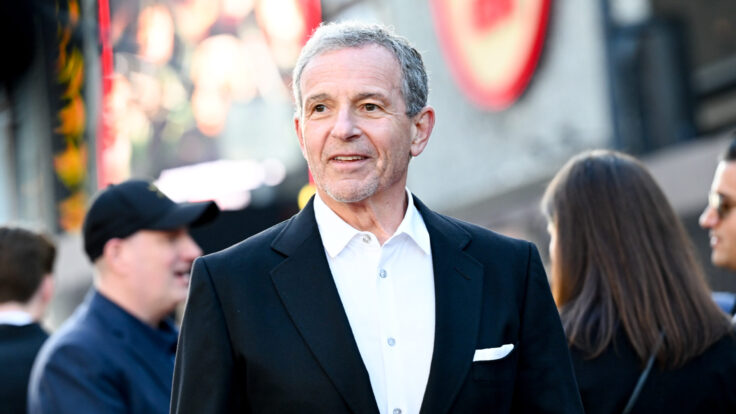
Bob Iger’s final act as C.E.O. of Disney—his now-canceled billion-dollar deal with
OpenAI—had a certain logic to it. In one fell swoop, Iger would jujitsu Sam Altman from a threat into a partner, ensure that his kingdom wouldn’t be overrun by the tech barbarians at the gate, and burnish his bona fides as a media visionary before quite possibly reprising his old role as an advisor at Thrive, an early OpenAI investor. But Iger’s lame-duck decision didn’t have a ton of support internally, I’m told, and many executives breathed sighs of relief
last week when OpenAI unceremoniously shut down Sora, its generative A.I. video platform, thus killing the Disney deal.
Yet the death of Sora doesn’t herald the end of A.I. video, nor suggest that the manifold threats to Disney have gone away. On the contrary, Hollywood is facing challenges on multiple fronts. Even the creepiest, most uncanny A.I. content—like those gnarly “fruit dating” videos that have started to dominate Reels, Shorts, and TikTok—is racking up hundreds of
millions of views. Facebook is overrun with deepfake Boomer slop. And as Netflix chair Reed Hastings recently noted, all of legacy media will come under pressure as digital creators get their mitts on increasingly sophisticated A.I. tools.
Josh D’Amaro, Iger’s successor, will now have the opportunity to rethink the company’s A.I. strategy entirely. Should Disney retrench and play defense in the copyright wars? Find a new licensing
partner? Or get creative with other ways to invest in generative A.I.? Any partnership that opens the A.I. slop floodgates is precisely the sort of thing that most company executives have spent their careers fighting. At the same time, an A.I. deal that’s overly restrictive sort of defeats the point of tapping into Disney’s diehard, multigenerational fandom.
These are the questions that kept coming up in my conversations last week with various Disney employees and former entertainment
executives now working in the A.I. space. Historically, Disney, as everyone knows, has been extremely protective of its family-friendly brand—which is why Iger famously decided not to buy Twitter (too much “nastiness” on the platform, he said, and that was pre-Elon), and why ESPN initially avoided sports betting. But there’s huge value in tapping the unhinged creativity of the internet, along with Disney’s I.P., for the company’s next phase of growth. And that market is
already professionalizing. Skibidi Toilet, the surreal internet series that became a YouTube phenomenon, is set to become a movie developed by… Michael Bay. |
Disney has been down this road before. In 2014, Iger acquired Maker Studios, a YouTube creator network, in a
$500 million deal. Predictably, this resulted in the unfortunate-on-every-level discovery that one of Maker’s top stars, Felix “PewDiePie” Kjellberg, was reading Frozen erotic fanfic in his videos. Iger was reportedly displeased. (Five years later, Maker was essentially defunct.)
D’Amaro might worry about getting burned again, but he needs to find a manageable path for A.I. engagement. Younger audiences are increasingly comfortable using gen A.I. tools to make
content, according to a Reuters Institute study published last fall. They also prefer watching creator-led content, often discovered through social media. According to Deloitte’s 2025 State of Media survey, more than half of all Gen Zers said they felt a stronger connection to creators than traditional actors.
Perhaps the answer has been in front of D’Amaro’s face this whole time. My conversations about Disney’s community story-building potential often lead back to the same possible M&A
target: Epic Games, the maker of Fortnite, the battle royale–style shooter where fans can play as characters from Marvel, Star Wars, and other Disney properties. Disney already has a 10 percent stake in the company and is building out a special Disney-branded environment on the platform, but as former Viacom digital executive Andrew Rosen explained, the best way to leverage I.P. in the A.I. marketplace is to have full control over the platform where
content is created and stored. (Rosen points to David and Larry Ellison perhaps having a similar theory in mind with their moves to bring together Paramount, Oracle Cloud, and their minority stake in TikTok.)
Video games are a natural sandbox for community co-creation. For years now, creators have been making entire digital series inside of Minecraft. More recently, there’s been an explosion of creativity inside gaming ecosystems like
Fortnite and Roblox, with gen A.I. tools only accelerating the content creation. And by owning one or more platforms where that sort of storytelling takes place, Disney could potentially monetize fan-driven I.P. experimentation in novel ways—though, yes, it could cost upward of $30 billion. For example, Disney could sell in-game tools for building more elaborate, individual set pieces within a larger “theme park” setting, or bring in advertising through partnerships with
clothing brands.
The key is “speed to I.P.,” Gavin Purcell, a former Tonight Show producer who now works in A.I., told me—providing tools to younger creators to iterate on legacy I.P. while simultaneously developing entirely new characters and concepts. Letting players build their own stories and worlds around, say, some of the lesser characters on Marvel’s 7,000-deep bench could eventually monetize I.P. otherwise collecting dust.
Still, there’s a caveat.
“You would have to have your own actual distribution platform,” Purcell said. “That’s the only way to do this right.” Could owning a collaborative storytelling and social platform like Roblox or Fortnite broaden how fans interact with and further develop Disney characters? “The real value to Disney is, how do you use these platforms that have their own A.I. tools to create new or rejuvenated I.P.?” Purcell added. “Rather than just investing enough money to say, ‘We’re an A.I.
company too.’”
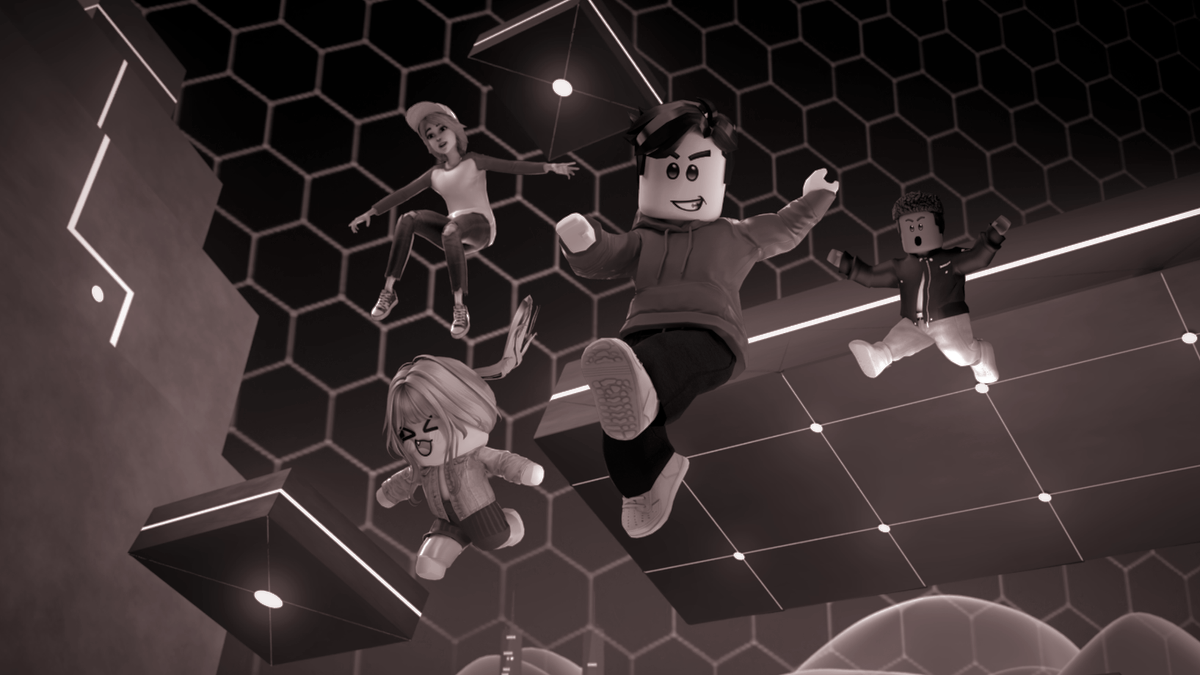
Roblox, one of the fastest-growing gaming platforms, with more than 150 million daily active users as of Q3 2025, offers several meaningful proof points. According to analyst Matthew Ball’s annual “State of Gaming” report, Roblox has developed significant network effects, making individual developers (or creators) want to build within the game universe. Grow a Garden, which launched just last year on the platform, surpassed 20
million concurrent players in one session—and is now being adapted into a film. Last year Roblox hit 65 percent of Netflix’s total viewing hours. But while Netflix is growing between 1 and 2 percent per year, Roblox is growing tenfold. You can see why D’Amaro might dream of movie premieres inside Fortnite.
And therein lies the potential for vertical monetization. Rather than trying to establish new points on the flywheel, maybe Disney should simply double down on its
investment through the community building and storytelling that’s already happening online. Recent layoffs at Epic Games may have some people inside Disney feeling anxious about the investment, but C.E.O. Tim Sweeney has been working on addressing those issues—in part by copying what’s worked for Roblox. Fortnite is now allowing players to create their own games and ecosystems, which are rewarded with creator payouts that in turn can create new engagement
pipelines.
All entertainment companies are currently trying to figure out how to be in A.I., just like they once had to figure out how to be on YouTube—but investing in new technology can require completely changing direction. Oftentimes, the answer isn’t to acquiesce to the pressures from shareholders, but to further invest in what’s already worked, even if those paths forward feel like a whole new world. |
Some great charts to send to your family to explain why you no longer have a job.
[WSJ]
CNN’s new podcast-style aesthetic maybe doesn’t convey the “authenticity” they think it does. [New
Yorker]
Aaron Moss explains why the Supreme Court’s latest copyright ruling is very bad for rights-holders. [Copyright Lately]
Nothing like a good Nielsen Gauge scandal: Julia Alexander looks at whether the measurement firm “caved” to streamers.
[Puck]
Netflix has hiked the price of its ad-free plan 150 percent since 2013, well above the rate of inflation. It’s now at $20/month, but at
what point would you cancel? Exactly. [Bloomberg]
Fruit Love Island, an A.I.-generated riff on the dating show that debuted last week on TikTok, has generated 10 million views for each of the first 21 episodes.
[WSJ]
Note to ITV and NBC Universal lawyers: You’re cool with that title?
Matthew Yglesias has
good theories on why movies got so damned long. [Slow Boring]
I finally listened to Steven Spielberg’s sharp chat with Sean Fennessey, and I’m now convinced he’s an alien.
[Big Picture]
Roy Price argues movies are working this year because they’re fun. Okay… that’s a bit amusing because I wouldn’t call Price’s era of Amazon Studios, with Manchester by the Sea and Chi-raq, a nonstop party.
[N.Y. Times]
Bob Iger’s finsta is @maxstryker, which I’m hoping is a reference to his son Max or Homer Simpson’s “Max Power” alter ego and not some secret porn star side gig. [LA
Material]
Tom Cruise, John Travolta, Jenna Elfman, and rapper Doug E. Fresh made it to L. Ron Hubbard’s 115th birthday party. [Tony Ortega] |
My Thursday analysis of the push for a federal tax credit drew skeptical responses. A couple examples…
“Adam Schiff being associated with any kind of federal tax incentive push is the exact reason Trump will kill it.” —A lawyer
“This is the guy who’s gonna save Hollywood? God help us.” —A manager
“To me, the easiest fix is for California to have a 20-25 percent tax credit—no cap—on everything
that films here. L.A. would be a boom town again overnight!! Newsom had a chance to propose this when filming was starting up again during the pandemic, but he didn’t, which always felt like a missed opportunity. Hopefully, whichever governor gets elected sees the value in having a strong CA tax incentive with no cap.” —A producer
“My advice to the industry groups working to get a federal tax credit: Hire Kellyanne Conway. She got Trump to issue all those
pardons. She gets it done.” —A filmmaker |
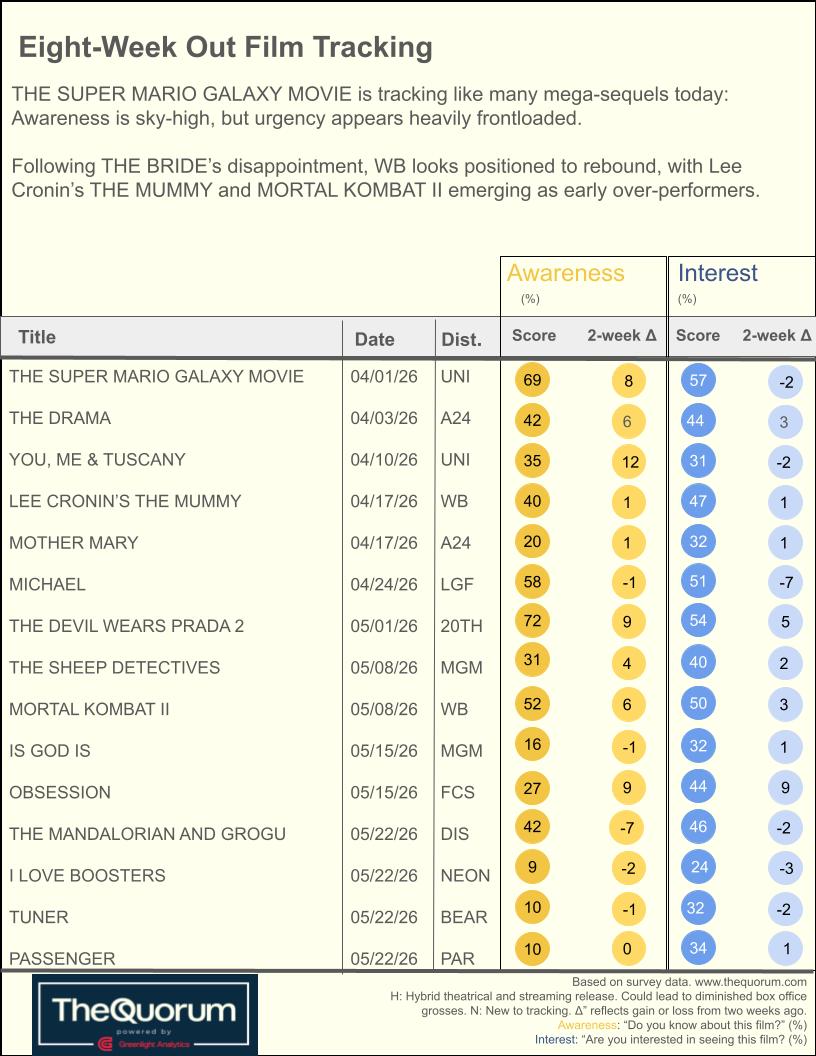
Disney’s Mandalorian & Grogu numbers are high but going in the wrong direction in the latest early
tracking chart from The Quorum… |
Have a great week,
Matt
Correction: The Greatest Showman is previewing in
Bristol, which is a couple hours outside London. Apologies for my bad U.K. geography.
Maya Tribbitt contributed research for this issue.
Got a question, comment, complaint, or anyone who’s had a better time at Disney World than Lindsey Graham during the partial government
shutdown? Email me at Matt@puck.news or call/text me at 310-804-3198. |
|
|
|
Need help? Review our
FAQ page or contact us for assistance. For brand partnerships, email ads@puck.news.
You received this email because you signed up to receive emails from Puck, or as part of your Puck account associated with {{customer.email}}. To stop receiving this newsletter and/or manage all your email preferences, click here. |
Puck is published by Heat Media LLC. 107 Greenwich St., New York, NY 10006 |
|
|
|
|