Welcome back to What I’m Hearing...
Happy Sunday, a little later today thanks to my kid’s Ghostbusters-themed birthday party. A reminder as you’re watching the SAG Awards tonight (or, more likely, just following the tweets): Subscribers can gift Puck columns to friends or colleagues by clicking on the gift box icon in article pages. It’s fun, easy, and a great way to prove you’re a reasonably well-informed person.
Discussed in today’s email: Peter Rice, Timothy Hutton, Mekan Delrahim, Dawn Hudson, Jeff Zucker, Shari Redstone, Adam McKay, David Ellison, Dean Devlin, and, of course, the Oscars.
Who Won the Week: Chris Licht
My colleague Dylan Byers scooped yesterday that the Late Show with Stephen Colbert executive producer and veteran TV news exec will succeed Jeff Zucker at CNN. I like this pick: Licht has great news and entertainment judgment, knows everyone in media, and is super competitive.
Quote of the Week
“Would HBO be doing a lot better if it had three more really successful scripted series right now? It’s not clear.”
–David Zaslav, the incoming Warner Bros. Discovery C.E.O., questioning, on an earnings call, the prevailing theory that more spending always equals more subscribers.
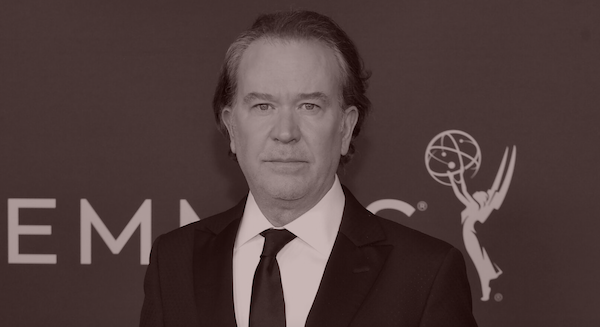
Timothy Hutton was accused, investigated, cleared (sort of), but still lost a lucrative job. Now Hutton is suing, setting up a legal battle with no easy answers. People sometimes ask me, as I’m sure they ask you, whether the #MeToo movement has actually changed Hollywood. I usually say it’s shifted nothing and everything, meaning the power structures that gave rise to all that awful behavior still exist, but a lot of the specifics—from casting decisions, to how people conduct themselves in personal and professional settings, even to the things people fight over—have definitely changed.
For instance, here’s a legal dispute that is playing out right now, in secret. The situation sounds generally familiar, as far as Hollywood fights go, but the framework and details would have been unimaginable five years ago:
An Oscar-winning actor stars on a TV show for five seasons. A few years later, a streaming service wants to revive the show with the cast intact. The actor says great, starts negotiating with the producer, and his reps hammer out the major terms. Just before the deal is signed, however, a media outlet publishes an account of a woman who claims the actor raped her at age 14, nearly four decades earlier. The actor says he’s never met the woman and can prove she’s trying to extort him. The producer freaks, immediately re-casts the actor, and the streaming service quickly announces the reboot without its original star. Authorities then investigate the woman’s claims, and more than a year later they decide not to bring charges. Case closed.
So, what’s the actor to do? He’s been vindicated, sort of, but it’s been a year, he lost the lucrative job, and the horrible accusation is still out there, just waiting for any casting director to Google. And, as many might say, do we really know he’s innocent? Just because police decide not to bring charges doesn’t mean he didn’t do it. The article included multiple people corroborating the very detailed claims. It’s still a massive he said-she said, and because of that, the celebrated actor’s career has been seriously harmed. If he truly didn’t do anything, it’s an awful injustice. These kinds of issues are quietly playing out all over town, lawyers tell me.
Hutton has been locked in a standoff with Devlin since he was blindsided by the news on April 22, 2020, that IMDb TV had picked up the Leverage revival with Noah Wyle, not Hutton, starring. TV Line was similarly surprised, writing the headline, “Leverage Revival Ordered, Noah Wyle to Star (But Where's Timothy Hutton?)” A month earlier, the Buzzfeed story had dropped with the allegations from Canadian model Sera Johnson, who claimed that Hutton sexually assaulted her as a minor during the filming of Iceman in 1983. The claims were lengthy and shocking.
Buzzfeed had actually been threatening to publish the story for awhile, and Hutton had received a letter way back in late 2017 from a fairly notorious lawyer named Jeff Herman, who is said to have asked for $1.5 million in exchange for Johnson’s silence. In the story, Hutton strongly denied the claims (he had actually reported Johnson to the F.B.I. months earlier), so he didn’t think he’d be dropped from what became Leverage: Redemption without a proper investigation. And when he was, his lawyer’s attention shifted to getting him paid.
That’s because Hutton was pay-or-play, or at least he’s claiming he was pay-or-play, meaning that Devlin could fire him for any reason, but would still have to shell out $175,000 an episode for the 13 guaranteed. (Ultimately, 16 episodes were shot for the first season, which aired last year, and it’s been renewed for a second.) Hutton’s deal wasn’t signed, which is why he’s suing for breach of an oral contract, but his WME team and deal attorney Alan Wertheimer believe they had hammered out all the key terms: fees for acting and executive producing, points on the backend; credit; trailer; publicity; perqs—everything you’d see in a usual deal for a TV star, and $3.1 million total owed. They believe they had a deal that had “closed” in February, weeks before the Buzzfeed story, and that both sides were acting like it was a done deal… until Devlin wasn’t.
That’s disputed, of course. I asked Patty Glaser, Electric’s litigator, about Hutton’s situation and specifically his pay-or-play claim. “There is no merit to his position, in our view,” she told me. But beyond Hutton’s lawsuit and the claims by litigators Dale Kinsella and Nicholas Soltman, it’s a fascinating situation, because if you’re Devlin, and your only goal is to sell your show to Amazon, and Amazon is skittish about the #MeToo claims against your star, your incentive as a producer is to fix the problem, recast the star, and sell the show. Which is exactly what appears to have happened.
I’ll be following this case, for sure. Nearly five years into the #MeToo movement, many of us in Hollywood have been involved in various aspects of accusations and the behind-the-scenes machinations. Personally, I’ve published allegations as a writer or editor, and covered the business and legal fallout, and counseled others dealing with it all, and by no means do I want to minimize anyone’s willingness to come forward. But what’s clear to me is that every situation is different, the consequences from allegations are significant, and the victims in these cases aren’t always apparent at first glance.
My Reading List
Q&A: Mr. Antitrust Predicts the Future of Streaming
My colleague Eriq Gardner has a great interview today with Makan Delrahim, who led the D.O.J.’s antitrust division during the Trump administration and sued to block AT&T’s acquisition of WarnerMedia. Click here to read the full interview, but I’ve highlighted a few of his most interesting observations about the streaming wars, Facebook’s real problems, Amazon-MGM, Shari Redstone, and how antitrust law will impact the future of Hollywood…
Eriq Gardner: Do you think we see more cases standing up to vertical integration that harms competition?
Makan Delrahim: I got blamed for the first vertical merger challenge in 40 years [AT&T’s acquisition of Warner Media]. It was a good case and used AT&T’s own arguments and reasoning when it opposed Comcast’s merger with NBCU [in 2011]. There were many settlements that AT&T’s leadership rejected, so we had to litigate it. I think people look back and say it showed courage. Who knows in that case, with a different judge, what the outcome would have been. I’m sure that AT&T shareholders would have been delighted, in retrospect, had that deal been blocked. Or at a minimum AT&T had just sold a majority of DirecTV back in 2017 when they could have gotten 3-4 times the price they got when they sold a stake to TPG. [Disclosure: TPG is an investor in Puck.]
Obviously, there’s quite a bit of focus on Amazon these days and its acquisitions. What do you think about government intervention?
I think with any of the big tech companies, there is an automatic presumption against them making any acquisitions, period. I don’t know if it’s fair or not, but I think that’s the reality. I watched with some interest the Facebook-Giphy acquisition being challenged in the U.K. I mean, it’s Giphy. What’s the barrier to entry on having gifs? They don’t want Facebook getting any bigger. Should that be the role of antitrust, or should we have a blanket policy against acquisitions?
Getting back to your question about Amazon buying MGM, as you know, I was involved not only with the review of the Time Warner transaction, but also Disney-Fox, Sinclair-Tribune, Discovery-Scripps. It’s an industry I’m familiar with, and the D.O.J. is familiar with it, and I’m curious what the F.T.C.’s theory would be should they challenge Amazon-MGM. It seems hard to argue that there is a barrier to entry for movie production, but who knows what their investigation will find.
I’d guess it would have to do with how Amazon controls its Prime and Fire platforms for MGM’s rivals to reach consumers in the streaming video market.
Possible. Is Amazon too big a platform? In antitrust theory, is that particular transaction “substantially” limiting competition? That is the legal standard. Does Amazon Fire have enough market share compared to Roku, Apple or Samsung? Think of all the other hardware or software out there. Do they have enough market share? Also, you look at the product market on the content production side. What is MGM’s share?
It’s small.
Yeah, so under a traditional view, the mirror to this would probably be Amazon-Whole Foods. Amazon wasn’t in the supermarket business or had a very small percentage. Are they limiting competition? The F.T.C. reviewed that and decided no. What the F.T.C. does in this transaction will be an interesting comparison to that. Is there a barrier to entry to movie production? Certainly for some of the I.P. that MGM holds, but beyond that?
Well, once upon a time, Instagram and WhatsApp were seen as tiny, and Facebook’s acquisitions sailed through without anyone raising an eyebrow. Now…
That’s in litigation now as part of the F.T.C.’s case. When you look at antitrust merger analysis, you have to look back at the time of the merger and ask: Would Instagram be a real competitor had it not been for the resources that Facebook put into it? What if Facebook had copied some of the elements of Instagram in its own product? Some would say that Instagram did a lot of what Snapchat had done when Snapchat refused to sell to Facebook. I think it’s easy to look back today and say they would be competitors. It could very well be that Facebook looked there and said, “Let’s crush them.” I don’t know. The court will decide that issue.
People look at Google and YouTube and say they compete. Did Google buy them to take out a competitor? Is that really what motivated Google? I think, had Google not bought them, YouTube would probably be out of business because of the copyright liabilities they had. We have to credit the engineering and the resources that Google put into YouTube to make it the product it is today. I think that’s a different analysis than the current debate in Congress and around the world looking at it and asking whether these companies, with this amount of data, with this amount of market power, should be able to make any acquisitions.
That’s not antitrust law, that’s industrial and regulatory policy. Congress could certainly have new rules, but if you are looking at it under current antitrust law, in terms of limiting competition in a defined market, it’s a much more difficult argument to make. Sometimes enforcers can bring bad cases, and some of the cases can lead to bad legal precedents. You, as an enforcer, have to think ahead and have some evidence that an acquisition target will be a competitor. I don’t think, for example, that MGM will be the next Amazon. If that’s the theory, that wouldn’t make any sense.
If the government loses that case against Facebook, could it set back antitrust enforcement?
It depends on what the court says, what the legal precedent is. They brought it under a monopolization theory. If the hurdles to bringing a case get raised, it could become a problem for future enforcement cases.
OK, give me a prediction—and it doesn’t have to be about antitrust enforcement.
In the next couple of years, I think the ad-supported video-on-demand marketplace is going to become more and more prominent. There are limits to the number of streaming services that consumers want to manage. More than three or four? We’ll see. But there is zero cost to download a service like PlutoTV. It’s almost like back to the future. They are going back to the way broadcast television was, where you have the content provided free for the consumer. I think [Paramount Global C.E.O. Bob] Bakish’s bet on Pluto and Fox’s bet on Tubi will pay off, and I wouldn’t be surprised to see more competitors in the space.
I also see a consolidated streaming platform that makes it easier for consumers. A bundle. You already see it at Disney with Hulu, ESPN+ and Disney+, but once you get past Netflix, HBO Max, maybe Apple and Amazon, you have a lot less distribution air for a lot of great content out there. How will consumers get there? My expectation is it’ll be much more efficient for a handful of companies to come together and create a joint venture to offer all this content.
Paramount’s Shari Redstone has Pluto–good, but she needs scale for Paramount+. Maybe combine it with NBC Universal’s Peacock?
I can see any of them with Paramount+. You have a lot of great content, and consumers want curation. There’s also the clumsiness of going in and out of apps and going on the Fire stick. Maybe Apple comes out with it, or maybe it’s a different technology. That will be interesting.
The Feedback
People had strong feelings about my Thursday assessment of the Beauty and the Beast prequel implosion and Disney’s I.P.-branded TV efforts. Some examples:
“You mentioned the Branded TV division but what you didn’t say is that this focus is relatively recent for Disney, which is crazy. All that I.P. just sitting there, and an amazing performance with the film remakes (Aladdin, Lion King), yet it took this long to get a Beauty and the Beast TV show even in development? That’s a strategy failure, not execution or any specific failed execution.” –A producer
“Who was going to watch a Beauty and the Beast prequel show anyway? No Belle, no Beast, just Gaston and his helper dude? Thank you to Peter Rice for putting this ill-conceived show out of its misery.” –A Disney employee
“Disney is the cheapest in town, and everyone hoped that would change with the Fox execs in charge of TV. Alas…” –A lawyer
My applause for the Academy’s decision to present eight Oscars before the telecast generated some spirited hate mail….
“You’ve clearly never made a movie. If you had, you would realize how offensive it is to be relegated to second-class citizenship by an Academy that claims to represent and advocate for film artists.” –An editor
“How much is the Academy paying you to carry their water?” –A producer
“As usual, it’s the way the Academy communicated this change (haphazardly and without explanation) not the actual rule that makes everyone so mad. And then they went silent, leaving everyone to fume and speculate. Dawn [Hudson], David [Rubin] and the leadership should be ashamed of themselves. –A journalist
A note on this topic: The Academy really needs to clarify how the pre-show will work. How many people will be in the audience? Will the red carpet go on as usual during the pre-show or will people need to be in their seats a lot earlier? Many, many questions have not been answered, and Hudson and Rubin have been silent.
Correction: On Thursday, I mentioned that Universal paid $400 million for a new Exorcist trilogy without seeing a script. But there was a script for the first movie before greenlight, I’m told. Apologies.
Have a great week, Matt
Got a question, comment, complaint, or just want to chat? Email me at Matt@puck.news or call/text me at 310-804-3198.

You received this message because you signed up to receive emails from Puck.
Was this email forwarded to you?
Sent to {{customer.email}}
Interested in exploring our newsletter offerings?
Puck is published by Heat Media LLC.
For support, just reply to this e-mail. For brand partnerships, email ads@puck.news |


SHARE