 |
|
Happy Monday, I’m Eriq Gardner.
|
|
Welcome back to The Rainmaker, a private email about the inside story of the legal business. (Was this email forwarded to you? Click this link to subscribe.)
In this week’s edition, the scenario that could land Donald Trump in jail sooner than most think. Plus updates on Pras Michel, Tom Girardi, and Elon Musk, a terrible development for Project Veritas, and secret rulings for Bill O’Reilly and a Bachelorette star.
|
|
|
- Pras Michel, the former Fugees rapper who is charged with helping conceal campaign donations for an alleged Malaysian crook and secretly lobbying for the Chinese, is finally going on trial this week. The case has only become more unusual in recent weeks, even as the judge refused to let Michel call Trump, Obama, and other politicians to the witness stand. To add even more intrigue, the feds recently indicted Guo Wengui, the same Chinese national that Michel wanted the Trump administration to deport, for fraud. Michel’s lawyers wanted to tell the jury about Guo as part of a narrative that Michel was really just trying to get a bad seed out of the country, not help the Chinese government get their hands on a dissident, but the judge granted a government motion to preclude that. Here’s the order. Michel is nevertheless continuing his push to make Guo testify.
- I’ll have much more on Dominion v. Fox after the imminent summary judgment ruling, but watching a key hearing this week, I came away with the impression that Delaware Superior Court Judge Eric Davis is a pretty no-nonsense guy (“no adjectives,” he told the attorneys) who could end up frustrating both sides. On one hand, he really struggled to understand Fox News’s positioning on the proper libel standard—i.e., Fox claims that it was only neutrally conveying Trump’s allegations about the election, but the judge didn’t understand how anyone exhibiting actual malice could be neutral. On the other hand, Davis mentioned that Dominion might have a causation problem—i.e., proving that the false statements that aired on Fox can be linked to the economic losses Dominion supposedly incurred. Trust me, there’s more nuance to this case than what’s commonly reported.
Also, there’s a status conference tomorrow where I hear the parties will discuss whether Rupert Murdoch will be compelled to attend the trial. Additionally, the two sides will talk to the judge about Abbie Grossberg, the recently fired Fox producer who is now suing the network and claiming that her former bosses coerced her into misleading deposition testimony. It’ll be interesting to see if Dominion now tries to add her to its witness list.
- Finally, Owen Diaz’s racial bias case against Tesla goes to trial (again) this week, with some $137 million at stake. I previewed the case here, and will have updates as it progresses.
|
|
|
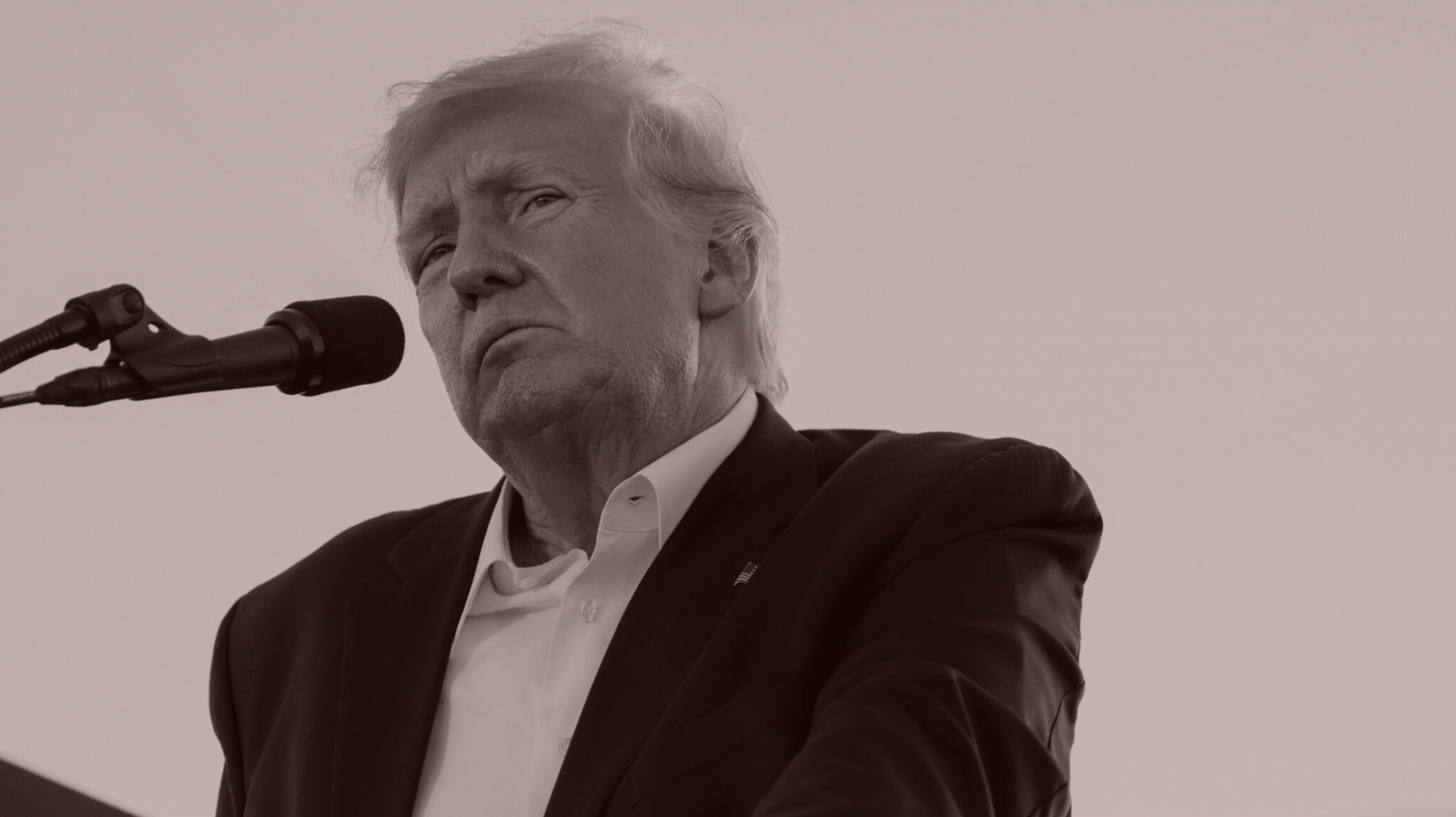
| Has U.S. District Court Judge Lewis Kaplan left a tripwire for Donald Trump? The Manhattan judge issued a curious ruling last week in the case of writer E. Jean Carroll, who is suing Trump for defamation over an alleged rape in the mid-1990s. Kaplan has decreed that the jury must be kept anonymous. It’s a seemingly minor ruling that could have major consequences when the case goes to trial on April 25.
Interestingly, neither Trump nor Carroll’s lawyers objected when Kaplan first notified them, a couple weeks ago, that he was considering an anonymous jury. The Daily News and Associated Press argued against it, of course, but on Thursday Kaplan issued his opinion (read here) that highlighted his fear that Carroll jurors could be harassed, or worse. “This is a unique case,” he wrote, enumerating various instances of Trump’s public misbehavior, like inciting his supporters during the Jan. 6 riot and, last week, when he claimed he was about to be arrested in the Stormy Daniels case. Kaplan added: “Mr Trump’s quite recent reaction to what he perceived as an imminent threat of indictment by a grand jury sitting virtually next door to this Court was to encourage ‘protest’ and to urge people to ‘take our country back.’”
Kaplan’s note about the potential timing and proximity of the Daniels case previews a whole host of issues that could crop up if Manhattan district attorney Alvin Bragg does, in fact, indict Trump. If that criminal action commences, will the Carroll civil trial still move forward? That’s unclear. Trump could make an emergency motion arguing that a sexual assault trial, with the potential for interrogation on the witness stand, would prejudice him, potentially forcing Kaplan, 78, to postpone. Kaplan, for his part, has been pretty careful these past couple of months to keep this trial on schedule. Maybe this signals he’d charge forward regardless of what Bragg does.
But Kaplan’s opinion also opens the door to potential legal deadfalls for Trump. To wit: The judge declared that “the names, addresses, and places of employment of prospective jurors… shall not be revealed.” Nice passive voice. Who is he ordering here? Is he telling the media it must not identify jurors? And what would be the penalty for violating this prior restraint? Because if Kaplan’s intention is also to gag Carroll and a notoriously impulsive Trump, well, good luck keeping the former president or his equally notorious legal advisers and media surrogates from speaking out of school.
That could be especially consequential if the Carroll trial proceeds while Trump is out on bail in the Stormy Daniels-related case, as seems likely to happen if Bragg moves forward. The conditions for Trump’s continued freedom would presumably include following all court orders—even in cases happening “next door.” And this ruling in favor of an anonymous jury might not be Kaplan’s last decision aimed at protecting the sanctity of the coming trial. How might all this play out? Your imagination is as good as mine. |
|
|
| James O’Keefe may be out at Project Veritas, the conservative muckraking outfit he founded, but he’s not free of the legal headaches surrounding his tenure. On March 21, a retired judge finally issued her report on what the Department of Justice should see following the November 2021 F.B.I. raid on the homes of O’Keefe and two others associated with Project Veritas. And it contains some very bad news for the group.
The F.B.I., as you’ll recall, has been investigating the theft of a diary belonging to President Joe Biden’s daughter, Ashley, which was stolen and sold to Project Veritas. After getting permission to execute a search warrant, F.B.I. agents seized thousands of documents related to the diary. (O’Keefe decided not to publish the diary, but it did turn up on a conservative blog, and Trump used it in the final days of the 2020 election.) Soon after the raids, O’Keefe and his staff cried foul, arguing their First Amendment rights were violated; Special Master Barbara Jones was appointed to screen the materials and figure out what exactly the Department of Justice should see and what should remain confidential.
Jones, who just issued her recommendation (read the full report here), concluded that most of the materials are not, in fact, privileged—and, more importantly, she rejected O’Keefe’s argument that his conduct was protected under Bartnicki v. Vopper. The precedent from that 2001 case is one of the most significant for the U.S. media: In short, it allows for the publication of lawfully obtained information, even if the sources themselves broke the law to get it (e.g. the Sony hack materials, Trump’s tax returns, the Dobbs ruling, etcetera).
As Jones sees it, Bartnicki has nothing to do with the F.B.I. getting a search warrant, nor does it protect journalists who unlawfully acquire information. The Special Master also opined that Project Veritas’s communications with its sources aren’t really confidential because those sources have already pleaded guilty for trafficking stolen materials. She likewise concluded that there’s no reason to shield the group’s internal deliberations about everything from whether to publish the diary to whether to turn it over to authorities.
But the final part may be most alarming to the Project Veritas gang. Per Jones, not all of the group’s communications involving their lawyer are protected by attorney-client privilege, thanks to the crime fraud exception. On the contrary, she reviewed the documents and found evidence of an attempt to further or conceal crimes, which she identified in a footnote as conspiracy to transport and possess stolen property, among other things. Specifically, she says 10 documents are subject to the crime fraud exception. The report now goes to a district court judge for review, and could be appealed beyond. |
| ‘Bachelorette’ N.D.A. Drama |
|
| For those unfamiliar, Blake Horstmann was the runner-up on the 14th season of ABC’s The Bachelorette, before later starring in Bachelor in Paradise in 2019. Afterward, like dozens of contestants before him, Horstmann scrambled to capitalize on his momentary fame. But he apparently pushed the limit by appearing on several “tell all” podcasts, despite a clause in his initial contract binding him to confidentiality.
Unsurprisingly, Bachelor producers weren’t happy. Last year, they dragged Horstmann to arbitration and successfully cited the liquidated damages portion of his Bachelorette deal. The arbitrator awarded NZK Productions, which produces the franchise, $150,000 for the breaches, plus an additional $25,000 for arbitration costs. This past week, an NZK attorney appeared in court in Los Angeles to confirm the award.
This is at least the second time that NZK has gone after a contestant for spilling behind-the-scenes details. A few years ago, producers obtained a $100,000 judgment against Bachelorette contestant-villain Luke Parker, after he made “at least four” press appearances in 2019 without NZK’s assent. The production company, which has become one of the more aggressive secret-keepers in Hollywood, has also gone to war against spoiler websites like Reality Steve for inducing those affiliated with the show to breach their contracts. (Consider this fair warning to any handsome Rainmaker readers aspiring to become the next Bachelor.)
The ruling echos a similar legal result in a different corner of the media universe, in which former Fox News associate producer Andrea Mackris is facing retribution for publicly accusing Bill O’Reilly of sexual harassment. Back in 2004, the two reached a settlement in which Mackris received $9 million for agreeing to remain silent about O’Reilly’s lewd phone conversations. Then, in 2021, she gave an interview to the Daily Beast and was set to appear on ABC’s The View when O’Reilly rushed to court and obtained a temporary restraining order. The dispute then seemingly vanished from public view—at least until a recent ruling, which I just uncovered.
O’Reilly obtained a favorable arbitration award against Mackris, and this past week filed a case under seal to confirm the ruling. The details of the victory remain confidential and neither side would talk to me about it. Last year, Biden signed the Speak Out Act, which unwinds the stricture of non-disclosure agreements when sexual harassment is alleged, but that new law only applies to NDAs entered into before a dispute arises, and isn’t applicable here.
Nevertheless, these cases may be vestiges of a fading era where those in power tightly control what former employees and contractors can say and do. Policymakers today are focused on rewriting laws to leave more room for victims to tell their stories, in addition to collecting damages. Even this Bachelorette situation, which has nothing to do with sexual harassment, may increasingly seem quaint. In the arbitration, producers were unhappy with Horstmann getting paid to promote the dating site Bumble, which they claimed violated a separate provision in his contract that guaranteed his exclusive media services for a set period of time. It’d be interesting to see how something like that would hold up under the Federal Trade Commission’s proposed rule banning noncompete clauses. |
| Is Tom Girardi Faking It? |
|
| Meanwhile, the Los Angeles legal community continues to puzzle over the medical mystery at the center of the prosecution of Tom Girardi, the former California power lawyer, better known to Bravo fans as the ex-husband of Real Housewives star Erika Jayne. Specifically: Is Girardi, who faces criminal charges for allegedly embezzling $15 million of client funds, faking dementia to get out of standing trial?
That might sound like an outlandish TV plot, but in arguing about how much time a psychological expert would have to examine the disbarred 83-year-old lawyer, prosecutors told the judge that the defendant’s reps didn’t want a personality test because it would expose him as “malingering” and there was something about Girardi’s “rapid neurocognitive decline as well as the timing of it” that required “closer scrutiny.” On Friday, the judge allowed an examination without restrictions, except for ruling that whatever Girardi said during a mental competency evaluation wouldn’t be later used as evidence against him at trial. |
|
|
| Finally, a word on Elon Musk and his plan to remove legacy “verified” checkmarks from accounts that don’t cough up $8 per month for a Twitter Blue subscription. Yes, Twitter badly needs more revenue to pay down its debt, but this plan seems foolish. After all, the checkmarks were originally established not to serve as a V.I.P. badge, but to solve a problem dating back to the company’s earliest days, when impersonators ran rampant. Celebrities complained and even sent legal threats Twitter’s way.
While Section 230 of the Communications Decency Act provides a legal shield for third party content, there’s an exception for intellectual property. That includes trademarks and, arguably, a famous person’s name and image. With the proliferation of deepfakes, these issues may be destined for the Supreme Court.
In the meantime, however, the removal of blue checks will likely contribute to consumer confusion, and Musk runs the risk of liability when brands get hijacked. It’s ironic and probably appropriate that the checkmark removal program is scheduled to begin on April 1—that is, April Fool’s Day. Let the follies begin.
I’ll be taking a vacation next week, and back in your inbox on April 10. |
|
|
|
| FOUR STORIES WE’RE TALKING ABOUT |
 |
| TikTokenfreude |
| Silicon Valley’s TikTok obsession, Disney cuts, and D.C. media games. |
| DYLAN BYERS |
|
 |
| Hunter Goes Rogue |
| Inside Hunter Biden’s dueling P.R. campaigns & Jeff Roe’s DeSantis link up. |
| TARA PALMERI |
|
 |
|
 |
|
|
|
|
|
 |
|
|
|
Need help? Review our FAQs
page or contact
us for assistance. For brand partnerships, email ads@puck.news.
|
|
|
|
Puck is published by Heat Media LLC. 227 W 17th St New York, NY 10011.
|
|
|
|