 |
|
Happy Monday, I’m Eriq Gardner.
|
|
Welcome back to The Rainmaker, a private email about money, power, fame, and, most of all, the lawyers behind it all. (If you’re not already a subscriber, click this link if you’d like to get this newsletter weekly.)
This past week, I attended a trial packed with international intrigue and a potential $16 billion judgment. In today’s edition, the backstory of an extraordinary Wall Street showdown.
But first, a scoop about Trump and Fox News…
|
|
|
- Trump’s Tucker Tapes: As the possibility of Jan. 6-related criminal charges hover over Donald Trump, the former president has subpoenaed Fox News for Tucker Carlson’s unaired interview with Steven Sund, the former U.S. Capitol Police chief, along with any communications about that interview, according to information I’ve obtained. Trump is seeking the tapes and messages as part of his defense against a lawsuit filed by seven police officers who sustained injuries that fateful day. A federal judge has already rejected Trump’s argument that the First Amendment shields him from liability in the civil suit, which has now proceeded to the discovery phase.
Remarkably, Fox News is fighting Trump’s demands. After receiving the subpoena, the network’s attorneys sent a response letter to the former president, arguing that the materials are shielded from compelled disclosure under reporter’s privilege. Additionally, the network challenged whether the interview was really “crucial” to his defense and suggested that he may be able to obtain the information more directly, by deposing Sund, for example. Carlson, who lost his Fox News show before the interview with Sund could air, recently disclosed during a podcast with Russell Brand that Sund had claimed the Jan. 6 crowd was riddled with federal agents. In other words, Trump might wish to use the interview in an attempt to deflect blame from himself.
As right-wing buzz about the involvement of covert federal agents on Jan. 6 gets louder, Trump could theoretically bring a court motion that would force Fox News to comply with the subpoena. That would put the network in an uncomfortable spot, not only because it regularly courts Trump voters, but also because the network was recently hit with a defamation lawsuit from Ray Epps, a Trump supporter who alleges that he was falsely tarred by Carlson as a federal agent who incited the Jan. 6 crowd. A Fox spokesperson declined to comment about these developments.
- Apple esoterica: The Supreme Court is out of session, but there’s nevertheless action on the so-called “shadow docket,” including a new emergency petition from Epic Games in its ongoing grudge match with Apple. The Fortnite developer wants the ability to steer iPhone subscribers over to a web browser where payments can be made without Apple taking its customary 30 percent fee. A trial judge ruled that Apple’s anti-steering rules violated California law, and the Ninth Circuit Court of Appeals affirmed, but because Apple is pressing for review at the Supreme Court and some Ninth Circuit esoterica, those anti-steering rules remain in place. Epic wants to change that immediately, which could mean that the justices indicate sooner rather than later whether they’ll be taking up the entire heavyweight case.
- The NFL’s new headache: Speaking of big antitrust actions, the NFL on Friday told a federal judge that the Sunday Ticket class action over the way 32 teams pool rights and package out-of-market telecasts directly challenges its broadcast agreements with CBS and Fox. In fact, the N.F.L. argues the eight-year-old lawsuit represents a “challenge not just to Sunday Ticket, but to the entire broadcasting structure for NFL Football,” claiming that the plaintiffs, if successful, will end up eviscerating the CBS and Fox deals. How? That’s redacted, but it may have something to do with the possibility of each team streaming its games. Regardless, the league is now making a rare move to invoke its antitrust immunity under the 1961 Sports Broadcasting Act. (Read the NFL’s summary judgment motion here.) Should the NFL fail to convince a judge, this goes to trial next February.
- This week’s amazing read: The federal indictment against Joe Lewis, the 86-year-old billionaire who owns Tottenham Hotspur and is now being accused of insider trading. Is there anyone Lewis didn’t tip inside information? A lover, a poker buddy, his personal assistants, his pilots…
|
|
|
| If you could travel back in time eight years, with $15 million in hand, what would you do with the money? Would you invest in Apple (up nearly 600 percent), Tesla (more than 1,500 percent), Nvidia (around 8,000 percent)? How about buying the rights to prosecute a socialist South American government?
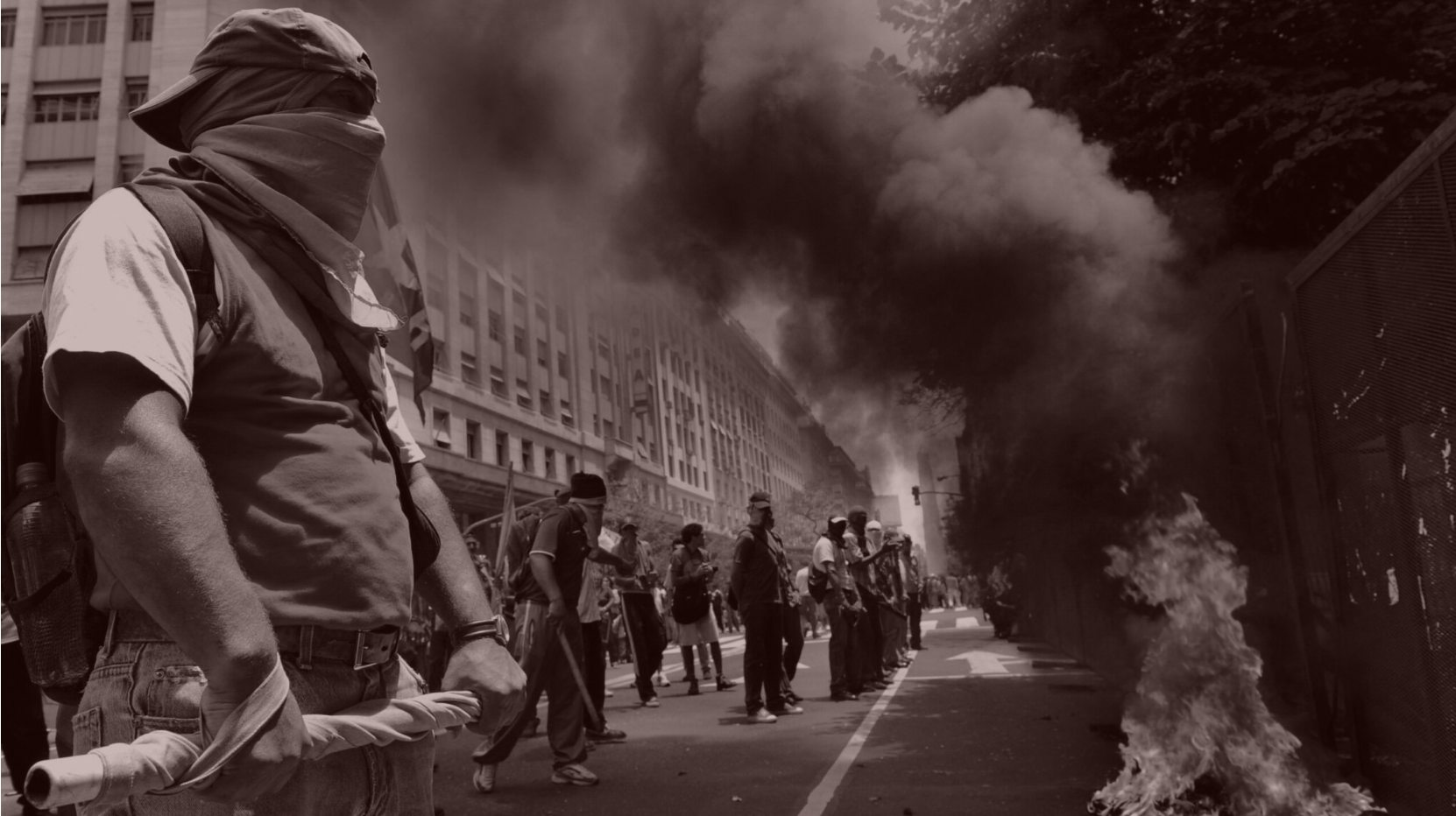
Burford Capital, which specializes in financing mega-lawsuits, made that very bet. In 2015, the publicly-traded British firm stepped into a bankruptcy auction and acquired the exclusive rights to prosecute claims against the Republic of Argentina for seizing the energy company YPF. For $15 million, Burford secured a 70 percent stake in the potential legal bounty, then committed approximately four times that initial investment to actually litigating what has turned out to be a fiercely contested, slightly dangerous, and extraordinarily high-stakes lawsuit.
The trial, which I attended last week in Manhattan, may turn out to be “one of the best investments in the past 20 years,” to quote a Sullivan & Cromwell attorney representing Argentina. Indeed, Argentina went into this trial with a best-case outcome of limiting a damages judgment to merely $5 billion. And if Burford gets exactly what it wishes? Well, then the judgment soars as high as $16 billion. Not bad for a $15 million bet, if Argentina ever pays. |
|
|
| This multi-billion dollar saga has its origins in the economic shock therapy days of the early ’90s, when President Carlos Menem steered Argentina towards free market liberalization. YPF, the nation’s crown jewel oil company, was privatized and went through an I.P.O. in 1993, but investors couldn’t help but harbor skepticism towards a country with a long history of taking over various industries. In a bid to reassure Wall Street, Argentina made a solemn legal pledge to indemnify investors against any re-nationalization down the road.
Flash forward to the 2000s, when YPF fell into the hands of Spanish multinational Repsol, coinciding with the election of Argentine president Nestor Kirchner, an ardent proponent of increased government involvement. While his regime nationalized public services like water, radio, and trains, Kirchner took a subtler route with energy, orchestrating the sale of about 25 percent of Repsol YPF to Enrique Eskenazi, a trusted ally who ran the Petersen Group. But Eskenazi’s acquisition came at a steep cost, financed by hefty loans from banks like Credit Suisse and Goldman Sachs. To service the colossal debt, YPF’s newest stakeholder demanded towering dividends, sparking discontent in Argentina, where local politicians accused the company’s new owners of prioritizing wealth extraction over reinvestment.
In 2012, a momentous oil shale discovery put even more pressure on the government to take YPF back. A few years into the presidential tenure of Kirchner’s wife, Cristina Fernandez, Argentina finally seized Repsol’s shares. On April 16, 2012, the government announced an intervention, and on May 7, Argentina’s legislative body passed a law cementing the takeover. Repsol eventually settled for $5 billion, but Eskenazi’s Petersen Group chose not to pursue litigation, demoralized by the forceful ejection of YPF’s former stakeholders from their offices and their unceremonious return to Spain.
As fate would have it, however, Petersen succumbed to bankruptcy, paving the way for its unresolved legal claim on YPF to be bought up by Burford. |
|
|
| In the drama that unfolded during last week’s three-day trial, one man’s presence loomed large: Christopher Bogart, the formidable C.E.O. and co-founder of Burford, who sat just behind Argentina’s current attorney general in the Manhattan courtroom. Bogart, after all, is one of the pioneers of litigation finance, the high-risk, high-reward business of funding lawsuits—sometimes on behalf of vulnerable clients who can’t otherwise afford litigation; other times on behalf of plaintiffs targeting vulnerable countries, such as developing nations. And, of course, the payouts for the companies that invest in the riskiest cases can be huge. Burford Capital is valued at nearly $3 billion.
Not surprisingly, Argentina’s attorneys made every effort to ensure Judge Loretta Preska understood Bogart’s role as the main beneficiary of her impending decision, nodding toward the centi-millionaire several times. Petersen’s own lawyer Paul Clement urged Preska not to be “distracted” by this. But there’s no question that Bogart has been a central, sometimes controversial figure in this high-stakes affair, and in litigation finance in general. Bogart, who honed his skills as a tough-minded trial attorney at Cravath before joining Time Warner, where he oversaw the legal department during the acquisitions of CNN and Turner Broadcasting, among others, has emerged as a unique breed of capitalist. After a series of investment roles, Bogart launched Burford in 2009 with an I.P.O. that raised $130 million. Since then, Burford has expanded globally with dozens of attorneys scouting for opportunities, their portfolio containing more than 1,000 matters, most shrouded in secrecy.
Before the lucrative Petersen opportunity presented itself, Burford had already tasted success in a prior showdown against Argentina. Dealing with two expropriated airlines, they turned a $13 million investment into a $95 million victory. Of course, going to battle with a foreign government isn’t without risks: The previous attorney general of Argentina unleashed criminal charges against Burford in a televised press conference. While the charges were later dropped, Bogart told an American court afterwards that he feared for his safety. “I do not put it past the Argentine government to attempt to imprison or otherwise menace me,” he stated in a 2019 declaration. “Indeed, I have also stopped members of my family from traveling to Argentina.” (When I asked Bogart about this last week, he confirmed there were no charges against Burford, but told me “I think it fair to say that we’re not exactly hometown heroes in Buenos Aires.”)
Undoubtedly, this trial wouldn’t have happened without significant investment from Bogart and Burford. The initial $15 million served as the mere entry fee into the grand game, necessitating further expenditures to resist Argentina’s claim to sovereign immunity and fight its attempt to move the dispute from a New York court to one in Buenos Aires. (In the process, Burford sold nearly 40 percent of its entitlement in the Petersen case to third party investors, reducing its net share of any proceeds to around a third.) Appeals and legal intricacies tied up the case for years, until Judge Preska finally got a chance to evaluate the evidence, Argentinian law, and the core issue of whether the Republic breached its contract by failing to tender an offer for Petersen’s shares when the nation took control of YPF.
On March 31, Judge Preska delivered a game-changing summary judgment win for Burford-backed Petersen, saving the damages issue for trial. In a world where a corporation’s share price rarely responds dramatically to non-merger legal news, this instance was an exception. Burford’s shares soared more than 50 percent as word of the court ruling spread in the financial community. The momentous bet was on the brink of paying off. |
|
|
| While it’s clear that Argentina must compensate YPF’s former minority shareholders, there remains the thorny issue of what is owed, which largely boils down to two questions for trial. First, when exactly did the Republic acquire control of the energy company’s shares—was it upon President Fernandez’s initial move in April 2012 or the passage of legislation the following month? Second, what sort of prejudgment interest is appropriate? Astonishingly, a mere difference of three weeks and a few interest points could swing the judgment by a staggering $11 billion, placing it anywhere between $5 billion and $16 billion. The trial’s outcome is poised to set a record for the Southern District of New York.
Naturally, the lawyers involved here have seized upon this ambiguity, transforming what’s unresolved into a high-stakes exploration of constitutional and corporate powers. Indeed, the trial has featured many Argentinian law professors delving into the meaning of owning shares, interpreting government actions, and finally, speculating on how an Argentinian commercial court might handle this situation. The testimony may have been tedious and repetitive, but it was also oddly captivating as participants creatively dissected the questions at hand.
Once Judge Preska reaches her conclusion, Argentina will face a massive tab. During the trial, Argentina’s lawyers pointed out the hardships its citizens currently endure due to high inflation, highlighting that $5 billion exceeds the government’s annual spending on both health and higher education. However, as a bench trial, neither side focused much on tugging heartstrings. Undoubtedly, had this trial taken place in Argentina or before a jury, the proceeding would have unfolded quite differently.
The judgment won’t mark the final chapter, as Argentina has already signaled its intention to appeal. The country’s leaders likely recognize the value of retaining top lawyers to contest this case and limit damages, rather than avoiding engagement altogether, as some sovereign nations do when confronted with lawsuits in American court. Nonetheless, Argentina is grappling with massive debts, having just struck a last-minute deal with the International Monetary Fund to avoid default. The coming decision will add to the country’s economic headache.
For Burford Capital, the focus will eventually shift to collection (unless the firm chooses to sell off its winnings to another investor). Burford, which boasts an in-house asset recovery team, remains somewhat guarded about its approach, but its financial statements already attribute $1 billion of carrying value to its YPF-related assets. Without a settlement, it could be many years before Burford realizes its hard-fought winnings. In the meantime, this case will embolden Burford and maybe lead other investors to also place bets in the American legal system. |
|
|
| That’s all for this week. Email me comments, tips, and how you would use a time machine to enrich yourself. |
|
|
|
| FOUR STORIES WE’RE TALKING ABOUT |
|
|
|
|
|
 |
|
|
|
Need help? Review our FAQs
page or contact
us for assistance. For brand partnerships, email ads@puck.news.
|
|
You received this email because you signed up to receive emails from Puck, or as part of your Puck account associated with . To stop receiving this newsletter and/or manage all your email preferences, click here.
|
|
Puck is published by Heat Media LLC. 227 W 17th St New York, NY 10011.
|
|
|
|