 |
|
Happy Monday, I’m Eriq Gardner.
|
|
Welcome back to The Rainmaker, a private email about money, power, fame, and legal drama.
Today’s edition is all about sex cults, time machines, and hush money payments—and whether the proposed TikTok ban is already doomed. Buckle up! (Still getting this email forwarded from a friend? Subscribe here to stay on the right side of the law.)
Let’s get started…
|
| Trump “Catch and Kill” Jiu-Jitsu |
|
| In just two weeks, Donald Trump is set to begin the first and most salacious of his upcoming criminal trials—facing down a New York jury over 34 felony charges regarding his hush money payments to porn actress Stormy Daniels. The basic facts of that case are largely undisputed: In October 2016, just before the presidential election, Trump instructed Michael Cohen, his erstwhile lawyer, to arrange a $130,000 payment to buy Daniels’ silence about an alleged affair.
More crucially, however, was the intent behind the payment. Manhattan District Attorney Alvin Bragg contends that it was to hide “damaging information from the voting public during the 2016 presidential election”—essentially escalating a dispute over falsified business records to a felony. (Cohen already served time in prison for his involvement.) Trump’s attorneys argue that it was simply to save face.
Of course, the scandal may not end there. Bragg is now vying for permission to introduce evidence about “catch and kill,” an age-old practice prevalent in certain sketchy corners of the media industry, wherein a publisher might use a non-disclosure agreement to acquire sensitive information, and then bury those secrets to shield someone. To wit: Trump allegedly worked with American Media Inc., the publisher of the National Enquirer, to catch and kill multiple accusations of extramarital affairs. AMI has admitted to making payments to individuals, like former Playboy playmate Karen McDougal, to unlawfully influence the 2016 election—a revelation that led to a non-prosecution agreement with the Department of Justice. AMI president David Pecker, who previously testified before the grand jury, may be called upon again to shed light on these past dealings with Trump.
Trump’s legal team—led by attorneys Todd Blanche and John Lauro—is arguing that “catch and kill” has no place at trial. They contend that the term will prejudice the jury and, at least for now, that these other hush deals are too unlike the payment to Daniels to be relevant. (It’s unsurprising that their first impulse is to ensure the jury doesn’t hear about uncharged conduct. That’s Defense Lawyering 101.)
Prosecutors, meanwhile, want testimony about “catch and kill” in order to bolster their case about Trump’s motives. They believe it shows a modus operandi and relates these transactions to each other. Perhaps most importantly, it’d allow for the introduction of AMI’s admission of an election crime in the payoffs. Should this topic be deemed relevant by Judge Juan Merchan, Trump’s legal team may need to pivot.
One possibility is that Trump’s defense team attempts some jiu-jitsu by turning an extended digression about the Enquirer and the prevalence of “catch and kill” in the tabloid business into a positive. For starters, the ex-president’s lawyers could point to AMI’s other dealings with celebrities, like Tiger Woods and Bill Cosby, where electoral politics had zero play. They might also then establish a pattern of behavior by Trump and Cohen, predating the 2016 election, in which he arranged for hush money payments or otherwise engaged in discussions with publishers to “catch and kill” stories about alleged affairs.
It could be a high-risk avenue for Trump’s lawyers, especially if the result is to shed more light on his past behavior. It could also be an embarrassing spectacle for Pecker and AMI, whose past dealings with celebrities could become fair game in a court of law. After all, answering such inquiries in this legal context probably doesn’t count as a breach of an NDA.
Will Pecker spill more secrets? Would Judge Merchan allow the discussion to move there if Trump’s legal team starts poking at other powerful people who paid money to cover up affairs? Who knows, but expect fireworks if the trial heads in that direction. |
|
|
- Altman lawyers up: William Savitt, the Wachtell superstar who has quickly become Elon Musk’s legal nemesis, will be representing Sam Altman in Musk’s OpenAI lawsuit. Savitt, of course, was the lawyer who represented Twitter when Musk tried to back out of the deal. Musk is now in arbitration with Wachtell over fees. Nevertheless, barring a conflict challenge, Savitt will be defending the claim that OpenAI’s commercial development breaches a supposed deal made by the founders.
- TikTok non grata: I’m more than a little skeptical of the latest push by U.S. lawmakers to ban TikTok unless it is separated from its Chinese parent company. Sure, the House Energy and Commerce Committee just unanimously advanced a bill designed to do just that—and President Biden says he’d sign the legislation if it gets to his desk. Still, I can’t shake the feeling that this is going nowhere. After all, we’ve been down this road before. Trump, of course, attempted to ban TikTok during his administration (he recently changed his stance after meeting with a major Republican donor, Jeff Yass, who has a multibillion-dollar stake in the company). And states like Montana have also attempted to pry the social media app from the hands of its citizens, only to be met with pushback from the judiciary.
Clearly, the First Amendment poses a formidable obstacle to any ban’s enforcement. And while the president holds national security powers that could potentially overcome free speech concerns (and another approach—as the Congressional Research Service told lawmakers last year—might entail amending the International Emergency Economic Powers Act to remove exceptions for “personal communications” and “informational materials”), the new bill tries a different path. The president does get to make a national security call on other apps that are controlled by foreign adversaries, but TikTok, owned by China-based ByteDance, already finds itself on the proverbial blacklist. So, this bill treats TikTok as app non grata from the jump, ineligible to be hosted and distributed within the United States, unless ByteDance agrees to divest ownership.
If the bill becomes law, I suppose the Justice Department will likely argue in court that it’s not regulating speech; it’s merely regulating ownership. But does that really sidestep First Amendment concerns? Doubtful. And isn’t the explicit TikTok callout constitutionally suspect, punishing ByteDance for perceived transgressions without due process? I wonder. Get ready for some more theater.
- NBCU’s “Hollywood accounting”: In Back to the Future 2, Doc Brown and Marty McFly took a trip to 2015, but perhaps they should have instead traveled to the California courtroom where NBCUniversal will square off against the DeLorean Motor Company next month over royalties from the franchise’s merchandise. (Yes, apparently Back to the Future merch is valuable enough to make a trial worthwhile nearly four decades after the original Robert Zemeckis movie premiered.)
The backstory is fascinating. In the 1980s, Universal Pictures and Steven Spielberg’s Amblin Entertainment had a deal with controversial automaker John Z. DeLorean to feature one of his cars as the now iconic time machine in the film. Under the terms, DeLorean was entitled to 5 percent of net receipts from any merchandising and commercial tie-ups that utilized the DeLorean time machine. All was well until DeLorean died in 2005, and the royalty checks ceased. What ensued was a battle between the motor company, acquired out of bankruptcy by Stephen Wynne, and DeLorean’s family, which eventually settled. DeLorean Motors then turned to Universal for its rightful share. However, dissatisfaction arose with the modest five-figure annual payments. The company suspected it was being cheated. Indeed, court records peg overall Back to the Future merchandise revenue at $12 million from 2017-22 thanks to licensing deals with Nike, Cadbury Company, Topps, and others.
While DeLorean Motors frames this as a classic case of “Hollywood accounting,” a recent ruling by U.S. District Court Judge David Carter offers a fresh twist. He determined late last month that the auto company lacked standing to sue for breach of contract. However, a trademark claim was permitted to proceed, as the judge noted that both DeLorean Motors and NBCU have trademarks. But which came first—the DeLorean time machine or the DeLorean time machine? And can consumers distinguish between rights to a fictional time machine and those to a tangible automobile? Yes, it’s nuanced, but it looks like both sides will be trying their luck with a jury—with legal heavyweight Dan Petrocelli entering the fray on behalf of NBCU. This apparently will be the O’Melveny star’s next trial.
|
| And now the main course… |
 |
| Zero to OneTaste |
| Notes on one of the most bizarre criminal cases in recent memory: Was OneTaste another NXIVM, or the victim of prosecutorial overreach? |
|
|
|
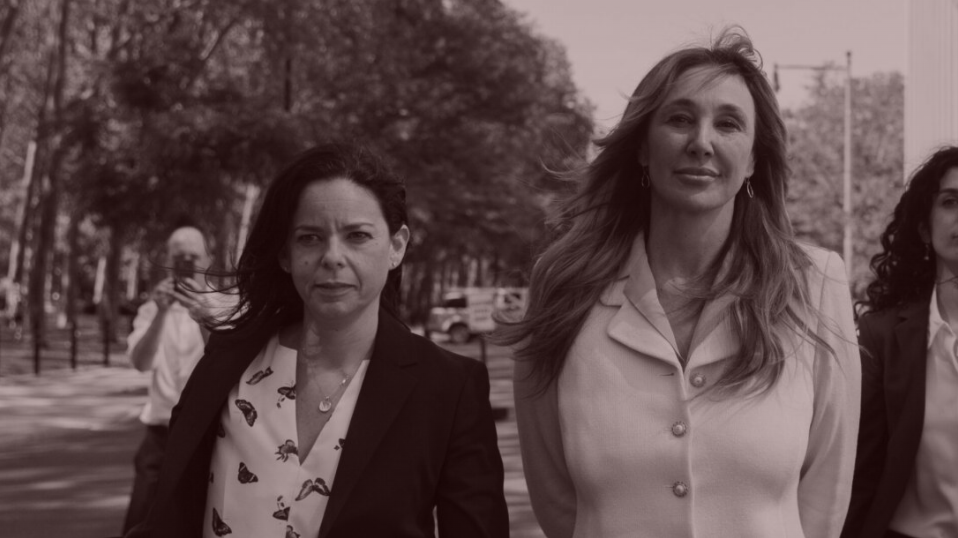
| Nearly 15 years ago, Nicole Daedone was a rising star among the in-crowd of the burgeoning wellness-spirituality-whatever space. The founder of OneTaste, a business built around the practice of “orgasmic meditation,” she graced a San Francisco TED Talk stage to extol the virtues of what she called slow sex. There was also a fluffy Times story and fawning endorsement on Gwyneth Paltrow’s Goop podcast for bringing about a new form of female empowerment. Alas, times change. These days, Daedone is facing prosecution for allegedly running a slavery ring, and orchestrating one of the most heinous conspiracies imaginable.
Along with OneTaste sales executive Rachel Cherwitz, Daedone stands accused of preying on individuals scarred by sexual trauma and enticing them into costly classes and five-figure debts. Federal prosecutors in Brooklyn—the same district that won sex crimes cases against R. Kelly and NXIVM’s Keith Raniere—argue that these students were then cut off from the outside world, monitored incessantly, and exploited as cheap labor, their dignity stripped bare as they were instructed to engage in intimate acts with potential clients and investors. (OneTaste has called this characterization “outrageous.”)
The indictment reads like a dystopian playbook for a cultish sexual regime, yet Daedone’s legal team vehemently contests this narrative. A few weeks ago, her lawyers filed a motion for dismissal, arguing that the government’s case is nothing more than prudish overreach and an attempt to stifle unconventional lifestyles under the guise of combating forced labor.
Is it possible that the prosecutors, still high off their NXIVM victory, overstepped? The defense team seems to think so, decrying the lack of specificity regarding the alleged criminal conduct. Who, exactly, among the tens of thousands who enrolled in OneTaste classes, are the victims? And what, precisely, were they compelled to do? “Remarkably,” assert lawyers for Daedone and Cherwitz, “in this alleged forced labor case, the indictment fails to identify either the ‘force’ or the ‘labor’ purportedly involved.”
Of course, Reid Weingarten, the Steptoe partner leading the defense, likely has some inkling. Undoubtedly, he’s pored over the 5,000-word Bloomberg expose (“The Dark Side of the Orgasmic Meditation Company”), delved into the 10-part BBC podcast series (The Orgasm Cult), and even perused the Netflix documentary (Orgasm Inc.). As seen in those stories, a few former adherents have emerged as vocal critics, complaining that OneTaste morphed from a wellness startup attracting erotic adventurers into a nefarious scheme exploiting the most vulnerable. Some of those detractors would likely take the witness stand.
But will the government’s case get that far? Prosecutors contend they’ve furnished sufficient detail about abusive labor practices and provided a “roadmap” of how they intend to prove the charged offense. A judge will convene a hearing later this year and decide the fate of this peculiar case. As it stands, a trial is slated for January 2025. |
| What Were the In-House Lawyers Doing? |
|
| Frankly, this case is even stranger than meets the eye—and it’s entirely impossible to predict, right now, how it will all pan out. Assuming prosecutors are taking a cue from what they’ve seen in the media, allegations range from a former OneTaste employee who says Tinder was used to line up sexual partners for unwilling participants (which the company vehemently denies) to women within the organization feeling pressured into intimate relationships. It’s impossible not to take this seriously. And despite Daedone’s organization making participants sign waivers and using a system of “red, yellow and green light” to curb unwanted sexual activity, it’s easy to believe, as Bloomberg once put it, that “consent in this setting was a gray area.”
Then again, OneTaste wasn’t exactly operating in the shadows: They had in-house lawyers continually shaping their policies, and recent court filings indicate a certain level of transparency, spurred by an intense desire to end an F.B.I. investigation. (They even fielded some of my questions on the matter and were surprisingly open.) Plus, their response to negative media coverage includes defamation suits (unsuccessful against the BBC, ongoing against Netflix), which suggests, at the very least, a willingness to defend their reputation against highly resourced adversaries.
It’s also plausible that newish U.S. Attorney Breon Peace, who was appointed by President Biden at the end of 2021, saw an opportunity for another headline-grabbing case, and is now shooting for a forced labor conviction that might be tough to prove. Perhaps the most baffling aspect is why prosecutors for the Eastern District, if they really believe there to be a conspiracy that’s led to literal enslavement, targeted Daedone and Cherwitz while leaving the organization relatively unscathed, even allowing it to continue under new ownership. In fact, Daedone sold her stake in OneTaste for around $8 million (now frozen pending her criminal prosecution), and the enterprise, with some fresh branding, is still pushing its brand of orgasmic meditation at live gatherings. Indeed, I hear, no joke, that it’s recently made its way into female prisons across the state of California. |
|
|
|
| FOUR STORIES WE’RE TALKING ABOUT |
 |
| A.I. Judgment Day |
| On Hollywood’s burgeoning A.I. filmmaker insurgency. |
| BARATUNDE THURSTON |
|
 |
|
 |
|
 |
|
|
|
|
|
 |
|
|
|
Need help? Review our FAQs
page or contact
us for assistance. For brand partnerships, email ads@puck.news.
|
|
You received this email because you signed up to receive emails from Puck, or as part of your Puck account associated with . To stop receiving this newsletter and/or manage all your email preferences, click here.
|
|
Puck is published by Heat Media LLC. 227 W 17th St New York, NY 10011.
|
|
|
|