 |
|
Happy Monday, I’m Eriq Gardner.
|
|
Welcome back to The Rainmaker. In this week’s edition, how the Tiger Woods-Erica Herman breakup could remake the law. Plus updates on David Boies vs FTX, why Tom Brady is sharing a legal tab with Larry David, what happens if Trump is indicted, and much, much more.
(Was this email forwarded to you? Click this link to subscribe.)
|
|
|
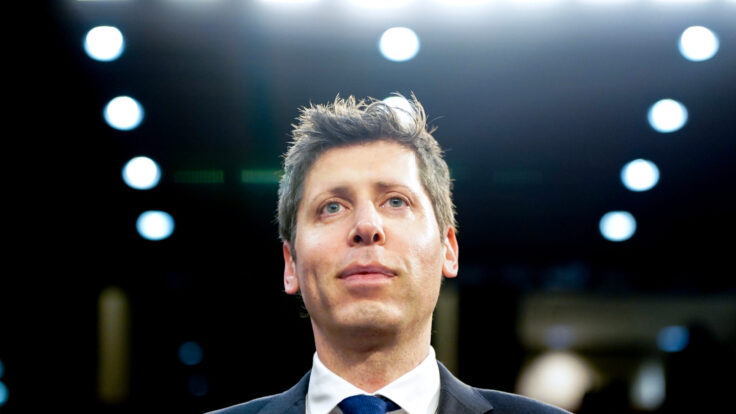
- Now that Chat GPT-4 has practically aced the bar exam, what’s the A.I. doing with its honorary law degree? Writing lawsuits to take down robocallers, analyzing smart contracts for security vulnerabilities, and perhaps my favorite, explaining why Dominion v. Fox News is taking place in Delaware while applying New York law. Still, GPT-4 only scored in the 90th percentile of the LSATs—those logic games are tough!—so congratulations to the thousands of law school students who can legitimately claim to still have an advantage over the machine.
- If Donald Trump is arrested this week, that’ll make history, too. I’m not shocked that Trump is on the verge of criminal charges, but I half expected the case to focus on the dubious valuation of his real estate portfolio or other shady business tactics—the original focus of the Manhattan D.A.’s probe—not his hush money payments to Stormy Daniels. As for those who say a conviction won’t be simple—to make it a felony, prosecutors need to show that Trump’s payments were designed to hide an election law violation—I’ll just note that I’ve spoken to plenty of lawyers over the years who once represented Trump, and nearly all of them paint him as basically the worst client ever. Any straightforward legal analysis is damn near silly with such a wildcard. For example, would any lawyer dare counsel Trump to testify at trial? Probably not, but would he listen? How might Trump establish an alternative motive to paying a porn star? We’re about to find out.
|
 |
| The Tiger Woods Legal Sand Trap |
| A new suit over ex Erica Herman and a Hobe Sound mansion could open the floodgates for litigious exes waiting to take a swing at their former celebrity flames. |
|
|
|
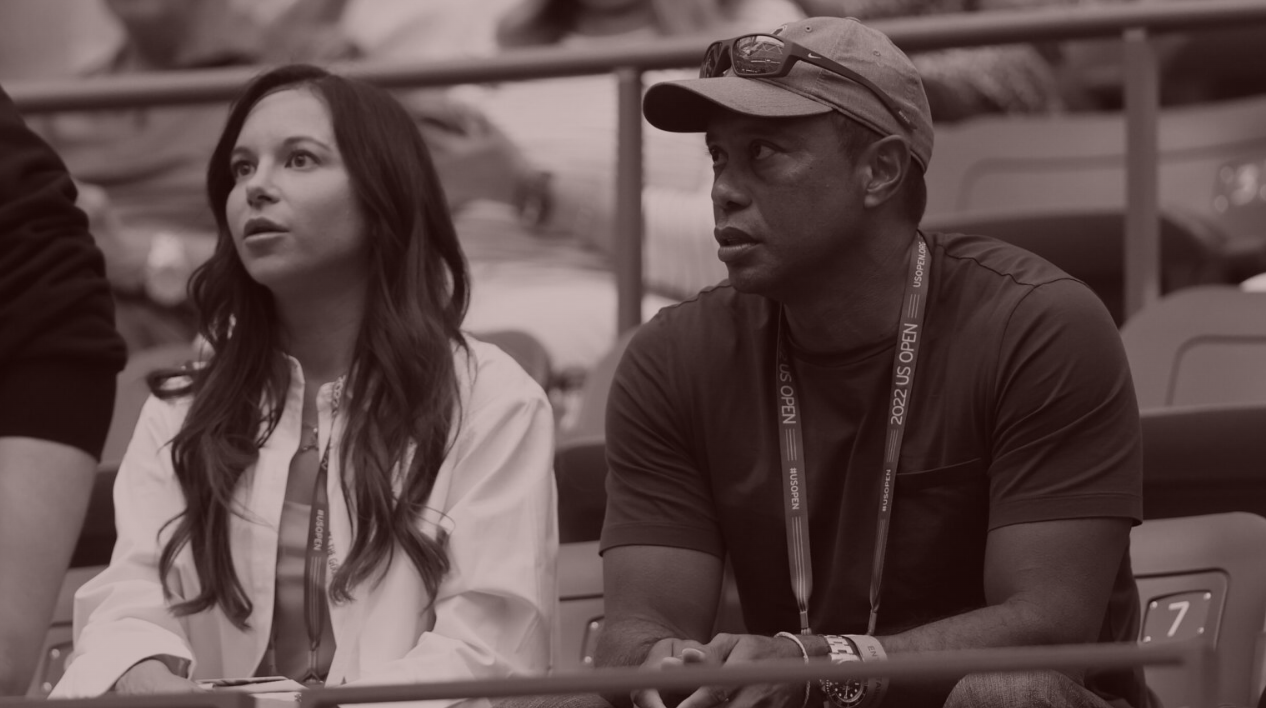
| Tiger Woods’ breakup with Erica Herman may soon become legal legend. It began with Herman packing her bags for what she thought was a romantic getaway. Instead, at the airport, Tiger’s handlers dropped the bombshell that she wasn’t welcome back at his Hobe Sound mansion. Now Herman is demanding more than $30 million in damages to compensate her for five lost years she expected to enjoy in that oceanside residence, which she claims she’s entitled to under an oral tenancy agreement. Woods, for his part, is pushing for arbitration, but Herman and her lawyers at Fisher Potter are throwing a curveball by citing the Ending Forced Arbitration of Sexual Assault and Sexual Harassment Act.
This new and largely untested law, which was signed by President Biden a year ago after a surprisingly bipartisan vote in Congress, allows anyone claiming sexual misconduct to have their entire case heard in open court—with a judge, not an arbitrator, calling the shots. The only problem is that the law doesn’t actually define sexual harassment, which means it’s pretty blurry what sort of misbehavior qualifies as an arbitration killer, an important topic now that arbitration agreements are ubiquitous. Aside from a recent case about Everyrealm, a metaverse company, there really hasn’t been much interpretation of the new statute’s scope.
Herman’s invocation of the law is intriguing, but the 39-year-old Florida woman hasn’t provided the details of Woods’ alleged behavior yet. It’s possible, of course, that her initial tease could be a media tactic to nudge the world-famous golfer to settle, now that TMZ is probably hitting refresh on the Martin County court website. But if not, attorneys everywhere will be closely watching the outcome. Indeed, should Herman find any success, there will be plenty of imitators, not to mention litigious exes waiting to take a swing at their former celebrity flames. |
|
|
| When Congress passed the Federal Arbitration Act, almost a century ago, the law’s original goal was pretty modest—to ensure the enforceability of private pacts among merchants wishing to resolve contract disputes outside of court. (According to one legal scholar, the furious lobbying campaign for the bill included business leaders treating lawmakers to some Babylon-esque parties in 1920s Hollywood.) Over the decades, however, the importance of the law has grown as America became lawsuit-happy, and more companies turned to arbitration agreements to avoid the burdens of litigation with employees and customers.
These days, of course, it’s impossible to sign up for a Netflix account or get into an Uber without consenting to arbitrate any future dispute. Meanwhile, the Supreme Court has repeatedly upheld the might of the F.A.A. to compel arbitration—to the frustration of plaintiff lawyers, civil rights advocates, and liberal states. The Ending Forced Arbitration Act potentially changes all that by giving plaintiffs the ability to bring other claims into open court, as long as they are accompanied by charges of sexual assault or harassment.
Critics worry this dynamic incentivizes lawyers to add sex claims purely to avoid arbitration. In late February, for instance, a federal judge in New York wrestled with this issue in two decisions concerning two employees separately suing Everyrealm, an upstart metaverse real estate company whose investors include Will Smith, The Weeknd and Jeffrey Katzenberg. Interestingly, and not coincidentally, both employees were represented by attorney Shane Seppinni, who Everyrealm accused of manufacturing “implausible” sexual harassment claims to publicly embarass the company and score multi-million-dollar settlements. Also interestingly, and this time coincidentally, both cases were assigned to U.S. District Court Judge Paul Engelmayer, who became the very first to interpret what qualifies as sexual harassment under the Ending Forced Arbitration Act.
One of the lawsuits was filed by Teyo Johnson, a former NFL player who Everyrealm hired to cultivate celebrity relationships. After working at the metaverse company for just 13 weeks, Johnson accused it of race discrimination. Later, when a bid to arbitrate came, Johnson amended his complaint to include a sexual harassment claim based on various comments made to him by Everyrealm C.E.O. Janine Yorio, including an alleged suggestion to play a sex-related game on a trip to the South by Southwest festival. The other lawsuit was filed by Katherine Yost, an independent contractor who Everyrealm hired to act as its human resources chief. Yost claimed she was paid less than the men and also that Yorio and others at the office made offensive jokes and targeted her for being bisexual.
Engelmayer allowed Johnson to advance in open court, but ruled Yost had to honor an arbitration agreement. What was the difference between his suit and hers? According to the judge, Johnson’s sexual harassment claim was viable based on the allegation that he was repeatedly pressured to have sex with colleagues and clients. (Everyrealm suggests in its own court papers that Johnson was the one who encouraged promiscuity, but that’s apparently immaterial at this stage of the case.) But he ruled that Yost’s factual allegations were “threadbare”—in part because Yorio’s conduct wasn’t because of Yost’s sexual orientation. Yost’s attorney argued that she should nevertheless be able to move forward in federal court on her other claims, but the judge ruled that this would be inconsistent with the F.A.A.
If that sounds like a legal minefield, it’s because it is. And litigators are already telling me they’re fielding concerns from clients on this topic. In the meantime, in her fight against Tiger, Herman will strive to show that she’s more like Johnson than Yost. And if there’s no settlement, Woods may push the judge to rule that this new law doesn’t apply to this sort of context. After all, alleged sexual harassment in the domestic arena is certainly unusual.
But then again, these are celebrities, and prenups with arbitration clauses aren’t uncommon, so it’s not that surprising either. If there’s any lesson to be drawn here, it’s that the sexual dynamics of a wide range of disputes is about to be fully drawn out. |
|
|
- MLB spring training this year is like none before, thanks to the bankruptcy of Diamond Sports Group, the Sinclair entity that owns 19 regional sports networks with telecast rights to baseball teams. Already, the Texas Rangers have sent a notice of default and termination, according to bankruptcy papers, and the Arizona Diamondbacks are reportedly close to doing the same. The RSN business is definitely in trouble as consumers cut the cord. Nevertheless, according to a declaration by Diamond C.O.O. David DeVoe (read here), the company would like to acquire additional digital rights to games to boost its Bally Sports + service. Making that happen depends on convincing the bankruptcy court and creditors that the company’s debt issues are merely a temporary after-effect of Disney’s sale of the RSNs to Sinclair and not a deeper existential problem with its business model. Play ball!
- In the above Chapter 11, the office of MLB commissioner Rob Manfred is being represented by James Bromley at Sullivan & Cromwell. It’s hard to think of a busier attorney these days. He’s also representing the debtors in the bankruptcies of FTX and SVB Financial Group. The latter was filed on Friday.
- More big news from the RSN docket: The war between the Baltimore Orioles and Washington Nationals over TV money—a story I first broke about nine years ago—went to a New York appeals court this past week. The justices there are reviewing a lower court’s decision to vacate an internal MLB arbitration award favoring the Nationals because of the conflicted participation of Proskauer Rose. The stakes of this feud have arguably grown now that the Nationals owner Ted Lerner just passed away at 97 and the team may be up for sale.
|
| Lawyers, Influencers, & Money |
|
| In the aftermath of the FTX bankruptcy, I’ve been delving into David Boies’ novel legal gambit to make celebrities like Tom Brady and Larry David liable for endorsing the company. Now, Boies is causing another rift within the S.B.F. litigation universe.
Boies and his partner Adam Moskowitz are seeking to consolidate all FTX-related litigation for a single monster case in Florida, which presumably they would lead. Not just their own matters against celebrities who starred in FTX commercials or endorsed the brand, but also another dozen or so cases against venture capital firms, banks, accounting firms and even a law firm (Fenwick & West) that allegedly facilitated the FTX fraud. Boies and Moskowitz argue that all these legal actions involve common questions about the crypto company’s business practices, and that rolling them into a single class action will promote a swifter resolution. They also claim they were the first to file a FTX-related lawsuit. (That’s disputed.) And now they’re preparing to seize the trophy for having the most money at stake, too. This past week, Boies and Moskowitz filed an additional $1 billion suit against various YouTube influencers for their role promoting FTX.
Naturally, the nearly dozen class action firms involved aren’t taking kindly to Boies’ chutzpah. They oppose consolidation and a transfer of their various cases from San Francisco to Miami, emphasizing the differences between their approach and Boies’ “disorganized attempts at forum shopping” and his team’s “blunderbuss approach in seeking to name every celebrity, person, or entity who came into contact with the FTX Entities.”
The celebrities, via their counsel, are siding with the opposers. Brady, David, and Brady’s ex Gisele Bündchen are sharing the bill for lawyers at Latham & Watkins while Kevin O’Leary, David Ortiz, and Trevor Lawrence each have hired their own attorneys; Shaquille O’Neal, meanwhile, “has not allowed himself to be served,” according to Moskowitz, who just got a judge to give him more time to locate the NBA legend.. They stress that odd-duck lawsuits over advertising unregistered securities is nothing like insider participation in a fraud or concealment of banking information. “The resulting discovery (if any) is therefore likely to be case- and defendant-specific,” they add.
Interestingly, some of the defendants, such as Sequoia Capital and Prager Metis, don’t mind being grouped with celebrities and are supporting Boies’ call. These firms, sensing an advantage, told a judicial panel tasked with overseeing multidistrict litigation that “these cases are ideal candidates for consolidation.” The next step is figuring out whether there will be a hearing to discuss the state of FTX litigation. Tom Brady’s lawyers told the panel on Friday that it’d be wise to hold one. |
|
|
Some very quick updates on past newsletters…
- Ron Meyer, the former NBC Universal vice chair, has beaten a lawsuit from actress Charlotte Kirk’s filmmaker ex over his movie about how O.J. Simpson wasn’t a murderer. Here’s the background and the ruling.
- The fervor around N.F.T.s has died down, but the company behind the Bored Apes Yacht Club has successfully defeated counterclaims from a copycat conceptual artist. Here’s the background and the ruling. Separately, I wrote about a dispute concerning a work that Sotheby’s once marketed as the “first N.F.T.” That was also dismissed on Friday.
- Selena Gomez moved heaven and earth to hunt down Chinese defendants who ripped off her image for a game. Now, the Puma is on the other foot as a judge has ordered her deposition and sanctioned her for evading one. Here’s the background and that order.
Email me any comments, tips, or March Madness boasts at eriq@puck.news |
|
|
|
| FOUR STORIES WE’RE TALKING ABOUT |
 |
|
 |
| SVB’s Final Days |
| The definitive post-mortem on the bank’s harried final days. |
| WILLIAM D. COHAN |
|
 |
|
 |
|
|
|
|
|
 |
|
|
|
Need help? Review our FAQs
page or contact
us for assistance. For brand partnerships, email ads@puck.news.
|
|
|
|
Puck is published by Heat Media LLC. 227 W 17th St New York, NY 10011.
|
|
|
|