 |
|
Happy Monday, I’m Eriq Gardner.
|
|
Welcome back to The Rainmaker, a private email about money, power, fame, and most of all, the law. (Was this email forwarded to you? Click this link to subscribe. And if you’re interested in a corporate subscription, reach out to Fritz@puck.news)
In this week’s edition, why two Supreme Court justices were fighting over the Andy Warhol copyright ruling. Plus, Bob Woodward, Elizabeth Holmes, Tiger Woods, Ron DeSantis, Rachael Rollins, Disney, TikTok, and the lawyer who may have cost Les Moonves his CBS severance. Finally, an ice cream treat.
|
|
|
- When Bob Woodward interviewed Donald Trump on 19 separate occasions near the end of Trump’s term, he became the “dominant author” of what was produced—or so argues a Simon & Schuster dismissal motion in Trump’s $50 million lawsuit, claiming copyright over tapes later used for an audio version of Woodward’s book. The publisher’s latest motion (read here) reveals Woodward’s methods, gets to Trump’s on-the-record admissions, and faults the former president for neither registering his alleged works nor knowing about the “Government Works” doctrine. For good measure, here’s Woodward’s declaration.
- I know nobody feels too badly for Rupert Murdoch these days, but a California federal judge has ordered Elizabeth Holmes and Sunny Balwani to pay him $125 million in restitution over the Theranos fraud. (See here.) Holmes also lost a bid to stay out of prison while her appeal plays out; she must self-surrender by May 30.
- The battle between Tiger Woods and his ex-girlfriend, Erica Herman, is unfolding pretty much as I anticipated. This is a novel test of a new federal law meant to keep sexual misconduct claims away from arbitration. Notably, Woods’ reply brief includes the N.D.A. Herman signed, as well as her reaction at the time she was asked to sign it. She wrote: “If something happened 5-10 years down the road I don’t want to be in my 40s heartbroken and jobless.” (Read Woods’ latest brief here.)
- Florida governor Ron DeSantis hopes to disqualify the federal judge overseeing Disney’s lawsuit claiming retaliation. The motion on Friday recounts how U.S. District Court Mark Walker offered Disney as an example of state retaliation during hearings in other cases. Of course, it’s Walker himself who will make the call about recusal. So don’t count on it.
- At Stability AI, the buzzy startup, Dr. Tayab Waseem says he’s been downgraded by C.E.O. Emad Mostaque from “co-founder” to “unpaid intern.” He wants the 10 percent ownership interest he alleges he’s been promised. (Here’s the complaint in Virginia federal court.)
|
 |
| The Warhol Diaries: Kagan v. Sotomayor |
| Inside the titanic legal clash and Latinate trash-talk behind one of the most consequential cases to rock the art world, and Hollywood, in a generation. |
|
|
|
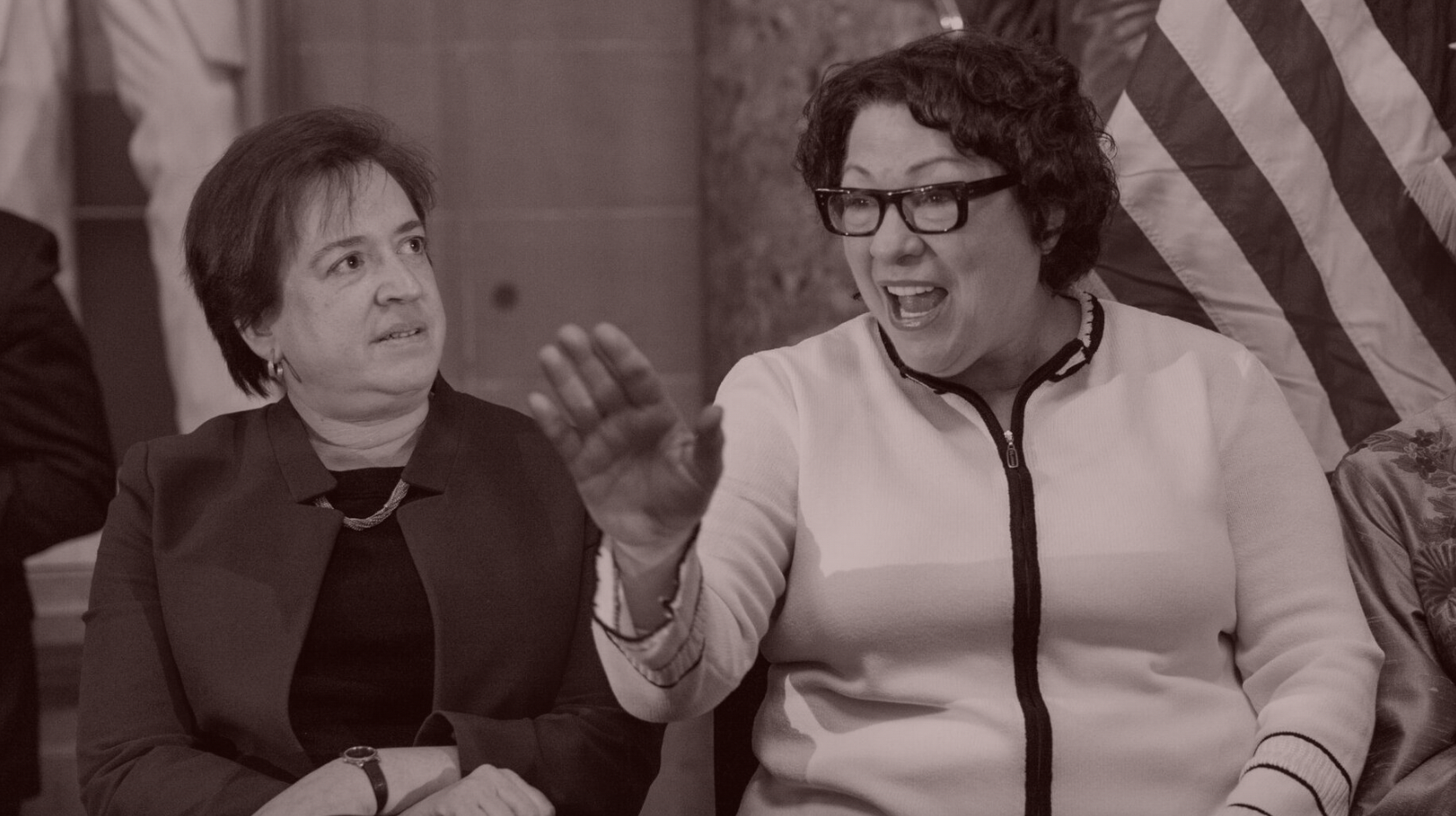
| Modern art has always led to arguments over meaning and value—some might even say that’s the point—but who would have guessed that a fight over Andy Warhol would see two of the Supreme Court’s most liberal justices insulting each other in Latin? Alas, that happened last week in Andy Warhol Foundation for the Visual Arts v. Goldsmith, when Sonia Sotomayor and Elena Kagan stopped just short of declaring pistols at noon in a case that will influence the next few decades of creative expression in Hollywood and the arts. (Read the whole thing here, including Kagan’s second footnote where she asks the reader to measure Sotomayor’s “ratio of reasoning to ipse dixit,” which is SCOTUS-speak for bullshit.)
Despite some misreporting around the case, the majority did not rule that Warhol wasn’t entitled to paint his own rendition of a prominent photographer’s portrait of Prince. Actually, Warhol had explicit permission to do just that—albeit on a “one time” basis for a Vanity Fair article 40 years ago. The real problem stemmed from the Warhol Foundation’s 2016 licensing of other works that Warhol had apparently created based on the same photograph. Maybe best to think of them as outtakes. Anyway, as Sotomayor goes to pains to emphasize, the problem wasn’t the original creation but rather the licensing. The Foundation insisted that the entire Prince series constituted “fair use” due to the “transformative” nature of the artist’s works. It was the Supreme Court’s job to decide whether that argument held true.
Of the four factors that determine fair use, Sotomayor and Kagan clashed over what’s meant by the all-important first factor, “the purpose and character of the use.” Kagan argued that judges should consider the creative and communicative intentions of those using copyrighted works; her dissent praises Warhol’s artistic approach, highlighting the profound difference between his Prince painting and the original photograph. She also viciously critiqued the majority position, suggesting that it’s almost pointless to educate Sotomayor and the other justices who voted similarly (all but John Roberts) on the finer points of art. “For it is not just that the majority does not realize how much Warhol added; it is that the majority does not care,” she wrote.
Sotomayor, writing for the majority, countered that the standard shouldn’t be an artist’s intent nor a viewer’s impression. In this case, Lynn Goldsmith’s photography and the Warhol Foundation’s licensing served essentially the same purpose: illustrating magazine stories. Even if the works could be reasonably perceived as conveying something different about a famous musician, as a district judge concluded, that difference, in this context, is not sufficient. Notably, Sotomayor fiercely critiqued Kagan’s dissent for favoring anything that smacks of “worthy art.” Without any limiting principle, she argued, this approach intrudes on a copyright owner’s derivative rights because almost all sequels and adaptations add something new. In other words: Should anyone be able to make an Avengers film? Sotomayor implies that Kagan’s opinion would have opened that door. |
|
|
| Back in 2010, when President Barack Obama nominated Kagan as an associate justice, I wrote that Hollywood ought to be cautious about how she might rule on copyright issues: While her judicial philosophy was largely unknown, there were already indications she’d take a strongly permissive stance on fair use. Well, it turns out my assessment was accurate. But that doesn’t necessarily mean that Kagan is wrong.
Kagan, in fact, presented a reasonable argument that creativity should carry more weight in the analysis of what’s a fair use. While copyright use may encroach on someone else’s derivative rights—movie studios surely swayed Sotomayor’s thinking on this front—a finding of artistic purpose needn’t be the end of the analysis. There are other fair use factors to consider, including the impact of the use on the copyright owner’s market.
That being said, Kagan’s approach has notable weaknesses. For starters, it places federal judges in the role of art critics, a position they are ill-suited to perform. As the dissent itself demonstrates, such critical evaluations are likely to favor commercially successful endeavors. Kagan writes, “You’ve probably heard of Andy Warhol…,” as if the mere mention of his famous name should hold some significance.
Of course, Sotomayor’s approach is not without gaps. It directs judges to assess whether a user’s purpose differs from that of the copyright owner’s and insists that transformation go beyond what’s derivative. However, there is little guidance about what qualifies as justifiable. Why was it OK for Warhol to make illustrations of Campbell’s soup can logo, for instance, but not to use Goldsmith’s photo? And how do you reconcile that logic with Acuff-Rose Music v. Campbell, the 1994 opinion that ultimately sanctioned the rap group 2 Live Crew’s parodic use of Roy Orbison’s Oh, Pretty Woman?
While Sotomayor provides a rationale for both—Warhol’s soup can series and the rappers had distinctive purposes by commenting on the original—it seems like the standard essentially boils down to the requirement that a copyright user not create competition with the owner of the original work. The result, of course, is that art forms like music sampling and literary mashups will immediately come under suspicion. And it’s not particularly clear if Warhol’s silkscreens of Marilyn Monroe can be licensed.
Regardless, industry observers seem pleased if not infatuated. Sotomayor’s opinion may have divided the liberal wing of the Supreme Court, but it wasn’t controversial at all in Hollywood, where the Copyright Alliance and re:Create Coalition, two advocacy groups that are typically at odds on copyright matters, both issued press releases expressing their satisfaction. (The Motion Picture Association did too.) The battle is now over how lawyers and lower courts interpret the decision. I’ve already seen the Warhol ruling, barely a week old, come up in court battles over tattoos in video games, celebrity home photos on a news site, and even Trump’s dispute with Bob Woodward over ownership of a taped interview. (Simon & Schuster argues there’s a transformative purpose in “commenting” upon and “criticizing” Trump’s statements.)
Clearly, we’re also entering an age in which artificial intelligence can create infinite new works after being trained not just on Warhol and Goldsmith, but the entire Western canon. ChatGPT, Stability AI, and other generative A.I. programs may spit out extremely impressive movie scripts, songs, and paintings, but will this tech-based authorship, if traced to some original source, be deemed as serving some novel purpose? I’m skeptical, although I’m sure that clever lawyering will quickly fill in the gaps.
The fair use debate, of course, will rage on. The same contentious dynamic that saw Kagan and Sotomayor repeatedly swiping at the other’s obliviousness about art and copyright law will now play out among thought leaders, too. This will become especially apparent as the wonkish instructions to judges on how to assess future controversies actually plays out in practice. Given the passionate and conversational nature of modern art, this was probably inevitable. And it’s exactly what Warhol himself would have relished. |
|
|
|
|
- Speaking of big copyright cases, here’s Disney’s summary judgment memorandum, filed late Friday, aimed at keeping full control over Iron Man, Spider-Man, Doctor Strange and other Marvel heroes. Disney is battling the co-creators of these characters in the 1960s and 1970s, or their family members, and argues they aren’t eligible for copyright termination because they were contributions made for hire. For those with access, the court record now also includes depositions, personal letters, accounting ledgers, expert reports, and more.
- Here’s the 155-page ethics report that caused the resignation of Rachael Rollins, who oversaw those “Varsity Blues” cases in Massachusetts. She was faulted, among other things, for leaking confidential information to a local newspaper as well as how CAA paid for her travel, lodging, and meals for an industry event.
- ByteDance will likely file its own lawsuit, but in the meantime, this complaint from TikTok users over a Montana ban is a must-watch on the First Amendment front.
- “Taco Tuesday” got all the attention this past week, but as far as trademark oppositions go, this one over “Why Should White Guys Have All the Fun?” is pretty interesting in its own right. It comes from Daddy Warbucks, an entity associated with Reginald Lewis, a man who identifies himself as the wealthiest Black person in U.S. history and is now looking to control a movie adaptation of his book.
- Finally, don’t miss this episode of The Daily, where former Covington & Burling associate Allison Diercks comes out as having leaked an investigatory report about Les Moonves to the Times. Without spoiling too much, she lost her law license and has gone through great turmoil over what happened.
And now for one last thing… |
| America’s McFlurry Problem |
|
| “The concentration of power in the hands of so few may be efficient and sometimes popular. But it does not tend toward sound government.”
Supreme Court Justice Neil Gorsuch wrote these words this past week in explaining the use of a public health law to expel migrants seeking asylum. But I can’t help but wonder whether he was also alluding to the way those ice cream machines at McDonald’s keep breaking down. After all, according to one tech startup, there is a scandalous reason why it’s so hard to get a refreshing McFlurry on a scorching hot day. It comes down to federalism.
For those unfamiliar with this saga, Kytch Inc., co-founded by Jeremy O’Sullivan and Melissa Nelson, devised a way to remotely monitor and service temperamental soft-serve machines. Numerous McDonald’s franchisees eagerly embraced the “Kytch Solution,” propelling the startup to Silicon Valley stardom.
But things took a twist when McDonald’s executives in Chicago caught wind of these developments and had a meltdown. McDonald’s, it turns out, has an exclusive contract with a vendor to supply kitchen appliances to 13,000 locations. According to Kytch’s lawsuit in Delaware federal court, the fast food giant swiftly sprang into action to safeguard its “lucrative repair business.” Allegedly, it collaborated with the vendor to pilfer trade secrets for their own system called Open Kitchen (an accusation McDonald’s vehemently denies). When these efforts failed to impede Kytch from gaining “market dominance,” McDonald’s warned its franchise operators that the Kytch Solution posed a risk of “serious human injury.” Kytch, in its trade libel complaint, asserts that it’s suing to set the record straight, curb anticompetitive conduct, recover hundreds of millions of dollars in lost sales, and, ultimately, to fix those soft-serve machines.
On May 11, McDonald’s delivered a resounding response in court, dismissing the entire conspiratorial narrative as a “work of fiction.” Instead, Mickey D’s defends the need for strong oversight. The company’s lawyers at Orrick say, “Kytch fancied itself a disruptor, following the Silicon Valley mantra of ‘move fast, break things.’ Kytch devised a risky business strategy of attempting to hack the McDonald’s franchise system by marketing directly, and secretly to franchisees, in the hopes of presenting McDonald’s with a fait accompli. In so doing, it bypassed all of McDonald’s’ testing and evaluation requirements.”
The outcome of this battle remains uncertain (and please don’t tell me that the hallowed McFlurry is just a rip-off of a Dairy Queen Blizzard, as my savvy but clearly sugar-buzzed partner Matthew Belloni did). However, as the parties present arguments about the proper balance of power within the McDonald’s universe, one thing is clear: Scientists predict a significant rise in global temperatures in the coming years, which will undoubtedly have implications for health and food security. Therefore, any resolution that ensures the functionality of ice cream machines is one I’m inclined to support.
Got something to tell me? As always, email me at eriq@puck.news. |
|
|
|
| FOUR STORIES WE’RE TALKING ABOUT |
 |
|
 |
| Lazard Succesion |
| Notes on a major Wall Street succession, SVB lessons, and ESPN calculations. |
| WILLIAM D. COHAN |
|
 |
| ESPN’s Future |
| What will the next generation of sports fandom look like? |
| DYLAN BYERS |
|
 |
| The Chanel Spell |
| A rundown on the latest shifts at the storied fashion house. |
| LAUREN SHERMAN |
|
|
|
|
|
 |
|
|
|
Need help? Review our FAQs
page or contact
us for assistance. For brand partnerships, email ads@puck.news.
|
|
|
|
Puck is published by Heat Media LLC. 227 W 17th St New York, NY 10011.
|
|
|
|