Hi, and welcome to Line Sheet. Post-pandemic, we’ve been busy making excuses for bad art, from
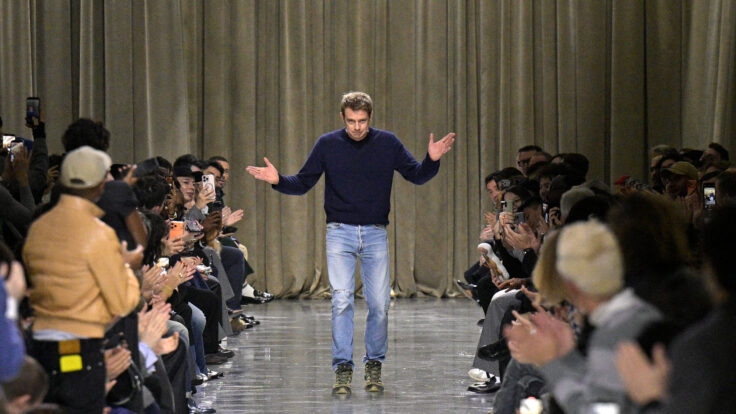
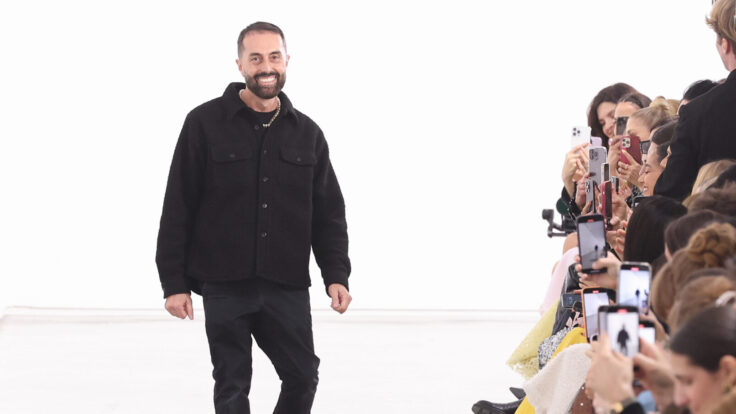
Sabato De Sarno’s Gucci to the third (and fourth) season of The Bear. Personally, I’ve struggled to find worthiness in mediocre runway collections. But Jonathan Anderson and Michael Rider’s debuts at Dior and Celine, respectively, offer reason for hope.
Today, I’ve got more on Rider, who showed on Sunday, and the situation at Celine. I also have news from the front lines of celebrity styling, and a quick hit on
Meghan Markle and the jam kerfuffle. For the main event, I’m looking at the future of Valentino—and minority owner Kering—as questions arise regarding both the brand and the larger group.
Programming note: Tomorrow’s Fashion People guest is the one and only Teri Agins, the first reporter to properly cover the business of fashion. She’s also the author of The
End of Fashion: How Marketing Changed the Clothing Business Forever and Hijacking the Runway: How Celebrities Are Stealing the Spotlight from Fashion Designers. I would not be me if it weren’t for Teri, and we had so much fun discussing how the industry has transformed over the past 30 years. Listen
here and here.
Mentioned in this issue: Jacopo Venturini, Valentino, Alessandro Michele, Kering, Mayhoola, Gucci, Pierpaolo Piccioli, Luca de Meo, François-Henri
Pinault, LVMH, Francesca Bellettini, Pietro Beccari, Remo Ruffini, Michael Burke, Celine, Michael Rider, Meghan Markle, Jamie Mizrahi, and many, many more… |
|
|
A MESSAGE FROM OUR SPONSOR |
The refined BMW 7 Series is all luxury. With the ability to define your design, the ultimate glamour is yet to be.
Learn more at BMWUSA.com. |
|
|
Four Things You Should Know…
|
- Burke
is back!: This morning, LVMH announced that Michael Burke—the former C.E.O. of the LVMH Fashion Group, and before that, Louis Vuitton and Fendi—was heading to New York to become C.E.O. of the conglomerate’s Americas business. Now Anish Melwani, chairman and C.E.O. of LVMH North America, and Davide Marcovitch, president of LVMH Latin America, will report to Burke. (Sorry, Anish.) As is common with these types of
appointments, it was surprising but not entirely shocking. Burke understands the U.S. market—the company’s second biggest, after Asia—better than any of Bernard Arnault’s other confidants, and he’s been spending more time on the U.S. business during the past year or so, working very under the radar.
And yet, it’s a major statement. Less than a year ago, various people in and around the company—including those familiar with the thinking of the LVMH board—declared Burke
“out of the game.” Indeed, it felt like he was just hanging out, swapping his blue suit for a Berluti zip-up cashmere sweater. While his mood can be uneven, most longtime executives (especially in the U.S.) like working with him and find comfort in his direct connection to Arnault. As one said to me upon learning the news, “Thank the lord.”
There is certainly a chance that he will be more hands-on with the businesses based in the U.S., including Marc Jacobs, Tiffany & Co. (where he is now
nonexecutive chairman), and Sephora. The U.S. is also a big alcohol market for the Moët Hennessy division. And probably most telling: Burke is a real estate exec at heart, and LVMH has some ambitious projects coming up stateside. (There were also some bungled projects, including a potential Cheval Blanc hotel in Beverly Hills, that I could see being revived in a different form. The company just
sold its only hotel in the U.S., El Encanto in Santa Barbara, to Culver Capital for $82 million.) But more than anything, Burke’s return signals Arnault’s unwillingness to let go of the people he trusts most. After all, it wasn’t so long ago that Burke made it clear to several people I’ve spoken with that his generation
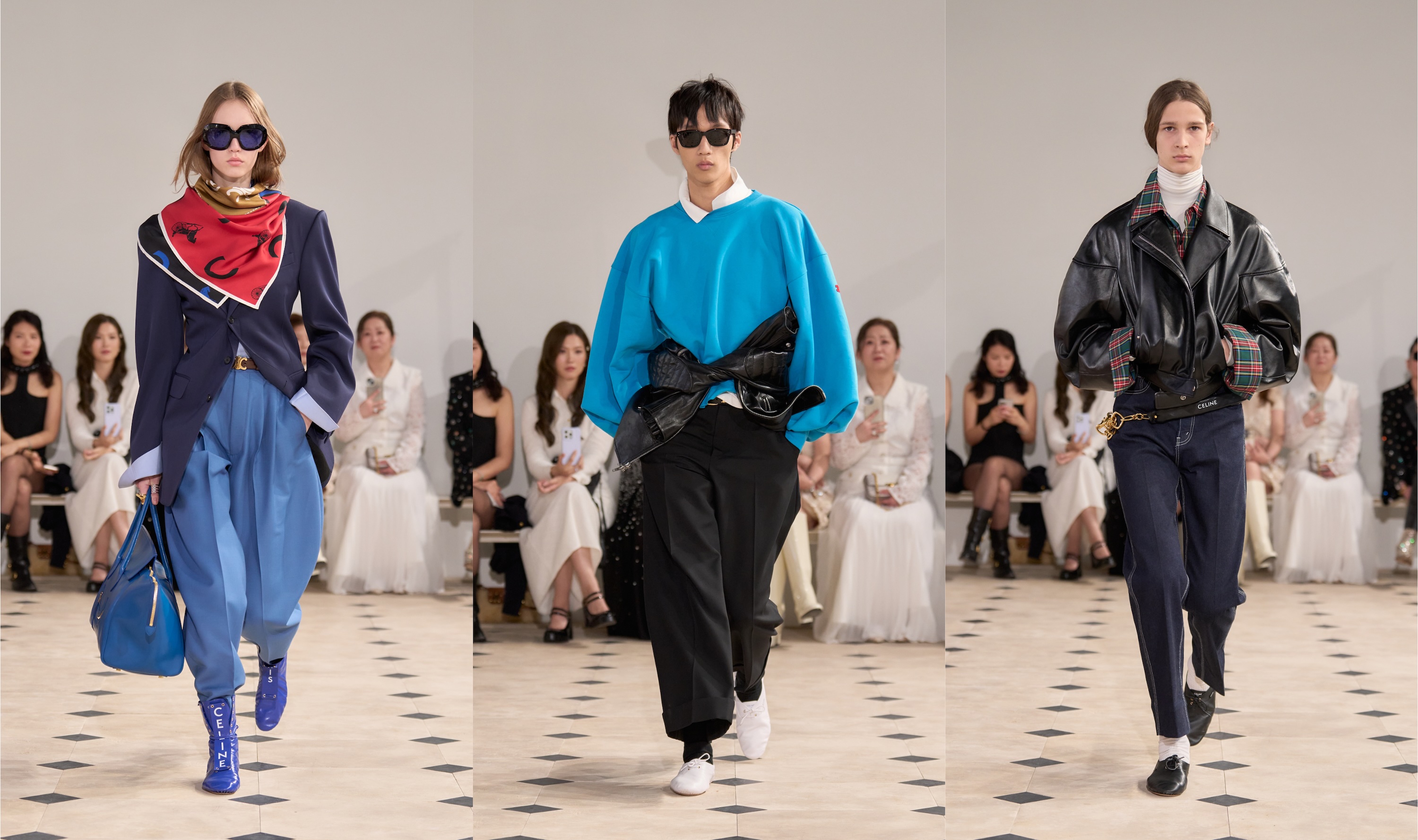
should step back and let Alexandre Arnault, Frédéric, and co. take their turn. But as one person who knows all these guys well told me, the shake-up was also a demonstration of Bernard’s loyalty to the people who helped him build LVMH—Burke, Sidney Toledano, Marc Jacobs, etcetera. “This shows B.A. has a heart,” this person said to me. - The Celine scene: Michael Rider’s Celine debut on Sunday morning garnered lots of positive reviews from people who were there, and those watching the livestream, across my various messaging platforms. The good news is that Rider, who worked at Celine for a decade before refreshing Polo, made it blatantly bourgeois—the defining characteristic of Celine, and one that every creative director (Céline Vipiana, Michael Kors, Phoebe
Philo, Hedi Slimane) has understood. At its best, Rider’s take captured the essence of an ’80s Spiegel catalogue.
|
Photos: Tom Shickle/Courtesy of Celine |
- The
defining look was a bright blue sweatshirt, layered over a white polo, with a black leather jacket wrapped around the waist and worn with black cropped trousers and white dance shoes. (I just bought Keds.) The
second most important look was the cornflower-blue oversize trousers, worn with a nipped-waist navy blazer and red, black, and blue Celine-branded scarf. The peg legs and ultra-skinny trousers were downright subversive. As expected, Rider’s sense of color is off the charts. His Celine debut also felt in dialogue with his friend
Jonathan Anderson’s new proposition for Dior. (Some people even preferred this to Dior.)
No matter where you land on the personal opinion spectrum, both collections reflected a post-gender dress code. It’s all interchangeable. But perhaps more than anything, Rider tapped into something specific for a certain strain of elder Millennials who grew up when normcore was just… normal. Across my messages, everyone agreed that this collection was made with us in
mind—probably because Rider is one of us. Brian Molloy—who also styles The Row, Tory Burch, Tod’s, Issey Miyake, etcetera—also had a hand in this collection, and is a big influence on The Way We Dress Now.
There were mistakes, of course: Like many first attempts, it needed a proper combing. I also can’t get behind 72 looks, especially when some put me in mind of the Gucci collection between Alessandro Michele and Sabato De Sarno.
Also, the celebrity strategy needs serious refining. I’m into Alanis Morissette (her face looked great) and Kristen Wiig, but I didn’t see a throughline. That said, on an item-by-item basis, I’m confident that Rider’s debut will sell, especially if it’s priced in a reasonable way. It was… wearable. And Celine, like many fashion brands, needs the boost: Sales are significantly down this year so far, I’m told.
|
- On
the Meghan Markle beat: There’s been much ado this past week about the provenance of As Ever’s inventory. Namely, the fact that Republic of Tea is a vendor, according to Vanity Fair and others. Big whoop. Of all the criticisms lodged at Markle—the poorly timed rollout, delivery hiccups, dumb name, edible flowers—the manufacturing doesn’t
matter. Of course she’s using a standard facility: This is how you make products en masse. As Trader Joe’s and Quince have shown us, most stuff is just white-labeled and comes from the same place.
As Rachel Strugatz recently noted, Markle’s larger mistake was partnering with Netflix rather than creating her own
product line. As a result, she was stuck in a brand prison of her own design—with a lifestyle company created to leverage her show, With Love, Meghan, albeit with a different name (another pretentious salutation) and ownership structure. The S.K.U.s that don’t sell are going to end up at Marshalls, which is fine, but given the influence Markle has over her fans, it all feels very half-baked—which may just be the Sussex way.
Yes, Netflix’s consumer products division is
clever—content-adjacent merch sells, and can be hugely profitable—and it was a largely risk-free, pocket-the-cash proposition. But there was a far bigger opportunity for her out there. Either do it like the Foster sisters (who launched their clothing line Favorite Daughter with licensor Centric Brands) or take some lessons from the good and bad of Gwyneth’s Goop trajectory, and raise money to develop it properly. Both scenarios are more
advisable than her current setup. - It’s stylist switcheroo time: In the lead-up to this year’s awards season, I expect we’re going to see several stars changing stylists as they embark on press tours and position themselves for Emmys, Oscars, and advertising campaigns. A few weeks ago, I wrote about Brad
Pitt’s collaboration with Taylor McNeill. This week, I wanted to note that Jamie Mizrahi—of Adele and Jennifer Lawrence fame—is now working with sudden superstar Pedro Pascal, who is currently on a press tour for the new Ari Aster film, Eddington, co-starring Joaquin Phoenix and Emma Stone.
Previously, Pascal was attached to
Julie Ragolia, who is more of an editorial stylist (her notable gig is Zegna) but occasionally dresses men for the red carpet. Ragolia and Pascal seemed like a good match—she’s the one who put him in Valentino shorts for the 2023 Met Gala—but he’s doing Marvel movies now, and that requires a different set of skills. Mizrahi has had a lot of success with
both men (Jeremy Allen White) and, more broadly, actors who have undergone swift upticks in fame (Mikey Madison). So far, on the Eddington tour, Mizrahi hasn’t totally deviated from Ragolia’s approach, but that may say more about Pascal’s own sense of style than anything else. Their first major collaboration, a double denim look from Givenchy, indicates that he’s going Big Luxury in a real way.
|
And now for the main event… |
|
|
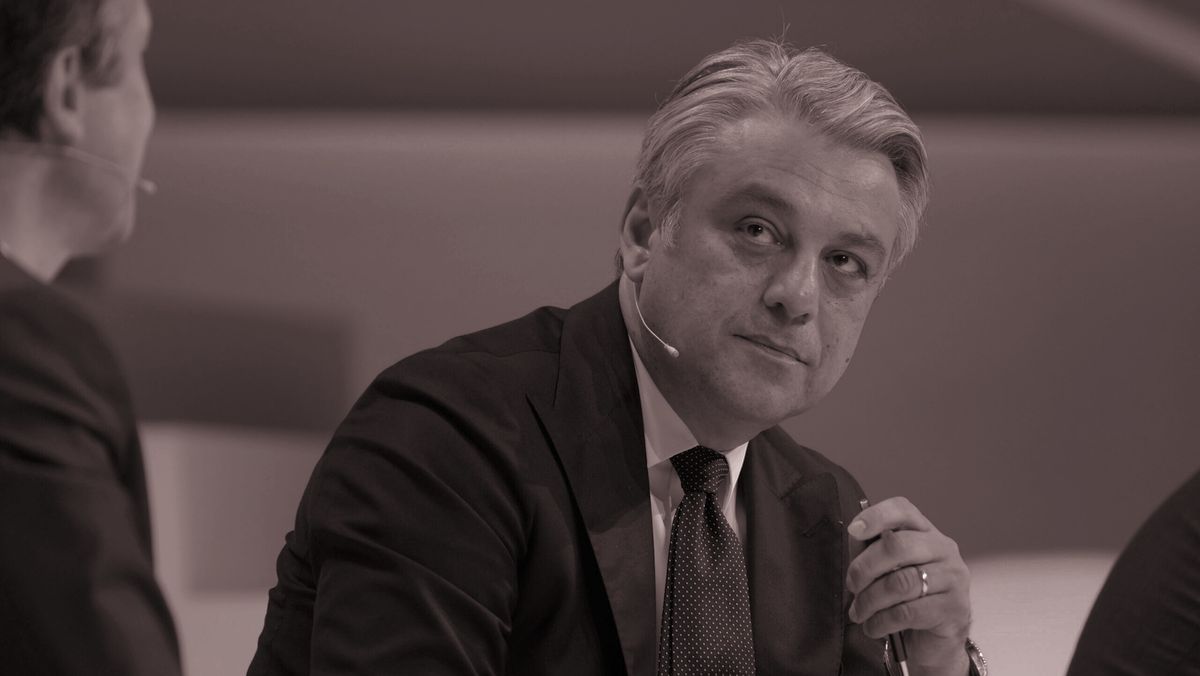
Amid tumult in Valentino’s executive ranks and uncertainty in the luxury market, new Kering
C.E.O. Luca de Meo has several options before him: reshuffle the team, buy Valentino outright… or simply wait and see. |
|
|
Last week, there were a number of reports indicating that Valentino C.E.O. Jacopo Venturini
had exited the business—so many, in fact, that the company, which is owned by Mayhoola, had to issue a statement revealing that the sixtysomething executive, who was recruited from Gucci in 2020, was actually on sick leave. Venturini’s health has been a subject of speculation for months, even dating back to the early days of Alessandro Michele’s arrival at the Roman brand in early 2024. And, in many ways, this terribly unfortunate turn has highlighted the larger and
complex questions surrounding both the brand and its current ownership structure.
Michele and Venturini, a merchandiser by trade, were partners at Gucci, and their reunion was highly anticipated. In the early days of Michele’s Valentino, I could see Venturini’s prowess sprouting up via the shoes and handbags. And yet nothing appeared to become a runaway hit. After all, the collection entered the market at the worst moment for luxury fashion, perhaps ever. But the shoes and handbags were
also, at times, overwhelmed by Michele’s designs, which were far more expensive (albeit better quality) than his Gucci wares, maybe attracting fewer diehards than expected. Valentino also undoubtedly lost a part of its base with Pierpaolo Piccioli’s departure. |
|
|
A MESSAGE FROM OUR SPONSOR |
The refined BMW 7 Series is all luxury. With the ability to define your design, the ultimate glamour is yet to be.
Learn more at BMWUSA.com. |
|
|
I still have high hopes for Michele’s Valentino: The brand’s owners, Mayhoola, have confidence in him and his
vision. But the market is simply different than it was a decade ago, when he proposed an entirely new way of dressing. These days, re-creating that magpie look is easier than ever, and consumers are far more comfortable buying secondhand and archival pieces. In 2024, Valentino’s revenue was a little more than $1.5 billion, a drop of about 2 percent from a year earlier. That’s hardly a slide, especially compared to many competitors, but the 22 percent decline in profit indicates that the business
relied far more on promotions than in the previous year.
Will this impact the strategy at Kering? There was recently chatter that the company, which owns 30 percent of Valentino and has the option to acquire the business outright from Mayhoola, would absorb the brand by the end of this year, or early next. This scenario was pooh-poohed by several insiders, who told me the group would wait as long as it could, for the most favorable climate, to buy Valentino. But that was all before the
appointment of Luca de Meo as the new C.E.O. of Kering, effective in early September. |
De Meo, a turnaround expert credited with reviving Renault, theoretically has more than two years to decide
on Valentino. But if the past is prologue, he’s proven to be a swift and decisive executive. More than a decade ago, François-Henri Pinault streamlined his father’s group to focus purely on luxury, steadily folding adjacent and synergistic businesses (eyewear, beauty) into the larger operation. De Meo, with Pinault’s counsel, will now undoubtedly employ a host of advisors to help reimagine the business for the future by asking loftier questions of the business. To wit: Are
fashion brands the future? Can the tremendous growth in leather goods ever be re-created? Do other, more logical acquisition targets or merger partners exist? Valentino’s future lies with the answers.
Before Kering adds more brands to its fold or considers strategic partnerships, however, sales must rebound. There is a scenario in which de Meo maintains Francesca Bellettini and Jean-Marc Duplaix as deputy C.E.O.s to focus on that challenge, but that would
mean they’re willing to stick around. Bellettini, who was integral to many of the changes implemented at Kering over the past two years, and once seemed like an heir apparent, must be weighing her options. While I can’t imagine her moving to LVMH—she’s too big of a force—there are big opportunities for someone with her track record. Prada’s C.E.O., Gianfranco D’Attis, just left, for instance. Armani is in
transition. |
|
|
I find it hard to believe that Bellettini would have an easy time saying goodbye to the designers she
appointed, or the executives who are there because of her. Nevertheless, she may want to exit if all her work is about to be dismantled. Also, as I’ve mentioned before, de Meo will be able to attract extremely high-caliber executives. This is a guy who has people like Moncler’s Remo Ruffini and Brunello Cucinelli singing his praises to The Wall Street Journal. If he weren’t working for a direct competitor, I bet Louis Vuitton C.E.O.
Pietro Beccari would be giving a quote, too. (They are car friends.) In the Italian executive world, he’s held in the highest regard. Presumably that means he’ll also know what’s best for Valentino. |
What I’m Reading… and
Looking At
|
Laura Reilly’s brilliant quarterly brand ranking, based on what people are shopping on her
Substack and what they’re talking about in the chats, is back. [Magasin]
Sofia Coppola was obviously best-dressed at her ball benefiting the Musée des Arts Décoratifs.
[W]
More on Luca de Meo’s management style. [WSJ]
It’s worth having a conversation about Zohran Mamdani’s clothes.
[NYT, WSJ, GQ] |
Until tomorrow,
Lauren
P.S.: We are using affiliate links because we are a business. We
may make a couple bucks off them. |
|
|
Puck founding partner Matt Belloni takes you inside the business of Hollywood, using exclusive reporting and insight to explain
the backstories on everything from Marvel movies to the streaming wars. |
|
|
The industry's go-to source for unflinching reporting on the trillion-dollar business of artificial intelligence - perhaps the
single most important technology of our time. Ian Krietzberg, the powerhouse journalist behind The Deep View, delivers twice-weekly insights into the latest dealmaking and breakthroughs in A.I., and how the intersecting worlds of finance, entertainment, media, and politics are being transformed in its wake. |
|
|
Need help? Review our FAQ page or contact us for assistance. For brand partnerships, email ads@puck.news. You received this email because you signed up to receive emails from Puck, or as part of your Puck account associated with {{customer.email}}. To stop receiving this newsletter and/or manage all your email preferences, click here. |
Puck is published by Heat Media LLC. 107 Greenwich St, New York, NY 10006 |
|
|
|