 |
 |
|
Welcome back to What I’m Hearing+, coming to you from Brooklyn for the last time before I resume globetrotting (email me if you want to get coffee in New Zealand or Toronto) for some business travel.
This week, a close look at how YouTube is evolving into a veritable television company that has slowly, and then all at once, become a major competitor in the consolidated streaming landscape.
|
 |
| Is YouTube the Future of Streaming TV? |
| The least talked about video company is also the most popular, a veritable platform of platforms with billions of users, the one upon which all those other streamers rest. |
|
|
|
| Pop quiz: What’s the number one video platform, the number one destination for advertisers, which also has the fastest growing connected TV operating system, and hosts more than 2.5 billion monthly active users? If you’re not in the industry, you’d be forgiven for not knowing that the answer is YouTube.
The 18-year-old social video platform gets far less media attention than Netflix, or even Hulu, its most direct competitor in the streaming TV market. But it’s not an exaggeration to say that YouTube (including YouTube TV, which offers 100 or so cable and broadcast channels for $73 a month) has quietly become a frontrunner in the battle for the future of over-the-top television.
Of course, television is a fluid concept these days, with cable in terminal decline, social video (YouTube, TikTok, etcetera) soaring, and a dozen or so companies fighting to recreate (or re-bundle) the Pay TV experience for the streaming era. YouTube, despite producing original content and hosting billions of user-generated videos, isn’t quite competing in the same category as streamers, like Netflix or Max, whose growth relies on their pipeline of originals and well-worn old reliable hits, plus the algorithm that suggests them. Instead, YouTube seems to have broader ambitions. And it has several key advantages that could position Alphabet, its parentco, to compete with Amazon Prime Video as the platform of the platforms, the one upon which most other streamers rest. |
|
|
| Warner Bros. Discovery C.E.O. David Zaslav surely had Google in mind when he said the other day that the entertainment industry needed to find a way to work together in streaming, in part, to keep Big Tech at bay. Apple and Amazon are major threats as well, of course, but YouTube is unique in its scale and recommendation system, which sifts through billions of videos every day to hypertarget individual viewers. No platform is better at providing recommended trailers, behind-the-scenes featurettes, or creator essays on thousands of television shows and films to keep people watching longer. The autoplay function also ensures that these users don’t have to seek out something they may be interested in; instead, it surfaces automatically.
Sure, Netflix has a similarly powerful recommendation engine, but it doesn’t have access to the social web. And while executives in Los Gatos pay close attention to TikTok—after clips of Maid went viral, Netflix pushed the 2021 series to the top of its carousel—there’s no opportunity for users to actually move between Netflix and TikTok. YouTube, by contrast, potentially offers zero friction between the experience of browsing between premium video, user-generated content, and over-the-top Pay TV channels.
With the recent Primetime Channels, a service that allows users to subscribe to individual channels, YouTube can tap into the wider ecosystem of related videos in order to push viewers down the subscription funnel. (This is akin to Amazon Prime Video Channels or Roku, which are powerful but controversial aggregators due to their ability to help individual streaming services acquire subscribers, but at an additional cost, based on the percentage of subscription revenue or advertising inventory the services take.)
Even though some streaming services, including Disney+ and Netflix, have backed away from aggregators, the industry’s tune may be changing again. An aggregator with access to streaming services alongside a never-ending funnel of content that exists on the world’s most powerful recommendation system is a huge advantage at a moment when every streamer is currently exploring opportunities and partnerships without spending huge sums on marketing. That’s partly why Zaz merged HBO Max and Discovery+, for instance, and why Paramount+ is joining Verizon’s +Play ecosystem as a bundle option with Netflix. If you can’t entice customers to sign up willingly, finding a way into a broader ecosystem is another way of doing it.
And while YouTube may not be known for its premium content, it has the largest scale, collects unfathomable amounts of viewership data, and contains every possible genre and subculture in one place. Crucially, while YouTube’s content and viewership are extremely diverse—there are billions of users creating and consuming literally every type of content—the YouTube algorithm is unrivaled in its ability to steer users toward popular related content.
Case in point: Both Joe Rogan and Seth Meyers figured out that if you break long videos into smaller segments that tap into specific personalities, interests, or subgenres, those videos are both more likely to catch on with relevant subcultures and also more likely to lead those viewers back toward the original product. This is crucial for creators trying to scale their audience. And, in an increasingly online entertainment ecosystem where streamers are competing with TikTok, it is crucial to those streaming platforms. |
|
A MESSAGE FROM OUR SPONSOR
|
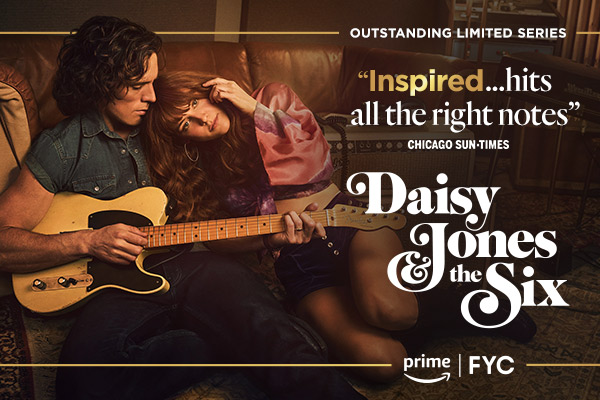 |
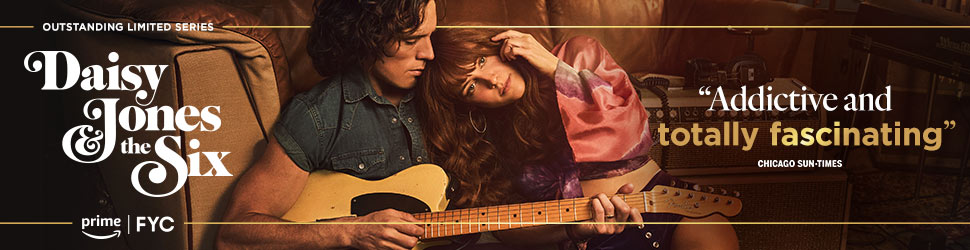
| "An exhilarating slice of 1970s rock ’n’ roll" — CHICAGO SUN-TIMES
In 1977, Daisy Jones & The Six were on top of the world. Fronted by two heat seeking missiles in Daisy Jones (Riley Keough) and Billy Dunne (Sam Claflin), the band had risen from obscurity to fame. And then, after a sold-out show at Chicago's Soldier Field, they called it quits. Now, decades later, the band members finally agree to reveal the truth. This is the story of how an iconic band imploded at the height of its powers.
For your consideration in all categories including Outstanding Limited Series.
|
|
|
|
|
| For streaming consumers, ease, access, and availability are everything, and they help explain YouTube’s ubiquity. YouTube TV, which can be added to any smart TV system (Fire TV, Roku, Apple TV, Google TV), maintains a familiar grid-like user interface that hundreds of millions of people already understand from decades scrolling through linear television. As adoption of connected TVs increases, and home entertainment platforms become more connected, YouTube has the unique benefit of being a distributor of content across V.O.D. and live, and being a content company that can monetize time and attention after audiences are done with a program.
So as television becomes streaming, and streaming dominates larger entertainment platforms, ecosystems like YouTube have an advantage over individual apps. Last year, for example, the NFL made a deal with Google to offer its Sunday Ticket package of out-of-market games via YouTube’s Primetime Channels service, which allows users to subscribe to individual channels. Starting this season, NFL Sunday Ticket isn’t just available on YouTube TV or YouTube Channels (for an extra charge); the NFL is also producing exclusive free content for YouTube. Creating entry points regardless of price sensitivities—free NFL content for those who want to use YouTube, all the way up to $249 for a Sunday Ticket subscription—theoretically increases discoverability potential and accessibility. Football fans can watch an upcoming game through YouTube Channels and then watch additional content for free on YouTube without ever leaving the app. Attention is fully captured and monetized by one platform.
While Amazon has the advantage of e-commerce, and Apple has the advantage of mobile hardware, Google is the fastest growing operating system on connected TVs. Combined with YouTube, Google also has the advantage of habit and search in an area where the other two companies are spending hundreds of millions of dollars to compete: television. |
|
|
| YouTube’s sports strategy, in many ways, is key to understanding its broader streaming ambitions. The company made a serious investment in its NFL Sunday ticket package. YouTube is paying roughly $2 billion a year for seven years, and the pricing structure for fans amounts to anywhere from $249 to $489 for the upcoming season. It’s especially nutty when you consider that DirecTV has been paying $1.5 billion annually for rights and reportedly losing $500 million a year on the package.
But YouTube clearly sees an opportunity to capture more users as they cut the cord, even if the company loses money on customer acquisition. While Thursday Night Football’s first season on Prime Video saw a 41 percent decline in overall viewership, it also notched an 11 percent uptick in viewers aged 18-34, the service’s next-gen consumer base. Theories about this discrepancy range from older NFL fans not knowing how to access Prime Video (hmm) to younger NFL fans having a much easier time finding, accessing, and viewing the game thanks to Prime Video. (Either way, it remains true that national broadcasting channels still reach larger audiences.) Nevertheless, it’s a long-game investment in a consumer segment allergic to cable, especially when there’s an O.T.T. alternative. Like Amazon, Google is betting on the opportunity generated by hosting some of the most sought-after streaming games on one of the most accessible streaming platforms.
Since YouTube has the advantage of being a growing distribution system and a content supplier, the company may be able to recreate the consolidated ecosystem that individual streamers tried to escape a few years ago. Take YouTube Channels. Similar to Amazon Channels, YouTube will carry a number of streaming platforms and make them available to YouTube users. While Channels being a primary subscription method has seemingly declined—the number of subscriptions fell by 50 percent between 2019 and 2022, according to streaming savant Matthew Ball—YouTube has two advantages: it’s connected to the biggest search engine in the world, and maintains the most time spent per platform monthly on television sets in the US, according to Nielsen.
That sort of scale is the ultimate flywheel. The NFL saw more than three billion views for its videos in 2020, according to YouTube, and the league is increasing the exclusive content on the platform. Meanwhile, the free service creates a daily habit for a growing number of connected TV viewers, providing an opportunity for YouTube to convert free users on YouTube into paying Sunday Ticket subscribers, all within one app. |
|
|
|
|
| Google famously worked on a gaming system—Google Stadia—that ultimately failed spectacularly. But YouTube still found its edge with its billions of hours of user-generated gaming content—a content arena in which Amazon spent $1 billion, via its acquisition of Twitch, to try to compete.
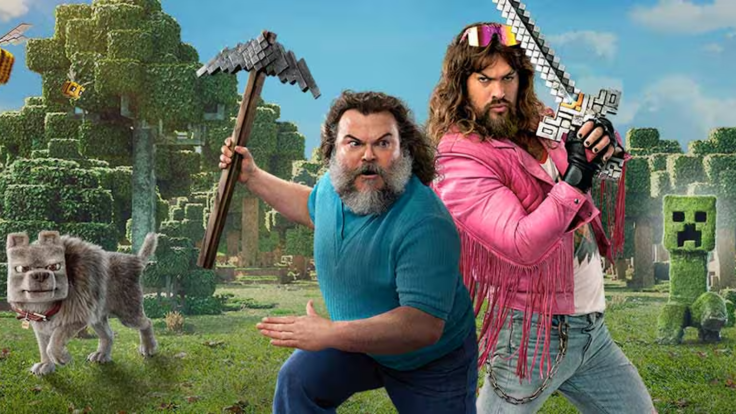
YouTube’s greatest contribution to the gaming industry was as the birthplace of Let’s Play videos, in which creators film themselves playing through a certain title. These helped Minecraft generate billions of dollars in revenue, and led the games industry into an entirely new era for marketing, creation, and, most importantly, consumption. Amazon, which is developing a Lord of the Rings game to supplement its Rings of Power series, has used Twitch, the livestreaming platform it owns, to tie everything together. For example, streamers can simulcast TV series and films from Prime Video with their audiences.
I’ve often told industry insiders that, considering how often the streaming platforms use YouTube to reach new audiences (Netflix uploads to more than a dozen channels, while Showtime uploads full pilot episodes for free), it’s odd that streaming services don’t incorporate some of the corresponding YouTube videos from creators back onto their own platforms. Video essays on popular series like The Last of Us could exist as recommended material after people are done watching an episode, or bingeing an entire season. This may be harder to incorporate on a platform, but on YouTube, it’s just an added benefit.
Google may at some point try to compete in the games space, but the biggest lesson YouTube discovered was how to take advantage of the platform’s biggest assets: scale, discovery, and ease. As individual streaming services try to maintain that audience attention while keeping costs low, finding ways to lean into additive content that reinforces adoration for a series, or facilitates more direct discovery, becomes a crucial part of the equation. This is Roku’s big selling point—but, again, YouTube is bigger, and its content is more consistent and cost effective.
Of course, YouTube isn’t without its issues. It’s still not a premium content service, it’s still largely seen as a free platform (meaning that trying to convert those viewers to paying customers is difficult), and being part of Google means that any big move into additional consumer spaces comes with heightened scrutiny from regulators. But YouTube has the advantage of being global, with tremendous scale and, based on all the data available, high adoption on smart TV sets. Google isn’t a quiet competitor by any means, but it certainly deserves more attention in the streaming wars. |
|
|
| FOUR STORIES WE’RE TALKING ABOUT |
 |
|
 |
|
 |
| President Dimon? |
| On the inside chatter percolating around the Core Club set. |
| WILLIAM D. COHAN |
|
 |
|
|
|
|
|
 |
|
|
|
Need help? Review our FAQs
page or contact
us for assistance. For brand partnerships, email ads@puck.news.
|
|
|
|
Puck is published by Heat Media LLC. 227 W 17th St New York, NY 10011.
|
|
|
|
|