
• Washington
  • Wall Street
  • A.I.
  • Hollywood
  • Media
  • Fashion
  • Sports
  • Art
  • Join Puck Newsletters What is puck? Authors Podcasts Gift Puck Careers Events
  • Join Puck

    Directly Supporting Authors

    A new economic model in which writers are also partners in the business.

    Personalized Subscriptions

    Customize your settings to receive the newsletters you want from the authors you follow.

    Stay in the Know

    Connect directly with Puck talent through email and exclusive events.

  • What is puck? Newsletters Authors Podcasts Events Gift Puck Careers
Welcome back to What I’m Hearing+, coming to you from Auckland, New Zealand, where I’m busy meeting with clients. This week, a return to everyone’s favorite streaming debate: weekly vs. binge. Instead of focusing on which is unequivocally better, a conversation that will seemingly never be resolved, I’ll delve into how Netflix et al. can use hybrid models to maximize the lifetime value of customers, decrease acquisition costs, and keep those eyeballs engaged.
 ‌ ‌ ‌ ‌ ‌ ‌ ‌ ‌ ‌ ‌ ‌ ‌ ‌ ‌ ‌ ‌ ‌ ‌ ‌  ‌ ‌ ‌ ‌ ‌ ‌ ‌ ‌ ‌ ‌ ‌ ‌ ‌ ‌ ‌ ‌ ‌ ‌ ‌  ‌ ‌ ‌ ‌ ‌ ‌ ‌ ‌ ‌ ‌ ‌ ‌ ‌ ‌ ‌ ‌ ‌ ‌ ‌  ‌ ‌ ‌ ‌ ‌ ‌ ‌ ‌ ‌ ‌ ‌ ‌ ‌ ‌ ‌ ‌ ‌ ‌ ‌  ‌ ‌ ‌ ‌ ‌ ‌ ‌ ‌ ‌ ‌ ‌ ‌ ‌ ‌ ‌ ‌ ‌ ‌ ‌  ‌ ‌ ‌ ‌ ‌ ‌ ‌ ‌ ‌ ‌ ‌ ‌ ‌ ‌ ‌ ‌ ‌ ‌ ‌  ‌ ‌ ‌ ‌ ‌ ‌ ‌ ‌ ‌ ‌ ‌ ‌ ‌ ‌ ‌ ‌ ‌ ‌ ‌  ‌ ‌ ‌ ‌ ‌ ‌ ‌ ‌ ‌ ‌ ‌ ‌ ‌ ‌ ‌ ‌ ‌ ‌ ‌  ‌ ‌ ‌ ‌ ‌ ‌ ‌ ‌ ‌ ‌ ‌ ‌ ‌ ‌ ‌ ‌ ‌ ‌ ‌  ‌ ‌ ‌ ‌ ‌ ‌ ‌ ‌ ‌ ‌ ‌ ‌ ‌ ‌ ‌ ‌ ‌ ‌ ‌ 
What I'm Hearing +
What I'm Hearing +

Welcome back to What I’m Hearing+, coming to you from Auckland, New Zealand, where I’m busy meeting with clients.

This week, a return to everyone’s favorite streaming debate: weekly vs. binge. Instead of focusing on which is unequivocally better, a conversation that will seemingly never be resolved, I’ll delve into how Netflix et al. can use hybrid models to maximize the lifetime value of customers, decrease acquisition costs, and keep those eyeballs engaged.

The Netflix Spike-Slump Effect
As Bela Bajaria recently exclaimed, Netflix stands by its binge model. But what if there is data outside its walls that suggests weekly is better?
JULIA ALEXANDER JULIA ALEXANDER
A few weeks ago, at the annual UCLA Entertainment Symposium, Netflix content chief Bela Bajaria turned a few heads when she unequivocally defended the company’s patented binge-drop orthodoxy and declared “there is no data to support that weekly is better.” That’s not exactly true, of course, as my colleague Matt Belloni recently noted, and its veracity is even belied by Netflix’s very own successful strategy of segmenting the seasons of its most popular shows into two or more tranches to ward off churn. But the micro drama over Bejaria’s comment highlights a real and important issue regarding how Netflix is thinking through the evolving cost-benefit analysis of the binge vs. weekly question.

After all, we’ve yet to see that much experimentation in the tempo of streaming releases. A decade after popularizing the single-day full-season drop, Netflix has only recently moved into season splitting. Other streamers have adopted the hybrid model of releasing three episodes and then moving to a weekly cadence—still the best semi-traditional way to release a show when it comes to marketing spend and customer retention.

But there’s still room for new thinking here, especially as everyone pivots their focus from subscription growth to managing costs and minimizing churn. The trouble with the binge model is that it requires an endless firehose of new content to meet expectations and keep subscribers from churning out. So why are Bajaria & Co. so resistant to changing gears?

Binge Mode
Perhaps Netflix’s preference for bingeing is sort of a self-fulfilling prophecy. Netflix hasn’t experimented enough with alternate release formats to truly and conclusively determine what does and doesn’t work, and if the only data being sourced is based on original series that have binge releases and licensed library titles, that’s a recipe for confirmation bias.

When new series were predominantly released via linear TV, the weekly schedule benefitted networks that needed to fill 52 weeks on a calendar and, in most cases, create inventory for ads. The binge release model didn’t, and audience behavior followed suit. It wasn’t as if Netflix’s data proved that audiences weren’t interested in weekly television, or that the binge format was better for content longevity; instead, it was simply the format that Netflix used, customers liked it, and everyone else followed suit.

Meanwhile, the company’s internal data, which is organically binge-skewed, can be further skewed. Right now, for instance, Netflix algorithms favor completion rates. On some level, that makes sense: The longer a customer stays with a show, and the stronger the recommendation, the more it rises up the page, and the longer it stays there. As a result, binged series naturally push the data to favor binge models.

We can see this reflected in Nielsen ratings, where Netflix shows routinely dominate the Top 10. Most Netflix content also tends to appear and disappear from these lists quite quickly. Whereas top performing shows (such as Disney+’s The Mandalorian) or even smaller shows (like HBO’s Succession) stick around week after week, the average Netflix original series sits for a couple of weeks before disappearing. It’s a double-edged sword: The binge format creates sharp spikes in viewership, but it’s less effective at drawing out sustained media and fan attention and requires Netflix to constantly generate new content to fill the engagement vacuum left behind.

It’s also costly. Remember when co-C.E.O. Ted Sarandos told analysts that his goal was to produce at least one huge hit a week? Netflix could save itself a lot of money, and a lot of headaches, by leaning on more licensed fare to support more targeted original bets—steady and reliable draws like NCIS and Cocomelon, which repeatedly top the charts on Netflix. But Netflix is still pushing for original shows to comprise a majority of its catalog, even as the audience demand share for originals has been dropping, according to data from Parrott Analytics, where I work as director of strategy.

A MESSAGE FROM OUR SPONSOR
The Netflix Slump Effect
For a more holistic view, the fundamental question has to change. Rather than focusing on which release format is more beneficial for general audiences, executives should point their gaze on the goal of each format. We have at least some evidence that Netflix executives see value in drawing out the episode releases for certain high-value projects. Stranger Things’ fourth season was released in two tranches instead of all at once, and the result was longer sustained demand for the show compared to its prior seasons, according to data from Parrot Analytics.

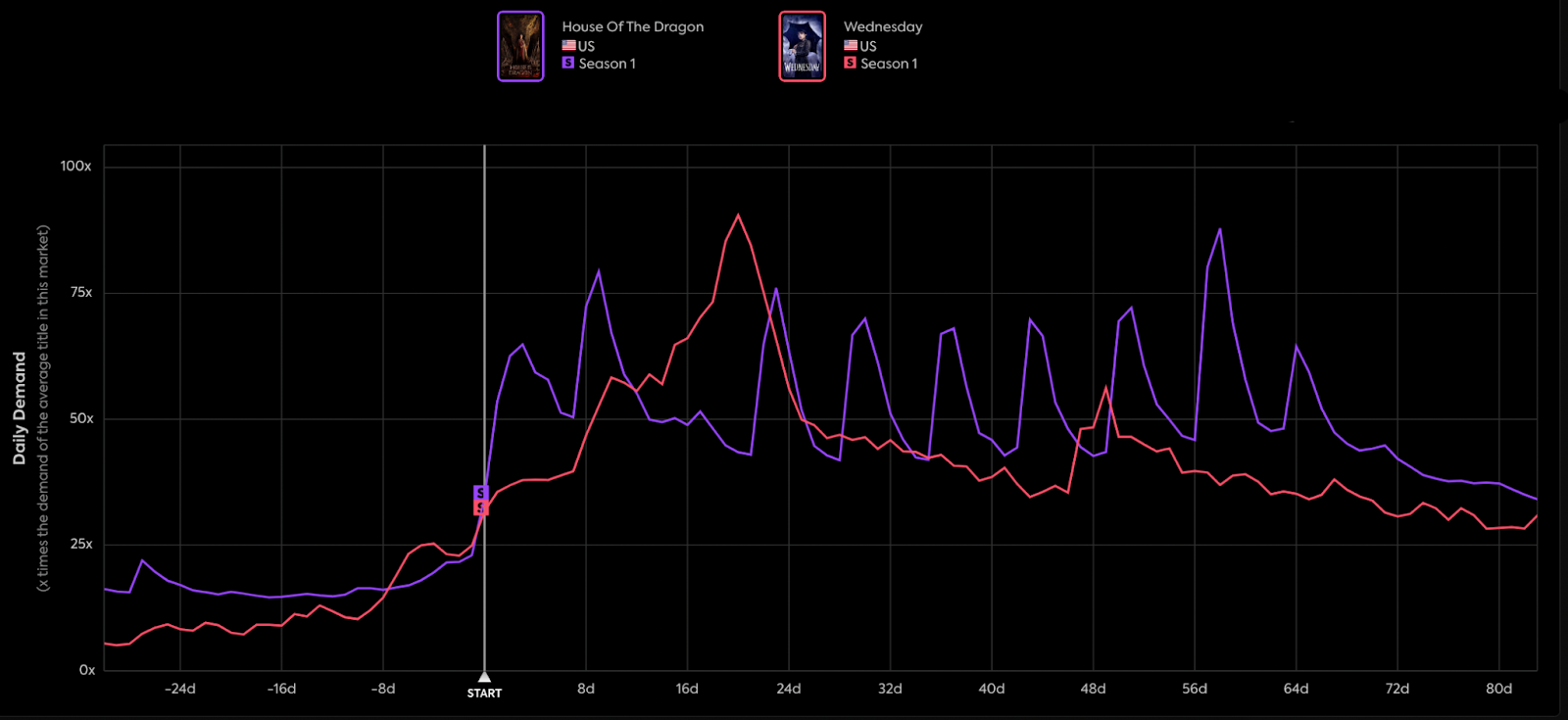
Most importantly, Netflix saw two separate viewership spikes that created sustained momentum for the show, according to research firm Whip Media, rather than just one. In the chart below, we can see that HBO/Max’s House of the Dragon, whose episodes were released weekly, saw demand grow over the course of its season and then decline slowly. By comparison, Netflix’s Wednesday had an initial peak in demand, then another post-viral TikTok dance, before trailing off.

https://puck.news/
The Netflix Slump Effect—that massive first week spike in viewership, followed by a huge drop-off in the show’s second and third week—is visible in any chart looking at the company’s release data. This is true for even its biggest drama series, like The Night Agent, Dahmer, and Inventing Anna, which are rightfully heralded as huge hits. This seemingly inevitable slump leads to interesting economic questions for a show’s subsequent seasons. If each season also experiences the Netflix Slump Effect, but audience interest nevertheless increases, is it possible to leverage that organic enthusiasm to elongate subscriber attentiveness and prevent churn, while simultaneously lowering the cost of re-acquiring those same customers a few months later? Since Netflix’s current strategy relies on the strength of immediate reception, the bigger opportunity lies in planning for the latter half of a show drop.
Binge Benefits
Binging is not without its benefits. Sarandos and other executives have rightly pointed out that Squid Game spread like wildfire around the globe due to the series’ momentum. More people binged it, recommended it, and that pushed it to the top of the page (with the help of some editorial curation) for other subscribers globally. Squid Game took advantage of Netflix’s scale, yes, but also Netflix’s core thesis. Other advantages of the binge release are 1) decreased marketing spend required to keep audiences engaged each week; 2) a freer creative approach to episode structure; and 3) mitigated risk of losing an audience.

These net positives are especially evident in the first seasons of shows. New series help bring in customers, or supplement another show that is bringing in subscribers (i.e., watching Squid Game and then tuning into Alice in Borderland). Stronger completion rates can also help determine which shows are worth renewing. While this is only one factor in programming decisions (others include referral capabilities and the potential to reach new demographics), the binge model can theoretically help make that decision a little easier. If more than 80 percent of viewers within the first two weeks don’t get past episode four, is that a show worth supporting? A weekly streaming series has to wait, well, weeks for that determination.

By the show’s second or third season, however, that built-in audience is going to return for the show regardless of how it’s released. Consider Amazon’s The Boys, which went from a binge release to a hybrid model between the first and second season to better drive returns. While some fans complained about it, Prime Video’s strategy team will tell you that people who were upset still showed up weekly to watch. It wasn’t a matter of sticking to one model because it worked, but figuring out how to best monetize an expensive yet popular series so that audiences didn’t just show up for one weekend and then take off.

$(ad3_title)
The Genre Question
Another element of this conversation, of course, is genre. Some genres lend themselves to a weekly release, and vice versa. Prestigious sci-fi dramas that cost $20 million an episode, such as Stranger Things, should be drawn out for better returns. Other genres, however, do lend themselves to the binge release. When comparing new comedies that were released weekly vs new comedies that were released as a binge, the binge portfolio saw 1.5x more demand than weekly, according to Parrot. F/X, for instance, adheres to a hybrid model, especially when it comes to prestige. It is dropping the episodes of The Bear’s second season all at once, this week, as it did for season one.

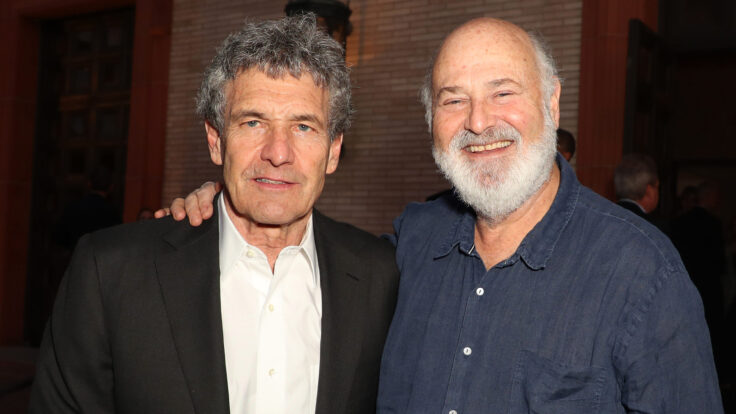
Former Disney Studios chief Alan Horn noted in a roundtable interview moderated by Matt, a few years ago, that of course audiences want everything available to them in every format, whenever they want, and for as little money as possible. But that doesn’t necessarily make sense for the company. What made Netflix such an incredible offer for consumers, back in those early days, was that it replaced channel-surfing. Everything that people could ever want was in one app for an affordable price and, contrary to what was happening over the course of 22 episodes on linear TV, all episodes were available at once, without ads. This was before competition increased in core markets, demand for Netflix originals fell, and rivals pulled licensed titles.

Some of that is now changing, with streamers like Max willing to license more content again. That ought to help with Netflix’s overall churn reduction. It doesn’t suggest, however, that Netflix should continue leaning on a system that worked during a period of disruption but must work three times as hard in a different market. When it comes to maximizing margins per show, part of Netflix’s strength isn’t just in having the best hits every single month—which any executive will tell you is a near-impossible achievement to maintain—but maximizing hold on customer attention and keeping their credit card active for as long as possible.

FOUR STORIES WE'RE TALKING ABOUT
De Niro’s Feud
De Niro’s Feud
Inside a $6M suit with his assistant.
ERIQ GARDNER
Fashion’s D.E.I. Backsliding
A conversation with Danielle Prescod.
LAUREN SHERMAN
The ‘Flash’ Crash
The ‘Flash’ Crash
Bad news for the summer box office.
MATTHEW BELLONI
Twitter’s Creditor Army
Why isn’t Musk paying his bills?
WILLIAM D. COHAN
Puck
Facebook Twitter Instagram LinkedIn

Need help? Review our FAQs
page
or contact
us
for assistance. For brand partnerships, email ads@puck.news.

You received this email because you signed up to receive emails from Puck, or as part of your Puck account associated with . To stop receiving this newsletter and/or manage all your email preferences, click here.

Puck is published by Heat Media LLC. 227 W 17th St New York, NY 10011.

SEE THE ARCHIVES

SHARE
Try Puck for free

Sign up today to join the inside conversation at the nexus of Wall Street, Washington, A.I., Hollywood, and more.

Already a member? Log In


  • Daily articles and breaking news
  • Personal emails directly from our authors
  • Gift subscriber-only stories to friends & family
  • Unlimited access to archives

  • Exclusive bonus days of select newsletters
  • Exclusive access to Puck merch
  • Early bird access to new editorial and product features
  • Invitations to private conference calls with Puck authors

Exclusive to Inner Circle only


Latest Articles from Hollywood

MELANIA documentary
Matthew Belloni • June 21, 2023
Can ‘Melania’ Open?
On top of the $40 million Amazon ponied up for Brett Ratner’s docu-hagiography, the studio is spending another $35 million to open it in 27 countries, including a splashy Kennedy Center premiere to be attended by top executives. But for all the expense, Melania is for an audience of one.
Ted Sarandos
Matthew Belloni • June 21, 2023
Movie Theaters Want a Ted Sarandos Blood Oath
Regal’s Eduardo Acuna goes public with his pitch for Netflix to sign a 10-year binding pledge with the Trump D.O.J. (and other ideas), ensuring Sarandos won’t go back on his recent promise to give Warner Bros. movies a 45-day window. Offering Greta Gerwig’s ‘Narnia’ a wide release would help, too.
Ted Sarandos
Matthew Belloni • June 21, 2023
How Netflix’s Sony Deal Explains Its Warners Pursuit
The streamer's new global agreement with the studio, valued at up to $8 billion, puts a public value on its slate. Now apply that math to its potential Warners takeover.


Kathleen Kennedy
Matthew Belloni • June 21, 2023
Kathleen Kennedy’s Final Episode
As president of Lucasfilm, the producer oversaw five Star Wars films, a wave of TV shows…. and a galaxy’s worth of abandoned projects and jilted filmmakers. With her exit finally official, is the franchise better off now than it was 14 years ago?
Bob Iger
Julia Alexander • June 21, 2023
The Math Behind Combining Hulu and Disney+
The long-ordained integration of Disney’s two streaming services is being heralded inside Burbank as a transformational moment for both. But will the merged platform really be more than the sum of its parts?
Kevin Spacey
Eriq Gardner • June 21, 2023
Kevin Spacey’s $80M Legal House of Cards
The disgraced actor is soon expected to sit for a brutal cross-examination in the rare Hollywood insurance dispute that has actually made it to trial. A potentially huge payout hinges on whose version of House of Cards’s ending prevails.


John Landgraf
Kim Masters • June 21, 2023
Can John Landgraf’s Slow TV Model Survive?
The oracle of Peak TV is at an inflection point as Disney+ absorbs Hulu and the chase for prestige gives way to the tonnage model.


Get access to this story

Enter your email for a free preview of Puck’s full offering, including exclusive articles, private emails from authors, and more.

Verify your email and sign in by clicking the link we just sent.

Already a member? Log In


Start 14 Day Free Trial for Unlimited Access Instead →


Latest Articles from Hollywood

Dana Walden
Matthew Belloni • June 21, 2023
20 Surefire, 100 Percent Probable Hollywood Predictions for 2026 (Part Two)
StrikeWatch ’26, a bizarre Michael Jackson record, and the future of Disney’s Dana Walden (if she’s C.E.O. or not) in the second act of the town’s favorite prognostication of the year ahead.
a minecraft movie
Scott Mendelson • June 21, 2023
It Was One Box Office Battle After Another in 2025
With Hollywood’s annual output back to resembling its pre-pandemic levels, some clear trends emerged: Kids showed up, horror hit more often than it didn’t, and the superhero slump is real. How might it all apply to 2026 and beyond?
Ted Sarandos
Eriq Gardner • June 21, 2023
Netflix’s Game of Antitrust Chicken
If the streaming giant wins Warner Bros., the feds will almost certainly present their next hurdle. And the Trump Justice Department might ask some questions that Netflix would like to avoid.


Sydney Sweeney
Matthew Belloni • June 21, 2023
20 Surefire, 100 Percent Probable Hollywood Predictions for 2026 (Part One)
The town’s favorite year-ahead forecast returns, with input from some of my best sources—plus a few celebrity Puck friends. The future of ‘Star Wars,’ Instagram Reels, ‘Rush Hour 4,’ and Sydney Sweeney foretold in the first of two parts…
Bryan Lourd caa
Eriq Gardner • June 21, 2023
The CAA-Range Finale, Zaz’s $500M Beef & Trump’s Media Damages Calculator
A look ahead at the most consequential media lawsuits and legal crises that will come to their conclusion in 2026.
Pam Abdy, Mike De Luca
Matthew Belloni • June 21, 2023
Hollywood’s Heroes of the Year Are… The Warner Bros. Duo
In 2025, Mike De Luca and Pam Abdy went from dead executives walking to a six-month stretch of blockbusters and Oscar contenders that silenced the town and offered a middle finger to their boss, David Zaslav. In an era when I.P. has taken over Hollywood, and their studio has been sold to Netflix (or Paramount?), they decided to go out swinging…


sam altman
Matthew Belloni • June 21, 2023
Hollywood’s Villain of the Year Is… Sam Altman
A year before the OpenAI C.E.O. gets the ‘Social Network’ movie treatment, the slop-ification of entertainment took a major leap in 2025 thanks to a copyright infringement hub called Sora 2 and Altman’s brazen courtship of Disney.
Get access to this story

Enter your email to get access to one article and free previews of our private emails from Puck authors and editors.

OR

Already a Member? Sign in


Latest Articles from Hollywood

Oscars
Matthew Belloni • June 21, 2023
The Oscars-YouTube Brand Problem
The streamer’s bold bid to host the Academy Awards offers maximum reach for a show that was becoming minimally niche, but mixing prestige and base populism has its potentially problematic downsides.
Ted Sarandos
Kim Masters • June 21, 2023
Does Anyone Believe Ted Sarandos on Theaters?
As the streamer’s winning bid to secure WBD faces regulatory scrutiny and a hostile offer from Paramount, Ted Sarandos insists that Netflix is committed to a standard theatrical window for Warner Bros. movies. Is it enough to earn Hollywood’s loyalty?
bob iger
Eriq Gardner • June 21, 2023
Disney’s Sora Wager & Hollywood’s Next A.I. Legal Battles
A field guide to the A.I. cases and deals that will shape 2026, including Disney’s recent peace treaty, the Elon-Altman feud, the next round of labor negotiations, the whole ScarJo voice issue, and many more…


david zaslav
Matthew Belloni & William D. Cohan • June 21, 2023
Who Wants Warner Bros. More?
Battle lines have been drawn over David Zaslav’s Warner Bros. Discovery, and both Netflix and Paramount think they have the winning formula. Will the Ellisons get to $34 a share? Can Netflix counter? Is Larry really “backstopping” all the equity? Or is the game already rigged?
Alan Horn and Rob Reiner
Kim Masters • June 21, 2023
Alan Horn Remembers Rob Reiner
The longtime exec paid tribute to Reiner, his onetime partner in Castle Rock Entertainment, and explained why the director dedicated their first movie together to his father.
Ted Sarandos, Greg Peters
Julia Alexander • June 21, 2023
Why Netflix Needs Warner Bros.
Prior to its $83 billion deal to acquire the studio and HBO Max, the streamer had never spent more than $700 million on an acquisition. But Netflix saw an opportunity to own, not license, a significant chunk of its content—and, perhaps more importantly, to block David Ellison from taking it away.


wicked cynthia erivo
Matthew Belloni • June 21, 2023
Can Media Coverage Buy an Oscar?
Every year, awards contenders and pretenders have been mounting unbridled and financially unchecked press campaigns in the hopes of boosting their chances. A new data analysis reveals that they maybe shouldn’t have bothered.


  • Terms
  • Privacy
  • Contact
  • FAQ
  • Careers
© 2026 Heat Media All rights reserved.
Create an account

Already a member? Log In

CREATE AN ACCOUNT with Google
OR YOUR EMAIL

OR

Use Email & Password Instead

USE EMAIL & PASSWORD
Password strength:

OR

Use Another Sign-Up Method

Become a member

All of the insider knowledge from our top tier authors, in your inbox.

Create an account

Already a member? Log In

Verify your email!

You should receive a link to log in at .

I DID NOT RECEIVE A LINK

Didn't get an email? Check your spam folder and confirm the spelling of your email, and try again. If you continue to have trouble, reach out to fritz@puck.news.

CREATE AN ACCOUNT with Google
CREATE AN ACCOUNT with Apple
OR USE EMAIL & PASSWORD
Password strength:

OR
Log In

Not a member yet? Sign up today

Log in with Google
Log in with Google
Log in with Apple
Log in with Apple
OR USE EMAIL & PASSWORD
Don't have a password or need to reset it?

OR
Verify Account

Verify your email!

You should receive a link to log in at .

I DID NOT RECEIVE A LINK

Didn't get an email? Check your spam folder and confirm the spelling of your email, and try again. If you continue to have trouble, reach out to fritz@puck.news.

YOUR EMAIL

Use a different sign in option instead

Member Exclusive

Get access to this story

Create a free account to preview Puck’s full offering, including exclusive articles, private emails from authors, and more.

Already a member? Sign in

Free article unlocked!

You are logged into a free account as unknown@example.com

ENJOY 1 FREE ARTICLE EACH MONTH

Subscribe today to join the inside conversation at the nexus of Wall Street, Washington, A.I., Hollywood, and more.

START 14-DAY FREE TRIAL

  • Daily articles and breaking news
  • Personal emails directly from our authors
  • Gift subscriber-only stories to friends & family
  • Unlimited access to archives
  • Bookmark articles to create a Reading List
  • Quarterly calls with industry experts from the power corners we cover