 |
|
Happy Monday, I’m Eriq Gardner.
|
|
Welcome back to The Rainmaker, a private email about money, power, fame, and most of all, the law. In this week’s edition, how autonomous driving deaths, deepfake excuses, and chatbot hallucinations could implicate Elon Musk (and could be trouble for Sam Altman, too). Was this email forwarded to you? Click this link to subscribe.
But first…
|
|
|
- Are Hollywood writers about to get screwed because, once upon a time, they took a rep’s advice to save a few bucks on their taxes? Probably. Like many in the creative community, George Gallo established a “loan-out” corporation that employed him and sold rights to his work. On Friday, however, Sony’s Columbia Pictures filed a lawsuit that alleges that the tax-friendly set-up basically forfeits Gallo’s right under copyright law to cancel a grant and reclaim the Bad Boys franchise. That might seem totally unfair, but it’s hardly ex nihilo et subito, and I already hear Hollywood lawyers telling their clients to mind the future and ditch the loan-outs.
- I’m closely following a new case over the EA Sports College Football video game franchise, which has spawned more moves than a Nick Saban playbook. A decade ago, Electronic Arts discontinued the game, abandoning more than $100 million in annual revenue because of a legal uprising of college athletes against both the NCAA and those who exploited their names and likenesses. But then, the rules changed to allow college athletes to profit. Earlier this year, EA Sports, led by Cam Weber, announced a return of the game, striking an innovative deal with OneTeam Partners, which is positioning itself as a quasi-union for college players. Under the deal, a college football player can opt into the game and receive a flat $500 payment. But the BrandR Group, a licensing company that claims to have exclusive deals to represent dozens of universities and their athletes, is now suing, contending that EA’s arrangement interferes with its contractual relationships. This dispute should move quickly. With the June 30 opt-in deadline approaching, BrandR is pushing for a temporary restraining order. (Read the TRO application here.)
- Remember Sportscenter host Sage Steele’s lawsuit against ESPN and Disney for “sidelining” her after she spoke up about a Covid mandate? Well, this week, Disney offered Steele $501,000, plus her attorney’s fees, to drop the case, which is proceeding in Connecticut, where employers are forbidden from disciplining on the basis of speech. A judge hasn’t yet ruled on ESPN’s argument that it has its own free speech right to make casting decisions. Nevertheless, Disney made a stab at resolving the situation. I hear Steele isn’t impressed by the offer and wants an apology.
|
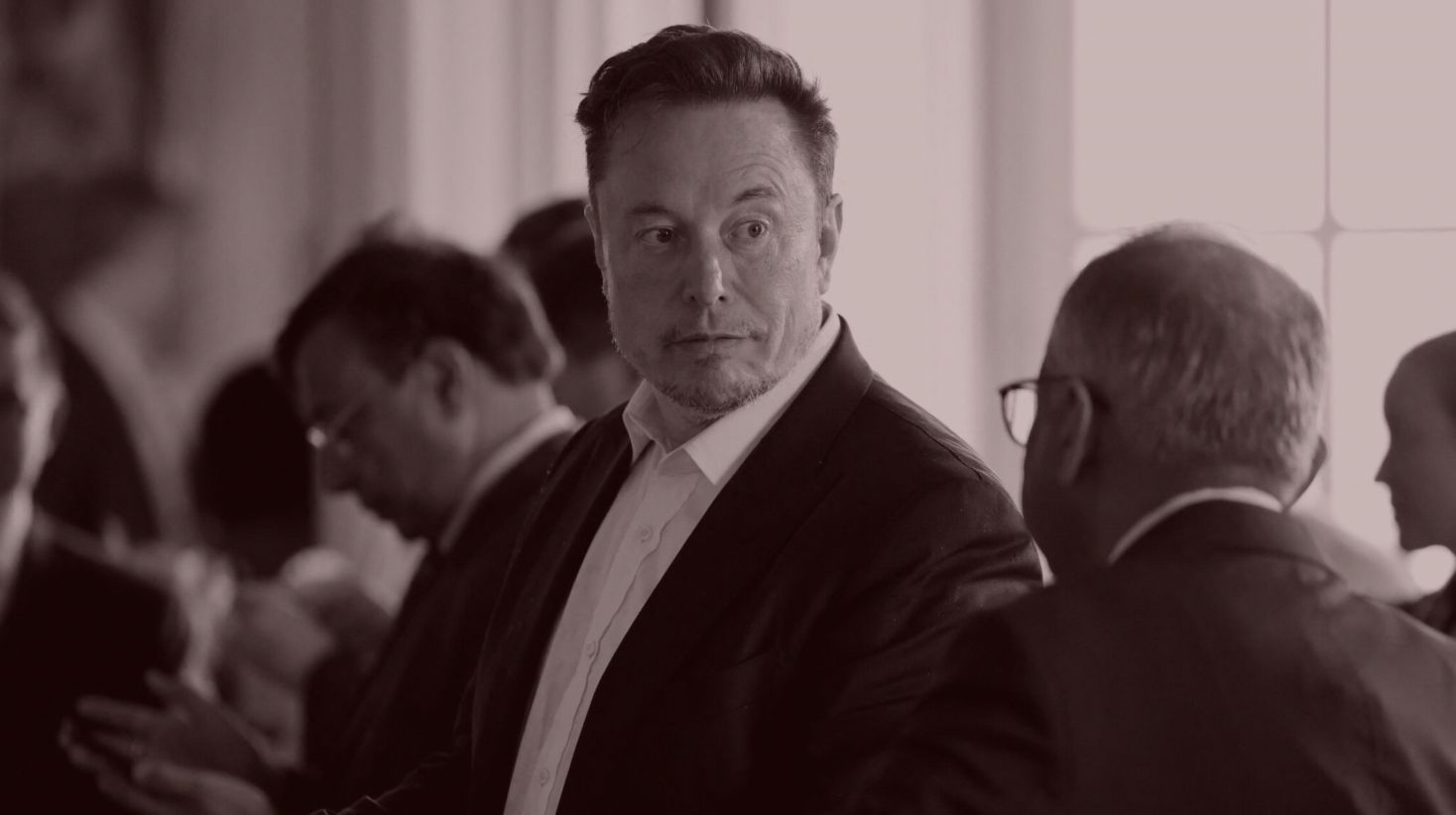 |
| The Elon Hubris Deposition Test |
| Would an ordinary person have been misled by Musk’s hyperventilating into believing that the company’s “self-driving” cars could actually, you know, drive themselves? |
|
|
|
| At the annual Code Conference in 2016, Elon Musk, then arguably at the height of his self-aggrandizing, hyperbolic powers, made an assertion that would ripple into the present. “Autonomous driving is a solved problem,” he declared, onstage with Kara Swisher and Walt Mossberg. Highways were now “relatively easy” to navigate using the technology, he continued. Incredibly, he claimed, the Tesla Model X “can drive autonomously with greater safety than a person right now.”
Of course, seven years later, neither the Model X nor any other Tesla vehicle can truly drive autonomously, let alone more safely than a human. In that time, Tesla’s “Autopilot” software has been involved in hundreds of crashes, some of them fatal. Now, Musk’s over-the-top salesmanship may finally come back to haunt him. On Thursday, the Tesla legal team finally relented to allowing Musk to be deposed in a lawsuit over one of those fatalities, which may impact the future development of A.I., deepfakes, ChatGPT, and more.
Like many headaches involving Musk, the deposition, which Tesla vehemently fought for 18 months, is largely the consequence of his own epic hubris. On April 26, 2019, Tesla was sued by the family of Walter Huang, an Apple engineer who had been relying on the company’s Autopilot system when his Model X crashed into a highway barrier. Huang, who had been engrossed in a video game on his phone at the time, died from his injuries. According to the family, Huang relied on Tesla’s marketing that it was a “state-of-the-art” vehicle and believed his Model X was safer than a human-operated car because he heard about Tesla’s claimed technical superiority. The suit doesn’t specify the damages sought.
In the lead up to the trial, which begins next month, Tesla argued that Huang’s family had obtained enough information from its engineers that there was no need to also depose Musk. In February, Judge Evette Pennypacker agreed to limit the interrogation to written form. But then Tesla’s lawyers at Bowman and Brooke got just a little too cute, noting that public figures like Musk are often featured in deepfakes, and so any video of Musk singing the praises of Autopilot at Code couldn’t be authenticated. Huang’s lawyers quickly responded that, if Tesla wanted to make that argument, then they obviously should be allowed to ask Musk if he remembered being there. In April, the judge agreed.
Tesla’s lawyers tried to backtrack, telling the judge that, lo and behold, they had suddenly uncovered new information that verified the videos. No need for a deposition. Too late, responded Huang’s team, suggesting that Tesla was merely delaying the inevitable, and that Musk’s team should be sanctioned for its gamesmanship. Finally, Tesla threw up its hands, abandoning its resistance to the deposition. So in the next few weeks, Musk will dial into a video conference and take a lawyer’s questions. The judge has already decided that the transcript will be made public. |
| Well, What Did You Expect? |
|
| Although this will mark Tesla’s first encounter with a jury concerning a man’s death, it is not the first trial involving an Autopilot accident. Just a few months ago, Tesla won a battle against Justine Hsu, who suffered a facial fracture when her Model S careened onto a curb, causing a forceful airbag deployment. In interviews afterwards, jurors expressed their conclusion that drivers have a responsibility to remain attentive while operating a vehicle. And that determination was no coincidence. At the trial, Tesla hammered home the message that Autopilot was merely a helping hand—a tool meant to be employed with caution. Drivers, like Hsu, were expressly instructed not to engage auto-steering on city streets and to keep their hands on the wheel, ever ready to respond to the car’s visual and audio warnings. Hsu’s case crumbled under this unyielding defense (although she’s now seeking a re-trial with the allegation that Tesla buried safety data).
Now, Tesla is poised to replicate this winning strategy. Court documents reveal that prior to the catastrophic accident, Huang confided to his wife about the Model X’s unsettling inclination to veer towards the triangular gap at the edge of highway off-ramps. Meanwhile, dashboard data reveals an even more reckless story—Huang’s hands were apparently off the wheel right before the crash. And at the scene of the accident, authorities discovered that his phone screen was tuned to a mobile videogame, Three Kingdoms. Tesla’s legal team will surely place the blame squarely on Huang, arguing that he alone should bear responsibility for the tragic outcome.
But it’s hardly a slam-dunk case if Judge Pennypacker allows in videos of Musk or Tesla promoting the infallibility of their self-driving software. First, the Huang family will surely point to the damning testimony of Ashok Elluswamy, director of Autopilot software at Tesla, who, during his deposition, shockingly acknowledged that a 2016 promotional video was staged. The clip tantalizingly begins with the tagline, “The person in the driver’s seat is only there for legal reasons. He is not doing anything. The car is driving itself.” Elluswamy confessed that the video merely showcased “what was possible” rather than “what was available for customers.” Of course, Huang’s lawyers will probably question whether customers could have possibly appreciated this fine distinction.
And then there is Musk’s grandiose assertion at the Code Conference about the safety of autonomous driving on highways, along with numerous other comments he has made over the years about Tesla’s self-driving system. Under the so-called “consumer expectations test,” a court may hold a seller responsible for defective products that don’t perform as safely as would have been anticipated by an ordinary consumer. In other words, would the average customer reasonably have been misled by Musk’s public commentary, and Tesla’s marketing, into believing that the company’s supposedly self-driving cars could actually, you know, drive themselves?
While this test is rather uncommon—more prevalent is an approach based on “risk-utility balancing,” where courts hear about reasonable design alternatives—the test holds sway in California when a product’s complexity doesn’t impede consumers from forming expectations. Tesla, of course, vehemently argues that Autopilot is way too much of a novel, cutting-edge technology for consumers to harbor any assumptions about its safety. (In the Hsu case, a judge rejected the argument.)
For now, Judge Pennypacker has refrained from delivering a definitive ruling on the applicability of the consumer expectations test. However, she’s given tantalizing hints that it may find a place in this drama. Irrespective of the trial’s ultimate outcome—assuming there isn’t a settlement—the standards by which a case like this gets analyzed will undoubtedly become fodder for further examination on appeal. The legal and academic spheres are already abuzz with the intricacies of assigning blame for mishaps in this new era of A.I. This pivotal case could very well shape the precedents that guide future disputes. |
|
|
| Meanwhile, thanks to the rise of ChatGPT and Bard, many are starting to consider the legal ramifications when these conversational A.I. chatbots spread false and damaging information about real-life individuals. Just recently, a Georgia radio host filed a groundbreaking defamation complaint against ChatGPT’s creator OpenAI, signaling that more lawsuits of this nature are probably on the horizon even if the application of traditional libel standards to this new territory remains uncertain.
That brings me to UCLA law professor Eugene Volokh’s thought-provoking new paper in the Journal of Free Speech Law. In the paper, he explores the potential role of negligence law—the very same legal realm currently being fussed over in that coming trial over Musk’s autonomous death machine—in handling an A.I.’s reputational damaging hallucinations. While negligence law generally applies to physical injury rather than pure economic loss, Volokh suggests legal principles from product design cases can shed light on how a lawsuit against a chatbot developer might be evaluated.
Without delving too deep into the details of the paper—you can read it for yourself here—Volokh argues that when an A.I. company like OpenAI becomes aware of spurious information being propagated, that should be enough to satisfy any “actual malice” standard. Volokh contends that even in the absence of a cease and desist letter, a viable negligence suit could be pursued anyway, particularly when private matters are involved. Drawing parallels to product liability law, the paper then examines such concepts as “risk-utility balancing” and the “consumer expectations test,” exploring, for example, how failure to verify the accuracy of quotes might be judged.
Perhaps adoption of this legal framework would incentivize A.I. companies to be proactive and figure out foreseeable harms when designing their systems. Of course, not every problem would be anticipated, and if we begin seeing negligence cases pursued against A.I. companies for spreading false information, I imagine that defendants will look to shift blame as Tesla is now trying with respect to Autopilot crashes. Take, for example, that new case from the Georgia radio host who alleges ChatGPT made up false stuff about him: Was it user error? Faced with a negligence claim, OpenAI would probably trot out that defense. In any event, Sam Altman better get ready for deposition demands. |
|
|
- Speaking of ChatGPT hallucinations, we finally learned the punishment for Steven Schwartz and Peter LoDuca, the two lawyers who carelessly submitted made-up case precedent in a legal brief. U.S. District Court Judge Kevin Castel is making those lawyers write a series of letters to judges identified as authoring fake opinions. Very schoolmaster of him. By the way, Castel’s 34-page order (not including the appendix) is longer than his ruling this week dismissing the underlying case.
- I still can’t believe that after nearly 10 years in court, the legal fight between Dr. Luke and Kesha ends with the most anti-climatic of statements: “Only God knows what happened that night.”
- I asked Jay Edelson, representing victims of disgraced L.A. personal injury attorney Tom Girardi, what he thinks of California’s new “snitch” rule that requires attorneys affirmatively report misconduct by other lawyers. “A step in the right direction,” he said. “However, its value depends on the Bar actually doing thorough and non-conflicted investigations, something the Bar has refused to do.”
- Check out this really fun amicus brief at the Supreme Court from four men named David Sosa on behalf of another man named David Sosa, who apparently was wrongfully arrested and is now challenging the constitutionality of a Florida law that allows for an extended period of unquestioned detention. Read it here.
|
|
|
| Apparently, there’s others named Eriq Gardner, believe it or not, but I’m nonetheless an original. That is, if we’re not all living in a simulation created by an advanced intelligence. Just moments before talking about autonomous driving as a “solved problem” at the 2016 Code Conference, Elon Musk said there was a “one in billions chance this is base reality.” So maybe I’m a deepfake too.
Until next week,
Eriq |
|
|
|
| FOUR STORIES WE’RE TALKING ABOUT |
|
|
|
|
|
 |
|
|
|
Need help? Review our FAQs
page or contact
us for assistance. For brand partnerships, email ads@puck.news.
|
|
You received this email because you signed up to receive emails from Puck, or as part of your Puck account associated with . To stop receiving this newsletter and/or manage all your email preferences, click here.
|
|
Puck is published by Heat Media LLC. 227 W 17th St New York, NY 10011.
|
|
|
|