 |
 |
|
Welcome back to What I’m Hearing+, coming to you from Brooklyn, where Memorial Day means the city becomes slightly more unbearable in the heat yet slightly emptier as everyone escapes to the Hamptons, Shelter Island, and the Berkshires.
In tonight’s edition, a conversation with JunKoo Kim, the founder and C.E.O. of Webtoon, one of Netflix’s most important content partners in a key emerging region. He talks about creating some of Netflix’s most popular series in the key South Korea market, and the company’s manifest destiny into Hollywood proper.
But first…
|
| Succession’s $850 Million Win |
|
| After four seasons, HBO’s Succession came to an end Sunday, and the cultural impact is still reverberating. “Kendall” has been trending on Twitter for two straight days, and if your TikTok or Reddit feed is anything like mine, the Roys are pretty inescapable. That’s not shocking: Succession was always an elite media obsession, not a mass-appeal title. Its finale drew 2.9 million viewers across platforms on Sunday, per HBO, a series best but hardly Last of Us numbers. But it was always over-represented on social channels, which skew younger and toward higher income, more urban households.
All that social data also provides us with an updated snapshot of the show’s real value to HBO (and Max and Warner Bros. Discovery) in the coming years, and an estimate for how much money they left on the table by not pursuing a fifth season. Parrot Analytics, where I work as director of strategy, projects that Succession will contribute $850 million to HBO globally through 2027. That projection is estimated by examining the correlation between demand and a platform’s publicly reported streaming revenue, with derivative deductions for customer acquisition and retention. It also takes into account audience demand, which we can approximate based on consumption data, social video, search, and social media.
A fifth season of Succession would have generated another $237 million for HBO through 2027, according to Parrot. The vast majority of the series’ value—70 percent—was projected to derive from new subscribers, which will happen less now that the series has ended. That said, Succession has a smaller decay rate than other prestige dramas, meaning that its revenue contribution to HBO will likely remain significant even without producing new seasons. Plus, ending it now means no additional marketing costs or increased pay for the cast. Bottom line: It’s safe to say that as more shows are removed from streaming platforms, Succession will be easy to find on Max for years to come. |
| Amazon’s Citadel Debate: Huge in India! |
|
| Is Amazon’s ultra-pricey Citadel series a flop? It seems that everyone wants an answer, especially after Prime Video’s The Rings of Power was scrutinized by critics and industry bloodhounds, raising questions about the platform’s murky strategy and the general difficulty of defining success and failure in streaming. The early Citadel data points are underwhelming: The debut didn’t land on Nielsen’s Top 10 list; it was beaten by a John Mulaney comedy special, which had the benefit of not costing Netflix a reported $300 million to produce; IMDB ratings for Citadel declined steadily per episode (a leading indicator of completion rate); and Google Trends data showed a steep decline in interest after the initial release. Not great for a weekly show, especially from big-ticket producers the Russo brothers.
Even if the series landed within the Top 20 or Top 25 series, we can argue that based on publicly available data, Citadel didn’t perform in the U.S. Amazon also didn’t tout its success on the company’s official channels. Instead, Amazon Studios chief JenSalke posted that it drew “one of the largest global audiences in Prime Video history” on her social media. Hmm.
So, yes, Amazon overspent for Citadel, given that it hasn’t performed as needed in the U.S. market. But the series is playing very well in India. On IMDB, 40 percent of the 1,000+ reviews for Citadel from India were 10 star ratings. This is more than double the number of 10 star ratings in the U.S., and quadruple the number of 10 star ratings out of Germany. Again, IMDB data is speculative and additive at best, but we also know that Citadel is a global play for Amazon, and having Priyanka Chopra star in the series is one way to try and penetrate the Indian market.
Demand for Citadel in India is higher than in the U.S., its origin country, which rarely happens, according to data from Parrot. It was a top 10 in-demand series within India for three weeks following Citadel’s release, and is currently the 14th most in-demand series in the country. Citadel should theoretically boost Prime Video sign ups in a country that no one has figured out. No wonder Amazon greenlit a second season. |
 |
| Architect of a Korean Streaming Invasion |
| A candid conversation with JunKoo Kim, founder and C.E.O. of Webtoon, which has become an essential content discovery platform for Netflix and other global streamers. |
|
|
|
| It’s no secret that Netflix, the most global of the American streaming brands, is best positioned to ride out a prolonged writers’ strike. Over the past few years, the company has demonstrated the ability to turn its foreign series into U.S. hits. South Korean shows, in particular, have proven to be popular with American audiences—Squid Game needs no introduction. But even series like Attorney General Woo and All Of Us Are Dead have resonated in the U.S., while also exceeding expectations at home, which is Netflix’s barometer of success for international programs. If the WGA and the studios can’t resolve their differences in the next few months, expect to see more dubbed shows cropping up on the Netflix homepage.
It’s all upside for JunKoo Kim, the founder and C.E.O. of Webtoon, an online comics website that launched in 2004. During the past half decade, Webtoon has become a critical discovery platform for streaming services like Netflix. Series like All of Us Are Dead, the fourth most watched international TV series of all time on Netflix; Hellbound, which stayed in the Top 10 for four weeks; and the recent chart-topper Black Knight, have all come from Webtoon. In 2021, Kim and Webtoon also acquired Wattpad, an online publishing platform that has produced titles adapted into beloved Gen Z films, including Voltage Pictures’ After and Netflix’s The Kissing Booth. Since authors and artists are uploading to Webtoon first, developing readership numbers in the hundreds of thousands and millions, Webtoon has an eye on what fans will likely want in an adaptation—giving Webtoon first priority, and partners like Netflix a project with a built-in audience at a time when established I.P. is limited and getting far more expensive.
As Webtoon expands its U.S. presence with a new headquarters in Los Angeles set up in 2020, and works with more streaming platforms and studio partners, I sat down with Kim ahead of a trip to South Korea to talk about Webtoon and its effect on the entertainment industry. Herewith, our conversation about turning a South Korean content empire into a true player in Hollywood, which has been edited for length and clarity. |
|
|
| Julia Alexander: Your business is focused on both user generated content and serving as a discovery platform for U.S. streamers. Are you angling to work more with companies like Netflix and Disney, or do you still view your company first and foremost as a creator platform?
JunKoo Kim: There were three phases for us. The first phase was creating an independent platform and ecosystem in South Korea. The second phase was scaling up that ecosystem globally, and the third phase will be going beyond the platform business to become a full blown content and I.P. business. We have a large number of users [north of 89 million monthly active users] and 70-80 percent of them are Gen Z. That’s why more film and TV companies are interested in us. That’s why they want to adapt our stories.
Julia: Four of your most popular adaptations are All of Us Are Dead, Hellbound, Sweet Home, and the recently released Black Knight. These are all thriller or horror series, but when you look at the breakdown of comics on Webtoon, it’s quite heavy on romance. When you talk to your partners both in South Korea and the U.S., do you see any interest in adapting more of the romance content or is the buy side focused on more male-oriented, action type series?
Kim: The adaptations in the U.S. are horror and thriller titles. But in Korea, there are so many romance and romance fantasy titles. When it comes to romance, the localization aspects are very important. You need to understand the local audience, so I think that’s why it’s popular only in different countries right now. Horror and thriller became more globally popular. There are many female-oriented womens’ titles in the U.S. that are already written, so they will be adapted in the U.S.—we’ve actually entered into many contracts, but I can’t reveal more details. |
|
A MESSAGE FROM OUR SPONSOR
|
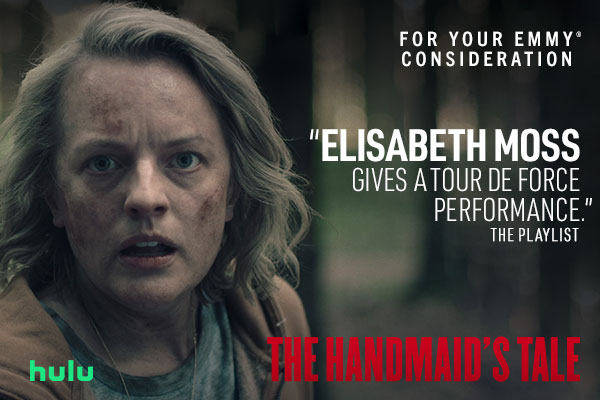 |
| Emmy®-winning actress Elisabeth Moss gives another tour-de-force performance in the latest season of “The Handmaid’s Tale,” Hulu’s critically acclaimed and Emmy Award-winning drama series. Forbes calls the series “one of the most important on television,” and the stunning ensemble cast includes Yvonne Strahovski, Bradley Whitford, Ann Dowd and more. The series is for your Emmy consideration for Outstanding Drama Series and all other eligible categories. Visit FYC.HULU.COM for more information. |
|
|
|
|
| Julia: Obviously Korean media is having a moment: you see the likes of Squid Game, Parasite, K-pop, BTS, etcetera, exploding globally. Where do you think the next big hits for Webtoon will come from? Is it still Korea?
Kim: I think the U.S., really. With our American partners, we are signing many, many contracts at the moment based on stories coming from American creators. And there are many projects in progress in the U.S. So we expect to see many success cases there. Korea was faster for us because Korea had more content from local creators, and therefore adaptation occurred in larger numbers. But considering the speed of development of stories happening in the U.S., the number of adaptations will increase naturally and mega hits will emerge. So we have high expectations, and that’s why we created our new headquarters in the U.S.
Julia: A lot of the people in the industry view the Webtoon platform as a way to discover and to test new characters or new material across multiple mediums, to broaden the world they’re building in film and television. This is a conversation I’m having more and more lately as companies think about turning their two-dimensional I.P. assets into something more multi-dimensional. And they look at Webtoon as a place to capture an audience that is following these stories from one visual medium to another. Does the flywheel spin both ways? Do you see a world in which, hypothetically, something that’s working on Netflix or Amazon then becomes a Webtoon comic, where the story can keep moving and find new audiences?
Kim: When the existing players saw that Webtoon has so many users—and the interaction is very lively, and readers love these worlds—they started bringing their I.P. to us with suggestions for how we could adapt it on our platform. We get these proposals often now.
Creating a movie or series takes a lot of effort. So, from an R.O.I. perspective, Webtoon is a good platform to explore a new story in a new way at low risk. When they want to know whether young people would be interested in a certain story, they often want to test it with us. When original stories are adapted into live action series, viewers watch and then they come back to Webtoon. We see that all the time. Those new fans can explore Webtoon as a new service to continue their fandom. It’s a very happy collaboration that goes both ways for all I.P. holders. |
|
|
|
|
| Julia: With more of these creations coming out of the U.S., there are also emerging questions about data transparency, fair pay, job stability—especially now, with the Writers Guild currently on strike. Of course, you work with independent creators, so it’s slightly different. But as Webtoon becomes more influential in Hollywood, outside of the South Korean market, how do you maintain the relationship with those creators and writers while navigating the Hollywood studio system?
Kim: Webtoon started as, and still operates as a platform. Transparency is really, really important. It’s an integral part of our company. I think I can say this: when I first came to the U.S., an American creator we’re working with said, “You’re a creator-friendly company in an unfriendly town.” When there’s a fight between a company and a creator, we are on the creator’s side. But when there’s a fight between creator and the user, we are on the user’s side. Those are our principles. So protection of I.P. and monetization for any creator is very important. We want the pay to be clear and fair.
Julia: The most successful Webtoon adaptations in the U.S. and in Korea have been TV shows, not movies. That’s not surprising—it’s what streamers want right now, the engagement is better, the risk is lower, and the R.O.I. is higher. Do you see that changing?
Kim: It’s important what intention we have for the project, but the market flow has become more important. Throughout the pandemic, drama and live-action categories became much more in-demand than film. The current adaptations are more focused on live action series for that reason. For us to make money, maybe film is better, but to acquire more viewers and to reach more users, TV is more powerful. When they watch season one, rather than waiting for season two, they can go to Webtoon. That was more beneficial for us.
Film could be a new market for us, but we need to work hard to ensure the possibility of success based on our I.P. is solidified first across the market. Studios are interested, so it’s up to us to figure out what’s best for our creators, our platform, and our company. |
|
|
| FOUR STORIES WE’RE TALKING ABOUT |
 |
| A Yellowstone Mystery |
| Notes on an $80M lawsuit surrounding TV’s No. 1 series. |
| MATTHEW BELLONI & ERIQ GARDNER |
|
 |
| Bezos at Sea |
| A conversation encircling the latest mediaworld plot lines. |
| DYLAN BYERS |
|
 |
| Iger’s Vulcan Chess |
| Notes from the Maidstone crowd and Burning Tree delegation. |
| WILLIAM D. COHAN |
|
 |
|
|
|
|
|
 |
|
|
|
Need help? Review our FAQs
page or contact
us for assistance. For brand partnerships, email ads@puck.news.
|
|
|
|
Puck is published by Heat Media LLC. 227 W 17th St New York, NY 10011.
|
|
|
|
|