Welcome back to What I'm Hearing...
I’m Matt Belloni, former editor of The Hollywood Reporter and an entertainment attorney.
Reminder: My emails are for members of Puck, the new media company focused on the power centers of Hollywood, Silicon Valley, Washington, and Wall Street. If this email has been forwarded to you, please sign up for a membership here. (Yes, we have group subscriptions, just email fritz@puck.news for details.)
But first...
The Halyna Hutchins Tragedy: 5 Questions
The killing of cinematographer Halyna Hutchins by a gun fired by Alec Baldwin on the set of Rust is too sad. And details are still coming out, so it’s too early for me to offer an assessment today. For now, I’ve just got five questions:
Sponsored by Amazon Prime Video 

It’s an open secret in Hollywood that many feel the movement toward greater accountability and inclusion sometimes goes too far—and are terrified of getting called out, themselves. Now Netflix has become an unwitting signpost in the culture wars, and some believe it may signal a turning point. Don’t lie, you’ve had the “cancel culture” conversation. Probably many times. It’s an open secret in Hollywood that a sizable chunk of its power players feel the movement toward greater accountability and inclusion in public forums sometimes goes a bit too far. I hate that term, “cancel culture,” but it usually comes up when people criticize the recent shift in entertainment that, very broadly speaking, encompasses everything from aggressive efforts to increase race and gender representation to a lower tolerance for hateful speech and offensive personal behavior.
You don’t hear it publicly, of course, but it’s a topic at lunch or via texts when a filmmaker is fired over old tweets or a studio apologizes for an insensitive casting decision. Some of it is just backlash from people for whom progressive change is threatening or uncomfortable. Others make a more legitimate point that Hollywood is currently dealing with a lot of threats to its existence that are probably more pressing than whether, say, a gay character is played by a gay actor. Either way, many people are terrified of doing something objectionable and getting called out.
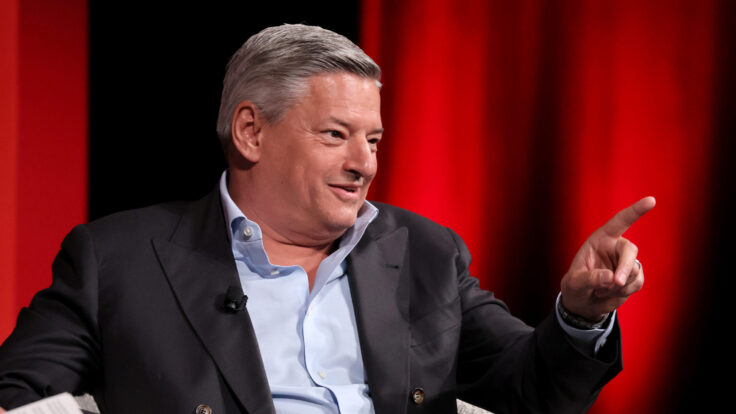
That’s why it was interesting to pick up chatter this week about the impact of the Dave Chappelle controversy. Netflix co-C.E.O. Ted Sarandos was faced with a choice: Side with Chappelle, defend an offensive, transphobic comedy special, enrage activists and a cross-section of his own employees; or censor Chappelle, please the activists, but damage talent relationships and ignore the preference of the vast majority of the service’s members. The feeling, at least among a few people who I consider bellwethers, was that when Sarandos sided with Chappelle and double-downed after backlash, an industry that had been terrified of offending the sensibilities of vocal minorities, particularly on social media, had finally drawn a line in the sand. “Kudos to Ted,” an executive texted me. “Someone stood up to the mob.”
That’s probably an oversimplification. As I’ve written, Sarandos’ move was based on a business imperative: Netflix wants to be a platform for all content, and it benefits financially if creative people believe that Netflix will defend their work, even if it pisses people off. For Sarandos, there was really no other decision to make.
Yet now Netflix has become an unwitting signpost in the culture wars, and some believe it has signaled a turning point in Hollywood. Will other media companies be less willing to acquiesce to the demands of interest groups? Next time an artist is criticized for going too far or exhibiting terrible personal judgment, will the outlets that work with them think twice about censoring or severing ties? Maybe a stand-up special by a revered artist like Chappelle is simply different from the usual sources of outrage and action. But maybe artistic freedom in the post-Chappelle age now means something slightly different and, perhaps, more free? I don’t know the answer, but it’s an interesting question.
In 2017, CNN dropped Kathy Griffin after she posted a video of herself with a decapitated Trump head, which she described as “merely mocking the Mocker-in-Chief.” Would CNN defend her freedom to push boundaries today? Would Disney fire Roseanne Barr for her racist jokes on Twitter, like it did in 2018? Would Scarlett Johansson need to step down from playing a transgender character, like she did from a film project in 2018, or would she simply argue artistic license like Chappelle?
It will be interesting to see how companies act going forward, because artists themselves seem to be conflicted. There was a healthy outpouring of support for the Netflix trans walkout on Twitter from activist artists like Ava DuVernay and Dan Levy. But I saw few criticizing Netflix or Sarandos’ decision. Ryan Murphy, an outspoken L.G.B.T.Q. advocate and one of Netflix’s most high-profile creators, has been totally silent on the issue. These are the same artists who routinely criticize hate speech when they see it. Maybe they’re just reluctant to bite the hand that feeds them, or maybe they recognize this issue is dicey for artists who see themselves, like Chappelle does, as button-pushers at times.
The ongoing Golden Globes fight may be the next chance to see whether the studios and streamers will draw a similar line in the sand. The show, and the Hollywood Foreign Press Association, are still being held hostage by a group of activist publicists who have demanded a host of changes in response to the group’s practices and lack of Black members. In a letter sent on Friday, the H.F.P.A. explained that it has now made almost all of the changes that Times Up and the publicists together demanded a few months ago (except the one change the publicists really want: an end to press conferences they don’t control), and the group announced that it will award Globes this year even without an NBC telecast. Yet the publicists are still pressuring the studios to maintain the boycott and deny press screenings or at-home screeners.
Privately, many publicists and studio awards executives have reached out to me saying the prolonged boycott is stupid and they feel like they are being held hostage by this militant minority of publicists, who, after all, claim to be speaking on behalf of the talent. But none has said so publicly, and the studios seem terrified to engage with the H.F.P.A; not because they don’t want to, but because they fear the public ire, especially on social media.
But maybe Netflix’s line in the sand on Chappelle will allay those fears of backlash, or maybe Netflix itself will take a leadership position on the Globes issue and end its boycott now that the H.F.P.A. is reforming itself. It’s OK to be criticized, Sarandos seemed to be saying, as long as there’s a good reason to endure the criticism. That’s a lesson that a lot of people in Hollywood hope will take hold.
ADVERTISEMENT
Amazon Studios presents THE ELECTRICAL LIFE OF LOUIS WAIN, a true story of British artist Louis Wain (Benedict Cumberbatch), whose surreal pictures transformed the public’s perception of cats. From the late 1800s-1930s, he sought to unlock the world’s mysteries and, in so doing, to understand himself and the love of his life, Emily Richardson (Claire Foy). The Daily Mirror raves the film is "a charming triumph." 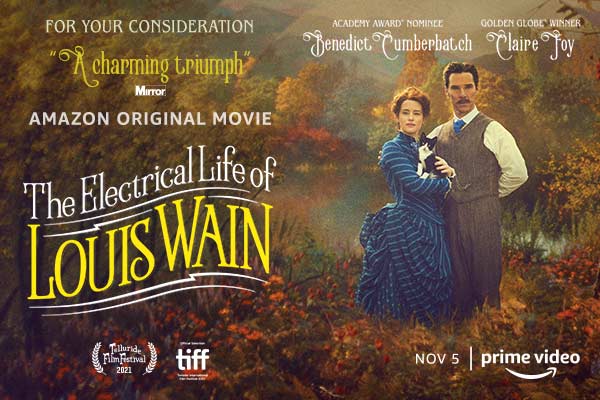
THE ELECTRICAL LIFE OF LOUIS WAIN is in theaters and streaming November 5th on Amazon Prime Video.
Quote of the Week “We have an amazing culture and we are incredibly profitable. We wouldn’t fit in.” –Jeremy Zimmer, the UTA C.E.O., firing back at Ari Emanuel’s recent comment that Endeavor “doesn’t need” to buy UTA, and taking a swipe at Endeavor’s $319 million loss last quarter.
An Early Frontrunner Has Emerged for the Academy’s Next C.E.O
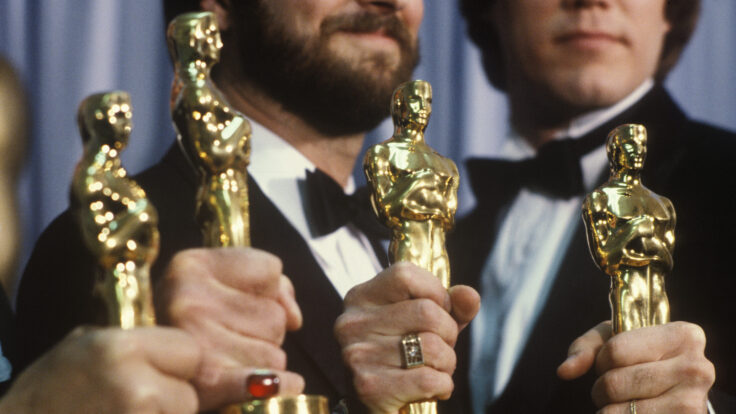
The Dawn Hudson haters were out in force this week after the motion picture Academy C.E.O. announced that she’ll step down when her contract ends in 2023. Hudson is one of the most controversial figures in town, thanks in part to the outsized role the Academy plays as Hollywood’s de facto town counsel and proprietor of the Oscars. I always equate the Academy to the public servants of Pawnee on Parks & Recreation… if Pawnee hosted the Super Bowl every year.
I happen to like Dawn personally, and I think she often takes the hits for industry-wide problems like inclusion and the generational divide among members, which can often lead to dumb decision-making (the “Popular” Oscar?), not to mention shouting matches at board of governors meetings. But it doesn’t help that her leadership style can seem scattershot and reactionary, or that she took over in 2011 for Bruce Davis, who held the job for 22 years, during which the Oscars became a cash cow.
Here’s a humble assessment of the Dawn Hudson era at the Academy:
The Good…
– Unprecedented leadership and action on diversifying an organization that was 94 percent white and 76 percent male when she joined. After Hudson became the unwitting face of #OscarsSoWhite, she added about 3,000 people to a group that now includes 9,362 members, bringing the female number to 33 percent and underrepresented minorities to 19 percent. Some see that as anti-meritocracy (how many Wayanses does the Academy need?), but it’s pretty clear something drastic needed to happen. A more representative, more global Oscars will be better positioned for the next 50 years.
– The Museum finally got built. Love it or loathe it, Hudson pushed the long-delayed project across the finish line. Yes, it cost too much (half a billion!), was plagued by multi-year delays and executive turnover, and its long-term financial health is still a big question. But she leveraged the industry’s fundraising muscle, hired and then brought back Bill Kramer as the museum’s leader, and can take credit for finally fulfilling a goal of the organization from its very beginning.
The Bad…
– Few C.E.O.s would keep their jobs if their core revenue generator tanked 75 percent during their tenure. Toilet-swirling ratings for the Oscars aren’t totally Hudson’s fault, of course, and any organization with an unwieldy 54-member board is going to struggle to make bold decisions, but she certainly didn’t do anything to help stem the audience declines. Imagine if Hudson had invested the kind of effort she put into the diversity campaign to plug holes in the Oscars’ sinking ship. “We have failed to move the Oscars into the modern age, despite decades of increased competition and declining ratings,“ former board member Bill Mechanic wrote in his 2018 resignation letter. He was right, and it’s only gotten worse since then.
Clearly, saving the Oscars must be the focus of the new C.E.O. And with Hudson’s 2020 compensation reaching $950,000, the Academy should be able to convince a strong candidate to take the job. Who? It’s early, and given the 2023 timetable, I’m sure all corners of the nonprofit world will be scoured. I don’t think the board will pick someone until after next summer’s election, when a new president will replace the termed-out David Rubin. But based on conversations with members, Academy insiders and longtime observers, Bill Kramer seems to be the leading (and some say only) internal candidate, the person who several key insiders hope gets the job.
As director of the Academy Museum, Kramer has been credited with what the board considers a successful opening, and for bringing stability after Kerry Brougher was pushed out after five years. An experienced fundraiser, he also counts strong relationships with influential Academy members like Ted Sarandos, Steven Spielberg and Bob Iger. He’s never dealt with the Oscars, which could be negative, but the early money is on him.
One other name I heard is Keri Putnam, which is intriguing. The longtime Sundance Institute C.E.O. left in March and would bring with her impeccable filmmaker relationships and nonprofit management experience. After Hudson, who came from Film Independent, some governors might be reluctant to turn the Academy over to another indie veteran, but Putnam knows how to navigate an arts organization with a lot of stakeholders used to getting what they want.
I’m told some governors also like Nancy Utley for the job. The former Searchlight Pictures chair exited in April and is currently serving a three-year term on the board. She’s got the best track record of winning best picture in recent years, so she at least knows the value of an Oscar, and what losing that currency would do for the Academy. It’s so rare for a non-profit to own an asset like that, can they save it from irrelevance?
ADVERTISEMENT 
My Reading List
Showbiz Legal Divorce Update: Who’s Joining the Ziffren Defectors
The conscious uncoupling of some of Hollywood’s biggest talent lawyers at the Ziffren Brittenham firm is continuing. I’m told the defecting group—led by Matt Johnson, P.J. Shapiro and Greg Slewett, as well as Tara Kole of Gang, Tyre, Ramer, Brown & Passman—has added a new group of attorneys: Ziffren’s Raymond Tambe, Patrick Ragen and Ryan Worrell; as well as Marjorie Williams, a senior business affairs exec at Amazon Studios; Samantha Wainaina of the Hansen Jacobson firm; and Tiffany Graddick of Lichter, Grossman, Nichols, Adler, Feldman & Clark. They join Ziffren’s Logan Clare and Wendy Kirk, who I predicted last month would join.
The new firm won’t launch until January, and it’s still an amicable split from Ziffren. But I’ve heard Johnson and his partners are talking to others about joining, so there could be more names added in the next few weeks.
The Feedback My Thursday breakdown of The Last Duel and the narrowing lane for movies in theaters led to a bunch of responses either defending or pillioring the film. My point was larger than the specifics of one project— that entire genres might have lost their path to viability on the big screen—but pegging the analysis to the flop of the year probably invited those emails. Some highlights:
“You can say The Last Duel shouldn’t have been made for theaters, but the fact is Disney doesn’t care about the Fox movies and is only releasing them due to contractual obligation. It’s obvious. You can see it in the muted marketing and press, in the terrible release dates (mid-October for a well-reviewed drama far better suited to the holidays?), and in how the homegrown Disney movies are given the prime slots (Fox’s [animated] Ron’s Gone Wrong was buried this weekend while Disney’s Encanto gets Thanksgiving.) It’s sad to see the Fox slate treated this way, and worse to see you encouraging Disney to make only billion-dollar films.”–an executive
“Or, you know, people were turned off by a movie that is about one of the lead characters raping the wife of the other lead character. If there is a movie that screams ‘streaming service,’ this was it.”–a TV personality
“One unappealing movie flop does not mean the end of adult dramas in theaters. This reductive thinking will stifle creative risk-taking.”–a music producer
“White film executives are enamored with the white movie stars that look and act like the white movie stars they grew up with, hence Emma Watts’ crazy belief that Matt Damon, Ben Affleck and Adam Driver would be enough to sell this $100 million movie. This is why we need a new generation of non-white executives to call bullshit on that outdated thinking.”–a manager
Have a great week, Matt
Got a question, comment, complaint, or an invite to your Squid Game-themed Halloween party? Email me at Matt@puck.news or call/text me at 310-804-3198.
FOUR STORIES WE'RE TALKING ABOUT 
The Monday morning question surrounding bombs like The Last Duel has shifted from What went wrong? to Why the hell was this movie in theaters in the first place? MATT BELLONI 
Members of the intelligence community are increasingly convinced that the Russian government is behind the "Havana Syndrome." JULIA IOFFE 
An internal Facebook plan reveals the machinations of a company determined to fend off Apple’s new privacy controls. ALEX KANTROWITZ 
The DWAC merger is full of red flags: peripatetic sponsor, nonexistent product, outrageous valuation. But a mysterious bulk order may be the most telling market signal of all. WILLIAM D. COHAN 
You received this message because you signed up to receive emails from Puck.
Was this email forwarded to you?
Sent to {{customer.email}}
Puck is published by Heat Media LLC.
For support, just reply to this e-mail. For brand partnerships, email ads@puck.news |


SHARE