 |
|
Welcome back to What I’m Hearing+, back in the U.S. for a few weeks before I resume my streaming industry worldwide tour. (I’ll be in New Zealand and potentially Australia; email me with your best food recommendations and if you’d like to set up coffee.)
In tonight’s edition, my conversation with Dan Robbins, V.P. of advertising marketing and partner solutions at Roku, who is at the center of two major issues facing the streaming industry—improving discovery across all streaming platforms and advertising on streaming content. But first…
|
| A Writers Strike Catch-22 |
|
| After a week on the picket lines, it unfortunately doesn’t seem like the Writers Guild is anywhere near a resolution with the studios. The strike presents a number of challenges and second order effects, as my colleague Matt Belloni and labor expert Jonathan Handel discussed on Sunday. But, of course, I’m particularly interested in which streamers are best prepared to weather an extended shutdown.
It’s a complicated question. Netflix is able to lean on new international content—specifically the sort of scripted TV and movies that Hollywood can’t produce right now—and it has the largest supply of unreleased titles. At the same time, if consumers behave how they did during the last writers strike, unscripted programming will see a massive uptick. And here is where things get interesting.
Netflix has the second highest supply of unscripted content in the U.S. relative to its streaming rivals. But the company also has the third lowest level of audience demand for these titles compared to competitors, according to Parrot Analytics, where I work as director of strategy. (Amazon, followed by HBO Max, have the lowest audience demand for unscripted titles.)
Not surprisingly, Discovery+ has both the highest demand and the highest supply of unscripted shows—Love It or List It, 90 Day Fiance, Dr. Pimple Popper, etcetera—which is Warner Bros. Discovery C.E.O. David Zaslav’s specialty. But the biggest winners in this category may actually be Peacock (which includes all of Bravo’s guilty pleasures) and Paramount+ (which has CBS’s Survivor and The Amazing Race, among many others), which come in at No. 2 and 3, respectively. Will audiences who fill up on unscripted shows on Discovery+ and Max eventually migrate to Peacock and Par+?
Another possibility, which may be more likely, is that audiences first turn to the streaming services they already have to catch up on the backlog of scripted originals they might have missed. In this scenario, Netflix is king, alongside Disney+ and Prime Video. Looking at originals alone—those highly marketed, exclusive projects that get talked about at Upfronts—HBO Max (meaning all of Max, not just HBO), Peacock, and Paramount+ have the lowest level of demand in the United States. Their demand slightly increases when looking at total catalog (like if someone wanted to catch up with House of the Dragon and also watch Young Sheldon). The top three aforementioned streamers, however, also benefit from being the services most consumers already subscribe to. The barrier to entry is much lower. |
 |
| Hollywood’s Coming “OS Wars” |
| The real battle for consumer attention isn’t between individual apps but rather the set-top device-makers that aggregate everything on your smart TV’s “home screen”—and that starts with Roku. |
|
|
|
| I often tell clients that streaming has an object permanence problem: If you can’t find something on your smart TV, does it really exist? No, it isn’t necessarily easier to find shows on cable, which has zillions of channels that nobody watches, impossible-to-understand remote controls, and horrifically designed interfaces. But if you’re bored enough, you can scroll through your favorite channels and understand what’s available in the moment.
Streaming, on the other hand, isn’t built for channel surfing. It’s an intent-dependent medium. You have to choose which app to open, then navigate to a specific tile or hub or category to find something to watch. Sure, streamers have gotten better at surfacing content, but there’s still dozens of apps to choose from, each with a vast oversupply of content, leading to decision paralysis and other discovery challenges.
That’s why you hear so much these days about the “OS wars,” which is a jargony way of saying that the real battle for consumer attention is less between individual apps than it is between the set-top device-makers that aggregate everything on your smart TV’s “home screen”: Roku, Amazon Fire TV, Apple TV (not to be confused with Apple TV+), Google TV, etcetera. Each has its strengths—Roku and Fire TV devices are the most popular globally, while Apple TV tend to be more popular among high income households—but many of the core goals are the same.
By controlling how people watch—subtly directing what they watch, and, most importantly, collecting data and a percentage of subscription and/or advertising fees—these devices and their respective operating systems are now the nucleus of the streaming experience. They have the potential to unify where the apps divide. They have also become platforms in their own right, advantaging their respective streamers (Amazon Prime Video or Apple TV+, for example) and their music services, while laying the groundwork for future offerings such as video games. These storefront mega platforms are, in many ways, the future of what it means to watch TV.
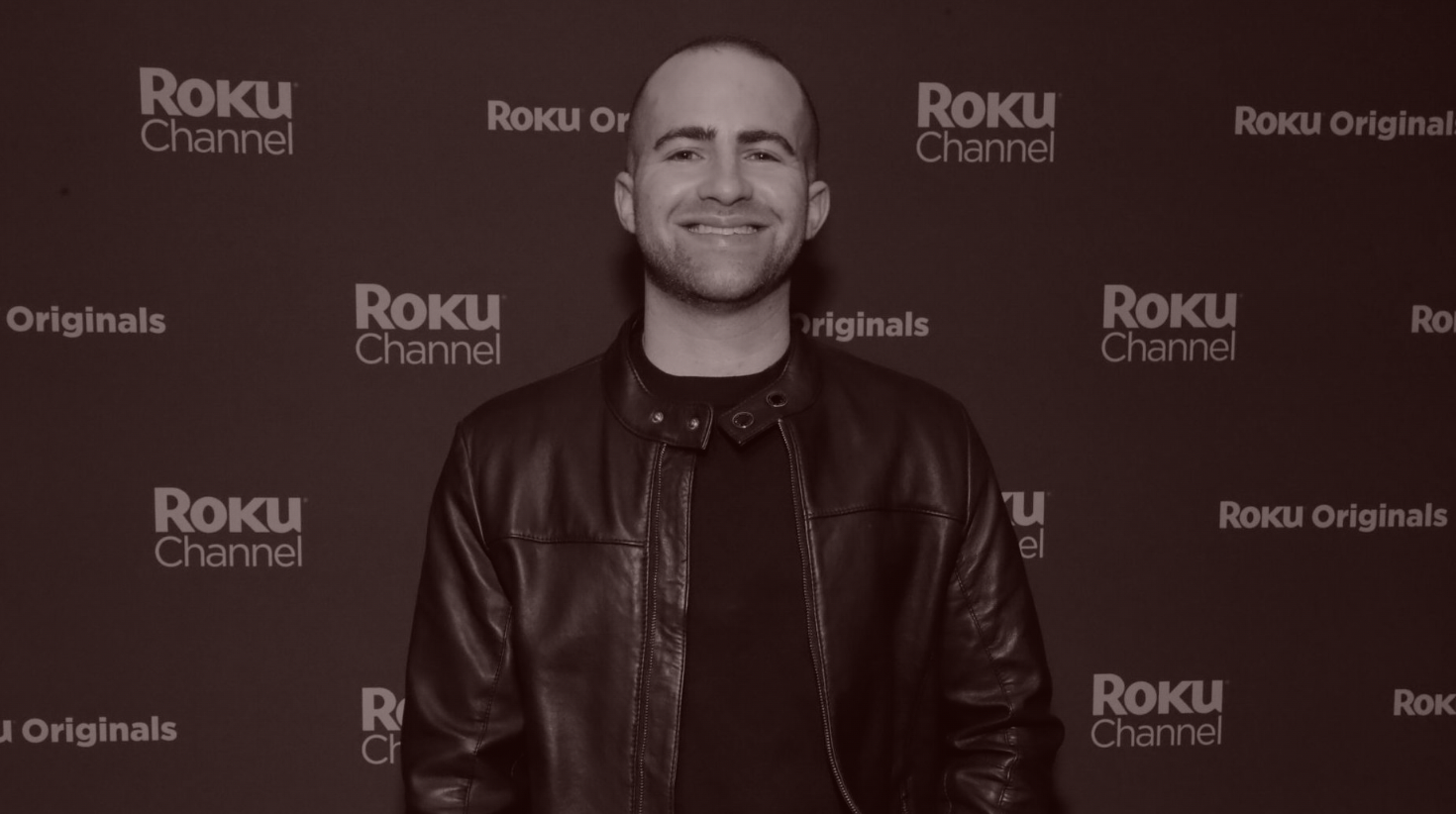
To further explore the idea of a unified hub, I spoke to Dan Robbins, the V.P. of advertising marketing and partner solutions at Roku. The company, which had a pandemic-era market cap of $66 billion, is now valued at just $8 billion and is frequently floated as an acquisition target for a larger platform looking to enhance its position in the “OS wars.” Roku, after all, delivers actual streaming content to 71.6 million active accounts.
Dan is one of the go-to connectors for advertisers and streaming companies trying to reach these households at a time when consumption habits are changing, churn is becoming a bigger issue, and free ad-supported television (FAST) is becoming a bigger player than expected. Below we discuss the decline of linear TV, the role of aggregators and algorithms, the “discovery” paradox, and how Roku views the evolution of the streaming landscape. |
| The Personalization Thing |
|
| Julia Alexander: Let’s start with my favorite question to ask executives: What do you think is the most interesting and under-reported topic when it comes to streaming?
Dan Robbins: There’s real interest in how the launch of different streaming services and different streaming tiers lined up, but the reality is that the streamer’s journey starts well before somebody chooses what to watch. And it goes on well after. That’s really interesting for our industry because TV used to just be about the shows and the channels, but now it is an interactive experience.
Julia: People often ask me, How come Netflix hasn’t created a global sitcom? Comedies, which rely on particular cultural references, tend to be regional, of course, but my other theory is that it’s simply harder to attract audiences to comedies on streaming, where, unlike with linear television, you have to actively choose to watch a new program. On cable, I might start off watching an NFL game and then get swept into the pilot for a new sitcom, simply because I left the channel on. Or maybe I flipped during a commercial break. My engagement session is longer, but more out of inertia than intention.
With streaming, everything is intent—intent to open the app, intent to watch something, and if I choose to stick around and watch something else, I’m intentionally browsing and clicking play. There’s no such thing as an accidental lead-in. Do you think that that is a problem? And is it something that Roku or Google TV can solve?
Dan: This is even bigger than streaming; it’s actually across all media. Look at where we are right now. Cable subscriptions are down from 90 percent about a decade ago to just about 50 percent today. What you’re seeing is the effect of more personalization and choice across media. It’s a big opportunity, in that it’s really now about a streamer’s journey, as opposed to just one show or one network. At Roku, one thing that we’ve spent a lot of time on is improving discoverability.
We know, for example, that consumers are spending more time searching for what to watch than they ever have been. We’ve launched a free feature that allows you to pull together some of the best free content across all of streaming. We’ve also launched things like our sports zone, which allows a consumer to follow multiple sports in one hub because it can be difficult to figure out where games are actually occurring in real time. In Q4, streaming hours that originated from these homescreen experiences doubled year over year.
Julia: What you described sounds very much like cable. If you want sports, you go to the sports channel cluster. News is generally all in one section. Interestingly, the issue of having to pay for add-on services—if you want to watch a game on cable that isn’t included in your package, you still get an annoying pop-up message—hasn’t gone away with the shift to streaming. What do you see as the main advantage that Roku has here, compared to cable, outside of the technology factor? Is it purely the algorithmic recommendation engine?
Dan: What I think is fundamentally different and more exciting is that there is a conversation taking place between the consumer and the experience that didn’t exist before. What I mean by that is the opportunity to walk into television and have it be more like a grocery store, where the shelves rearrange themselves for you. Important stuff comes to the front, and the things you’re not interested in go to the back.
There’s also the ability to improve the actual discovery process. When HBO launched House of the Dragon, we worked with them to create a whole hub that included the easy ability to catch up on Game of Thrones, a rundown that gave you everything that you needed to know about what was coming in the new season, an interactive feature to get a sense of the characters and the lay of the land, and a literal takeover of the home experience that can be personalized in a way that hadn’t existed before. |
|
|
| Julia: Another aspect of Roku’s business that’s been brought to the front is the Roku Channel. You guys bought the Quibi library. I know that you are not going to give me numbers, but I would love to know how those have performed.
Dan: Roku originals have been really successful for us. I would just correct the record and say that it’s not just the Quibi content anymore. We have since really expanded our own original Spanish language channels, home entertainment, DIY, and we’re starting to see real success and interest there—most recently with Weird, the Weird Al Yankovic biopic, starring Daniel Radcliffe. What we’re most excited about with Roku originals is the way that they can complement what’s out there. And that’s what has always been exciting about television: the diversity and the choice that exists within storytelling, and that consumers and households generally are looking for a lot of different things. And so our focus has been to really find those pockets where we can deliver something unique and valuable.
Julia: Are you seeing quarter-to-quarter engagement increase? And is it people seeking out that content, or is it people kind of meandering through the Roku Channel after they’ve watched Succession?
Dan: The short answer is that the Roku Channel serves a variety of different needs. That’s why its integration with our platform has been particularly successful. Most recently T-Vision put out some research that the Roku Channel was a first stop for streaming sessions—above Netflix, Hulu, and other services. Which is to say that when you look at somebody’s first session, they’re coming to the Roku Channel to start their streaming experience more often than some of those larger services. That’s what’s exciting about the integration of the content and the platform and the advertising that all comes together to make that happen.
Julia: What we’re talking about here is free ad-supported TV, or FAST. I was talking to somebody relatively senior at a company that has a FAST platform, and they told me, FAST is a bubble, we’re just waiting it out.
You operate a big FAST platform. What do you think are some of the challenges to growing that market? We know, for instance, that one of the big audiences clinging to cable is sports fans. People watching live sports on FAST—they’re not watching NFL games. They’re not watching Monday Night Football on a FAST channel. The ESPN viewers, if they’re going to go anywhere, it’ll likely be ESPN+. What might be the challenges with getting even more adoption to FAST over the next 24 to 36 months?
Dan: To the first part of your question: Ad-supported streaming is growing faster than our overall platform. That’s a testament to the fact that there is a real future for ad-supported streaming in a world where all TV is streamed, and that certainly applies to free ad-supported streaming. The second thing is that it’s still early days. Television has been here for decades, and ad-supported streaming still has a healthy and exciting road ahead of it. More than anything, it’s an opportunity for our entire industry to continue to experiment and explore and push it forward.
Julia: Advertising, which Roku has pursued since the beginning, is now a bigger story among all the big platforms. Why do you think it took so long?
Dan: I can’t speak to any specific streaming network or company and their strategy. For a time, there was a thought that all streaming would be subscription based. When you look at the long arc of television, it has always been a dual revenue experience. There have always been subscriptions in some capacity, and there’s always been ads in some capacity. What I also think is sometimes lost in the discourse, or maybe underappreciated, is the way that advertising has shaped the medium of television, from the soap operas decades ago to the way that advertisers are now sponsoring shows within streaming.
The thing that I think we’re all collectively coming toward is that, over time, the ability to service the entire market in different ways is really that streamer’s journey from beginning to end. And it doesn’t just start with one specific business model; it’s about building a platform that’s truly built for streaming in all its forms. |
|
|
|
| FOUR STORIES WE’RE TALKING ABOUT |
 |
|
 |
| Aron vs. the Apes |
| Can Adam Aron settle litigation with AMC’s meme stock investor army? |
| ERIQ GARDNER |
|
 |
|
 |
|
|
|
|
|
 |
|
|
|
Need help? Review our FAQs
page or contact
us for assistance. For brand partnerships, email ads@puck.news.
|
|
|
|
Puck is published by Heat Media LLC. 227 W 17th St New York, NY 10011.
|
|
|
|