 |
|
Happy Monday, I’m Eriq Gardner.
|
|
Welcome back to The Rainmaker, a private email about money, power, fame, and the legal arena where they all collide.
In today’s edition, a close look at the mounting legal questions surrounding the new sports streaming service from Disney, Fox, and Warner Bros. Discovery. Naturally, the Department of Justice has questions about this joint venture, and FuboTV has already filed an antitrust lawsuit. It’s time to assess what’s really happening.
Plus, a surreal courtroom battle over a luxury yacht—and why the outcome could mean hundreds of millions of dollars for Ukraine in the war against Russia.
(Want to read the Rainmaker archives? Click here. Getting this email forwarded? Earn some good karma and subscribe here, or reach out to our email concierge, Fritz@puck.news, for information on corporate and group rates.)
But first…
- Will Netflix settle?: As I first reported back in September, Netflix is facing a pretty extraordinary defamation trial over Ava DuVernay’s When They See Us, a 2019 docudrama that inaccurately depicts the plaintiff, Linda Fairstein, as the chief prosecutor in the notorious Central Park Five case. Fairstein, played by actress Felicity Huffman, is also portrayed as obsessively biased against the Black and Latino teens.
Now, thanks to a pretrial statement last week, we know how much Fairstein is seeking: up to $8 million for reputational harm, plus an extra $1.4 million for being dropped by her book publisher after the Netflix series was released. Notably, the estimates don’t encompass the possibility of punitive damages, a matter that remains fiercely contested ahead of the June 10 trial.
Netflix, which replaced its original legal team with Bart Williams at Proskauer Rose, and Fairstein, represented by Andrew Miltenberg, are also warring over a host of other contentious issues. Among them: whether Netflix’s profits and insurance situation will be open for discussion, whether famed book author Nelson DeMille will be called to the witness stand to testify about why the Mystery Writers of America rescinded an award to Fairstein, and even whether the full, four-part miniseries will be screened for the jury right before opening statements. The trial figures to last three to five weeks.
- A.I. irony alert: Attorney Joseph Saveri, who is currently leading high-stakes copyright lawsuits on the West Coast against OpenAI on behalf of clients like Sarah Silverman and Ta-Nehisi Coates, made a surprise appearance in New York on February 12 to protest similar cases being brought by The New York Times, George R.R. Martin, the Authors Guild, and others. His objection? That these rival actions bear a striking resemblance to his own proposed class action—and should take a back seat, since he filed his paperwork first.
This sort of jockeying among class-action lawyers isn’t all that unusual, but Saveri’s timing is noteworthy: Last month, OpenAI quietly struck a deal with authors litigating in New York, and the Sam Altman-led company agreed not to file a motion to dismiss (as it did in California with some success) and instead dive straight into discovery. In exchange, the authors committed to promptly make their case for whether training A.I. on copyrighted materials qualifies as fair use. This pivotal discussion will unfold during a summary judgment briefing, scheduled for early 2025.
Essentially, the East Coast litigants have agreed to skip ahead and confront the core issue head-on; for OpenAI, it’s an opportunity to dispel the primary legal uncertainty hovering over its operations. Saveri, meanwhile, fears being left behind.
|
| Russian Yacht Custody Battles |
|
| On April 12, 2022, Fijians witnessed a bizarre scene when a mysterious 350-foot superyacht pulled into a local dock and was boarded by authorities, who began interrogating the crew. The Amadea, which had been scheduled to depart to the Philippines and onward to Russia, was instead seized and transported to San Diego, where it’s now the epicenter of an extraordinary U.S. forfeiture action.
The feds contend that the Amadea belongs to Suleiman Kerimov, a Russian oligarch who landed on an American sanctions list in 2018 amid escalating tensions over Russia’s annexation of Crimea. But the yacht has also been claimed by another, non-sanctioned Russian—oil baron Eduard Khudainatov—sparking a heated battle in a New York federal courthouse over its true ownership.
Tensions have escalated of late as the Department of Justice looks to expedite the sale of the Amadea, citing exorbitant monthly maintenance costs estimated around $600,000. In light of this bid, more details about the intricate web of Russian ownership structures have come to light. Khudainatov, according to an amended complaint filed on February 16, is listed as the owner of eight yachts, including the Scheherazade, a $700 million luxury vessel rumored to have ties to Vladimir Putin himself. But the D.O.J. contends this doesn’t pass the smell test. As an F.B.I. agent told a Fiji court before the Amadea was shipped to San Diego, Khudainatov may be wealthy, but he has never been on the Forbes billionaires list, and the fact that this “second-tier oligarch (at best)” claims to own multiple vessels suggests he’s “being used as a clean, unsanctioned straw owner to conceal the true beneficial owners of these vessels.”
Mounting evidence suggests the true owner of the boat is indeed Kerimov, based on records retrieved from the vessel’s computers while it was still parked in Fiji: itineraries, guest manifests, emails, pictures of passports, vaccination records, and even code names that crew members allegedly had for Kerimov and his family. In February 2022, according to the F.B.I. agent who worked on the case, right around Putin’s invasion of Ukraine, the automated system that transmits the ship’s location was turned off. Suspicious, obviously.
Undeterred, Khudainatov’s legal team is pressing on, with his attorney Adam Ford vigorously defending his client’s claim to ownership. He maintains, for instance, that certain members of the Amadea crew have identified Khudainatov as the true owner. On Friday, Ford opposed a quick sale of the yacht, arguing that would be premature and unprecedented. A judge will decide soon.
The prospect of a lucrative auction for the Amadea looms large, with estimated proceeds of at least $300 million potentially being earmarked for Ukraine by the Biden administration, which could theoretically steer the money to fight Russia without congressional approval. Stay tuned. In the meantime, here’s a picture of the Amadea, courtesy of the government’s latest court filing, if you’re in the market for a new boat. |
|
|
| Speaking of ownership structures… |
|
|
| When Disney, Fox, and Warner Bros. Discovery unveiled a joint plan to create a “Hulu for sports” streaming bundle, not everyone applauded. Just as I predicted a couple of weeks ago, the Justice Department wasted no time launching an investigation, followed by FuboTV’s antitrust lawsuit on February 20. Is “Spulu” already skating on thin ice?
The most pressing questions, naturally, revolve around the FuboTV case. The rival streamer aspires to be the go-to option for sports fans cutting the cord and understandably sees this joint venture as a grave threat to its future. FuboTV has long dreamed of offering a skinny bundle of sports channels at an affordable price—only to be force-fed non-sports content by media giants, wielding their leverage over coveted channels like ESPN and TNT. As a result, FuboTV finds itself bloated, with a pricing structure that lacks competitiveness in the current market landscape.
Seeking to shed some weight, FuboTV has turned to antitrust laws as its Ozempic. Can the Sherman Act, the Clayton Act, and the Donnelly Act whip this streamer into shape? I see no reason why not. After all, around a decade ago, Cablevision took on Viacom for bundling “must-have” networks with less popular ones—a battle that settled after Cablevision successfully rebuffed a dismissal motion. Those lesser-watched channels, like MTV Hits and VH1 Classics, subsequently faded into obscurity.
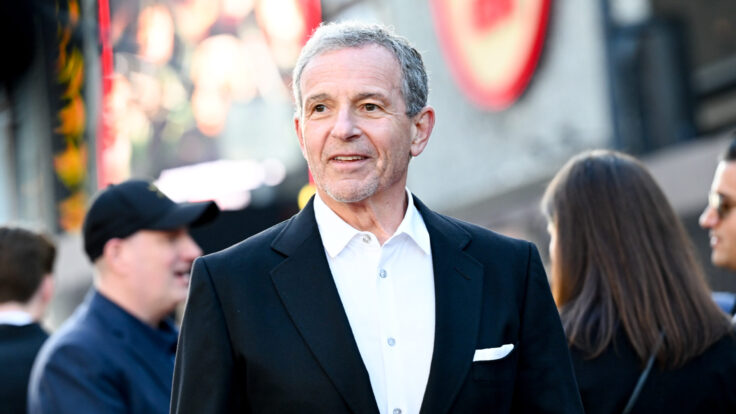
Disney, Fox, and WBD may face similar scrutiny, as well as allegations they are freezing price competition through the use of “most favored nation” contractual clauses. But that might have been the case even without the introduction of a new sports streamer. True, it seems unseemly that these giants intend to ditch unwanted channels for their own service—or, as Bob Iger put it, offer sports at a “price point that will be obviously more attractive than the big fat bundle.” However, that’s not what makes this lawsuit intriguing.
What really grabbed my attention is FuboTV’s assertion that the joint venture will substantially increase the incentive for these big media conglomerates to hike prices and withhold critical sports channels in licensing negotiations. Additionally, there’s the suggestion that the joint venture will facilitate collusion among Disney, Fox, and WBD.
But how, exactly? This is where the complaint gets fuzzy, which is unsurprising given our limited knowledge about Spulu’s operational details. Perhaps we’ll see sharper arguments presented on this front soon (until then, I wouldn’t count on FuboTV achieving an injunction to stop Spulu from launching). For now, this signals where the Justice Department will look to address its own concerns. |
|
|
| The D.O.J. has stepped in before. Fifteen years ago, when online video was just getting off the ground, there was palpable fear that media giants would use their vast content libraries to muscle out competition in the online realm and seize control of digital pipelines. The government moved swiftly to address the situation. Take Comcast’s acquisition of NBCUniversal in 2011: That deal came with more strings attached than a marionette convention, including a condition that required the new owner of networks like Bravo, USA, and E! to license programming to online rivals.
A few years later, AT&T bought Time Warner, and this time the Department of Justice took an even more aggressive approach. Instead of negotiating conditions, they aimed to block the deal outright. While the political backdrop is often mentioned—Trump’s presidency and AT&T’s ownership of CNN, in particular—the crux of the government’s case centered on AT&T’s incentive to advantage its own distribution platform, DirecTV, potentially by threatening to withhold Turner networks from rival distributors. Such friction in negotiations, it was theorized, would lead to blackouts and ultimately higher prices. However, a federal judge didn’t buy this theory, citing insufficient evidence that AT&T would willingly sacrifice profits by encouraging prolonged blackouts. The government lost the case.
But would Disney, Fox, and WBD ever withhold ESPN, TNT, and Fox Sports 1 to favor Spulu? You can bet that some government economist will soon be crunching the numbers to assess the possibility of market foreclosure. While the Department of Justice came up short in the AT&T-Time Warner case, Biden’s antitrust regulators are known for their assertiveness, and a rematch on vertical integration in the content space would surely pique their interest.
Now, Spulu might not be a merger, per se, but as coordination among rivals, it raises eyebrows. To highlight just one of the many concerns the government has previously emphasized, how will these frenemies share sensitive information without crossing the line into collusion? If Disney, Fox, and Warner Bros typically bid against each other for rights to telecast games or for the hiring of talent, what sorts of protocols will be in place to ensure such competition is preserved, and nobody’s peeking where they shouldn’t? Naturally, the D.O.J. will be sniffing around like a bloodhound, you can count on that.
Some might say Hulu set a precedent for media giants playing nice in the streaming sandbox. But let’s not forget that when Hulu burst onto the scene, online video wasn’t exactly center stage. The government was nevertheless watching. (Another condition of the Comcast-NBCU deal was that the company ceded management rights in Hulu.) And now, with live sports reigning supreme in the realm of broadcast, cable, and satellite television, Spulu could be a real game-changer. Regulators will undoubtedly want to referee. |
|
|
| That’s it for this week. Reply with comments, tips, or invitations to your superyacht. |
|
|
|
| FOUR STORIES WE’RE TALKING ABOUT |
 |
|
 |
|
 |
|
 |
| Ackman’s Rebuttal |
| On Bill Ackman’s latest public soliloquy and ongoing B.I. offensive. |
| WILLIAM D. COHAN |
|
|
|
|
|
 |
|
|
|
Need help? Review our FAQs
page or contact
us for assistance. For brand partnerships, email ads@puck.news.
|
|
You received this email because you signed up to receive emails from Puck, or as part of your Puck account associated with . To stop receiving this newsletter and/or manage all your email preferences, click here.
|
|
Puck is published by Heat Media LLC. 227 W 17th St New York, NY 10011.
|
|
|
|