 |
|
Happy Monday, I’m Eriq Gardner.
|
|
Welcome back to The Rainmaker, a private email about money, power, fame, and the legal arena where they all collide.
In today’s edition, the strange legal saga of how Elon Musk’s $55 billion compensation clawback could threaten Jeff Bezos’s space fantasy. Plus, updates on Vince McMahon’s legal travails, more Trump SPAC fallout, Elon’s Altman suit, and a close look at Sam Bankman-Fried’s bid to avoid spending the rest of his life behind bars.
Getting this email forwarded? Click here to subscribe.
But first…
|
| Was Christian Horner Really Cleared? |
|
| If you’re among the millions who binge-watched the latest season of Drive to Survive, Netflix’s cinéma vérité about Formula 1 racing, you’re probably aware that the sport’s biggest drama is currently occurring off the track: Specifically, the bewildering, murky scandal swirling around Christian Horner, the principal of F1 powerhouse team Red Bull Racing.
In short, Horner, who is married to former Spice Girl Geri Halliwell, stands accused of sending “sexually coercive” messages to a female colleague. Details remain frustratingly scarce (Red Bull has treated the matter with supreme secrecy), but we know that in early February, after a German newspaper reported about the workplace drama (the story has now mysteriously vanished), Red Bull hastily announced an “independent investigation” to be carried out by an external lawyer. As the F1 season was revving up, and sponsors were hoping for a quick resolution, Red Bull abruptly declared the investigation “complete” and the grievance “dismissed.”
Several media outlets proclaimed Horner “cleared” and “exonerated of any wrongdoing,” despite the lack of clarity surrounding who conducted the investigation, and what conclusion was reached. The team’s statement also included the perplexing line that “The complainant has a right to appeal.” So was Horner really cleared?
Of course, some key questions remain unanswered. To wit: Was the outside lawyer truly independent? (I find it unlikely; I don’t think Red Bull would be willing to risk such exposure.) And is it possible that this was the speediest arbitration in history? It’s anyone’s guess, although a deluge of Horner’s messages were leaked after the conclusion was reached, suggesting that not everyone shared Red Bull’s confidence in the investigation’s rigor and impartiality. But what struck me most was the masterful evasion by Red Bull and Horner when faced with the most basic inquiries. Even Horner’s denials (“I have always denied the allegations”) seem carefully worded to sidestep any potential legal entanglements. Now, there’s talk of F1’s governing body stepping in to demand transparency. More to come on this… |
|
|
| The next chapter in the seemingly endless Sam Bankman-Fried legal saga is the matter of his sentencing, now that the disgraced crypto wunderkind has been soundly convicted of fraud. This week, his legal cavalry, led by Trumpworld lawyer Marc Mukasey (a former federal prosecutor and onetime partner of Rudy Giuliani), boldly proposed a mere six-year stint behind bars in his sentencing memorandum. Mukasey’s appeal centers on the anticipated full reimbursement of FTX customer funds, based largely on S.B.F.’s seemingly prescient investment in the company Anthropic A.I. But as I discussed on the Powers That Be podcast, there’s more to this gambit than an effort to recast Bankman-Fried in a sympathetic light—it’s a math game, one that might eventually play out at the Supreme Court.
The intricacies of federal sentencing guidelines play a crucial role here. Bankman-Fried faces a baseline sentence of six years, with Judge Lewis Kaplan weighing recommended enhancements running the gamut from the sophistication of the crime to whether there was obstruction of justice, such as S.B.F. lying on the witness stand. But the biggest potential multiplier surrounds victim losses, initially estimated to be a staggering $10 billion. That astronomical sum could balloon his prison term by a gut-wrenching three decades, which is why S.B.F. and his lawyers are now pointing to a rebound in FTX’s crypto assets, plus a savvy investment in Anthropic A.I., that could be used for reimbursements.
Of course, there’s a plot twist. This argument is made possible by a seismic legal development two years back, wherein the 3rd U.S. Circuit Court of Appeals (encompassing New Jersey, Pennsylvania, and Delaware) decided to flip the longstanding precedent that sentencing guidelines should factor in intended, not just actual, financial harm. According to their new ruling, only losses actually suffered should influence sentencing enhancements. (Cue the flurry of white-collar criminals angling for leniency.) Given the apparent circuit split, and allure of weighing in on administrative overreach (the direction to count intended losses stems not by statute, but from the U.S. Sentencing Commission), it’s only a matter of time before SCOTUS steps in to settle the matter.
And therein lies the real drama of Mukasey’s sentencing memorandum. Even if the six-year bid doesn’t sway Kaplan himself, its real purpose is likely to set the appellate stage—where Bankman-Fried will argue he was denied a fair trial when Kaplan prevented him from presenting his honest intentions with FTX. As a fallback, he’ll attempt to convince the higher-ups to take a “textualist” approach to criminal sentencing. |
|
|
- Musk v. Altman: On Friday, Elon Musk sued Sam Altman, alleging that OpenAI breached an agreement among the startup’s founders (which include Musk) by putting profit before mission when the company jumped into bed with Microsoft. The case is being handled by intellectual property heavyweight Morgan Chu, who argues in the complaint that allowing a nonprofit to move intellectual property into a for-profit structure would “radically redefine how venture capitalism is practiced in California.”
A few observations as this battle kicks off: This case could very well reveal the truth behind the dramatic events of last November, when Altman thwarted a boardroom coup and regained control of OpenAI; Musk will likely find it challenging to demonstrate that past communications between him and Altman constitute a legally binding contract; and finally, nonprofit malfeasance is a murky legal area, which means this dispute might draw the California A.G.’s attention.
- $288,888 per hour: Perhaps the only thing more eye-popping than Delaware Chancellor Kathaleen McCormick’s decision to vaporize Musk’s $55 billion pay package is what the plaintiff lawyers are now requesting as their bounty. The attorneys at Bernstein Litowitz, Andrews & Springer, and Friedman Oster are hoping to receive 11 percent of the 266 million shares clawed back—which equates to nearly 6 billion dollars, or about $288,888 per hour for legal work. “We recognize that the requested fee is unprecedented in terms of absolute size,” wrote the attorneys, attempting to justify the stock-based fee as a tax-deductible reward. Can’t blame them for trying!
- A Trump liquidity holdup: Over the past week, Donald Trump’s lawyers have been locked in a frantic legal battle, countenancing the mountain of debt arising from two civil judgments in New York. As my colleague Bill Cohan has noted, Trump’s stake in Truth Social—which is poised to go public through a SPAC merger, making his stake potentially worth billions, an admittedly absurd sum for a social media platform that few are using—might be his best asset to pledge as collateral while seeking appellate review.
However, a fresh legal saga has erupted. Former Apprentice candidates Andy Litinsky and Wes Moss, who say Trump Media is their brainchild, have filed a Chancery complaint. They allege that the board’s ratification of a billion new shares has meaningfully diluted their own stake, a violation of their services agreement. What makes this situation urgent is not only an impending shareholder vote on the merger, which is scheduled for March 22, but also by the revelation that Trump has reached an agreement with Digital World Acquisition Corp., the SPAC, which permits him to transfer his stock post-merger to his family, a trust, or other affiliates.
This arrangement sets the stage for an imminent liquidity event for the financially embattled former president. Attorneys for Litinsky and Moss say this is “particularly alarming given the over $500 million in civil judgments Trump owes judgment creditors” and may “explain his last-minute stock grab.” This afternoon, a Delaware vice chancellor granted a motion to expedite and gave Trump until Wednesday to respond. A hearing is slated for this weekend.
|
|
|
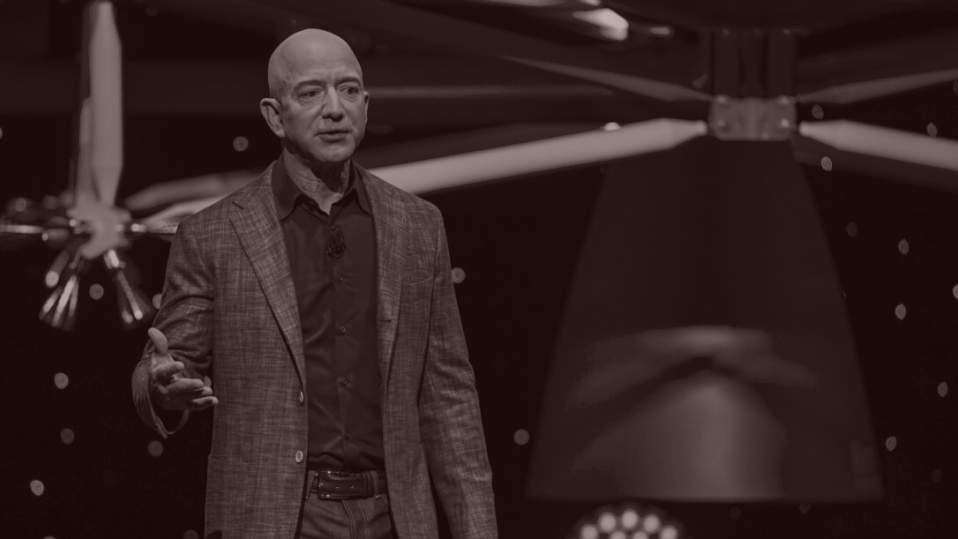
| Is there a bigger loser in the history of the chancery court than Elon Musk, who was recently ordered to relinquish $55 billion in compensation after a judge struck down his Tesla pay package? The jury is still out, especially if Musk files an appeal. In the meantime, however, Tornetta v. Musk has already produced a surprising legal aftershock: Shareholder lawyers are seeking to leverage that landmark decision to go after Jeff Bezos. And in a cosmic twist, it’s Musk who most stands to benefit.
Bezos, of course, isn’t just the chairman of Amazon. He’s also Musk’s leading competitor in the commercial spaceflight industry via Blue Origin, which boasts more than 11,000 employees and has sent more than a dozen payloads into orbit. However, Blue Origin has always played second fiddle to Musk’s SpaceX in terms of launches, government contracts, and hype. Over the years, Musk has seemingly relished his upper hand, taunting Bezos with his successes in the billionaire space race.
Inside Amazon, however, it’s SpaceX that’s being treated like a second-tier competitor. Back in 2019, Amazon announced “Project Kuiper,” a high-speed, satellite-based internet service that would require sending hundreds of payloads into orbit. Perhaps unsurprisingly, Bezos’s Blue Origin secured the contract; more worryingly, from a fiduciary perspective, SpaceX was allegedly never invited to bid on the project.
Sure, there could be a justifiable reason for that. Kuiper will compete with Starlink, Musk’s own satellite-based internet service. But lawyers at Grant & Eisenhofer, representing a Cleveland pension fund, are crying foul. In August, the firm accused Amazon of essentially prioritizing Bezos’s ego—and his feud with Musk—over the best interest of shareholders, who might have seen lower costs from a deal with SpaceX. Musk himself, they note, has stated that SpaceX’s launch services are available to Starlink’s competitors. Instead, according to the complaint, the Amazon board’s audit committee held two brief meetings about the matter and “rubber-stamped” the multibillion-dollar contract with Blue Origin.
Amazon’s rebuttal is being handled by Wachtell’s William Savitt (yes, the same legal luminary who faced off against Musk in the Twitter saga), which has made a case for the integrity of its board. Watchell attempted to wave away any whiff of fiduciary oversight gone awry, arguing that while directors “can always do more,” bad faith claims should be reserved for “disciplining directors who deliberately do essentially nothing.”
But in the wake of Tornetta, the shareholder lawyers have seized an opening. On February 16, they revised their complaint to underscore Bezos’s status as a “superstar,” like Musk, who is “so familiar to the world that no first name is required,” shrugging off how Bezos relinquished the C.E.O. role to Andy Jassy and now owns just 12 percent of Amazon’s stock. They asserted that Amazon’s board remains under Bezos’s spell, describing it as having “succumbed to a controlled mindset.”
Whether this strategy succeeds remains uncertain, but it could lead to an investigation of Bezos’s influence over his board, and whether additional measures beyond Bezos’s recusal were necessary to ensure the fairness of the Amazon-Blue Origin deal. Ironically, this might be the one occasion where Bezos finds himself rooting for Musk’s success in the courtroom: If Tornetta is upheld, it could establish a tougher governance standard. |
| The Vegas Fight of the Decade |
|
| Speaking of superstars and the Delaware corporate wetland, the WWE is still grappling with allegations surrounding its former ringmaster, Vince McMahon. The spotlight, of course, remains on the sex-trafficking lawsuit filed in late January by employee Janel Grant—but several Chancery lawsuits are zeroing in on McMahon’s role in the 2023 merger between WWE and Endeavor’s UFC. Numerous shareholder law firms, through redacted complaints, are suggesting the WWE turned a blind eye to superior sales offers in order to keep him at the helm after he returned from sexual misconduct exile. The news that Netflix is striking a $5 billion deal for a decade of the WWE’s flagship show, Raw, only adds weight to suspicions of WWE undervaluation for McMahon’s sake.
TKO Group Holdings—the new company that controls WWE and UFC—outlined its legal position in an S.E.C. filing this past week. And while the above situation is undeniably fascinating, an even more pressing predicament is unfolding on the other side of the company. Next month, a trial is set to kick off in Las Vegas after nine years of legal wrangling. This class action concerns fighter compensation following a series of UFC acquisitions, and carries a damages target of $1.6 billion. It could also have an impact on future M&A in consolidated industries.
The fighters, who are represented by 19 lawyers led by Joseph Saveri (Rainmaker readers will recognize him from his side hustle spearheading lawsuits on behalf of artists against A.I. companies), contend that the UFC locked up monopsony power over talent by acquiring and shutting down rivals like the World Fighter Alliance, World Extreme Cagefighting, Pride, and Strikeforce. This left fighters with little choice but to take their talents to the UFC, which ostensibly used its newfound power to coerce them into long-term contracts. The plaintiffs argue that fighters should be making much more, with comparisons being drawn to athletes in MLB, NFL, NBA, and boxing. They want a jury to return a verdict that encompasses deprived compensation.
The UFC has responded through its lawyers at Latham & Watkins and Paul Weiss, arguing fighters writ large have benefited from the risk-taking organization that once teetered on the edge of bankruptcy, and has erupted in popularity to become one of the world’s premier combat leagues. They paint the plaintiffs as disgruntled athletes who, despite losing the majority of their fights, were nevertheless paid exactly as promised. They hope to call other UFC fighters to the witness stand to testify about exploding opportunities and increased pay in the sport. They also deny the charge of being a monopsonist by pointing to competitors such as Bellator and PFL.
Remarkably, this is the first of two possible trials on this front. While this one concerns the time period between December 2010 and June 2017, another looming showdown engages with what fighters have been paid in more recent years—and also drags Endeavor into the melee. That other case is still in the early stages, and will undoubtedly be impacted by the outcome of next month’s trial. |
|
|
- Clancy’s reprisal: Surprisingly, the aforementioned Musk-Altman showdown is only the second peculiar founder story I’ve come across this week. It turns out that a new company is being stood up to license the literary works of the late Tom Clancy. This venture arises following a labyrinthine rights dispute between the author’s first wife and widow—an ordeal of a case, to say the least. Fortunately, the parties have come to a settlement, and recently informed a Maryland judge that they are appointing a president to lead a new licensing company. Good news for those waiting for more Jack Ryan movies.
- Brin’s Fijian debacle: Google’s top legal eagles have been roped into a strange and tragic case concerning an airplane pilot who perished in a crash of Google co-founder Sergey Brin’s private jet in the Pacific Ocean. The widow of the deceased pilot contends that Brin, being one of the wealthiest individuals on the planet, could easily have arranged for the recovery of the aircraft, and the remains of those onboard. According to the complaint, Brin allegedly chose to hang in Fiji instead of addressing the issue. The filing includes images of idyllic island scenery, Brin and Musk reveling, and tragically, the widow holding a photo of herself embracing her late husband.
- Horsing around with the First Amendment: A recent ruling from the 9th Circuit regarding a racehorse named Malpractice Meuser feels bound for the annals of First Amendment showdown history. It appears there’s a Kentucky lawyer by the name of Michael Meuser, who specializes in equine law, and may or may not have raised objections… In any case, the California Horse Racing Board refused to register “Malpractice Meuser,” prompting legal action from the horse’s owner, who argued that the refusal violated the First Amendment. On February 26, the appeals court decided the horse owner may indeed proceed with his claim.
|
| That’s it for this week. Reply with comments and tips. And if you don’t like what you read, feel free to name a horse after me. |
|
|
|
| FOUR STORIES WE’RE TALKING ABOUT |
 |
| Zaz’s Bonus Math |
| A readout on the freshest Downtown Cip table chatter. |
| WILLIAM D. COHAN |
|
 |
|
 |
|
 |
|
|
|
|
|
 |
|
|
|
Need help? Review our FAQs
page or contact
us for assistance. For brand partnerships, email ads@puck.news.
|
|
You received this email because you signed up to receive emails from Puck, or as part of your Puck account associated with . To stop receiving this newsletter and/or manage all your email preferences, click here.
|
|
Puck is published by Heat Media LLC. 227 W 17th St New York, NY 10011.
|
|
|
|