 |
|
Happy Monday, I’m Eriq Gardner.
|
|
Welcome back to The Rainmaker, a private email about money, power, fame, and the legal arena where it all collides.
I will sadly admit that my chances of winning Puck’s March Madness pool this year are now slim to none. I’ve come to terms with this unfortunate reality (thank you, Kentucky), but despite the sting of disappointment, I’m not taking college basketball for granted. There is, after all, a multibillion-dollar trial on the horizon, which could finally force the NCAA to address the issue of whether athletes should be paid for their televised performances.
In this week’s edition of The Rainmaker, I discuss it all with Jeff Kessler, the superstar attorney at the center of the action. Plus the trials and tribulations of Shohei Ohtani, Merrick Garland, the UFC, Donald Trump, FIFA, Stephen Ross, Andy Warhol, Sam Bankman-Fried, and many more. (Still getting this email forwarded from a friend? Cut it out. Subscribe here.)
Let’s get started…
|
|
|
- Ohtani’s legal muscle: No one can convince me that Shohei Ohtani isn’t a huge risk-taker, no matter what details now surface in the unfolding gambling scandal over the Dodgers star wiring $4.5 million to a California bookmaker. What makes me so confident? Well, when Ohtani signed his contract with the Dodgers late last year, he deferred a staggering $680 million—an ingenious tax-savings gambit, no doubt, but one predicated on him steering clear of any trouble that could jeopardize future payments under his deal. Now, Ohtani’s $680 million payday seems less secure.
Unfortunately for Ohtani—who, incidentally, once served as an FTX ambassador in exchange for equity (whoops)—this complex, cross-border investigation hardly seems straightforward. The other key player in this drama—the jettisoned Ohtani translator Ippei Mizuhara—suddenly appears less credible, retracting statements he made in an ESPN interview that the $4.5 million payment covered his gambling debt. Meanwhile, Ohtani has lawyered up, enlisting Blair Berk and Andrew Brettler, both seasoned Hollywood lawyers with whom I’m well acquainted.
MLB will undoubtedly probe whether gambling tainted the integrity of the game, but federal prosecutors will also scrutinize whether Ohtani aided and abetted an illegal gambling enterprise or engaged in wire fraud. No wonder Ohtani has hired specialists: Berk is an expert in criminal law, while Brettler, who has represented many embattled celebrities, such as Prince Andrew and Armie Hammer, may be tasked with managing the media frenzy surrounding one of the year’s biggest sports stories.
- UFC’s $335M handshake: Earlier this month, I nodded to an impending antitrust trial, where MMA fighters were challenging the UFC over a string of acquisitions that allegedly created monopsony power in the sport. According to a recent securities filing, UFC’s owner, TKO Group, has reached a $335 million settlement to resolve the nearly decade-old case (and another lawsuit involving its sister company, Ari Emanuel’s Endeavor). Final approval of the proposed settlement awaits a judge’s endorsement.
- FIFA rumblings: Last summer, I chronicled a legal skirmish between Stephen Ross’s Relevent Sports Group and FIFA/U.S. Soccer surrounding his thwarted plan, five years ago, to stage an in-season Barcelona soccer game in Miami. At the time, U.S. Soccer was poised to petition the Supreme Court to review the case, which would address its central question: When does an ostensibly anticompetitive rule by an association escalate into a concerted antitrust conspiracy by its members? Recognizing the stakes, the justices found the issue sufficiently compelling to ask the Biden administration for input.
On March 14, Solicitor General Elizabeth Prelogar finally weighed in, urging the high court to forgo any review of the case. This might potentially set Ross, who owns the Miami Dolphins, on a path towards a trial after being denied the first Lionel Messi match in town. Notably, Relevent is represented by Jeff Kessler.
|
| Speaking of whom… |
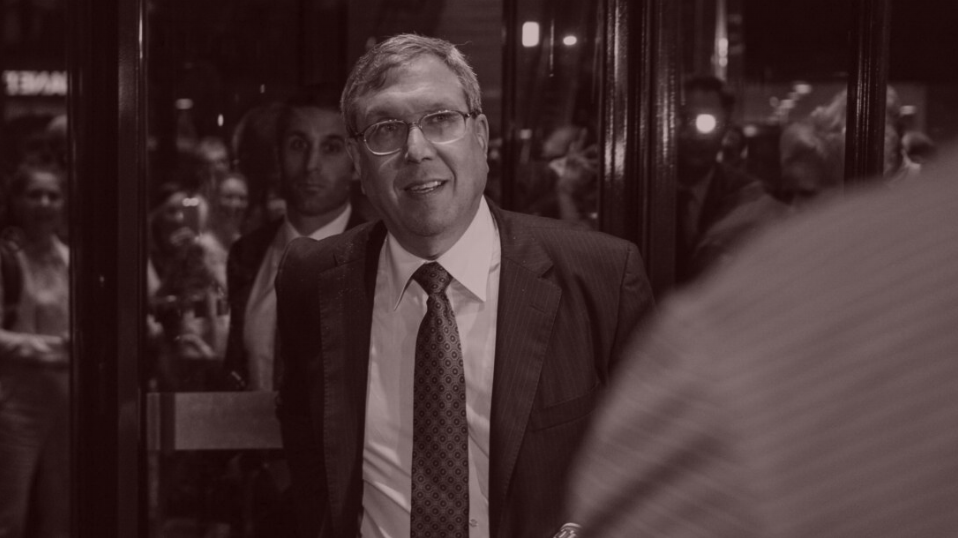 |
| The Man Who Broke the NCAA |
| Mega litigator Jeffrey Kessler opens up about smashing the college sports cartel, the reality of “pay for play,” and the $10 billion antitrust case that could change everything. |
|
|
|
| Three years ago, Jeffrey Kessler, the superstar Winston & Strawn attorney, celebrated a resounding victory over the NCAA at the Supreme Court. In Alston v. NCAA, with a unanimous 9-0 vote, the justices decreed that the overseers of college sports are not immune from antitrust laws—and that the supposed “amateurism” of the players doesn’t justify restrictions on compensating them appropriately. It’s hard to understate the impact of this groundbreaking ruling, which produced a deluge of subsequent litigation, a wave that Kessler is currently riding with three significant cases—Hubbard, Carter, and House. This litigation could also potentially dismantle the NCAA’s age-old business model and funnel billions of dollars into the hands of collegiate athletes who have competed over the past decade.
The fact that Kessler, at 70, is at the forefront of this battle surprises no one familiar with his C.V. Since the 1990s, Kessler has undeniably been the most influential sports lawyer in the game, steering virtually every major labor action. He has represented star football and basketball players in pivotal disputes following the expiration of collective bargaining agreements, championed female soccer players in landmark cases for equal pay, and taken on various Olympic committees in the fight for individuals with disabilities. It’s nearly impossible to write the history of sports without mentioning Kessler’s impact.
The quest for fair athlete compensation in college has been one of Kessler’s enduring crusades, and it now appears to be on the brink of fruition—a potential crowning achievement in his illustrious career. With so much momentum on this front, I had the opportunity to sit down with him to discuss the movement and what lies ahead. The conversation has been lightly edited for clarity… |
|
|
| Eriq Gardner: Given the tremendous changes to the NCAA over the last few years, how close is its current state to your vision of where things ought to be?
Jeffrey Kessler: There’s still quite a bit left to accomplish. We’re maybe halfway down the road. There are now no limits on schools giving education-related benefits to the athletes. That’s what we won in Alston. And there’s almost no limits on third-party N.I.L. [name, image and likeness] deals. But we still need to get rid of the remaining N.I.L. restrictions. That’s our House case. Schools should compensate athletes directly for the N.I.L. they use in these billion-dollar broadcast agreements, for which athletes currently get nothing. And that’s going to come, along with lifting the remaining restrictions on compensation. Let a fair market develop.
Just to be clear, what you’re describing is pay-for-play, right?
Yes. That’s not a dirty word. You are paid to play. I am paid to play. Every coach gets paid for play. Every athletic administrator gets paid for what he or she does. So, that’s not a dirty word. It’s what people who provide services that add value are entitled to get.
Still, it makes some people uncomfortable.
They think it is wrong because of the myths that the NCAA has created over so many years. It’s like the way they used to say nobody could be in the Olympics if they were compensated because it’s got to be amateur, right? They got rid of that in the ’90s. Has the lifting of the Olympics ban caused fans to lose interest? Is it immoral? I don’t think so.
How different do you think college sports will be five years from now?
I think we’re in the middle of the change. I think every change that’s happened so far has been positive. I think people like it, and think it’s more exciting. They think it’s fair. They think it’s more just and I think that’s how I’ll continue to view it. So, I think it’ll keep evolving, but it reminds me of the fact that when I started practicing law, there was no free agency in the NFL and there was no free agency in the NBA. It was just barely starting. All the owners said then, ‘Oh, if you allow this, it’s going to destroy the game. Fans won’t like it.’ Guess what? I suspect you don’t even remember the sports without free agency. It’ll be the same thing in college sports.
How about unmitigated free agency? I’m sure you saw the ruling out of Tennessee a few weeks ago—that the NCAA can’t enforce rules meant to prohibit outside N.I.L. deals from inducing athletes to transfer. Is free agency coming to college sports?
There already is free agency. That’s called recruiting the athletes out of high school. There has always been a choice with the schools competing. So, I don’t see why it should be any different in terms of the transfer portal.
It feels like the NCAA is on such a losing streak right now in court that practically everything is susceptible to a challenge.
The only thing that we’re challenging are their economic compensation rules. That’s what a labor cartel does. It’s not appropriate. If they have safety regulations, rules of the game, educational requirements, those types of rules… nobody is going to challenge them. And if someone did, I don’t think they would win. |
|
|
| Do you worry at all about the adverse effects of all the change? For example, less popular sports being abandoned?
Division III has a full complement of sports. There is no transfer of money for the football and basketball programs in Division III to support the other sports because none of the sports earn significant money. It’s the same way that you support the English Department or the Arts Department. It’s part of the university budget because these are desirable things to have for your student body and for your school. The same thing would happen to Division I. I have no reason to believe that Division I schools won’t support the full complement of other sports just like Division III and Division II do.
You think there’s enough money to go around?
Just the money from the college football playoff can support their non-revenue sports ten or fifteen times over.
Yeah, well, that’s before everyone starts bidding against each other for players.
These other sports don’t cost that much. Division III supports them. The reason to have the sports is because it’s good for the schools to have them. They aren’t doing it for the charity of their hearts.
I take it you don’t think there’s any need for Congress to intervene.
Congress is not really able to agree on anything. But regardless, I don’t think there’s any need for Congress to mess with these antitrust issues. The Supreme Court ruled 9-0 [in Alston], and how the courts are handling this is perfectly fine. Now, whether there is something for Congress to do in other areas, like player health and safety, or things like that, that could be positive. But the NCAA running around and asking for antitrust exemptions is morally, socially, politically, and economically wrong.
How do you think NCAA president Charlie Baker is doing?
I think he has his heart in the right place. If you look at the proposals that he made recently—to allow the schools to do direct N.I.L. deals with their athletes, to have the schools be able to break away into higher revenue conferences, and be able to spend additional compensation… Those are all proposals in the right direction. It shows he knows the changes that need to be made. Now will the schools and conferences support him? I have no idea.
Are you disappointed there hasn’t been more action on Baker’s proposal?
Are you asking me am I disappointed we haven’t settled? Sure. Every day that goes by there are more athletes that will go through college without having the benefit of a fair market. So you know, the sooner the better. But am I surprised? That’s what’s been happening since I’ve been involved with this so it doesn’t surprise me.
It almost sounds like you’re planning to go to trial in the House case in January 2025. Should I book my ticket for Oakland now?
If we don’t settle, we’re going to trial. Whether we settle, I have absolutely no idea.
I don’t think people realize how financially significant this case is. Tell me if I’m wrong, but with how damages get trebled in antitrust cases, we’re talking about an action in House that could be worth more than $10 billion. Perhaps we’re even talking about an outcome that could become as big as the ones against Visa and the credit card industry, and set the record for the largest ever in an antitrust case.
Yes, if we win, it will be trebled and it will be multiple billions of dollars.
Would this represent a capstone in your career?
There are a lot of things I’m proud of in my career. This would certainly be right up there.
The Alston trial wasn’t before a jury. It was a bench trial. How will arguing before a jury shape the dynamic of the House trial?
Frankly, 20 years ago, I think the NCAA propaganda machines would have made it very difficult to prevail before a judge or a jury. But today, I think everybody understands what’s going on. No one thinks the system is the right or fair legal system for the athletes.
What do you think of the unionization push in college sports?
So I’m pro-union. I represent a lot of professional sports unions, so I’m certainly supportive. That said, it’s a long haul to get the union achieved as the end result here, because number one, you have the issue of state schools. You have to find a way to unionize them because some states have laws against that. That’s an area where Congress could help. But if that doesn’t happen, you have to find another vehicle, which is what is [happening in] the case against USC, UCLA, and the PAC-12, where they are trying to organize the conferences, as the conferences aren’t state organizations.
So you have to get a ruling that [the conferences] are a joint employer. So maybe that happens someday, but that will take a lot of litigation. Even at Dartmouth [a private school where the National Labor Relations Board recently ruled the athletes were employees who could form a union], you see a refusal to bargain, which means it now has to go back to the N.L.R.B. and then, when the N.L.R.B. supports [the athletes], it will get appealed to the circuit courts. So it’s still going to be years before we get answers.
Fair enough. Let’s end on a fun note. Do you fill out a bracket for March Madness?
I’ve done it on occasion.
Did you do one this year?
I did.
Who do you have winning?
I can’t say that.
Ooh, very lawyerly.
No, I just don’t want anyone to think, “You don’t know what you’re talking about? You’re wrong.” I will say, I did not have Oakland winning in the first round. |
|
|
- Party report: It was quite the sight to witness Attorney General Merrick Garland making the rounds at Puck’s First Amendment party this past Wednesday, mere hours before hitting Apple with a hefty lawsuit. Stay tuned for a deeper dive from me into this latest antitrust case. In the meantime, you can peruse the full complaint here.
- Stormy waters: The tardy document turnover won’t spell doom for the criminal case against Donald Trump in New York. At a hearing this morning, Justice Juan Merchan set an April 15 trial date. That’s hardly unexpected, although it’s worth noting that the former president isn’t the only one complaining about delayed access to documents. Heading into this past weekend, numerous prominent news outlets sent a letter to Merchan objecting to how it’s often days and sometimes even weeks before motions, orders, and other filings in this crucial case become publicly available. There will be building pressure to open up proceedings as the trial gets nearer.
- Losing the battle: In my recent focus on reality TV legal wars, I highlighted a key hearing last Friday involving Love Is Blind contestant Renee Poche, who sought to sidestep arbitration by asserting she was an employee of the production company. Unfortunately for Poche and her legal team, Bryan Freedman and Mark Geragos, the outcome didn’t turn out as they preferred. She will indeed be seeing an arbitrator in a $4 million battle over secrets.
- With a whimper…: Remember that Warhol copyright case that went all the way to the Supreme Court? The one that exposed a rift between liberal justices and may impact the future of artificial intelligence? Well, the Warhol Foundation is now paying $21,000 to settle a photographer’s claims. That’s a pretty paltry sum for something that garnered so much attention, but I suppose it was the principle that mattered.
- Prison math: We’ll be learning Sam Bankman-Fried’s prison sentence on Thursday. Prosecutors are demanding 50 years. S.B.F.’s attorneys say that would be an outrage, and doing the math, contend six years is more appropriate. I’ll be shocked if Judge Lewis Kaplan doesn’t come down very, very hard on the FTX founder.
|
|
|
| That’s it for this week. It was great seeing many readers at the First Amendment party, and I hope to catch up with more of you at the party we’re co-hosting next month for the White House Correspondents’ Dinner. |
|
|
|
| FOUR STORIES WE’RE TALKING ABOUT |
 |
|
 |
|
 |
|
 |
| Hollywood Mailbag |
| Yellowstone rumblings, Elon’s no-show, and much more. |
| MATTHEW BELLONI |
|
|
|
|
|
 |
|
|
|
Need help? Review our FAQs
page or contact
us for assistance. For brand partnerships, email ads@puck.news.
|
|
You received this email because you signed up to receive emails from Puck, or as part of your Puck account associated with . To stop receiving this newsletter and/or manage all your email preferences, click here.
|
|
Puck is published by Heat Media LLC. 227 W 17th St New York, NY 10011.
|
|
|
|