 |
 |
|
Welcome back to What I’m Hearing+, live from Brooklyn before I escape for a weekend at the Saratoga Race Track. As is my tradition, I’ll bet one whole dollar on the horse with the best name.
This week, an investigation into whether Disney+ is generating enough new hits—and doing enough with its I.P.—while Bob Iger is promising to raise prices multiple times. Let’s dive in…
|
 |
| Bob Iger’s Originals Sin |
| To pare its streaming losses, Disney plans to reduce spending, raise prices, crack down on password sharing, and produce less—less!—content. In an era of ruthless competition and franchise fatigue, Iger may be pushing the limits of what consumers will pay without getting something original in return. |
|
|
|
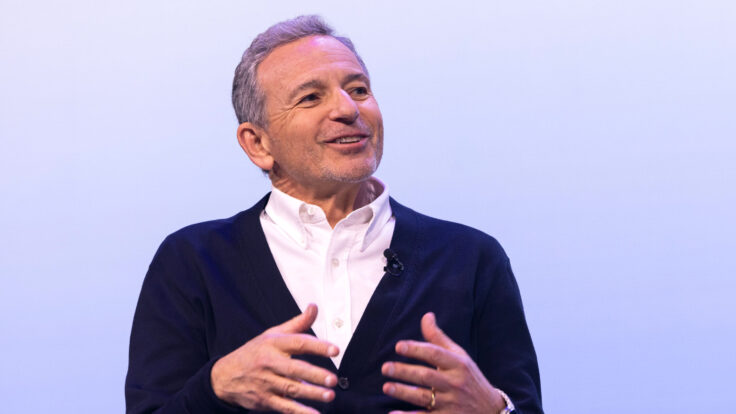
| On Disney’s recent earnings call, C.E.O. Bob Iger promised a slew of changes that neatly encapsulate the company’s enormous streaming dilemma. Sure, Disney+ has been paring its losses, down to $512 million last quarter from about $1.1 billion in the same period last year, but it’s still far from a profitable business. And yes, while the majority of its subscription losses came from its India brand, Disney+ Hotstar, which isn’t really material to the business, domestic users also dropped for a second quarter in a row. But the solutions Iger offered seem geared toward winning over shareholders, not subscribers: reduced spending, fewer movies, higher prices.
Iger is likely correct that D+ customers will tolerate a few price increases. The service currently has one of the lowest churn rates in the industry, and was underpriced at $7.99/month for its basic tier. It also still packs a ton of value, especially for families: Marvel, Star Wars, Pixar, 85 years of Disney films, plus Fox hits like The Simpsons for those late nights on the couch. |
|
A MESSAGE FROM OUR SPONSOR
|
 |
| Hulu’s “Only Murders in the Building” starring Steve Martin, Martin Short and Selena Gomez is nominated for 11 Emmy Awards, including Outstanding Comedy Series. Hailed as “TV’s perfect comedy” by The Los Angeles Times, the series follows a hilarious ensemble of neighbors, including Emmy-nominee Nathan Lane, who come together to solve - or commit - murder. “Only Murders in the Building” is for your Emmy consideration for Outstanding Comedy Series, Outstanding Lead Actor in a Comedy Series for Martin Short, and all other eligible categories. Visit FYC.HULU.COM for more information. |
|
|
| But Disney also faces a number of content challenges that Iger’s planned cutbacks will likely exacerbate—namely a dearth of memorable original titles and declining audience interest in big-ticket Marvel and Star Wars fare. In fact, Iger himself recently suggested that pulling back on some of the Marvel TV offerings would help the Marvel brand refocus. He’s not wrong, and kudos to Iger for facing the music. But still: less for more is a tough consumer sell even if it’s coming from Disney.
The stagnation is obvious from the data. Between July 2021 and July 2023, Disney+ hasn’t grown its U.S. viewership share among the streamers beyond 2 percent, according to Nielsen. Hulu increased by just over half a percent, while Netflix grew 1.5 percent, and YouTube jumped by just over 3 percent. FAST platforms, like Tubi and Pluto TV, have seen incremental rises each quarter.
Alas, Disney still hasn’t produced any non-Marvel or non-Star Wars originals that can compensate for franchise fatigue. At the end of 2022, the only other Disney-owned series to appear on Nielsen’s Top 15 total streaming list was The Simpsons; and no original Disney+ title appeared on Nielsen’s Top 15 Originals list. Furthermore, original titles generate an average of 15x less demand than the average of Marvel and Star Wars series between 2019 and 2023, according to Parrot Analytics, where I work as Director of Strategy. That’s not sustainable at a time when CinemaScore for MCU films received four times fewer “A” scores since July 2021 and twice as many “B” scores. This reality might be masked by strong box office results, which Iger pointed to on the call regarding Guardians of the Galaxy Vol. 3, but it’s undeniable that audience sentiment toward Marvel has soured over the past few years.
To be fair, these are still iconic, multi-billion dollar franchises with ravenous fan bases, and most other media companies would kill to have this problem. But the reality is that this is still a fallow period for the superhero genre when compared to the mid-2010s. Recent-ish successes Joker and The Batman were adult-oriented fare, while more family-friendly programming like Flash and Shazam saw disappointing box office returns. Of course, Guardians 3 performed okay, but not much different from Guardians of the Galaxy Vol. 2—and James Gunn is now overseeing Marvel’s biggest competitor.
My concern is that the declining interest in superhero fare hasn’t hit the bottom yet. So what approach should Disney take towards these stagnating properties, how much should Iger invest in other originals, and how can the company recapture mindshare when streaming customers have more choices than ever? |
|
|
| Iger’s pitch to Wall Street relies, in part, on the presumption that Disney’s franchises give it an edge. Yes, D+ has lost subscribers recently. But it also boasts one of the lowest churn rates in the industry—just over 4 percent as of 2022, according to Antenna. And the Disney bundle with Hulu (currently also with ESPN+) has the very lowest churn of all U.S. premium streaming services. In other words, the data suggest Disney can increase prices with little concern about adverse effects.
This raises a chicken-and-egg question for Iger: Should Disney focus on new content that can broaden the audience for Disney+? Or focus on what appeals to the core customers that are sticking around? One interesting lesson for Disney came from the filmed version of Hamilton, which generated a lot of new signups who were also more likely to churn. When it dropped in summer 2020, Hamilton brought an audience to D+ that wouldn’t be interested otherwise, as former C.E.O. Bob Chapek noted. Antenna’s data, however, proves that without anything to keep that audience there, they will leave.
The solution is to target new and existing customers, and this is where the bundle comes into play. First, Disney should shift spending from original content that’s not working to content that better engages the core D+ audience—including, ideally, big new franchises. There are opportunities here with new-ish titles like Percy Jackson or franchise expansions like Tiana (from Princess and the Frog) that also tie into new park rides. As Iger said last week, Disney’s goal is content that works across studios, streaming, and parks.
Of course, there’s nothing simple about creating new multi-billion dollar franchises. I noted last week that it’s easier for Netflix to license Suits than it is for NBCUniversal to create its own Stranger Things. In fact, in Netflix’s decade-plus as a hybrid programmer and distributor, it’s only created a handful of actual franchises, and only a pair of true global phenomenons (Squid Game and Stranger Things, to name the obvious). That’s one reason why Netflix, despite the advantage of scale, is focused on licensing the right shows to keep customers engaged while tinkering with its originals strategy, and finding ways to better monetize its audience (cracking down on password sharing, introducing advertising, etcetera) rather than throwing money at the wall like it did back in the day.
Contrast that with Disney, which owns the blockbuster I.P. of Ted Sarandos’ dreams, but doesn’t yet have the same scale or cash flow to continue betting on originals and therefore must rely on its catalog to keep people interested. Disney needs to better monetize its current D+ consumer base, but in the meantime it’s got Hulu to lure a wider array of customers. If the Hamilton crowd had access to The Bear within the same app, would more of them have stayed?
Maybe. But in Disney’s new austerity era, its core streaming strategy is to retain the customers it has, and maximize revenue per user, rather than scale the platform. After all, acquiring customers is costly. And acquiring customers in regions that either aren’t super interested in streaming yet (India), or where there are stronger competitors (Netflix), is doubly expensive. Luckily for Iger, the data suggest that Disney can wring more revenue from existing customers without substantial churn. Indeed, when my team at Parrot modeled consumers’ price sensitivity for each of the platforms, we found that demand for the Disney bundle was the most resilient to price increases, especially compared to Paramount+ and Showtime. (Cheaper advertising tiers helps, but willingness-to-pay has a ceiling.)
The problem is that as demand for individual titles decays alongside potential decay in core franchises (like Indiana Jones or Pixar titles), it gets harder to increase prices. Look at Willow, which was designed to appeal to those outside Star Wars and Marvel, but was removed from Disney+ less than one year after it debuted. (As it turns out, nostalgia isn’t a major economic driver without a large enough fan base.)
Perhaps most worrisome for Disney is the hard reality that very few franchises are born on streaming. Netflix has Stranger Things and Bridgerton. Chapek has argued that Encanto, which played briefly in theaters but took off on D+, should count as another. But in general, most franchise attempts on streaming are flailing and, worse, flat-out failing. The takeaway for Disney shouldn’t be that streaming can’t create franchises, but not every piece of I.P. needs tens or hundreds of millions of dollars for the potential to turn into a franchise. Disney’s former strategy seemed to be to throw anything it had in its vault at the wall and see what sticks; now Disney needs to better place its Disney+ bets while strongly monetizing the audience it already has. |
|
|
|
|
| The bundled offering—$20 for the ad-free package, versus Disney+ and Hulu priced at $14 and $18, individually—clearly provides greater value for consumers, further reducing churn. (In this way, Disney’s pricing strategy is not dissimilar from The New York Times, which is benefiting from its bundle of news plus sports, cooking, and games.) And as Iger confirmed last week, the bundle also gives Disney greater pricing power as it seeks to push new subs into its cheaper ad-supported tier, which actually generates higher ARPU than its ad-free offering. Disney’s bet comes at the right time, too: more than half of customers will choose a cheaper, ad-supported plan when given the opportunity, according to Antenna data published in May.
Hulu also outperforms Disney+ in a number of key areas. It has seen demand for its originals increase year over year by 2.1 percent, according to Parrot. It has the third largest platform demand share of all U.S. streamers (15.2 percent), just behind Max (16 percent) and Netflix (16.6 percent). Hulu’s audience also skews toward younger women, while Disney+ skews toward young men. The combined package is thus more appealing to the average household. Indeed, Hulu is the only platform that gained subscribers for Disney in the U.S. last quarter, adding 300,000 subs on its SVOD-only tier, whereas ESPN+ and Disney+ collectively lost some 400,000 customers. Hulu’s ARPU jumped 6 percent during the same period, compared to 3 percent growth for D+ and 2 percent decline for ESPN+.
Where Hulu underperforms compared to its competitors, however, is with originals. While YouTube, Prime Video, and Netflix all gained notable viewership share year to date, Hulu has remained stagnant, according to Nielsen data. Worse, FAST platforms like Tubi and Pluto TV are beginning to capture more and more viewership time, stealing attention away from pricier SVODs. Sure, Hulu had some incredible hits—including The Bear and Only Murders in the Building, which just started its third season—but the overall impact isn’t great when compared to Netflix, and things are only getting more costly. As one longtime executive noted to me, the problem with Hulu is that its original content is largely undifferentiated from the premium content on other platforms. I would argue that Hulu has a number of successful shows—The Handmaid’s Tale, Only Murders, and The Great, among them—but I take this person’s point.
The big question for Iger is how much Hulu’s originals business really matters right now. I would argue it’s a fundamental concern for the long term health of the offering. Short term positioning, however, might say otherwise. Disney needs to make its streaming business profitable. The likelihood of scaling in the U.S. to rival Netflix in the next year or two is unlikely, especially as Disney pulls back on content spend and potentially licenses out some library titles. Disney is also pulling back slightly on its global ambitions, with Iger noting that “not all markets are created equally.”
Instead, Iger has said he’s focused on maximizing revenue from premium paying subscribers while pushing as many potential new customers to the ad-supported tier. Which makes complete sense: More profit means more room for investment, which theoretically will translate to renewed subscriber growth and further monetization.
But can Disney suddenly start churning out hits? The decreasing excitement for franchise fare suggests Disney can’t solely rely on Star Wars and Marvel holding up Cinderella’s castle 20 years from now. And the reality is that it’s difficult to create The Bear or The Handmaid’s Tale each quarter. It’s difficult to build franchises. Disney didn’t create its three largest I.P. farms from scratch, it bought them. But now Disney needs more if it wants to be able to continue adding and monetizing new customers. It also needs new content at a frequency that increases the perceived value of the package as monthly prices go up—especially as the linear assets continue to decline.
I’m not betting against Disney, but I’m also aware that the company is once again in a transitional moment, as it was nearly 20 years ago, trying to figure out where to build, what to buy, and how to transform Disney back into a powerhouse. Let’s see if Iger can do again what he did then—this time without the help of ESPN, ABC, and the movie business all printing money. |
|
|
|
| FOUR STORIES WE’RE TALKING ABOUT |
|
|
|
|
|
 |
|
|
|
Need help? Review our FAQs
page or contact
us for assistance. For brand partnerships, email ads@puck.news.
|
|
You received this email because you signed up to receive emails from Puck, or as part of your Puck account associated with . To stop receiving this newsletter and/or manage all your email preferences, click here.
|
|
Puck is published by Heat Media LLC. 227 W 17th St New York, NY 10011.
|
|
|
|