 |
|
Happy Monday, I’m Eriq Gardner.
|
|
Welcome back to The Rainmaker, a private email about how those in power are navigating the legal realm. (Was this email forwarded to you? Click this link to subscribe.)
In this week’s edition, Disney vs. DeSantis, and a hint about the future of Hulu. Also, an update on the government’s bid to stop the Microsoft-Activision merger, a bombshell e-sports twist, the Trump indictment, a weird turn in the Pras Michel trial, and what an Elon Musk legal win says about the coming Dominion v. Fox trial. Plus Bob Woodward, Clarence Thomas, and much, much more in this jam-packed edition.
But first…
|
| A $7B Hollywood-Wall Street “Nuclear War” |
|
| Of all the shadowy figures in Hollywood, few are more enigmatic than the business managers who ensure their A-list clients invest smartly and spend responsibly—with money left over to cover their own hefty fees. Yet despite their immense influence, these personal C.F.O.s to the stars rarely emerge from the shadows to discuss their work, making them a true mystery to outsiders.
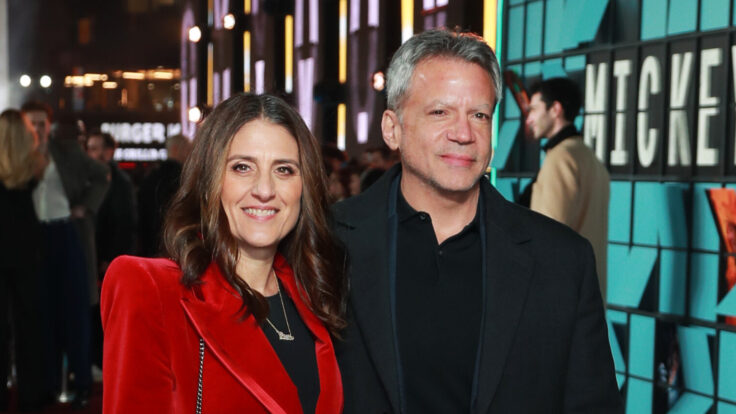
As someone who spent years compiling The Hollywood Reporter’s annual list of top business managers, I know all too well just how elusive these advisers can be. That’s why my eyes opened wide last week when I caught wind of a massive new lawsuit filed by Mickey Segal at NKSFB, now the biggest business management firm in the country—advising the likes of Beyonce, Drake, Selena Gomez, and Pharrell Williams—against the firm’s own parent company, Focus Financial, and Goldman Sachs.
In short, Segal accuses Goldman of having misled him while shopping NKSFB as an independent company and covering up a larger, furtive effort to sell Focus Financial in a $7 billion private equity deal. Although the complaint has since been temporarily sealed at the defendants’ request, I was fortunate enough to get my hands on a copy beforehand, and have been digging into the juicy details—financial projections, compensation structures, etc.—ever since. (Read the complaint here, which spells out the quirky way that NKSFB, unbeknownst to most outsiders including possibly their own clients, is really just an operational shell.)
The roots of this battle can be traced back to 2018, when Focus Financial, a publicly traded firm in the business of aggregating wealth management advisors, added NKSFB to its stable. As part of the deal, Segal’s firm was re-established as an independent entity, providing NKSFB with management services in exchange for a share of profits. Flush with new capital, Segal went on a shopping spree, buying up a half dozen rivals and doubling its own business.
However, relations between the business managers and Focus began to sour, and Segal received permission last year to hunt for a new buyer. Enter Goldman Sachs, which at Focus’s urging, helped Segal prepare presentations about Hollywood money management to Wall Street bigwigs. Before long, five potential buyers emerged.
What Segal didn’t realize was that Goldman allegedly had a much bigger deal in mind. Specifically, a $7 billion sale of Focus to the private equity firm Clayton, Dubilier & Rice (CD&R). Segal only found out about this when it was publicly announced on Feb. 2, leaving him feeling betrayed and blindsided. According to the complaint, Segal had been led to believe that there were no conflicts of interest for Goldman. Accordingly, managers at Segal’s firm say they shared confidential information under a non-disclosure agreement. “Focus and Goldman had been deceitful from the outset,” alleges the complaint, adding that the $7 billion deal now gives CD&R a right to control any sale of Focus’ subsidiaries. All this, adds Segal, has “spoiled the market for a transaction involving the NKSFB Business.”
This situation is now exploding. “A buyback of [NKSFB] at a substantial discount may be the only way to stop a nuclear war,” wrote Segal to Focus managing director Lenny Chang in a March 10 email. That suggestion was quickly rejected, leading to a lawsuit that alleges that Focus and Goldman breached contract and committed fraud, among other claims seeking financial damages for what occurred. “Mr. Segal’s actions are meritless,” a Focus spokesperson responded.
As for the future of NKSFB and its enviable client roster, there seems to be some question about whether these managers can now quit, set up a new shop and take their stars with them. Expect to hear more about this escalating situation in the coming months. |
|
|
- Trump Indictment Watch: Manhattan D.A. Alvin Bragg’s indictment of Donald Trump is getting only slightly better reviews than Shazam! Fury of the Gods, with critics pointing to everything from its lack of page numbers to the chin-scratching decision to turn a misdemeanor charge (falsifying business records) into a felony. I concur with those questioning the wisdom of this hush-money case, yet I’m fascinated by what Justice Juan Merchan, who’s overseeing the case, is going to do here. He’s got some big rulings ahead, including deciding whether New York prosecutors can really use a federal campaign law to seek harsher penalties and whether the Trump-Michael Cohen tape is admissible. It’s easy to see those rulings being taken on an appellate journey, but only after trial, making Merchan’s decision on when to hold the trial also pretty significant. It’s usually about a year from indictment, which would put this prospective trial right in the middle of the Republican presidential primaries.
- D.O.J.’s Star Witness: Meanwhile, Trump will have to follow a protective order that restricts how he uses sensitive case materials, and if you don’t think there’s any potential consequence for violations, see Pras Michel. In the midst of a trial alleging he secretly lobbied for foreigners, a separate criminal contempt case has now been opened over the way that Michel’s side allegedly leaked discovery documents to Bloomberg reporters. As for the main show, it resumes tomorrow with the cross-examination of George Higginbotham, the former entertainment lawyer working at the Justice Department who decided to moonlight as Michel’s attorney during the alleged crimes. With all due respect to Leonardo DiCaprio, he might be the trial’s most intriguing witness.
- A Fox-Dominion Twist: Did Judge Eric Davis do Dominion a favor by ruling that the voting tech firm has to prove actual malice at its trial against Fox News next week? The thought crossed my mind as the jury in the Diaz v. Tesla retrial delivered a $3 million verdict this past week, far short of the $137 million that former factory worker Owen Diaz had originally won in 2021. Sure, Tesla’s lawyers at Quinn Emanuel may have had something to do with the watered down result, but I can’t help but wonder if the biggest difference between the two trials is that Diaz no longer had to prove liability in the hostile workplace case. The trial instead became purely about damages, which often robs plaintiffs of the opportunity to painstakingly walk a jury through their antagonist’s bad deeds. So it might be to Dominion’s advantage that they have to spend extra time discussing Fox News’s knowledge of Trump’s lies, rather than solely debating the financial damage to its business.
|
|
|
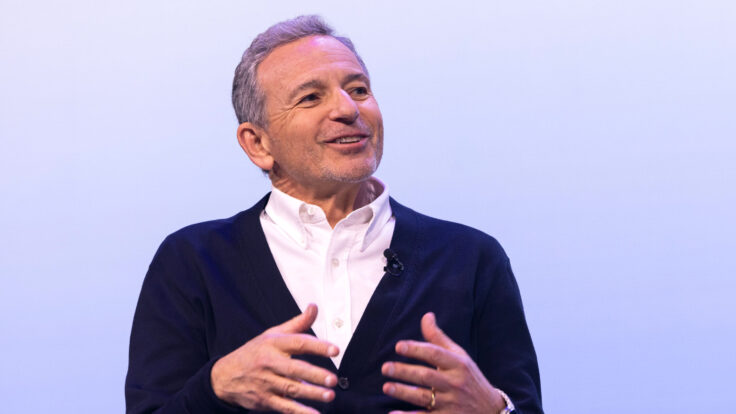
| The surprisingly hilarious legal tango between Ron DeSantis and Disney—which just made an end-run around the Florida Governor by affirming its control over control of Disney World until “21 years after the death of the last survivor of the descendants of King Charles III”—has temporarily overshadowed a host of other, more pressing challenges before the $180 billion entertainment giant. To wit: What to do about Hulu, the O.G. Netflix rival in which Disney and Comcast are estranged co-owners. Disney can buy out Comcast’s one-third stake by the end of the year, but with Disney+ in the picture, Bob Iger has been hinting that he might sell.
I can’t say for certain what will happen, but over the past couple of weeks, I’ve heard from a couple of insiders that Comcast has something that Disney desperately wants—certain Marvel rights—and there’s been some discussion about a swap.
Back in the 1990s, before Disney acquired Marvel, the comic book company licensed adaptation rights to its characters to various studios. Probably the most famous is Sony’s long-lasting hold over Spider-Man, but there’s also the Hulk, which is enjoyed by Universal. Last month, Citi analyst Jason Bazinet suggested a Hulk-for-Hulu deal. Sounds good, but that’s probably not enough. But what about the rest of the Avengers? Here’s where some contractual arcana comes into play. Marvel once assigned the lifetime theme park rights east of the Mississippi to a Universal subsidiary, which is why Disney maintains an Avengers campus in California and in Paris but not in Florida at Disney World. Indeed, the absence of what might be Disney’s most valuable I.P. in the Magic Kingdom is pretty glaring to anyone who visits (as I recently did, of course, for research).
Interestingly, in its moves preserving its powers around Disney World amid the DeSantis fight, the company reserved the right to build a major new theme park to reside near Magic Kingdom, Epcot, Disney Hollywood, and Animal Kingdom. Few people paid much attention, of course, given the higher profile battle with DeSantis, who is still stewing over being one-upped. (On Thursday, he ordered his chief inspector general to investigate, hinted that the Florida legislature could void the development agreement, and warned Disney to expect new taxes on its resorts.) But the language describing Disney’s future theme park rights may suggest one of the paths forward for Iger as he weighs what to do with Hulu.
Iger says he’s planning on spending $17 billion over the next decade at Disney World. Asked by a shareholder last week about Marvel theme park rights, he said he’d “love” to do more. A superhero theme park makes a ton of sense and would probably be a multibillion-dollar-a-year earner, judging by attendance figures, but that requires making a deal with Comcast. It might also mean Disney tolerating the fact that Universal Orlando has its own Marvel attraction, although I don’t think theme park rides compete against each other like movies do in a theater. So what if it’s not exclusive? The only thing theme park goers care about is whether it’s fun. As for DeSantis, if it makes him cringe, well, bonus points for that. |
| Microsoft Game Theory: The Wrath of Khan |
|
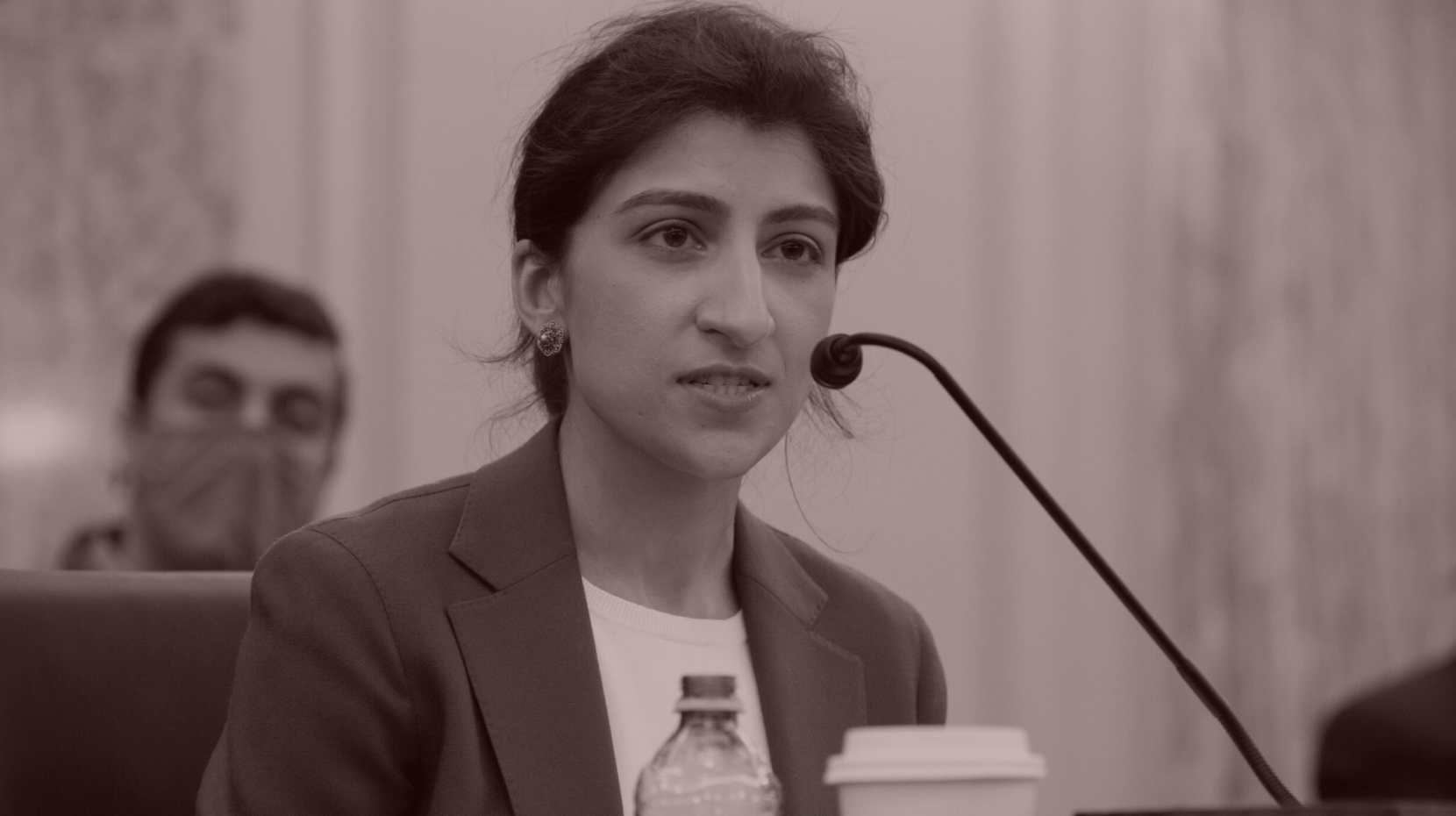
| In December, I wrote how the $68.7 billion Microsoft-Activision acquisition seemed all-but-dead after the Federal Trade Commission moved to kibosh the deal with an administrative complaint. In recent weeks, however, Activision’s stock has been rising and is now trading in the mid-$80 range as it gets closer to Microsoft’s $95 per share offer, indicating growing optimism on Wall Street that the transaction might actually close. So, what’s going on? Should we re-examine the thesis that Microsoft couldn’t escape Lina Khan?
Well, yes and no. On one hand, Microsoft does have one play, and it has made at least some progress on this front. That strategy would be to back the F.T.C. into a corner where the agency has no choice but to file in federal court to stop the merger. If that happens, Microsoft would have a fighting chance, maybe even a good shot, to sway a judge given case law over vertical mergers. (See, for example, the F.T.C.’s recent struggle in the Meta-Within dispute.) However, the F.T.C. will only go to court if it needs an injunction, and right now, the agency is perfectly fine taking its sweet time before an internal judge.
But depending on what happens internationally, the F.T.C. may no longer be able to slow-walk its complaint. The Microsoft-Activision transaction must clear foreign regulatory scrutiny, which is why the F.T.C. hasn’t needed an injunction. But suddenly, things appear to be swinging Microsoft’s way outside of Khan’s domain. Last month, Microsoft convinced the U.K.’s competition regulator that the deal wouldn’t harm the console market, a key conclusion that could soon lead to a green light for the deal. Microsoft also just gained merger approval in Japan, a nice symbolic victory given the objection from hometown hero Sony that the merger could eventually deprive it of Activision titles like Call of Duty, Diablo and Overwatch. That leaves the European Union as the most significant hurdle. Regulators there are expected to decide by April 25, and as the date draws near, Microsoft is working hard to appease the Europeans with the licensing of games to the NVIDIA and Nintendo platforms.
So it’s at least possible to force Khan’s hand, although the clock is getting very close to midnight. The Microsoft-Activision merger agreement, after all, has a July 18 deadline, with Activision set to collect a $3 billion termination fee if the merger doesn’t happen by then. The companies could amend to a later deadline (like, um, after August, when the F.T.C. administrative trial is scheduled), but that hasn’t happened yet (I’ve checked), which might say something. So the window is pretty damn tight for Microsoft to get the Europeans on board and then convince a U.S. judge to swiftly reject the F.T.C.’s yet-to-come-case.
And that’s assuming nothing else comes up. For instance, a bunch of video gamers are making their own class action antitrust challenge. The first version of this suit failed, but the plaintiff’s lawyer has expressed confidence about addressing the judge’s call for more details about the merger harms.
Finally, keep an eye on a pair of appeals that don’t yet tie into Microsoft-Activision, but may nevertheless impact the adjudicatory environment for mergers like this one. Any day now, the Supreme Court will rule in Axon Enterprises v. F.T.C., a case that will determine whether federal courts may hear early constitutional challenges to the agency’s procedures in merger challenges. And then there’s Illumina, now before the 5th Circuit Court of Appeals in an attempt to save its acquisition of Grail, a cancer test start-up.
The Grail case, in particular, shows what might happen if the Microsoft-Activision deal didn’t have such a tight deadline: Illumina initially prevailed before the F.T.C.’s chief administrative law judge—albeit after waiting 18 months—only to have that victory then overruled by Khan and the other Democrats on the commission. Illumina now turns to the most conservative-leaning appellate circuit in the nation for further review, and of course, it’s asking the judges to move quickly. (See here.) |
| Activision’s Other Antitrust Problem |
|
| Meanwhile, Activision has reached a settlement with the Department of Justice over the way that wages were suppressed for those competing in Overwatch and Call of Duty e-sports leagues. As a result of a consent decree, these leagues will eliminate a “competitive balance tax” that franchises incurred when exceeding salary thresholds.
However, the salary cap could return. That’s because the D.O.J.’s Antitrust Division submitted a proposed judgment in federal court that carves out applicable labor exemptions. In other words, e-sports gamers could in theory form a union that negotiates a salary cap, a draft, health benefits, a pension, whatever… with the powers that be. Yes, there’s precedent.
One more thing: It’s somewhat noteworthy that the D.O.J. handled this case instead of the F.T.C., which has traditionally policed the video game industry (see above). I guess that’s some acknowledgement that e-sports really is more sport than game. |
|
|
- Funny Business: FTX C.E.O. John J. Ray III has issued a new report about the oversight failures of the company’s former leadership, including Sam Bankman-Fried. He writes: “These individuals stifled dissent, commingled and misused corporate and customer funds, lied to third parties about their business, joked internally about their tendency to lose track of millions of dollars in assets, and thereby caused the FTX Group to collapse as swiftly as it had grown.” Full report here.
- All the President’s Words: Simon & Schuster and Bob Woodward are asking a court to dismiss Trump’s $50 million lawsuit where he claims copyright over the words spoken during an interview. “[T]he Complaint ignores Woodward’s role as the author of both the Interviews and the Work, making him the sole copyright owner” states the motion. “More fundamentally, this lawsuit offends the basic principle—codified in the Copyright Act—that government officials speak for the People and cannot own the words they speak while carrying out official duties.”
- Will Hometown Fans See Them Beat the Dodgers? In the ongoing Chapter 11 surrounding Diamond Sports, which owns regional sports networks around the nation, there’s been talk about missed rights payments, but only the Arizona Diamondbacks in an emergency motion not only want the money but an order compelling the debtor to “continue to produce and broadcast all games.”
- What Else I’m Reading: ProPublica’s blockbuster report on a billionaire friend’s gifts to Clarence Thomas…. A Stanford Law School Dean’s efforts to navigate protest and host controversial speech on campus… Gwyneth Paltrow’s lawyer James Egan, a.k.a. “Law daddy,” has become a viral sex symbol after helping the actress win the legal battle of the century over the ski slopes.
Email me comments and tips at eriq@puck.news |
|
|
|
| FOUR STORIES WE’RE TALKING ABOUT |
 |
| ‘Star Wars’ Amnesia |
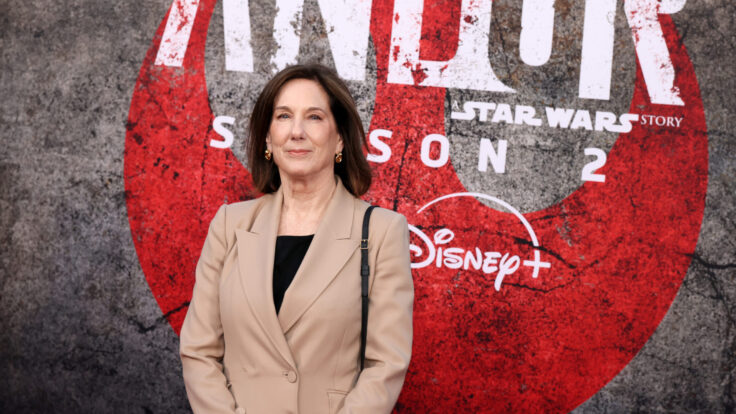
| Why did the Lucasfilm president seem to “forget” a Star Wars project? |
| MATTHEW BELLONI |
|
 |
| Elon’s Debt Roulette |
| Notes on Twitter’s looming debt fiasco, Apple’s M&A “wallet,” and more. |
| WILLIAM D. COHAN |
|
 |
|
 |
|
|
|
|
|
 |
|
|
|
Need help? Review our FAQs
page or contact
us for assistance. For brand partnerships, email ads@puck.news.
|
|
|
|
Puck is published by Heat Media LLC. 227 W 17th St New York, NY 10011.
|
|
|
|