|
|
Welcome back to The Rainmaker! I’m ringing in 2023 with a special edition that focuses on one timely topic—the looming copyright death of Mickey Mouse. I’ll explain why hedge funds are a greater threat to the public domain than Disney; why Hollywood’s grandkids will become increasingly pesky; and why studios will end up defending everyone’s freedom to adapt once-cherished intellectual property.
But first…
|
|
|
- Congratulations to the so-called New York Giants, who not only made it to the NFL playoffs this season but also defeated a class action that alleged this New Jersey team was committing a geographical fraud. Here’s a magistrate judge’s report paving the way to a dismissal on Dec. 29: “It is common for a professional sports team to name itself after the city it calls its home while playing in the suburbs of that city (or, in some cases, even further away),” writes Judge Barbara Moss. But the funnier (if wonkier) aspect pertains to diversity jurisdiction, namely whether this case even belonged in New York federal court given the citizenship of the parties involved. (It didn’t.) Meanwhile, in the District of Columbia’s battle with Dan Snyder over his team’s allegedly toxic workplace, the so-called Washington Commanders, admitting they’re really a Maryland team, have just removed a case from local to federal court and are now locked in a jurisdictional scrimmage because D.C. A.G. Karl Racine is demanding it go back. See here.
- You’d hardly expect a mundane legal subject like “service of process” to generate tremendous third-party briefings, but that’s what U.S. District Court Judge William Orrick got when the Commodity Futures Trading Commission sued Ooki DAO, a decentralized autonomous organization that allegedly failed to register a platform that allowed users to bet on the rise and fall of virtual currencies. Just what exactly is a “DAO”? An unincorporated association or a technology that’s incapable of liability? On Dec. 20, the judge ruled that even if the anonymous token holders of Ooki DAO aren’t individually being sued, the notice of the new case in a chat forum was good enough. Read here.
- Los Angeles magazine has submitted its bid to escape the defamation lawsuit brought by social media influencer Yashar Ali over an unflattering profile. Here’s the publication’s anti-SLAPP motion where it argues that Ali is unlikely to prevail on his claims, and so the action must be dismissed as an impingement of First Amendment-protected activity. I won’t handicap the battle just yet, but I do find it somewhat unimpressive that the magazine is relying so heavily at this juncture on the supposed absence of actual malice.
|
|
|
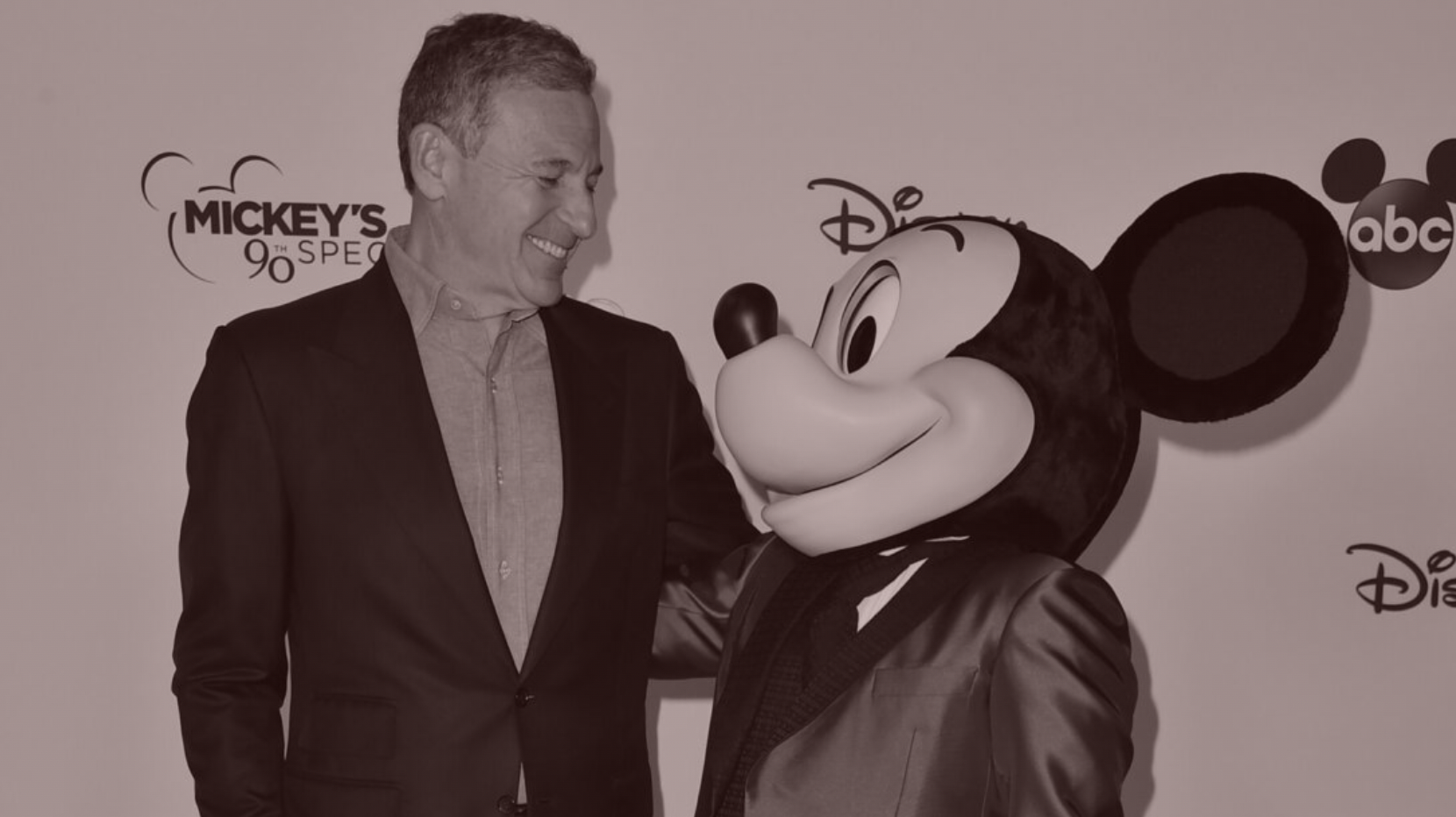
| As we celebrate the new year with fireworks and champagne, our public domain is getting larger. On Sunday, dozens of famous books, movies, and songs slipped free from copyright control after nearly a century under the thumb of their owners. That means these properties may now be exploited by anyone, for nearly any purpose. Newly adaptable works include the first movie “talkie” The Jazz Singer, Fritz Lang’s Metropolis, Arthur Conan Doyle’s final few Sherlock Holmes stories, and even a fitting Broadway song to mark the occasion: “The Best Things in Life Are Free.” (You can find a longer list here.) Meanwhile, everyone is counting down to an even greater prize: “Steamboat Willie,” otherwise known as the earliest version of Mickey Mouse, which will enter the public domain on Jan. 1, 2024.
The prospect of a free Mickey Mouse—even the naughty, early version instead of the cuddly character most know—holds special significance since this very rodent is widely credited with bringing about America’s lengthy copyright term in the first place. As the story goes, Disney successfully lobbied Congress for an extension near the end of the 20th century when it faced Mickey’s copyright mortality. This tale is true, if a rather simplistic version of the various forces that drove a change in the law. Regardless, the narrative that Disney cast an evil spell on lawmakers to firm up its hold on a lucrative kiddie character carries a lot of symbolic weight. So much so that when Disney clashed with Florida’s “Don’t Say Gay” law, politicians like U.S. Senator Josh Hawley proposed stripping Disney’s “special copyright protections” (never mind that such a punitive move would be unlikely to withstand judicial review).
Given what’s coming for the iconic character, I wasn’t surprised to read an early curtain-raiser in The New York Times last week. The article, written by the smart Brooks Barnes, nails a lot of things: He speaks to the right experts, he correctly distinguishes between copyright and trademark law (trust me, a lot of reporters screw that up), and he even cites relevant Supreme Court precedent. Unfortunately, and not necessarily the author’s fault, it also reflects some stale thinking about the copyright business. |
|
|
| Not to demean Mickey, but it’s been forever since this nonagenarian starred in a feature-length motion picture. The last time, according to the Disney Wiki, was the 2004 release of Mickey’s Twice Upon a Christmas, which is long enough ago that it went “straight to video.” Sure, Mickey Mouse fronts a lot of kiddie TV shows these days. And yeah, Mr. Mouse is certainly an important part of Disney’s theme parks, but if we held a draft of Disney I.P., would Mickey Mouse make the top five? No way. The top ten? Hmm.
Here’s my point: Mickey Mouse, as important as the character has been, doesn’t seem like the figure to go to war over. Disney would survive a competing adaptation of “Steamboat Willie” just fine, as it will when Jagged Edge Productions releases the indie slasher Winnie-the-Pooh: Blood and Honey next month. It’s not like anyone is trying to produce a new story about Darth Vader or Luke Skywalker. Now, that would be war! Fortunately for Disney shareholders, the Skywalker family is still relatively youthful in I.P. years.
In fact, if I had to wager on who might try to push the limits of copyright terms (currently, it’s 95 years for corporate authorship, 70 years after the death of the author for individual works, plus some further wrinkles on the clock), I’d look at Wall Street instead. Private equity firms including Blackstone, KKR, and Apollo Global just spent billions of dollars buying half-century-old song catalogs, including Genesis for $300 million and Neil Young for $150 million. A couple decades from now, in all probability, people will still be listening to The Beatles and Bob Dylan, so it’s conceivable that someone on Wall Street makes a play—sooner or later—to tap that royalty drip a bit longer. That would be one way to up a return on investment.
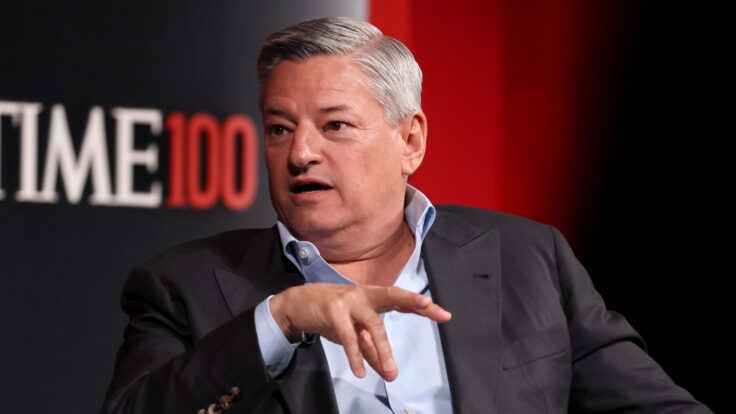
As for potential courtroom adventures, keep a close eye on DC Comics, currently controlled by Warner Bros. Discovery. Superman made his first appearance in 1938, which means that the ten-year public domain countdown soon begins. DC is definitely planning on new, big-budget Superman films, and it’ll be interesting to follow how C.E.O. David Zaslav or whoever inherits the Man of Steel will react to rival projects. Here’s where I could easily see some tensions. As one Warners lawyer once noted to me, “Superman’s power of flight was not introduced until some years after the character first appeared,” a comment that should foreshadow the very close reading of old comic books to figure out what’s really in the public domain.
But I also see even more obvious candidates for extreme aggression: The heirs of authors. Why them? Well, the various extensions of the copyright term starting in the mid-1970s have gone hand-in-hand with rules allowing authors and their heirs to terminate old grants to publishers and studios after 35 or 56 years (depending on the age of what’s been published)—meaning that a lot of properties may not even be in studio hands when their copyrights expire. Take the Avengers. Disney is currently in court with various comic book heirs who are trying to reclaim rights to characters including Spider-Man, the Incredible Hulk and the Mighty Thor.
So authors may retake control, and their heirs could resist having their inheritance fall into the public domain. While a diversified studio like Disney can survive the loss of a few prized assets, reclaimed properties will mean everything to the widows, children, and grandchildren—and they’ll fight equally hard to keep them by any means necessary.
In fact, that’s exactly what we’ve been witnessing. The best example is the Conan Doyle estate, which spent years in court, helping define the boundaries for characters in the public domain and fighting unauthorized “Sherlock Holmes” derivatives to the bitter end. Other characters including Buck Rogers and Zorro, which should be in the public domain if you look at the calendar, have also been bogged down in legal battles involving their creators’ heirs. |
|
|
| The next wave of turf wars may not play out exactly as armchair experts predict. When the subject of copyright expiration comes up, it’s often noted that the big Hollywood giants might turn to trademarks as an alternative legal bazooka to protect their I.P. But trademarks guard against consumer confusion about the source or sponsor of a product or service, not against new works of authorship. As the Supreme Court ruled in Dastar Corp. v. Twentieth Century Fox Film Corp., trademarks can’t be used to limit the public’s right to use expired copyrights.
But here’s the thing: Even if Dastar is truly limiting (R.I.P. Antonin Scalia), this ignores other and better advantages that studios have in guarding old monopolies (a word I’m very purposely using). And I’m not talking about how the fine print of a Disney+ subscription makes you agree to never, ever adapt Mickey Mouse. (I’m kidding, although Rainmaker readers may want to keep an eye on whether the Supreme Court agrees to hear that fight between Genius and Google, as the possibility of removing material from the public domain via a website’s terms of service is certainly on the table.) I’m referring, rather, to how a vertically-integrated studio may leverage distribution channels, industry relationships, and overall marketplace prowess to potentially interfere with commercial rivals.
Sure, we may see minor skirmishes when some bootlegger attempts to sell knockoffs of characters long associated with the company. (Here’s a lawsuit, for example, that Disney filed last week over masks featuring various characters including Winnie-the-Pooh.) But the far more impactful litigation is likely to occur when some ambitious producer uses something big from the public domain and nevertheless finds their project out in the cold. Might we see antitrust and tortious interference claims against studios resulting from backroom posturing and subsequent frustrations on the production and distribution front? That is what I’d watch for as the streaming economy gives certain insiders with a head start on franchises a real edge in maintaining their lead positions.
Another wrinkle is that the passing of copyrights into the public domain doesn’t necessarily mean there are fewer copyrighted works. On the contrary, it usually leads to more copyrights for each new remake. Consider the Sherlock Holmes canon: Warner Bros. has copyrights to its Robert Downey Jr. movies; the BBC has copyrights for its Sherlock episodes; CBS has them for Elementary, and so on. Netflix created an entirely new Sherlock-adjacent character, and now enjoys copyrights for its Enola Holmes films. Of course, only those elements that are truly original are eligible for new protections, which is why the BBC considered suing CBS over its own contemporary spin on the detective series (before thinking better of it).
After all, Hollywood studios are sued all the time for allegedly ripping off others. Fortunately for these studios, copyright lawsuits almost always fail because the law only protects original expression, not generic, time-worn genre tropes. Studios tend to be well represented and are usually adept at giving judges sound arguments for why their works don’t infringe. Nevertheless, with more people playing in the same sandboxes comes the increasing prospect of studios being sued for using famous characters in a particular way. So I’ll end with a prediction: There will come a time when Disney gets sued for infringing some new version of Mickey Mouse—and the studio defends itself by pointing to what’s in the public domain. |
|
|
|
| FOUR STORIES WE’RE TALKING ABOUT |
 |
| ’23 Brand Conundrum |
| A conversation with special guest Adam Davidson about the creator economy, podcast industry, and more. |
| JON KELLY |
|
 |
| Bloomberg Dream Sequence |
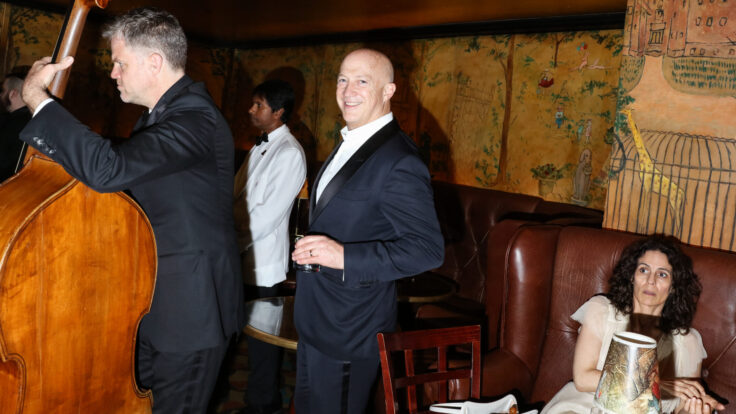
| Does Mike really want to buy the WaPo and WSJ, or is the latest report a red herring? |
| DYLAN BYERS |
|
 |
|
 |
|
|
|
|
|
 |
|
|
|
Need help? Review our FAQs page or contact us for assistance. For brand partnerships, email ads@puck.news.
|
|
|
|
Puck is published by Heat Media LLC. 227 W 17th St New York, NY 10011.
|
|
|
|