 |
|
Happy Monday, I’m Eriq Gardner.
|
|
Welcome back to The Rainmaker, a private email about money, power, fame, and the legal realm where they all intersect.
In this week’s edition, what’s ahead for Elon Musk after a Delaware judge ripped up his $55 billion pay package. Plus, more notes on Byron Allen’s secret weapon in his bid to buy Paramount. Also: updates on Bob Iger vs. Ron DeSantis; Sam Bankman-Fried’s improving legal outlook; The New York Times back at the Supreme Court; and a partial resolution to Felicia Sonmez v. The Washington Post. (If someone forwarded you this email, and you’d like to continue receiving it, click this link or we will sue you!)
But first, a big scoop about something that just happened, quietly, in Hollywood…
|
| The $35 Million Kevin Spacey Gamble |
|
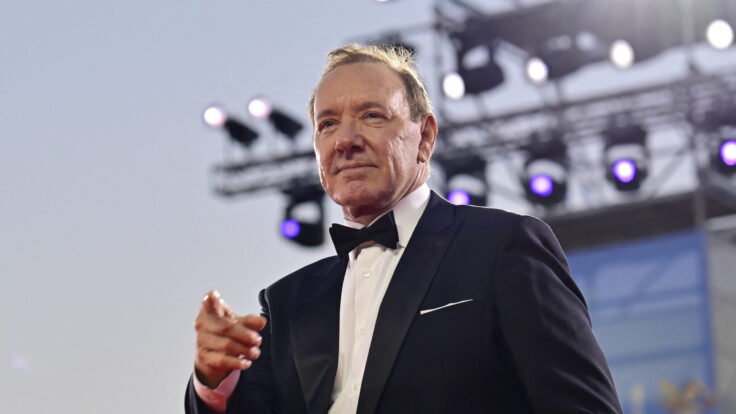
| Kevin Spacey just received a multimillion-dollar reprieve. Back in 2022, the disgraced actor was ordered to pay $31 million to Media Rights Capital, producer of House of Cards, for breaching his contract when he engaged in sexual misconduct on set. But in recent days, I’ve learned that Spacey has come to an equally astonishing settlement: If he cooperates with MRC’s lawsuit against the show’s insurers, including by testifying at a trial potentially happening this summer, his debt will be wiped clean.
The settlement represents a massive gamble by MRC, which has spent the past several years engaged in a multifront legal war to recover money it lost when Spacey was fired before what became the final season of the hit Netflix show. In late 2021, an arbitrator ruled that Spacey’s behavior on set was less than professional and breached anti-harassment policies. MRC eventually secured a $31 million judgment against the actor, which has steadily accrued another $5 million in interest while Spacey pursued multiple rounds of appeal.
However, a few days before the new year, Spacey paused his efforts to overturn the judgment, and a new deal was struck. According to the terms, Spacey will pay just $1 million to MRC, while assisting the company in its crusade to collect on insurance policies from Lloyds of London and Fireman’s Fund worth up to $150 million, plus punitive damages. (Thanks to a prior deal, Netflix will collect half of whatever MRC wins at trial.)
As I previously reported, MRC’s provocative legal argument centers on the contention that Spacey suffered from “sex addiction,” which the producer says qualifies as a sickness under the insurance policies. While a Los Angeles judge ruled against MRC in December since the malady wasn’t alleged to have first arisen during the policy term, an amended complaint was filed on Jan. 2, focusing on Fireman’s Fund’s alleged failure to reasonably investigate the producer’s claim and reimburse the company. According to the latest version, MRC was on a tight production schedule due to Netflix’s delivery deadlines, and the decision to move forward without Spacey in the sixth season was not motivated by fear of bad press or any blowback from Netflix, but rather because of Spacey’s unavailability while getting psychological treatment. (Spacey spent 45 days at The Meadows, the same 35-acre sex addiction rehab center in the Sonoran Desert that once hosted Harvey Weinstein and Tiger Woods.)
MRC hopes to take this case to trial, now tentatively scheduled for June 3. To that end, MRC has quietly made a deal with Spacey where he’ll release his medical records, give a deposition, and make himself available to testify about his inability to perform back in late 2017. If he does that, MRC pledges to vacate the $31 million judgment (plus interest) against Spacey. The insurers, meanwhile, are blasting the new arrangement, telling the judge that this new claim premised upon Spacey’s “unavailability” is false and flies in the face of what the producer alleged earlier—that he was ready and willing to come to set and work. Michael Kump, the lawyer for MRC, gave me a “no comment.” |
 |
| Elon’s Legal Options & Byron’s Edge |
| Notes from the legal bar, in Wilmington and Washington, on Musk’s latest board entanglement and Byron Allen’s political play for Paramount. |
|
|
|
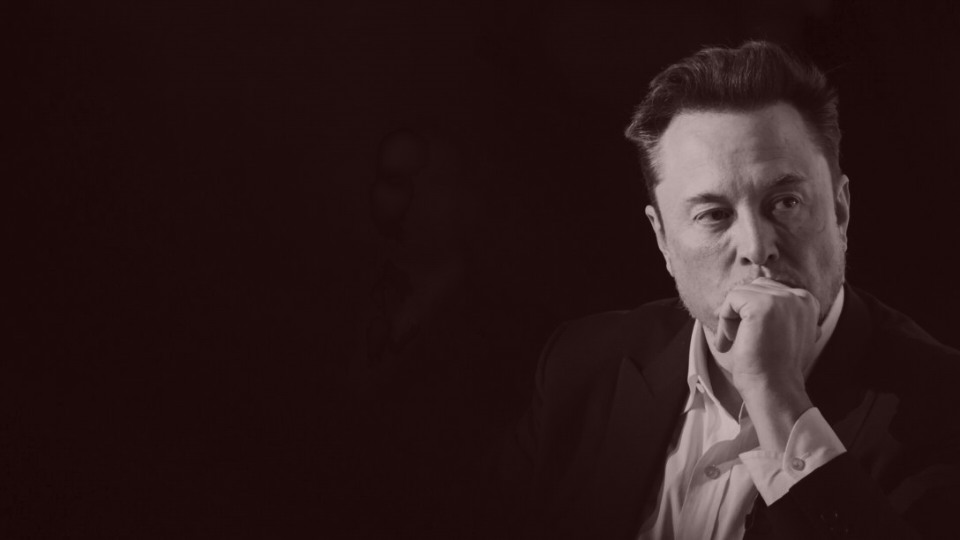
| It’s not every day that a judge vaporizes a $55 billion executive pay package, but then again, Elon Musk is no ordinary C.E.O. The question now isn’t whether Musk punches back, but rather how, exactly, he responds to Delaware Chancellor Kathaleen McCormick’s historic decision to void his 2018 options grant as unfair to Tesla shareholders. An appeal is table stakes, and likely just the beginning of a legal saga in which Musk could countersue.
This fight wasn’t inevitable, and might have ended differently if not for a fateful, all-or-nothing decision by Musk’s lawyers. Back in 2018, when Richard Tornetta, a heavy metal drummer who owned just nine shares of Tesla stock, sued Musk for breaching fiduciary duties and unjust enrichment, the billionaire could have defended the compensation arrangement while also suggesting an alternative amount that McCormick might consider, if she ultimately found it necessary to blow up his employment deal. Alas, Musk’s legal team at Cravath opted against this strategy, possibly concerned about justifying a lesser 11-figure sum and providing McCormick with an easy way out.
The gambit backfired. Musk now finds himself with nothing, in part because he declined to offer a reasonable compromise. For good measure, McCormick noted that it might even be normal if Musk did not receive any additional incentive at Tesla—after all, other visionary leaders like Mark Zuckerberg and Jeff Bezos forgo compensation, relying on pre-existing equity as their only incentive. And Musk had plenty of equity in Tesla. As the judge observed, he already owned 20 percent of the company, which he grew to more than $1 trillion in value at its peak in 2021.
Musk, of course, doesn’t want to lose the entirety of his $55 billion bonus. And while he’ll pursue an appeal, that’s not his only recourse. Musk could also seek restitution for his uncompensated services—i.e., leading Tesla from 2018 onwards. Should he pursue this strategy, he might even try to dodge McCormick by bringing fresh legal action in California (Tesla’s historic headquarters, where restitution laws are favorable) or Texas (a politically friendly environment for business leaders). He would probably aim to differentiate himself from Zuckerberg and Bezos by arguing that customers are buying Teslas due to his involvement, which is why he deserves a pile of cash from here to Mars.
But a restitution lawsuit raises several tricky questions. If Musk sues Tesla, who would be in a position to defend the company? McCormick’s 200-page ruling doesn’t exactly portray Tesla as the paragon of good governance. Instead, board directors come off as feckless lackeys—like Musk’s divorce lawyer, who runs the compensation committee and cried tears of fealty in his deposition. Would they really have the credibility to stand up to Musk effectively? And would any settlement here actually resolve the situation, or would it simply boomerang the entire affair back to Delaware as Tornetta’s legal team challenges the fairness of that arrangement?
To navigate this complex scenario, I consulted Columbia law professor Eric Talley, who suggested that Tesla board members could indeed “get a mulligan if they just frame [the amended pay package] as a settlement to a restitution suit.” However, he acknowledges that this strategy might only work if Tesla’s board is reformed, and the new directors are truly independent—you know, board members who will actually bargain with Musk rather than vacation with their C.E.O. on David Copperfield’s Bahamian island, as referenced in McCormick’s ruling, while under the influence of drugs. “The optics are better,” said Talley.
Will Musk obstruct the formation of a new Tesla board? As Tulane law professor Ann Lipton points out, the company is facing a slew of other legal challenges related to the lack of effective oversight of Musk. The actions range from the board’s failure to monitor his tweets, to how they essentially sat on their hands while Musk deployed Tesla engineers at his other companies. “It’s like a dam has broken,” she wrote when considering how McCormick’s opinion might impact those other disputes.
While an escape from Delaware may be part of the answer, if Musk really wants to fortify a defense for Tesla’s future—including, but not limited to, his future earnings—he will need to address the foundation of McCormick’s concerns. Otherwise, more judges will be emboldened to take action against his unchecked influence. |
|
|
| A few days ago, my colleague Matt Belloni and I noted how Byron Allen’s evasiveness about his financing was hurting his $14.3 billion bid for Paramount Global—and, crucially, undermining his desire to be taken more seriously in the industry. Allen, after all, has a long history of unfulfilled media acquisitions: ABC, the Denver Broncos, BET, CBS, all of which fell through.
Nevertheless, Allen has closed a handful of major M&A deals—including The Weather Channel and nearly three dozen local television stations—despite being chronically underestimated. So I would be careful about dismissing him entirely, as much of Hollywood seems to have already done. And more pointedly, given the relationships that he’s cultivated in D.C. and media circles, it’s possible that he has yet to play his most powerful hand in this saga.
Allen also knows how to use the legal system to his advantage. When he first came onto my radar, about a decade ago, the former comedian had just refashioned himself as a civil rights crusader. In 2014, he filed separate racial discrimination lawsuits against Comcast, Time Warner Cable, Charter, AT&T, and DirecTV after they refused to license his assortment of offbeat, niche channels devoted to topics like pets, cars, and comedy. At the time, I was less than impressed. Despite hiring a reputable attorney, who had once defended the city of Los Angeles in a civil case over the Rodney King beatings, the complaints had an unmistakable edge of eccentricity. I distinctly remember Al Sharpton, initially a co-defendant in the Comcast case, vehemently expressing to me over the phone that it was all ludicrous.
But Allen leveraged this legal campaign to its fullest advantage. Most of the cases settled with Allen securing licensing arrangements—and when the Comcast case didn’t, it went all the way to the Supreme Court, becoming a key test of one of the nation’s oldest discrimination laws. Allen came across my analysis and reached out for a series of lengthy conversations. I found him impressive. His core grievance—being shoved into a separate licensing path for minority-owned businesses—no longer sounded crazy, at least when articulated by him. More importantly, he convinced many others, including Sharpton and a large contingent of Democrats in Washington, to stand with him in the Supreme Court fight. Although he lost 9-0, he eventually got his deal with Comcast anyway, and won many important political allies in the process.
From there, Allen would continue to hunt opportunistically. He bought the Weather Channel, which is still a gravy train, in 2018. When Disney had to dives its local TV stations to win approval of its Fox acquisition, Allen teamed up with Sinclair to buy a stake in them (a fact that’s come up in the ongoing bankruptcy of Diamond Sports Group). Meanwhile, Allen has continued to press legal buttons. He’s currently suing McDonalds over its reluctance to invest significant advertising dollars in his television business, and he’s brought a case against Nielsen for its rating services cost.
Of course, his Paramount proposition is a different order of magnitude. Allen’s massive offer, should it ever go through, would put him in control of CBS as well as old Viacom cable networks like Comedy Central, MTV, BET, and Nickelodeon. Nonetheless, it’s impossible to gauge the feasibility of his proposal without knowing which bank, exactly, agreed to make a $3.5 billion bridge loan, the identities of those “strategic partners” that he claims will step up to take the studio’s I.P. and production lot off his hands, and further details about the debt financing. But Allen is confident enough that he tells me it would amount to a breach of Shari Redstone’s fiduciary duties not to sit down with him and his partners.
Sure, I doubt that Redstone is fazed by a prospective courtroom battle with shareholders, but as Matt and I outlined the other day, Allen’s influence might indeed complicate F.C.C. clearance. So does that mean that, if a different deal were to materialize, Allen would put up a fight? “I come in peace,” he professed, although not very convincingly. |
|
|
- A WaPo settlement: A quick scoop on Felicia Sonmez, the former Washington Post reporter who was fired after relentlessly tweeting criticism of the paper’s leadership. You may recall that the News Guild sought to contest her dismissal in an arbitration proceeding but was stymied by the expiration of an old collective bargaining agreement. Well, the News Guild and The Washington Post have just told a judge they’ve come to a resolution on this issue, following a new labor deal struck near the end of last year. The settlement would halt an appeal, although it’s contingent on a federal judge vacating his ruling from last July.
Sonmez, who now works for a public radio station in North Carolina, is still pushing a separate legal action challenging how the paper barred her from covering sexual assault issues after she publicly disclosed her own experiences as a victim. That case is currently before the D.C. Circuit Court of Appeals, where it has attracted a great amount of input from interested media companies and sexual assault survival groups via amicus briefs.
- Disney vs. DeSantis, cont’d: As you probably heard, a federal judge has dismissed Disney’s lawsuit against Florida Gov. Ron DeSantis, who essentially seized political control of the special district encompassing Disney World last year. But I wouldn’t bet against Disney, which has already filed an appeal. Sure, DeSantis could ultimately prevail, but I believe Disney made a strong argument that the governor’s actions amounted to retaliation for First Amendment-protected activity—and U.S. District Court Judge Allen Winsor’s decision for DeSantis seemed overly simplistic. Winsor reasoned that when a law is facially constitutional, courts shouldn’t delve into the motivations of the lawmakers. Disney is likely to contest the premise, and the case now heads to the 11th Circuit, which recently reversed a lower court’s decision to allow DeSantis to suspend a Florida prosecutor who spoke out, despite the governor having suspension powers under the state constitution.
- FTX math and aftermath: Dealbook had an interesting take last weekend on the possibility that FTX C.E.O. John Ray III, who has been working diligently to recover and liquidate company assets, may be able to repay the crypto exchange’s customers in full. As the Times reporters note, that outcome might complicate ongoing clawback lawsuits, such as those against Sam Bankman-Fried’s parents and Michael Kives’ K5. Sounds plausible. However, it seems less likely to impact S.B.F.’s imminent criminal sentencing. Throughout the trial, I listened to enough analogies from Judge Lewis Kaplan involving bank robberies to know he believes one can separate a criminal act from its aftermath. Nevertheless, it’s probably true that S.B.F.’s lawyers will likely argue on appeal that a jury didn’t hear the complete picture.
- Enter Sandmann: Speaking of The New York Times, the paper must soon decide how to respond to a Supreme Court cert petition from Nick Sandmann—the Kentucky teen who gained notoriety for wearing a “MAGA” hat during a class trip to D.C. and appearing to block a Native American activist at the foot of the Lincoln Memorial. A libel suit followed, and while a few media outlets settled, the Times (along with CBS, ABC, Gannett, and Rolling Stone) did not. Sandmann’s suit was dismissed on the basis that perceptions about his actions amounted to “opinion.” Now he’s seeking the justices’ attention to clarify the line between fact and opinion, echoing previous attempts to revisit Milkovich v. Lorain Journal (1990). Notably, we’re approaching the 60th anniversary of New York Times v. Sullivan (1964), the landmark opinion from the Supreme Court that significantly raised the bar for defamation cases involving public figures.
|
|
|
| That’s all for today. Questions, tips, feedback? Simply hit ‘reply’ to this email. Your notes go directly to my inbox.
Eriq |
|
|
|
| FOUR STORIES WE’RE TALKING ABOUT |
 |
| Capitalist Tools |
| Digging into Forbes’ finances as it re-enters auction mode. |
| DYLAN BYERS |
|
 |
| Nowhere to Ronna |
| A dispatch from the R.N.C.’s winter gathering in Vegas. |
| TARA PALMERI |
|
 |
|
 |
|
|
|
|
|
 |
|
|
|
Need help? Review our FAQs
page or contact
us for assistance. For brand partnerships, email ads@puck.news.
|
|
You received this email because you signed up to receive emails from Puck, or as part of your Puck account associated with . To stop receiving this newsletter and/or manage all your email preferences, click here.
|
|
Puck is published by Heat Media LLC. 227 W 17th St New York, NY 10011.
|
|
|
|