 |
 |
|
Happy Monday, I’m Eriq Gardner.
|
|
Welcome back to The Rainmaker, a private email about money, power, fame, and the legal realm where they all intersect.
In today’s edition, a look at actress Gina Carano’s lawsuit against Disney. Hollywood hasn’t seen a wrongful termination case quite like this one. Here’s how Disney is likely to defend itself.
Plus, in the wake of the Chiefs’ Super Bowl victory, a few legal dramas I’m following in the sports world. (If someone forwarded you this email, and you’d like to continue receiving it, click this link and receive karma toward your team winning next year’s big game.)
Up first…
|
|
|
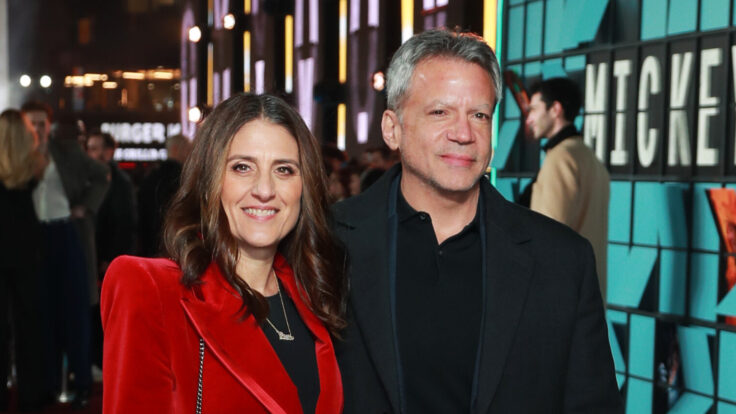
- Michael Rubin’s 99 problems: Fanatics C.E.O. Michael Rubin’s grand ambition to revolutionize the sports landscape is becoming a legal mess. His company, which has forged close ties with star athletes and professional leagues, finds itself increasingly embroiled in high-stakes battles with competitors. The latest episode unfolded just a week ago, after the company recruited executive Michael Hermalyn from DraftKings—a defection that ignited a courtroom confrontation involving top-tier attorneys from four of the nation’s most prestigious law firms.
The DraftKings complaint reads like a spy thriller. It features clandestine downloads of Super Bowl secrets and counterintelligence maneuvers, aimed at uncovering Hermalyn’s true whereabouts following a supposedly abrupt disappearance. It turns out that he relocated to California, allegedly to circumvent a non-compete agreement, while Fanatics established a shell corporation in Nevada to gain a jurisdictional advantage.
By week’s end, a Massachusetts judge had issued a restraining order curtailing Hermalyn’s activities at Fanatics, while a separate legal battle is underway in Los Angeles to determine whether the non-compete can be enforced. The development is noteworthy, but it’s only one part of a tapestry of Rubin-adjacent cases and arbitrations commanding an almost unbelievable amount of attention among the lawyers I know. This drama has the potential to shake up the sports business industry, so it’s worth tracking. I’ll have more soon.
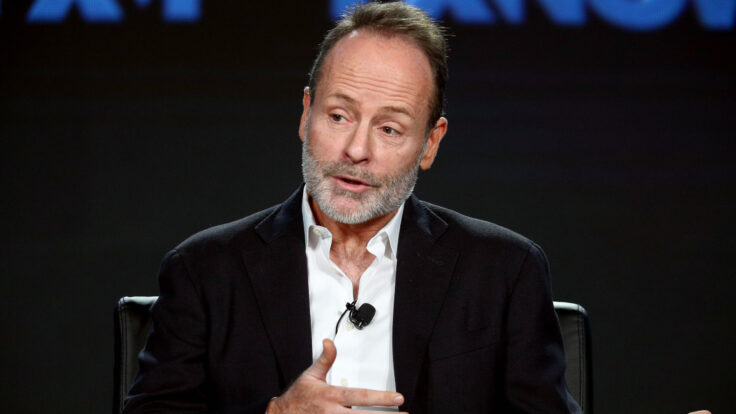
- The sports streamer antitrust dilemma: Elsewhere in the sports world, the streaming partnership between Disney, Fox, and Warner Bros. Discovery has stirred considerable excitement—be sure to check out my new colleague John Ourand’s insights—though I’m surprised by the relative silence surrounding the legality of this new venture. Allow me a bold prediction: Within the next two years, I foresee the Justice Department launching an antitrust investigation.
Sure, some are heralding this as Hulu 2.0, but I’m hearing that sports leagues are concerned that these media behemoths might collude to suppress the cost of sports broadcasting rights. Moreover, there are apprehensions about consumer pricing. No one would expect regulators to allow these companies to merge, but if you think a partnership will be overlooked, check out how the D.O.J. reacted to the “Northeast Alliance” from JetBlue and American Airlines.
In other words, even if this partnership is merely a newfangled iteration of the team-up that once led to Hulu, it could still trigger antitrust scrutiny. Want to know where Disney’s lawyers will be on Thursday? At a federal courthouse in San Jose, California, where they’ll seek to dismiss a putative class action tied to the company’s control of both Hulu and ESPN, along with purportedly anticompetitive carriage agreements that allegedly led to price hikes in the streaming live pay television market. Back in September, a judge looked at Disney’s role as both a content supplier and distributor in the sports arena and allowed the case to proceed. Given last week’s major announcement, the situation has only become more delicate, and it will be interesting to hear if the new deal gets mentioned at Thursday’s hearing.
|
| And speaking of Disney… |
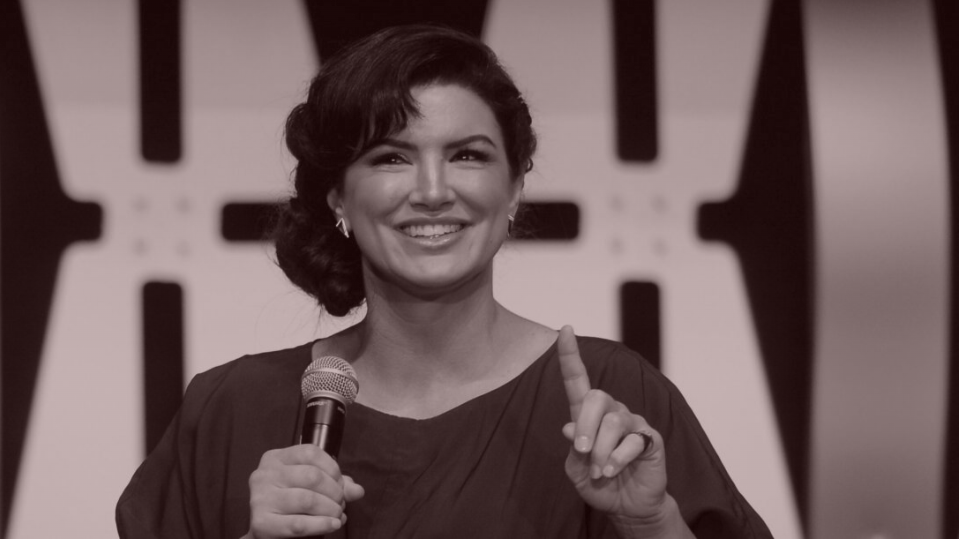 |
| Assessing the Musk-Carano Case Against Disney |
| The wrongful termination suit, bankrolled by Elon Musk, over the actress’ firing from ‘The Mandalorian,’ is being portrayed as a battle over free speech. But the real stakes are much more complex—and Carano may be a proxy for political interests who view her as a different kind of star. |
|
|
|
| Yes, yes, there is a lot of almost deafening, headline-grabbing culture wars hype surrounding The Mandalorian actress Gina Carano’s wrongful termination lawsuit against Disney, which materialized last week, a few years after the studio fired her for comparing the U.S. political climate to Nazi Germany on Instagram. On a superficial level, this is one of those everyone-hates-everyone-else situations: Carano’s allies have painted her as a defender of free speech while others suggest that she’s a hate-stoking idiot who authors juvenile tweets about her pronouns (“boop/bop/beep”), critiques of Covid lockdowns, and worse. Naturally, the hype around the case was magnified after it turned out that Elon Musk was bankrolling her complaint.
From a legal perspective, however, L’Affaire Carano isn’t really about free speech so much as it is about political speech, and how her politics may have conflicted with Disney’s carefully cultivated image. For starters, Carano is seeking to leverage an obscure provision of California’s labor code that safeguards the right to engage in political activity without interference from one’s employer. Although this law has been on the books since World War I, it’s rarely been tested, save for a few instances in the 1970s, when the state’s biggest telecom fired employees advocating for gay rights.
More recently, we’ve seen conservatives like James Damore, the Google engineer behind that infamous anti-diversity memo, and Grant Napear, a Sacramento sports radio host who was suspended after tweeting “ALL LIVES MATTER,” challenging the repercussions for voicing their opinions. Damore settled his wrongful termination case, whereas Napear survived a motion to dismiss and anticipates a trial later this year.
Disney is also facing a more sophisticated challenge than meets the eye. The company is not simply entering unfamiliar legal terrain; it’s also facing allegations of hypocrisy. Carano’s complaint points to the apparent disparity between how she was treated by Disney, and how the company dealt with Mandalorian’s marquee star, Pedro Pascal, who compared Trump to the Nazis without consequence.
Of course, Disney also enjoys constitutional rights, and the entertainment behemoth may argue that being compelled to retain Carano infringes on its own freedom of expression by dictating the content of its shows. Disney’s been down this particular road before. About a decade back, it successfully persuaded a federal judge overseeing a racial discrimination suit concerning The Bachelor that casting decisions are part of the creative process of a television program, and therefore protected by the First Amendment. Disney might revisit this argument, though Carano would likely counter that she was already part of the cast, and that she was punished for behavior committed away from set.
But Carano’s job wasn’t simply playing Cara Dune on The Mandalorian—she was also hired to be a public face for the franchise, a promoter in addition to a performer. That’s been true since Hollywood’s early days, which is why studios fret over actors’ public personas and include morals clauses in contracts. By embroiling herself in controversy, Carano jeopardized her value to Disney by altering the way that audiences perceive her. Conservatives might sniff double standards, but expect Disney to raise this point as part of its defense. After all, it’s in the image business. |
|
A MESSAGE FROM OUR SPONSOR
|
|
|
|
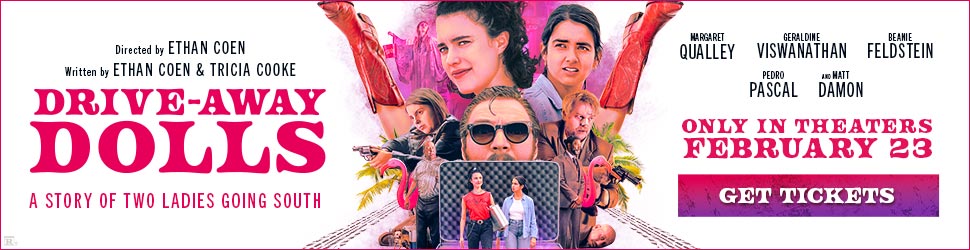
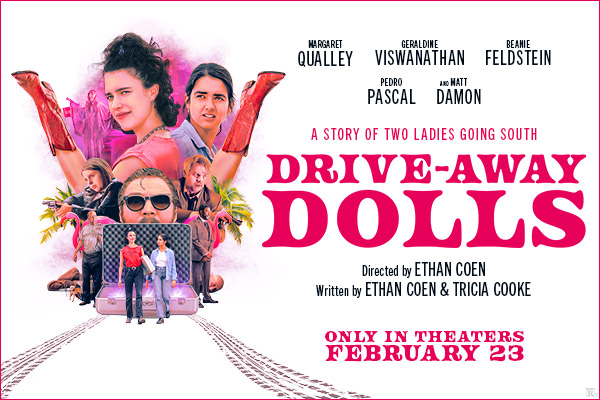
From Ethan Coen and Tricia Cooke, this comedy caper follows Jamie, an uninhibited free spirit bemoaning yet another breakup with a girlfriend, and her demure friend Marian who desperately needs to loosen up. In search of a fresh start, the two embark on an impromptu road trip to Tallahassee, but things quickly go awry when they cross paths with a group of inept criminals along the way.
|
|
|
|
|
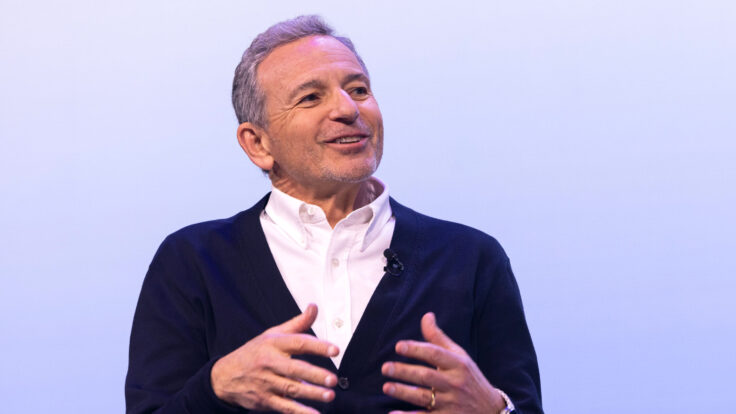
| During an interview on CNBC the other day, Disney C.E.O. Bob Iger was asked for his thoughts on the Musk-Carano team-up. “None,” he tersely replied. However, his apparent indifference is belied by his recent assignment of O’Melveny’s Dan Petrocelli and Molly Lens to address this problem. Opting for these high-priced legal stars, billing at $2,500 an hour, instead of the capable attorneys who have defended the company in previous cases (against soap stars and sports anchors who protested vaccination mandates), suggests this situation has reached a different magnitude. Indeed, the Carano affair might be as significant as the company’s ongoing clash with Florida Gov. Ron DeSantis over control of Disney World—a politically charged sensitivity that could prove enduring. (Petrocelli is also handling the Reedy Creek case.)
Obviously, so much of the Carano defense comes down to Musk, who is more than equipped to finance a legal pissing match with one of the world’s biggest companies despite a recent pay cut. Never mind that Musk’s platform, formerly known as Twitter, could be trying something more productive to win back massive advertisers like Disney rather than indemnifying users who piss off bosses. And never mind that X is part of a consortium currently before the Supreme Court to keep its freedom to moderate away from state regulation. Or that SpaceX, one of his other companies, is attempting to disembowel the National Labor Relations Board after the agency confronted him for firing employees who authored a critical open letter. If Musk’s effort to strip Disney of the ability to terminate an outspoken employee smacks of hypocrisy, he hasn’t seemed to notice.
Then there’s Carano’s legal team at the D.C.-based Schaerr Jaffe, led by Gene Schaerr. Schaerr’s other recent exploits include spearheading a class action for United Airlines employees allegedly coerced into receiving Covid vaccinations, challenging a federal rule banning gun bump stocks, and telling the U.S. Supreme Court in a recent amicus brief that Jack Smith lacks the authority to prosecute Trump because there’s no statute establishing the Office of Special Counsel. In other words, Schaerr is a dyed-in-the-wool conservative.
All this makes Carano no ordinary plaintiff. Her complaint, which can be read in full here, includes several audacious demands, such as being reinstated on The Mandalorian and receiving compensatory damages for an allegedly promised role in a spinoff that failed to materialize. Of course, it’s hard to believe this case is truly about financial remuneration, which means it likely won’t settle. Instead, it may serve as a conduit to advance political interests within the entertainment industry and beyond. As this legal saga unfolds, Carano can serve as her own spokesperson, as demonstrated by her appearance on Jesse Watters’ Fox News show on the evening of the filing, Feb. 6. After all, while Disney may be in show business, so is she.
And don’t be surprised to see more cases like this one. Musk is now actively seeking out those with gripes against Disney. This feud could swiftly escalate into a broader culture war, smack-dab in the middle of Iger’s fight to hold on to the boardroom. Ultimately, First Amendment precedent still leans in Disney’s favor—ironically, bolstered by conservative legal minds like Schaerr, who once argued it was wrong to force individuals and institutions to express a message contrary to their values. Yet it’s also clear that the noisier this case becomes, the more Disney is losing. Again, it has an image to protect. |
|
|
|
|
- Shanan settles: Speaking of Disney and obscure California labor laws, the company has just settled with Shanan Guinn, a former BP executive who was set to take a position as head of corporate affairs operations until Disney got dragged into public controversy over Florida’s “Don’t Say Gay” law, and her would-be boss, Geoff Morrell, lost his own job. Guinn sued Disney for inducing her to relocate with false representations, and this past week, the parties told a California court they had reached a deal to resolve the situation.
- Paging David Ellison…: Here’s another settlement that hasn’t been reported elsewhere: Paramount just ended a legal fight with Truman Capote’s heirs over rights to remake Breakfast at Tiffany’s. The dispute was complicated, and the terms of the deal are confidential, but it involves a new option, which should clear the way for a television series based on the famous 1958 novella if Paramount so wishes.
- The Daily Lawsuit: As the Supreme Court gets ready to tackle a case over whether Texas may limit moderation on social media platforms, state Attorney General Ken Paxton has aligned with Ben Shapiro’s Daily Wire to seek an injunction against the State Department. This new case comes amid the Biden administration’s efforts to combat global misinformation. The conservative news and entertainment organization argues that censorship is impeding its reach.
- End of an era?: While it feels like every week is legally momentous for college sports, the past seven days still stand out. The National Labor Relations Board ruled that Dartmouth athletes are employees and may form a union. Meanwhile, in a case brought by Tennessee and Virginia, a federal judge opined that an NCAA transfer rule meant to discourage pay-for-play “likely harms competition.” The judge declined to immediately stop this rule, but it’s looking more likely the NCAA could ultimately lose this case, ushering in an era of college sports free agency.
- Classy action: Attorney Adam Moskowitz, who keeps bringing new cases and class actions against celebs and others who promoted now-defunct crypto entities like Voyager and FTX, is doing a fair amount of chest-beating these days. His latest case targets the NBA and the law firm of McCarter & English, but I got distracted by the first footnote in the complaint. Is it just me, or is Moskowitz implying he was the reason that Mark Cuban sold the Dallas Mavericks?
|
|
|
|
| FOUR STORIES WE’RE TALKING ABOUT |
 |
| Neumann! |
| Is Adam Neumann’s seemingly fake WeWork bid a ruse? |
| WILLIAM D. COHAN |
|
 |
| Sports Media Roulette |
| Discussing the latest fixations of the sports-media industrial complex. |
| MATTHEW BELLONI & JOHN OURAND |
|
 |
| Little Britain |
| A candid dialogue on U.K. media talent and CNN’s micro-crises. |
| DYLAN BYERS |
|
 |
| Ronna Out of Time |
| On the trial balloons and guessing games surrounding Trump’s R.N.C. replacement. |
| TARA PALMERI |
|
|
|
|
|
 |
|
|
|
Need help? Review our FAQs
page or contact
us for assistance. For brand partnerships, email ads@puck.news.
|
|
You received this email because you signed up to receive emails from Puck, or as part of your Puck account associated with . To stop receiving this newsletter and/or manage all your email preferences, click here.
|
|
Puck is published by Heat Media LLC. 227 W 17th St New York, NY 10011.
|
|
|
|