 |
|
Happy Monday, I’m Eriq Gardner.
|
|
Welcome back to The Rainmaker, a private email about money, power, fame, and everything else that causes lawyers to dream big.
That includes David Boies, who’s seeking to extract a billion-dollar fee from his work battling Google. I caught up with him in D.C. to talk about his firm’s evolving business model, potential I.P.O. plans, and his next huge score. Plus: a Ryan Murphy settlement, and the drama at Clare Locke, 777 Partners, Media Matters, and much much more. (P.S. Are you still getting these emails forwarded to you? Do yourself a favor and subscribe here.)
But first… O.J. Simpson and Donald Trump…
|
| Trials of the Century: Juice & 45 |
|
| The timing is something to marvel over: As we process the death of O.J. Simpson, the world’s most famously acquitted alleged double-murderer, we’re also witnessing the first criminal trial of a former American president unfolding in Lower Manhattan. Of course, Simpson’s 1995 trial left an indelible mark on American jurisprudence. It was a riveting crash course for a morbidly fascinated public: Police were grilled about racial bias, DNA evidence hit the small screen for what felt like the first time, the glove didn’t fit. Nearly three decades later, I still can’t fathom why prosecutors went down that road.
But there were other ripple effects. Simpson’s trial minted a new crop of legal pundits while publicity-loving Judge Lance Ito’s decision to let cameras roll in the courtroom produced a wave of skeptics second-guessing the outcome. In the aftermath, except for a few holdouts like Florida, state judges across the nation became skittish about letting cameras into their courtrooms.
Fast-forward to this week, and Donald Trump’s trial is also shaping up to be a highly publicized affair—but one that will transpire, for better or worse, off-camera. Indeed, in terms of access, this trial is the antithesis of the O.J. saga. Not only is it taking place in one of the country’s most cramped New York City courthouses (the fancier one, familiar to Law & Order fans, is just down the block), but the jury will remain anonymous, the sketch artist is forbidden from drawing jurors’ faces, and the media practically had to beg just to attend voir dire this week. Sure, there’s the spectacle of a porn star, a tabloid bigwig, and a convicted lawyer on the witness stand, with Trump gunning for a mistrial. Expect the unexpected, but don't hold your breath for any glove fittings. |
|
|
- “We’re just going out for ice cream.”: We’re approaching the one-year anniversary of Fox News settling for $787 million rather than going to trial over its alleged defamation of Dominion Voting Systems. A few days ago, The New York Times looked at what this landmark case meant for Clare Locke, the Virginia-based boutique law firm known for its threats against media outlets reporting on powerful figures. According to the Times, Elizabeth “Libby” Locke repeatedly tried to distance her firm from the Dominion case, shattering morale among the team and leading four partners to leave to start their own firm, Meier Watkins Phillips Pusch. Locke vehemently denies this version of events.
While the Times piece is bold (given the firm’s history of litigating against the paper itself), it’s worth considering whether the exodus had as much to do with faulty McDonald’s ice cream machines as it did with election misinformation. The Dominion settlement came last April; the lawyers didn’t quit until August. During this period, the firm was representing Kytch Inc. in a trade libel case against McDonald’s over warnings to franchise operators not to allow Kytch to remotely monitor and service temperamental McFlurry machines. When the four lawyers left, Kytch followed them.
Now the Kytch case is settling, prompting Clare Locke to pursue more than $7 million in owed legal fees for more than 10,000 hours of work. Arbitrations have begun against both Kytch and the firm’s former partners—one of whom, Daniel P. Watkins, tells me that Locke’s contention that he left the firm to steal a multimillion dollar fee opportunity is “flatly untrue.” He contends that he and his colleagues started the new venture to “create a culture of professionalism and mutual respect.” Stay tuned…
- Covid in court: It feels like ages ago, but I can still recall the early days of the Covid pandemic, when companies were sweating over potential liabilities from employees getting sick on the job. (I wrote an entire column drawing parallels to the risks faced by baseball fans getting beaned by foul balls.) However, most of the subsequent legal activity centered on disputes over mask mandates and vaccine requirements, rather than the broader question of what duty employers owed their workers to keep them safe from Covid.
But that’s not to say there hasn’t been any legal wrangling around the issue. I’ve learned that a significant lawsuit has just reached a settlement. Paul Woodward, a van driver on the set of the 10th season of FX’s American Horror Story, contracted the virus while shuttling crew members between filming locations, and subsequently died. His widow alleges that Disney and Ryan Murphy’s production company failed to adhere to their own safety protocols, including the absence of a “spit shield” to separate Woodward from his passengers. The case was in the middle of summary judgment briefing when everyone figured out how to resolve the mess.
|
 |
| Billionaire Boies Club |
| The plaintiffs who sued Google aren’t receiving a penny, but the law firms who represented them are looking at a historic billion-dollar bonanza over the company’s “incognito” mode scandal. David Boies, one of the lead attorneys, says more 10-figure paydays are coming. |
|
|
|
| A couple weeks ago, news broke about an exceptional legal settlement in a multiyear class action against Google. The tech giant agreed to expunge the data it amassed from people using Chrome’s so-called “Incognito” mode. The class-action attorneys—from Boies Schiller, Susman Godfrey, and Morgan & Morgan—hailed the settlement as a “historic step” for user privacy, while Google also struck a triumphant note, boasting to reporters, “The plaintiffs originally wanted $5 billion and are receiving zero.”
But while it’s true that millions of Chrome users won’t see a cent, that $5 billion figure isn’t meaningless. In fact, it’s been memorialized as the value that the class-action lawyers and their experts are placing on the data deletion, new disclosures, and Google’s other remedial efforts—and, ergo, it will soon become the basis of their requested fees. As anyone versed in class-action settlements knows, plaintiffs’ lawyers typically seek a quarter to a third of the total sum. Well, I did the math, and I can confirm that we’re on the brink of witnessing a billion-dollar-plus legal fee petition, to be split between the three firms.
Yes, we saw a similar request earlier this year, when the attorneys who successfully contested Elon Musk’s $55 billion Tesla pay package asked the judge for $5.6 billion of Tesla stock—a fee request that is still pending. But the Google settlement is perhaps even more remarkable. According to a declaration from one of the lawyers, over 75,000 attorney hours were poured into this 4-year-old case. While that is certainly substantial, a $1 billion fee would amount to more than $13,333 per hour. And while a pay bonanza for the lawyers may not come as a shock to anyone who has ever received a meager settlement check in the mail, how about a billion or two for them and no financial redress whatsoever for the supposed clients?
As for the justification for this arrangement, here’s the spin I’ve heard from those involved: A sizable fee typically serves as the carrot in the class-action realm, ensuring the enterprise is economically viable; otherwise, who would take on such expensive cases? Usually, the fee is negotiated as part and parcel of the settlement package. But that approach can create a potential temptation for plaintiff lawyers to compromise on injunctive relief in exchange for a hefty pecuniary reward. Instead, what’s happened here is that the plaintiff firms strategically pivoted toward securing broad commitments on the privacy front from Google first, while deferring to the wisdom of the court to decide what constitutes a reasonable fee at a later juncture.
Well, that day is soon arriving. With the battle over liability concluded, the two parties will duel over the real monetary value of not being tracked incessantly by Google, and determine what to compensate lawyers for bringing about the agreed-upon changes. The plaintiffs have calculated, based on Google’s confidential metrics, that the new limits on the company’s collection of private browsing data represents about $200 million a year in decreased revenue.
Of course, Google has a vastly different estimation of the settlement’s worth. Last week, the tech giant’s attorneys told the judge that while they don’t oppose the plaintiffs’ motion to ratify the agreement, they view the marketing of the proposed deal as “gamesmanship.” They also scoffed at the supposed $5 billion of benefits for Google users, calling it “unsupported puffery.” In other words, the lawsuit is settling, and now the real legal wrangling can begin. |
|
|
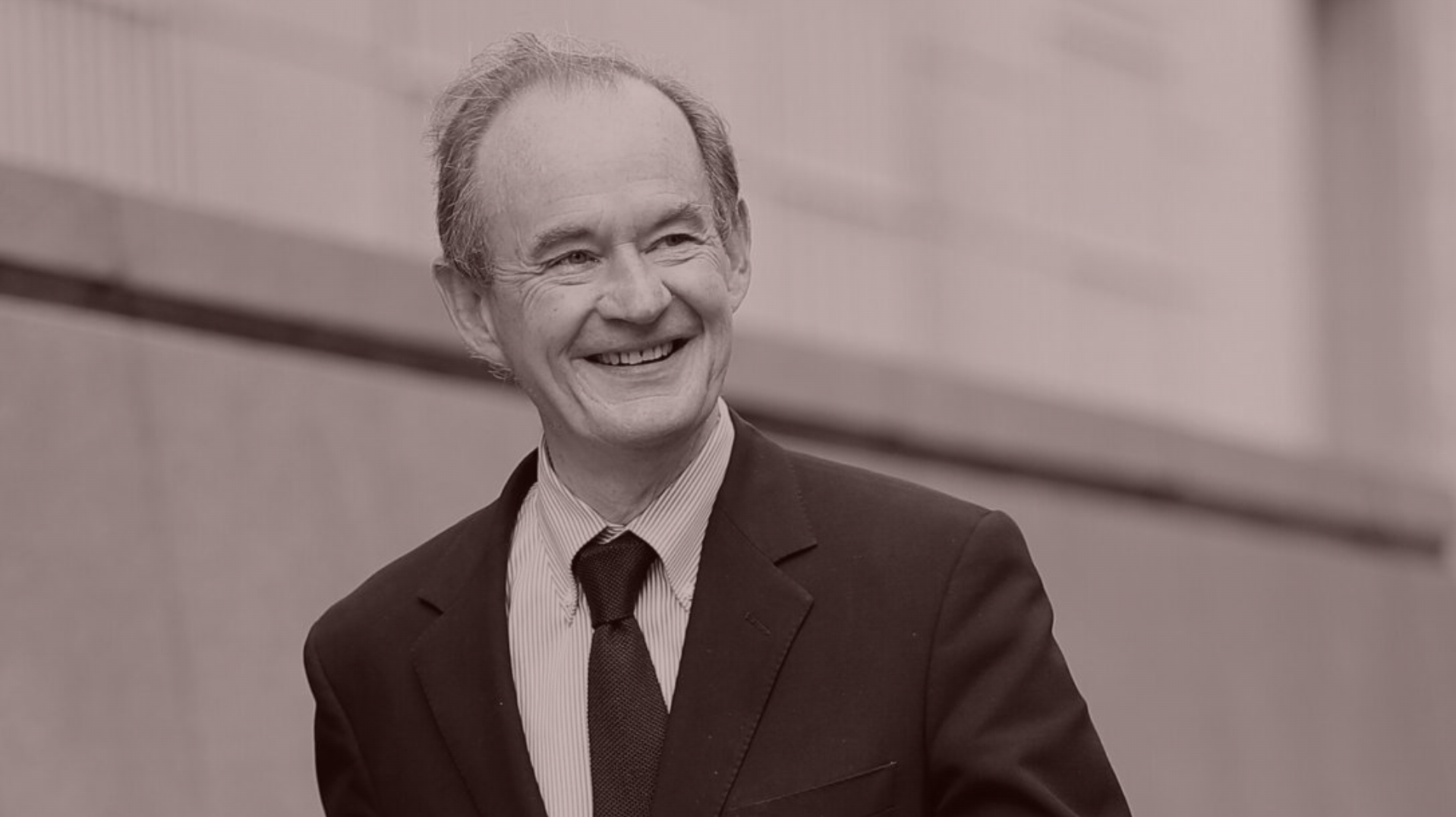
| A few days ago, I brought up the Google settlement to David Boies. He was visiting D.C. for the annual spring meeting of the American Bar Association antitrust section, and during a break in the action, we holed up at a local seafood joint. Boies sipped white wine and noshed on shrimp cocktail while musing about working cases at the age of 83, which he noted was older than President Joe Biden. He shared war stories about battling Fanatics C.E.O. Michael Rubin (more on that ongoing litigation soon) and gave me his opinion on the government’s antitrust suit against Apple, which many are comparing to his own turn-of-the-century case against Microsoft. (Let’s just say he gives surprisingly low marks to the D.O.J.’s complaint that Apple has monopolized the smartphone app ecosystem.)
I also brought up my observation that more law firms are pursuing I.P.O.s and other creative growth strategies. Boies Schiller Flexner, I noted, recently targeted crypto-endorsing celebrities as a way to seize control of an M.D.L. (multidistrict litigation) over the FTX implosion; the firm also partnered with a media company-slash-hedge fund to get the jump on a class action in the mortgage industry. The billion-dollar Google settlement, I said, seemed another manifestation of this trend.
Lighting up, Boies concurred. His firm embraces high-risk, high-reward endeavors “out of necessity,” he said, contrasting his approach with rivals that squeeze profits through leverage—a term in Big Law denoting a high ratio of associates to partners. Boies said this wasn’t his firm’s approach to staffing cases, emphasizing their more egalitarian compensation structure, which he said compels them to make bolder moves to ensure financial equilibrium for all involved. (The percentage of equity partners at Boies Schiller is not terribly different than at, say, Gibson Dunn, but Boies’ firm is known for big bonuses to associates.) Boies also underscored his firm’s rare blend of contingency-based plaintiff work and fee-based defense work, acknowledging the tensions in playing on both sides of the legal arena. (Most firms choose a side.)
Notably, the litigation boutique has weathered a few controversies (Harvey Weinstein, Elizabeth Holmes, etcetera) in the past decade, and head count is way off from its highs a half-decade ago, but according to The American Lawyer, Boies Schiller just posted its best revenue per lawyer ($1.46 million) in a decade.
Big-ticket class-action work can indeed pay off. Boies Schiller is looking forward to a fat check soon as a result of its decade-long work in an M.D.L. against Blue Cross Blue Shield. That case, over the way health insurance markets throughout the nation were divided in order to eliminate competition, settled two years ago for $2.67 billion—of which Boies Schiller will be getting $667 million (assuming the Supreme Court declines objectors’ invitations to intervene). It’s a good example of the firm at its best—not waiting around for the government to take action, as many firms do, and sticking with it long enough for the defendant to relent.
The “Incognito” case could be the firm’s next big score, even if early stories about the settlement overlooked the financial aspect of the resolution. Meanwhile, Boies himself isn’t done pursuing Google. “I’ve still got an antitrust case,” he said with a wink. |
|
|
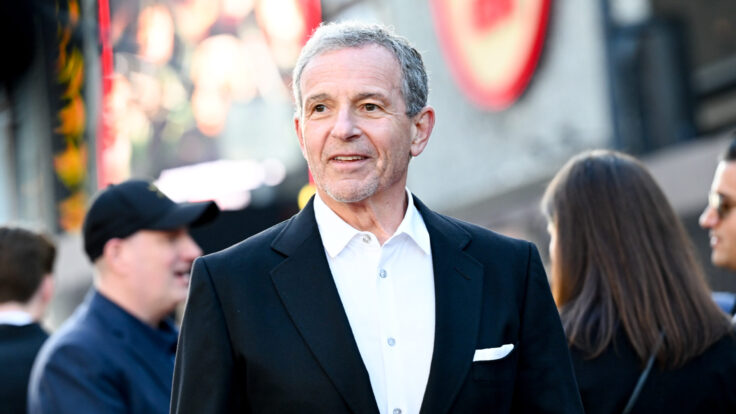
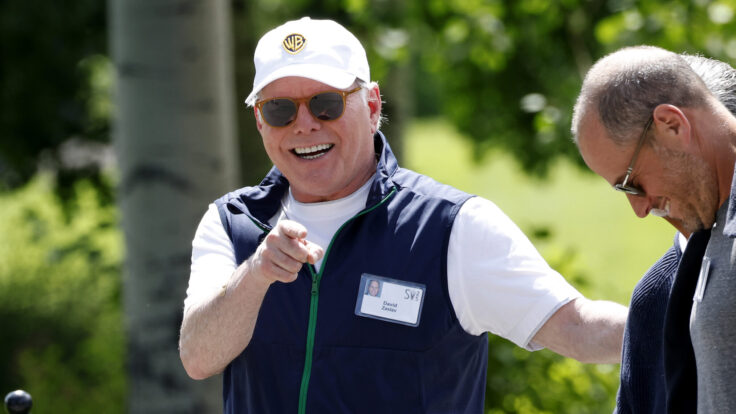
- Will Iger, Murdoch, and Zaslav get to play ball?: We may be on the cusp of a late-summer mini-trial regarding “Spulu,” the highly anticipated sports streaming service being jointly developed by Disney, Fox, and Warner Bros. Discovery. In pursuit of a preliminary injunction in its antitrust lawsuit, the competitive sports streamer Fubo TV is seeking expedited discovery followed by an evidentiary hearing. If granted, this hearing would likely take place just before the launch of the new streaming service, which is slated for autumn. There’s plenty about Spulu that’s unknown, from what it will cost subscribers to how the sharing of commercially sensitive information among co-owners will work. The evidentiary hearing, which may feature testimony from top executives, could reveal quite a bit about the new operation.
- More ‘Mandalorian’: It looks like Disney followed the First Amendment playbook I laid out for defending Gina Carano’s lawsuit against the company and Lucasfilm after she was fired from The Mandalorian. Carano, whose suit pertains to her vaccine skepticism, and who is being supported financially by Elon Musk, predictably lambasted Disney’s motion to dismiss, tweeting, “The First Amendment does not allow Disney to wantonly discriminate.” (She put the final word in all caps, but I’ll spare you.) But she may want to read this ruling last month in a case brought by Kim Moore, a Black actor who was fired from the Broadway musical Hadestown. The judge ruled that Moore had plausibly alleged she was the victim of racial discrimination yet nevertheless concluded that the production company’s First Amendment defense prevailed. As the ruling puts it, “The decisions Hadestown makes about whom to cast for which roles—its employment decisions—are inherently expressive because they are tied to the story it intends to tell and its creative expression.”
- So you want to own a sports team: There’s been considerable buzz about the financial standing of 777 Partners, the private equity firm that built its business in the insurance and aviation industries before making splashy acquisitions of soccer clubs worldwide, including the U.K.’s struggling Everton. Last week, 777 achieved a small but notable court victory against an investor that was seeking the return of $17 million. The investor pointed to media reports about financial difficulties and potential asset dissipation, and asked a New York court to issue a prejudgment attachment on $20 million worth of property. The judge refused, citing the weakness of the evidence.
|
|
|
|
| FOUR STORIES WE’RE TALKING ABOUT |
 |
| Art Market Shocks |
| Introducing Wall Power, Puck’s private email covering the art market. |
| MARION MANEKER |
|
 |
|
 |
| CNN Mysteries |
| Notes on three trending media micro-sagas. |
| DYLAN BYERS |
|
 |
|
|
|
|
|
 |
|
|
|
Need help? Review our FAQs
page or contact
us for assistance. For brand partnerships, email ads@puck.news.
|
|
You received this email because you signed up to receive emails from Puck, or as part of your Puck account associated with . To stop receiving this newsletter and/or manage all your email preferences, click here.
|
|
Puck is published by Heat Media LLC. 227 W 17th St New York, NY 10011.
|
|
|
|