 |
|
Happy Monday, I’m Eriq Gardner.
|
|
Welcome back to The Rainmaker, a private email about money, power, fame, and their intersection with the law.
In today’s edition, fresh details surrounding the infamous Bouvier Affair—an art world scandal involving a Russian oligarch, Sotheby’s, and a lost-and-found Da Vinci that’s quietly heading to trial very, very soon. There’s a lot of money on the line, and the trial may entail some uncomfortable (and totally engrossing) testimony.
Also mentioned in this email: Kevin Spacey, the Panama Papers, the $330 million “Amadea” superyacht, Roger Goodell, an Epic v. Google update, Elon Musk, First Amendment drama in Red State America, and much more.
(P.S. If someone else forwarded you this, and you’d like to continue receiving a newsletter that, in recent weeks, has explored Nazi-stolen art, C.I.A. spies infiltrating Big Tech, and Hollywood sex addiction, click this link.)
But first…
|
|
|
- Another Spacey Sex Addiction Twist: There’s been a big development in my October story about how the producers of House of Cards were trying to collect from insurers following the Kevin Spacey sexual misconduct scandal: Los Angeles Superior Court judge Mark Epstein just declared Lloyd’s of London the winner in the case. Media Rights Capital had alleged that Spacey’s sex addiction was a disability, triggering the insurance policy, but failed to show the alleged sickness commenced while the policy was active, rendering him unable to perform his on-set duties. Epstein also dismissed separate claims against Fireman’s Fund, the second insurer, but is permitting MRC another opportunity to amend a complaint alleging Fireman’s breached their contract by not obtaining Spacey’s medical records. We may see an appeal.
- A Panama Papers Mystery: I usually steer clear of writing about disputes where someone is representing him- or herself in court (a good conversation over drinks), but I’m oddly fascinated by the nitty-gritty of John Doe v. The Federal Republic of Germany. The plaintiff claims to be the whistleblower who leaked the Panama Papers—a trove of sensitive files from the Panamanian law firm Mossack Fonseca that revealed how affluent clients evaded taxes through offshore schemes. John Doe now asserts that Germany has reneged on its pledge to pay a €5 million reward for providing the complete Panama Papers to aid in prosecuting tax cheats, and is suing for breach of contract.
However, federal judges won’t let this individual proceed pseudonymously. Despite hearing claims that being named would be life-threatening, the judges remain unconvinced that the individual can’t share his identity under seal. After failing in D.C., the plaintiff is now pursuing a case in New York, paying filing fees, but getting stuck convincing a judge to transmit the paperwork to serve a foreign nation under the Hague Convention: The judge insists on knowing this individual’s identity before taking such an extraordinary step.
- Who Owns the Superyacht “Amadea”?: For months, the U.S. government has been locked in a murky legal battle with the Russian aristocracy over control of “Amadea,” the $330 million, 350-foot superyacht the Justice Department seized in 2022 as part of a money laundering investigation. No charges have been leveled yet, but given the ongoing Russia-Ukraine conflict, there’s little willingness to appease oligarchs by returning seized assets.
Now, the plot thickens: In a forfeiture suit, the U.S. government has named Suleiman Kerimov, a billionaire trader and politician reportedly close to Vladimir Putin, as the owner. But Russian oil baron Eduard Khudainatov claims the coveted ship actually belongs to him. The U.S. government alleges that the millions spent to maintain the yacht flow through U.S. financial institutions, violating sanctions. Yet, in a claim to the property filed this past week, Khudainatov asserts that neither he nor his company are on the sanctions list. Stay tuned.
|
| Now for another tale of the Russian elite… |
|
|
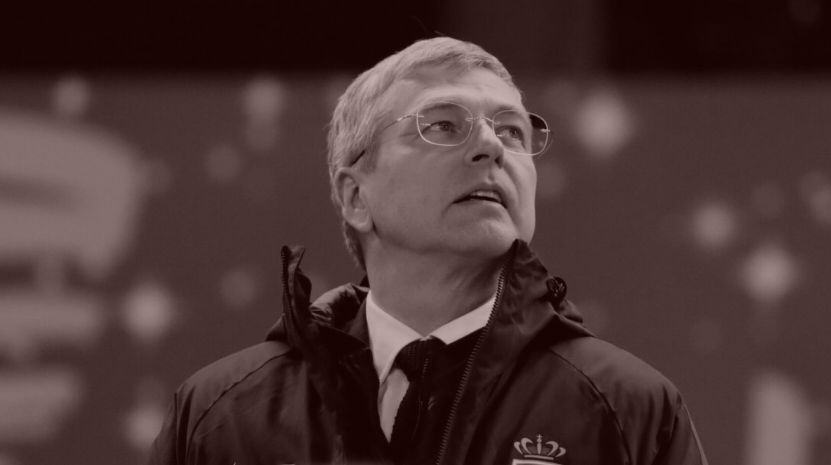
| A courtroom in downtown Manhattan is the last place you’d expect to find Dmitry Rybolovlev, the billionaire Russian fertilizer mogul who, like any oligarch who hasn’t yet fallen off his balcony, is considered an ally of Vladimir Putin. But he might soon appear in New York to persuade a jury that Sotheby’s colluded with a Swiss art dealer, Yves Bouvier, to trick him into overpaying by hundreds of millions for artworks including Leonardo da Vinci’s Salvator Mundi.
Rybolovlev made headlines back in 2013 when he acquired the “lost” masterpiece for $127.5 million, only to flip it four years later to Saudi Crown Prince Mohammed bin Salman for a staggering $450 million. Quite a profit, but Rybolovlev still contends that he was snookered in the initial acquisition by those who were supposed to be assisting him in building one of the world’s most enviable private collections.
Of course, the geopolitical environment was completely different in 2018, when Rybolovlev first lodged his complaint. At the time, he was perhaps best known in U.S. media as the mysterious buyer of Donald Trump’s Maison de L’Amitie, a colossal 62,000-square-foot estate in Palm Beach, for which the Russian paid an astounding $95 million in 2008—then the most expensive residential property transaction in town. Even more mysteriously, Rybolovlev never spent a night in the house. A few years later, he decided to tear it down, divide up the land into three parcels, and sold it for a small profit.
Now, with Russia approaching the dawn of its third year at war with Ukraine, Rybolovlev is facing another sort of scrutiny—and taking great pains to keep his oligarch status from tainting the jury. In fact, Rybolovlev’s legal team recently sought to prevent Sotheby’s from even mentioning the terms “oligarch” or “Mother Russia” at trial next month, arguing that these “slurs” would be prejudicial. They also insisted that Sotheby’s not be allowed to tell jurors how Rybolovlev became wealthy in the 1990s. Shortly before Thanksgiving, a judge denied the latter demand, saying that Rybolovlev’s wealth and sophistication as a businessman were fair game.
As such, the jury will likely hear all about how Rybolovlev somehow ascended from cardiologist to chairman of the Russian fertilizer giant Uralkali in the wake of the Soviet Union’s collapse. Less likely to be revealed during the trial are other, even stranger points in his biography: how he spent nearly a year in prison after being accused of plotting a rival’s murder, for example, or his use of offshore shelters during perhaps the world’s most expensive divorce, or details of his ultra-luxury V.I.P. resort on Skorpios, the private island once owned by Aristotle Onassis.
More importantly, this extraordinary legal showdown promises an insider’s view into the often murky world of high-stakes global art dealings. From the tax-haven freeports where the uber-wealthy store their art to meetings in strongrooms on private islands, this one has it all… |
|
|
| At the trial beginning January 8, a special focus will be on the dynamic between Rybolovlev and Yves Bouvier, a Swiss expert in shipping art, along with Sotheby’s awareness of their dealings. The association began in 2002 when Rybolovlev, new to the art market, purchased a Chagall painting and stored it at a Geneva freeport where Bouvier had been operating. Introduced through a mutual acquaintance, Rybolovlev was impressed by Bouvier’s demeanor and his offer to streamline his art acquisitions. Over the next dozen years, Bouvier facilitated Rybolovlev’s accumulation of an impressive art collection including works by Picasso, Matisse, Rodin, and Magritte.
Rybolovlev says he came to think of Bouvier as one of his closest friends. He invited the Swiss art dealer to small gatherings, including birthday parties in Hawaii and celebrations in an $88 million Central Park penthouse. The two traveled together, attended soccer matches, and explored art museums. And the relationship appeared to be mutually beneficial. After Da Vinci’s Salvator Mundi was suddenly rediscovered in 2005, at a New Orleans estate sale, Rybolovlev became fixated. Da Vinci hadn’t created many works, and this one was reputed to have been made around 1500. As the legend went, it once belonged to King Charles I of England before slipping into obscurity. Yes, there were doubts about its authenticity, but that only fueled the public’s curiosity. When Salvator Mundi was exhibited in 2011 at the National Gallery in London, Rybolovlev seized the opportunity, arranging for Bouvier to negotiate a purchase.
However, after Rybolovlev forked over $127.5 million for the work, he was surprised to read in The New York Times that Salvator Mundi had sold for between $70 million and $80 million. This led to a confrontation. The Russian says he asked Bouvier about the discrepancy and was told the price didn’t account for commissions, fees, and other expenses. Rybolovlev, having a low opinion of the media, accepted this explanation, until a month later, when, at a New Year’s Eve party in St. Barth’s, he apparently learned from a partygoer that a Modigliani that he had purchased with assistance from Bouvier for $118 million had actually been listed at a sales price of $93.5 million. Soon, a clearer picture emerged: Bouvier had been front-running him by purchasing the artworks first, and then marking up the price.
Feeling deeply betrayed, Rybolovlev accused Bouvier of violating his role as his agent. Rybolovlev insists that Bouvier’s only compensation was to be a 2 percent commission. However, that alleged arrangement was never put in writing, and Bouvier denies this was the precise understanding between the two. So far, he has fended off criminal charges in Switzerland and Monaco concerning the alleged defrauding of clients like Rybolovlev.
As for Sotheby’s, Rybolovlev and his legal team at Emery Celli allege that the auction house provided “substantial assistance” to Bouvier, effectively aiding and abetting a fraud. Indeed, Sotheby’s and its employees were involved in most of the contested transactions, and the company’s then-C.E.O. William Ruprecht personally signed off on what’s known as private treaty sales to Rybolovlev. Additionally, Sotheby’s vice chairman of private sales, Samuel Valette, worked closely with Bouvier to adjust the valuation of Salvator Mundi and delete Bouvier’s earlier purchase from its provenance.
Rybolovlev says documents from Sotheby’s helped persuade him that he was getting an original Da Vinci at the best possible price. In a summary judgment ruling in March, U.S. District Court Judge Jesse Furman pointed to such evidence in allowing claims over Salvator Mundi and four other works to proceed to trial. |
|
|
| Obviously, the auction house will hope to convince a jury that its involvement in the Bouvier affair was both minor and routine. Judge Furman’s March ruling did establish that, for most of the artworks initially in dispute, there wasn’t enough evidence of Sotheby’s awareness of Bouvier’s treachery. The case was narrowed down to just a few works, in which the compiled evidence presented a less clear picture about what a reasonable juror might conclude about its role in the alleged fraud. Thus, in the upcoming proceeding, Sotheby’s will attempt to distance itself from Bouvier as best it can.
But even more interesting is the way that Sotheby’s legal team, which includes Hogan Lovells partner Neal Katyal (former acting solicitor general in the Obama years) and Arnold & Porter partner Marcus Asner, is mounting a counterattack on Rybolovlev. In short, they’re angling to place the blame on the billionaire businessman, who “should have known better,” for not conducting due diligence on massively expensive investments. At his deposition, Rybolovlev claimed that his wealth was merely the product of incredible luck, but Sotheby’s has a different perspective. Intriguingly, much of the relevant evidence is currently sealed, but should come out in an open courtroom.
Finally, there is one aspect of the case that seems to be a true wild card in the final weeks before the trial. It revolves around the landmark 2017 auction at Christie’s, Sotheby’s rival, where Rybolovlev sold Salvador Mundi to a mysterious buyer, later revealed to be M.B.S. While Rybolovlev’s legal team contends that the staggering resale price is irrelevant and might skew the jury’s view of the case, Sotheby’s has been pressing the suggestion that this later sale could show an absence of market manipulation—that it’s possible both Bouvier and Rybolovlev managed to acquire the Da Vinci painting for less than its true value, and that a jury needn’t accept the earlier prices as indicative of what it’s really worth. The judge has ruled on nearly everything else, but on this particular point, he’s holding off on a decision until the final moments. |
| Elsewhere in the Legal World… |
|
- If Montana can’t manage to ban TikTok, it’s hard to envision the success of similar challenges. Here’s the recent ruling, which absolutely shreds the state’s attempt to restrict free speech in response to a perceived China problem.
- Just as a federal court shoots down Montana’s TikTok ban, Penguin Random House is suing over book-bans in Iowa aimed at keeping LGBTQ+ themes out of schools. (I guess there’s plenty of First Amendment fights in Red State America these days.)
- We’re midway through the antitrust trial between Epic and Google over the Fortnite maker’s challenge to the tech giant’s distribution rules. Last week, a judge denied Google’s bid for a directed verdict, saying, “I’m not taking this away from the jury.” This highlights how Google probably made a mistake by seeking damages in a countersuit. Without that move, there wouldn’t have been a jury.
- From efforts to schedule a hearing concerning the F.T.C.’s challenge to the Microsoft-Activision merger, we’ve learned that the NFL Sunday Ticket antitrust trial is supposed to last six weeks, starting in late February. For comparison, the above-mentioned Epic-Google trial is only scheduled to last five weeks. NFL commissioner Roger Goodell might be stuck in Los Angeles for a very long time after the Super Bowl.
- On The Powers That Be podcast, I explained why I wasn’t impressed by Elon Musk’s lawsuit against Media Matters. Still, for anybody paying attention, it’s also worth keeping an eye on a suit from the Twitter rival Rumble over an advertiser-pressure campaign. With Clare Locke on board, this one is better lawyered. Here’s the complaint.
- As for Elon, his interview with Andrew Ross Sorkin got plenty of attention. But my favorite quote pertained to all those copyright suits against A.I. companies. “I don’t know, except to say that by the time these lawsuits are decided, we’ll have digital god,” he said. “So you can ask digital god at that point.” Alriiiight.
- Apologies to Roberta Kaplan for the inadvertent misspelling of her name last week. Thanks to readers for alerting me.
|
| That’s it for this week. |
|
|
|
| FOUR STORIES WE’RE TALKING ABOUT |
 |
| Niche Film Magic |
| Dissecting the post-Thanksgiving theatrical boomlet. |
| SCOTT MENDELSON |
|
 |
| The RedBird Coop |
| On Zucker’s Telegraph bid, Iger’s cold war, and more. |
| WILLIAM D. COHAN |
|
 |
|
 |
|
|
|
|
|
 |
|
|
|
Need help? Review our FAQs
page or contact
us for assistance. For brand partnerships, email ads@puck.news.
|
|
You received this email because you signed up to receive emails from Puck, or as part of your Puck account associated with . To stop receiving this newsletter and/or manage all your email preferences, click here.
|
|
Puck is published by Heat Media LLC. 227 W 17th St New York, NY 10011.
|
|
|
|