|
|
Happy Monday, I’m Eriq Gardner.
|
|
Welcome back to The Rainmaker, my private newsletter focused on the legal maneuvering inside Hollywood, Silicon Valley, Washington, and Wall Street.
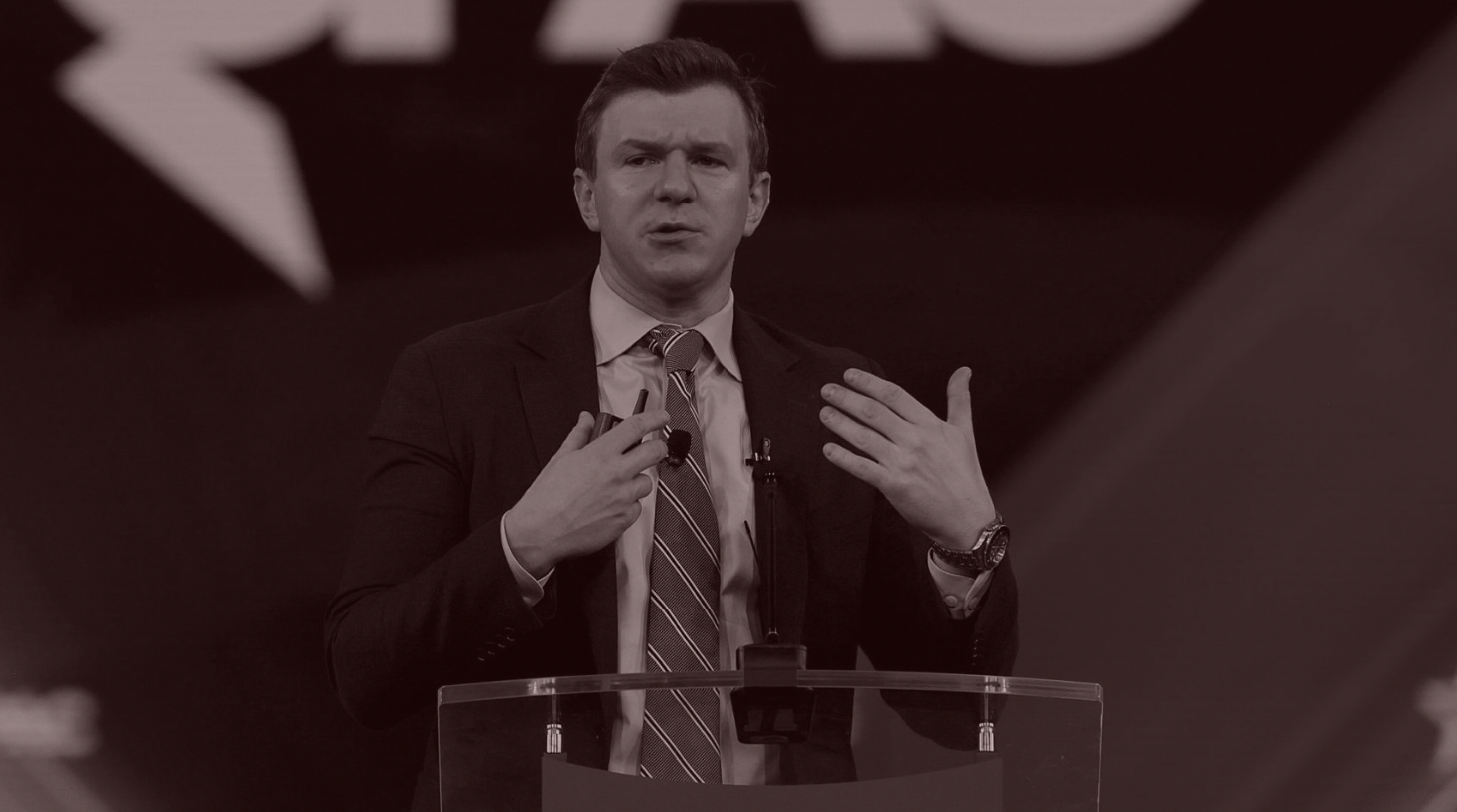
This week, I’m taking a closer look at the James O’Keefe trial playing out in Washington—a legal saga that could set new boundaries between what constitutes journalism and what counts as spying. Plus an update on Disney’s anti-vax legal headache, a Fifth Circuit thought bomb, and how a Making a Murderer defamation suit offers a rare look inside Netflix.
But first…
|
|
|
| It’s easy to forget these days that Hollywood once was the epicenter of vaccine hesitancy. Yes, in the years leading up to the Covid pandemic, stars like Robert De Niro and Jim Carrey complained about government overreach when California lawmakers, alarmed that student vaccination rates had dropped in wealthy Los Angeles enclaves, targeted parents trying to wriggle out of school mandates. Led by the controversial activist Robert F. Kennedy Jr., some like Jessica Biel even began appearing at California’s capitol to lobby against a bill meant to crack down on doctors who issued phony exemptions.
This chapter of celebrity medical history has become newly relevant as Disney’s ABC unit fights with Ingo Rademacher, the longtime General Hospital actor who was fired last year for his refusal to be vaccinated against Covid, despite his attempt to claim a religious exemption. Now he’s suing his former employer for alleged discrimination and wrongful termination.
But here’s where things get interesting. In response to the lawsuit, ABC—represented by Steven Marenberg and Jarryd Cooper at Paul Hastings—is seeking records from Protection of the Educational Rights of Kids (PERK), the anti-vax group allegedly bankrolling the suit, in order to ascertain whether Rademacher’s religious convictions are real. Rademacher, whose legal team includes none other than Kennedy Jr., himself, wants to quash the subpoena on the grounds that it violates his privacy and his attorney-client relationship. He also argues that the only point of the probe is to harass him.
ABC, of course, sees it differently. “Central to this case… is the issue of whether Mr. Rademacher actually has a sincerely-held religious belief that prevented him from getting the Covid-19 vaccine, or (as ABC intends to demonstrate through discovery), whether his objection to the vaccine was based on other reasons, perhaps genuinely held, but not religious in nature,” writes Marenberg. Rademacher’s motion to quash the subpoena will be argued on Sept. 27.
Given how fervent the current Supreme Court majority is about religious liberty, the Rademacher-ABC legal battle showcases a subject—the line between one’s religious beliefs and non-religious choices—that has the potential to become genuinely important. That’s especially true now that the Dobbs decision has unleashed a wave of legislative action on questions of bodily autonomy. So perhaps it makes sense that ABC wants to explore the subject of how secular liberals were, in some cases, the original anti-vaxxers. |
|
|
| My social media feed lit up this weekend after the Fifth Circuit Court of Appeals rendered an extremely controversial opinion in NetChoice v. Ken Paxton, which would allow Texas to forbid social media companies from restricting speech on the basis of one’s viewpoint. In short, Circuit Judge Andrew Oldham held that corporations don’t have a First Amendment right to decide what goes on their own platforms. Quite amazingly, Oldham even found support for this notion in Section 230 of the Communications Decency Act, a federal statute that’s been widely interpreted as providing immunity for a digital service provider’s moderation decisions.
I covered some of the controversy surrounding the Texas law, HB 20, back in May, when the Fifth Circuit first attempted to lift an injunction on enforcement of the law—an attempt that was promptly overturned by the Supreme Court. If this case now makes a return trip to the high court—as it almost certainly will—the justices may actually have to grant a full review this time around. Oldham’s word won’t be the last opinion on this subject. |
|
|
- First, an intriguing update in Colborn v. Netflix, in which retired Wisconsin cop Andrew Colborn is trying to prove that the hit docuseries, Making a Murderer, libeled him by insinuating that the police framed the show’s main subject, Steven Avery. In summary judgments filed Friday, Colborn attempts to demonstrate that Netflix’s actions meet the definition of “actual malice” by offering a rare look at the streamer’s creative notes: suggestions on “bad guy” music, family photos to place Avery in a sympathetic light, and direction to check source material for anything about planting evidence. Netflix, though, submits that it never saw old court records, wasn’t responsible for fact-checking, and had no reason to question the filmmakers. Netflix also adds that it’s not defamatory to tell a story from the convicted murderer’s perspective and adds that a win for Colborn would prevent journalists, documentarians, and ordinary citizens from fully discussing criminal trials.
- The New York Times has filed a motion to dismiss the Charles Harder-led libel lawsuit from the Dfinity Foundation, a Switzerland-based blockchain organization that was the subject of a Times story from Andrew Ross Sorkin and Ephrat Livni. The Times’s reporting leaned on Arkham Intelligence, a crypto analysis firm that Dfinity Foundation suspects has nefarious origins. But in a motion to dismiss, the Times states that “conspiracy theories about Arkham” don’t suffice for real facts that would cause the paper to doubt the firm, that Dfinity is objecting to non-actionable opinion, and that other statements in its article are substantially true. Here’s the full motion.
- Finally, some news on the incredible legal saga surrounding Pras Michel, the Fugees star accused of acting as an unregistered foreign agent by secretly lobbying Donald Trump’s Justice Department to back off its investigation into the 1MDB scandal. As I wrote last month, prosecutors tacked on the extra charges after Michel declined to take a deal in which he would have pleaded guilty to obstruction of justice, as well as a lesser violation of the Foreign Agents Registration Act, and spent up to 16 months in prison under sentencing guidelines.
Now, as Michel faces the possibility of 20 years in jail and the case proceeds toward a trial, U.S. District Court Judge Colleen Kollar-Kotelly has rejected Michel’s grounds for dismissing the case, including his lawyers’ challenge to the constitutionality of the foreign agents law and Michel’s argument that he’s being selectively prosecuted. Still, the judge said she wants to hear more about how and why the government only brought its superseding indictment after Michel rejected a plea offer. Here’s the opinion.
|
|
|
| This year marks the 50th anniversary of the Watergate break-in, so it’s only fitting that Washington is once again salivating over a case that explores the boundaries between political subterfuge and investigative journalism. I’m talking, of course, about Democracy Partners v. Project Veritas, the latest in a series of lawsuits targeting Project Veritas and its crusading founder, James O’Keefe, over their infiltration of left-leaning organizations. At the trial, which began Thursday and is now headed for a dramatic finish, a jury will decide if Project Veritas engaged in legitimate journalism, like what Bob Woodward and Carl Bernstein pursued once upon a time, or rather nefarious political spying, similar to those Richard Nixon-connected burglars who once broke into D.N.C. headquarters. It’s Watergate, the remix.
Project Veritas was founded by O’Keefe in 2010 to capitalize on his blockbuster undercover video recordings targeting ACORN, a liberal grassroots organization, that were selectively edited to discredit their work helping low-income communities. The videos, which O’Keefe promoted by dressing up as a pimp, transformed the then 25-year-old activist into a star of the Fox News cinematic universe. ACORN filed for bankruptcy soon afterwards.
In many ways, these provocative sting videos were a harbinger of Veritas stunts to come: everything from having a “drug smuggler” apply for Medicaid benefits to surreptitiously dialing into CNN’s morning editorial meeting. As for the current trial, it’s connected to one of Project Veritas’s most notorious exploits, part of O’Keefe’s 2016 “Rigging the Election” series, which he later boasted was as important to electing Donald Trump as anything done by Wikileaks or the Russians.
Here’s what happened. In April, 2016, a political consultant named Scott Foval ran into an undercover Veritas hand at a Wisconsin bar, and, with some encouragement, started mouthing off about disrupting Republican events. During this conversation, the two began discussing voter fraud schemes too, and Foval suggested that Democratic consultant Bob Creamer was a true virtuoso when it came to shady political activity. “Bob Creamer comes up with a lot of these ideas,” said Foval. “I’m the white hat, Democracy Partners is kind of a dark hat.”
Project Veritas followed the lead. After figuring out that Creamer was the husband of Democratic Rep. Jan Schakowsky, as well as a top consultant to Hillary Clinton, Project Veritas developed a plan to ingratiate itself to Creamer. The plot was slightly exhausting in its choreography. The undercover Veritas employee would tell Foval he had a wealthy client, “Charles Roth,” who was interested in making a donation. Foval arranged a meeting between “Roth” and Creamer. At the meeting, the fictitious millionaire (with an elaborate backstory, a social media profile, and having made an actual donation) would eventually introduce his niece, “Angela Brandt,” who wanted to volunteer. Eventually, “Angela”—another Project Veritas employee named Allison Maass—got an internship at Creamer’s consultancy, Democracy Partners, where she secretly recorded everything she experienced.
The recordings themselves weren’t particularly shocking. Maass caught operatives discussing tactics like “bracketing,” or staging counter messaging wherever an opponent holds an event; “bird-dogging,” or placing sympathetic voters to aggressively question an opponent on the campaign trail; and other tricks of the trade, like the time Clinton had a Donald Duck impersonator sent to Trump Tower to bring attention to how Trump hadn’t released his taxes. Pretty standard-issue stuff for a political shop, frankly, and Creamer resisted undercover attempts to bait him into endorsing a voter fraud scheme. Still, a few of the clips went viral in the final months of the election, and even provided Trump with some grist for his third debate with Clinton. Both Creamer and Foval lost a number of their top clients in the aftermath.
Creamer is now suing Project Veritas for misrepresentation and surreptitious taping. He’s demanding about $1 million for the contracts he lost, plus punitive damages. It’s not the first time that Project Veritas has defended itself in court, but it’s the first time a jury will render a verdict about the group’s activities in one of the cleanest legal tests ever of the perennial question, “Is this journalism?”
According to Paul Calli, the attorney representing Project Veritas, it’s an open-and-shut case: “They’re journalists in the finest American tradition called muckraking,” he said in his opening statement. “They did nothing illegal. They remain proud of their journalism. This is sour grapes.”
But Creamer’s attorney, Joseph Sandler, has sought to turn the case back to O’Keefe’s political advocacy and his relationship with the Trump campaign. “The evidence will show James O’Keefe met with Trump,” Sandler countered in his opening. “And the evidence will also show they didn’t ask questions or investigate much of anything. They just sent Ms. Maass in with a hidden camera. What journalist would do such a thing?” |
| Journalism Isn’t a Tort, But… |
|
| It may seem like kismet that the Creamer-O’Keefe smackdown should come to a head now, in the midst of the post-Trump reckoning, as a sort of referendum on Project Veritas’s brand of politically one-sided, gotcha journalism. In fact, both sides approached the legal questions here extremely tactically, leaning into this particular boundary-testing legal showcase.
For Creamer’s side, the strategy was to circumvent not only New York Times v. Sullivan and Hustler Magazine v. Falwell—two Supreme Court opinions which make it hard for public figures to recover damages from publishers over offensive statements—but also to steer around Teter v. Project Veritas, a libel suit from a woman named Shirley Teter who claimed she was defamed by what Foval had told an undercover Veritas operative in that Wisconsin bar (“She was one of our activists trained up to birddog…”). Just weeks before Creamer brought his own suit, Teter’s defamation case fell apart mid-trial when the judge wondered aloud whether her claims would be laughed out of court if it had been the late Mike Wallace from 60 Minutes in the defendant’s chair. The judge then issued a directed verdict that there was no actual malice.
So when Democracy Partners sued, Creamer didn’t make any libel claims—nor did he seek damages for loss of reputation. Instead, Creamer’s lawyers decided to focus on the acts that preceded publication. They aimed to make this showdown analogous to Sanders v. ABC, a big case from the 1990s where an undercover PrimeTime Live reporter secretly taped psychics to reveal the tricks of that trade. Mark Sanders, a “telepsychic,” went up and down the appellate circuit and eventually established a new precedent regarding the tort of “intrusion”: Specifically, that news publishers aren’t immune from legal action in cases where there’s an expectation of privacy in the workplace, and where the invasion is highly offensive. In the end, Sanders resulted in the first ever punitive verdict in a privacy case against a news organization. ABC settled for $900,000.
But Democracy Partners v. Project Veritas detoured… slightly. First, on summary judgment, U.S. District Court Judge Paul Friedman rejected a trespass claim against O’Keefe’s outfit because the plaintiff didn’t actually hold the lease to its office, shared its space with others, and ultimately lacked the ability to exclude people like Maass from walking in. As for the other big privacy claim—wiretapping—under both federal and D.C. law, only one party needs to consent to a recording, so as long as there was no criminal or tortious purpose, Maass was perfectly free to hit record on her device without telling anyone else. That’s different from many states where all parties need to consent.
But tortious. That’s the key word here, and what’s really the driving force in this trial. Did Maass have some sort of fiduciary relationship with Democracy Partners that she breached? If so, then yes, she had a tortious purpose and committed illicit wiretapping.
Project Veritas’s big tactical move in this case is welcoming a referendum about its journalism. The group says that Maass had no fiduciary relationship with Creamer because her eight-day internship was unpaid. It lasted less than eight days, and Maass never signed an employee contract or non-disclosure or confidentiality agreements. Most importantly, Project Veritas argues, her purpose couldn’t have been tortious because it was journalistic.
Judge Friedman was dubious at first when Project Veritas raised this “journalism defense” to wiretap statutes, which don’t include any explicit provision for recordings by journalists. Last year, when he had to decide whether Democracy Partners could introduce evidence showing that O’Keefe and Trump had been chummy during the 2016 election, Friedman wrote that he was “not persuaded that defendants’ supposed journalistic status is a fact of consequence in determining this action.”
That said, the judge continued, if Project Veritas wished to “open the door” to the argument that they are journalists, Democracy Partners should be allowed to introduce evidence that O’Keefe’s operation was primarily interested in electing Trump. Both sides eagerly accepted that bargain, opening those doors wide to the trial now at hand. |
|
|
| The Chicago political activist Saul Alinsky—who, incidentally, once mentored Creamer—famously said that “any effective means is automatically judged by the opposition as being unethical.” At trial, Veritas attorney Paul Calli brought up this quote and remarked to the jury, “They call our journalism unethical. How rich is that?”
Calli was taking a shot at Democratic consultants, like Creamer, for complaining about the same sort of political skulduggery that is the political operative’s stock-in-trade. But upon further thought, is stuff like “bracketing” and “bird-dogging” really so scandalous? What’s the real value of Project Veritas’s exposés? Anyone who has listened to MAGA nation rail about voter fraud and the need for election integrity likely already has an opinion on this, as do most Democrats, who dismiss Republican complaints, in turn, as conspiracy mongering.
It’s an important question because the other big claim in the Creamer-O’Keefe case is fraudulent misrepresentation—all the artifice involved in getting Maass an internship in the first place. In defense of that claim, Project Veritas is arguing that Creamer didn’t lose his contracts because Maass had misrepresented her true identity, but rather because shocking truths about Democracy Partners’ tactics and practices were revealed to the world. Hence, the trial has become a referendum on the plaintiff’s activities too.
If this trial involved different parties in an earlier era—say, Deep Throat exposing all the president’s men right after Watergate—maybe that would influence the outcome. But here the most important context may be Washington, itself: a predominantly liberal enclave where philosophical questions surrounding the sanctity of journalism have sometimes become secondary, in the aftermath of Trump and Jan. 6, to partisan realpolitik. The verdict, courtesy of a predominantly liberal jury, should arrive in the next few days. |
|
|
|
| FOUR STORIES WE'RE TALKING ABOUT |
 |
| The Oscars Makeover |
| Can C.E.O. Bill Kramer and president Janet Yang save the Academy from itself? |
| MATTHEW BELLONI |
|
 |
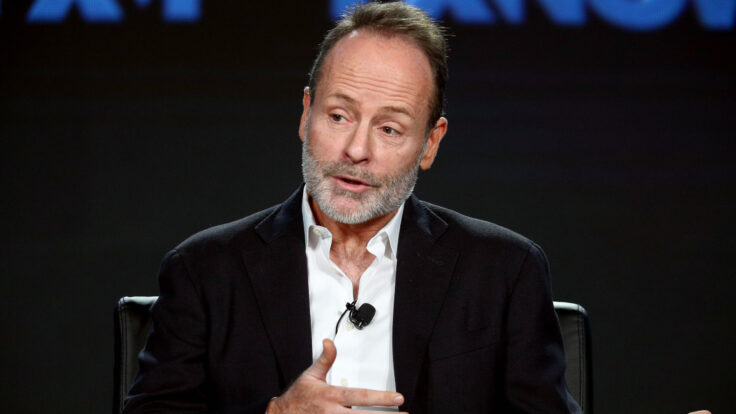
| CNN’s New Day |
| Jon and Peter dissect CNN’s programming shuffle and the NFL on streaming. |
| PETER HAMBY & JON KELLY |
|
 |
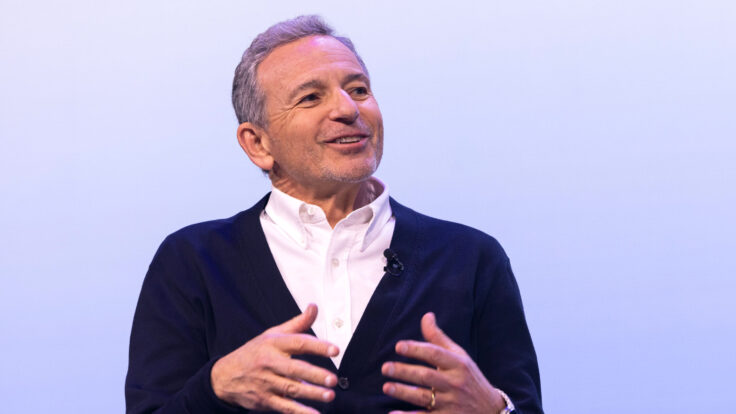
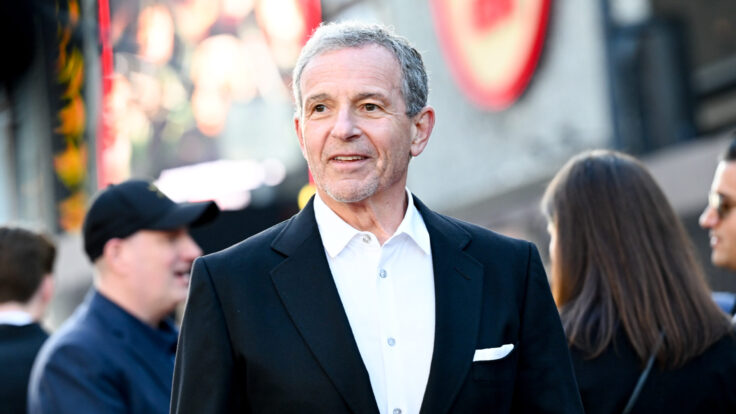
| Iger’s New Act |
| Observations on the great Wall Street stories of our age, or at least of this week. |
| WILLIAM D. COHAN |
|
 |
| The Pigskin Squeeze |
| A discussion encircling the consolidating college football television universe. |
| MATTHEW BELLONI |
|
|
|

|
|
|
| You received this message because you signed up to receive emails from Puck
Was this email forwarded to you?
Sign up for Puck here
Sent to
Unsubscribe
Interested in exploring our newsletter offerings?
Manage your preferences
Puck is published by Heat Media LLC
227 W 17th St
New York, NY 10011
For support, just reply to this e-mail
For brand partnerships, email ads@puck.news |
|
|