 |
 |
|
Happy Monday, I’m Eriq Gardner.
|
|
Welcome back to The Rainmaker! In this week’s edition: troubled marriages, asset wars, and antitrust regulatory frenzy. Plus the latest challenge over Microsoft’s acquisition of Activision, the most provocative docket items at the Supreme Court, Back to the Future royalties, car character copyrights, and whether Netflix password sharing is a crime.
But first…
|
|
|
John Paulson’s historic bet against the subprime mortgage market, immortalized in The Greatest Trade Ever, made him a fortune when Wall Street crashed in 2008. Now he’s embroiled in a different financial matter, with equally high stakes: a divorce battle before a New York judge over whether it’s possible to hide billions of dollars from your spouse.
Jenica Paulson, the Romanian-born secretary John married back in 2000, alleges that the three irrevocable trusts he created in their first decade of marriage effectively shielded assets acquired during their union and robbed her of an equitable distribution. (The former couple don’t have a prenup.) Represented by Robert S. Cohen, who recently handled Rupert Murdoch’s latest divorce with remarkable discretion, she’s suing him for fraud and breach of fiduciary duty in a civil action that could forever shake up family law. (A separate divorce proceeding is happening concurrently.) If allowed to stand, her court papers say, these trusts “would give license to wealthy spouses to jettison the requirements of financial fairness and spousal disclosure long enshrined in law.”
But were the billions really hidden? Not according to John, represented by Samuel Levy and Marilyn Chinitz at Blank Rome, who point to the fact that Jenica signed tax documents that identified the trusts by name. John Paulson also questions why she’s not suing the beneficiaries of the trust, the couple’s two daughters, who are argued to be indispensable parties to this matter.
But so what if she signed off on the couple’s taxes, her attorney responds. That doesn’t mean she actually knew about the existence of the trusts or their consequences. Yes, John may have technically disclosed them, her attorneys argue, but that doesn’t impute knowledge of a sneaky move costing her billions. “And he remains able to—and does—use the Trust’s residential properties as his own, including the New York City apartment in which he currently resides with his paramour,” they add.
Any relationship expert will say communication is key to a solid partnership. Now, New York Supreme Court justice Louis Nock will decide whether it’s also necessary from a legal perspective. He held a hearing on the matter this past Thursday and will issue a ruling soon.
|
|
|
- If Marty McFly could take his DeLorean time machine to 2022, he’d probably be devastated to find out those cars are no longer being manufactured—but that the corporate entity calling itself DeLorean Motor is suing NBCUniversal nonetheless. Here’s the complaint that alleges the studio is breaching a 1989 agreement that entitled John DeLorean to a five percent royalty from Back to the Future merchandise and commercial tie-ups. But this isn’t merely an accounting action—DeLorean also claims NBCU has infringed trademarks by, among other things, illicitly licensing that famous vehicle for the film Ready Player One.
- Speaking of intellectual property pertaining to famous movie cars, there’s been a big summary judgment decision in the case over “Eleanor”—the ’67 Ford Mustang Shelby from Gone in 60 Seconds. For those unfamiliar, I wrote about this decades-long dispute earlier. Now comes the conclusion: Eleanor is not entitled to standalone copyright protection, a stunning turnabout from what happened at the Ninth Circuit Court of Appeals back in 2008. As U.S. District Court Judge Mark Scarsi explains, those who purported to have rights, including the widow of the man who produced, directed and wrote the 1974 heist classic, have “embellish facts in their briefing” and led prior courts astray. Here’s the extraordinary opinion, which the widow attempted to keep sealed on grounds that it would not only harm her, but also other copyright holders. The dispute appears headed to another round at the Ninth Circuit.
- Finally, one more decision from the world of intellectual property, with potential ramifications for Netflix password-sharers worldwide: The D.C. Circuit Court of Appeals has rejected a free speech challenge to the law which prevents circumvention of technological measures designed to prevent unauthorized access to copyrighted works. (Read the opinion here.) The suit came from a security researcher who sought to publish a book that included sections of code, and while the opinion is pretty narrow, Netflix passwords do come up as an anti-circumvention device. Remember that before borrowing your college roommate’s account.
|
|
|
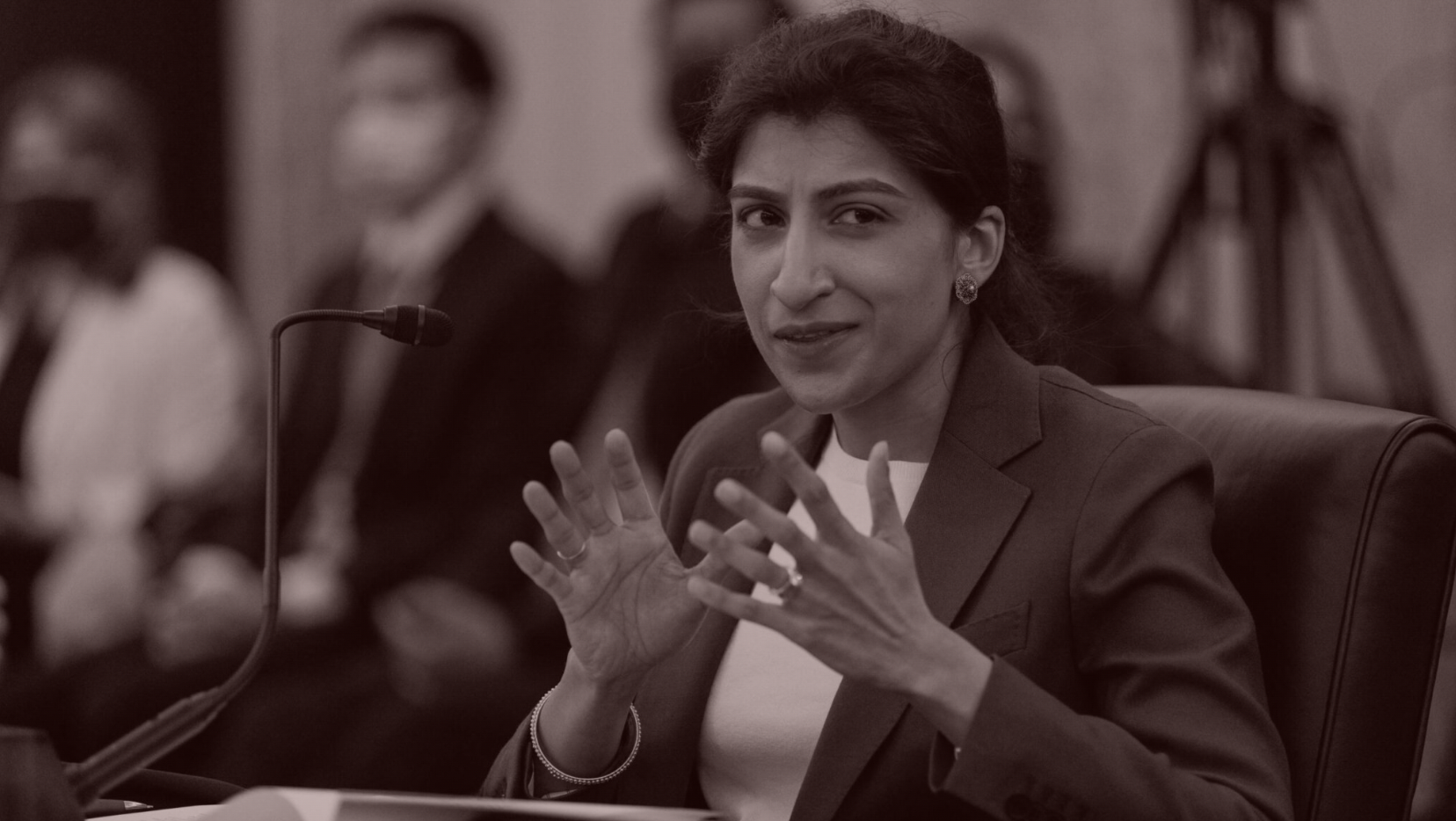
Is the biggest proposed merger in video game history dead? That’s what I’ve been contemplating ever since the Federal Trade Commission filed an administrative complaint on Dec. 8 contending that Microsoft’s $68.7 billion acquisition of Activision Blizzard would substantially lessen competition. Sure, headline writers made the fate of this merger seem like something less than a fait accompli, and that the government was merely “suing to block” the deal. But I wonder if giving Microsoft any shot here undersells what has just happened. Especially in light of what’s known about the F.T.C. adjudicative hellscape, the details of this particular merger agreement, and finally, how badly Lina Khan wants a win.
Wall Street, of course, has been hedging its bets for months. Yes, there was a clear industrial logic behind Microsoft, with its underrated Xbox business and strong cash position, buying up Activision, the behemoth video game publisher, especially amid various sexual harassment and discrimination scandals that helped convince C.E.O. Bobby Kotick it was time to sell. Still, thanks to Joe Biden’s very aggressive regulators, investors have harbored serious doubts whether the deal would close. Under the terms of the merger, Microsoft would pay $95 a share for Activision. Despite such generosity, the game publisher’s stock hasn’t traded past $86 at any time this past year. Currently, it’s at $75. Meaning, anyone who wants to bet on the merger actually happening would make a killing if it really does. |
| A MESSAGE FROM OUR SPONSOR |
| |
 |
“Movies are dreams that you never forget.” A deeply personal portrait of 20th Century American childhood, Steven Spielberg’s The Fabelmans is a coming-of-age story about a young man’s discovery of a shattering family secret and an exploration of the power of movies to help us see the truth about each other and ourselves. ABC News calls The Fabelmans a “personal best for Steven Spielberg. An enduring classic. You won’t forget this one.” The American Film Institute and the National Board of Review have both named it one of the year’s best films. And Time Magazine has selected The Fabelmans as the best film of 2022. Now playing in theaters nationwide.
|
|
|
It’s not like the Biden administration has a slam-dunk case. According to the government, Microsoft might deprive its console rival Sony of important Activision titles like Call of Duty, Diablo and Overwatch if the deal went forward. OK, but exclusives have long been a feature of the video game industry. What would change? Even if those particular titles represent a piece of intellectual property so valuable that Playstation collapses as a result of not having them, this state of affairs would still leave Microsoft competing with a smaller competitor like Nintendo, plus personal computers and mobile devices capable of hosting games, too. In other words, what market is Microsoft allegedly monopolizing? Are there really no product substitutes? Are the barriers to entry for new cloud and subscription services really that high?
Of course, we’ll surely see Microsoft challenging the government’s position with respect to these questions. Brad Smith, chief executive of the company, says, “We have complete confidence in our case and welcome the opportunity to present it in court.” Unfortunately for Microsoft, this isn’t your typical competition case. With the game clock ticking, this dispute may never make it to a real court. |
|
Lina’s Home Field Advantage
|
|
Microsoft drew the short straw earlier this year when the Activision acquisition landed at the F.T.C. instead of the Department of Justice. At the time, there was real suspense about which group of Biden’s regulators would handle this review: The F.T.C. has traditionally policed the video game industry while the D.O.J.’s antitrust division has deep familiarity with Microsoft from its landmark case against the tech giant at the turn of the century.
The stakes were high. Had assistant attorney general Jonathan Kanter led the review, Microsoft wouldn’t necessarily dodge a challenge, but the D.O.J. would be obligated to go to a federal court to show the transaction violated competition law. There, Microsoft might have a fighting chance sticking up for its acquisition, following AT&T’s success a few years back when the government challenged its Time Warner acquisition, an analogous vertical merger between a content platform owner and supplier.
In contrast, while the F.T.C. will sometimes file in federal court to stop the immediate consummation of a deal (such as the current battle to stop Mark Zuckerberg’s Meta from acquiring the virtual reality fitness app Within), the agency also battles anti-competitive mergers internally before an administrative judge. There, the standards for stopping a deal are lower, or that’s at least the perception among many in the legal community. And if the F.T.C. loses before an administrative judge—and it very, very rarely does—it may appeal before the full commission. In other words, to themselves. That includes F.T.C. chair Lina Khan, the 33-year-old legal supernova who has vowed to put the kibosh on consolidation. Only then will the merging parties get to federal court—to the D.C. Court of Appeals and maybe even to the U.S. Supreme Court.
All that takes years. For example, the F.T.C. is currently in the midst of an internal proceeding aimed at preventing gene-sequencing giant Illumina from acquiring Grail, a cancer test start-up. An administrative complaint was filed back in March 2021, and while an administrative judge surprisingly favored Illumina (citing the AT&T ruling), it took 18 months to get there. The September ruling is now on appeal with no end date in sight.
Has anyone attempted to speed things up? Well, yes: Axon Enterprises, a supplier of weapons to law enforcement and the military, attempted in 2018 to acquire a smaller competitor, only to be caught up in an adjudicative proceeding. The company then sued to enjoin the F.T.C., claiming among other things that the mysterious “clearance” process by which transactions end up either at the D.O.J. or F.T.C. amounts to a due process violation. On Nov. 8, the Supreme Court heard oral arguments, and there’s a very good chance that the conservatives on the bench shake up the so-called administrative state by allowing early constitutional challenges to F.T.C. proceedings rather than make parties wait for final agency actions before suing. That decision will come sometime next spring.
For now, Microsoft is facing the prospect of having to endure a very lengthy proceeding—and one that’s stacked against them. Meanwhile, Microsoft and Activision only have until July 18 to close the transaction under the terms of their merger agreement. The deadline can be extended if both companies consent, and maybe a favorable Supreme Court decision plus a lack of debt financing on this transaction make that a possibility. But then again, Activision is set to get a $3 billion termination fee for basically letting this merger collapse under the weight of a government challenge. That’s an awfully big windfall, and something that complicates a renegotiation even beyond the many years of litigation that it might take to bring this merger to fruition. (Kotick owns millions of shares and figures to score big upon an exit. Then again, there are other suitors, and Activision’s board recently eliminated a “transformative transaction award” he was set to receive for leading the Microsoft deal.) Needless to say, if this deal isn’t dead yet, it’s bleeding out. |
|
|
Another possibility also exists: a settlement between the government and Microsoft. Already, Smith has been pursuing this angle by offering Sony a 10-year license on new Call of Duty games. Theoretically, the F.T.C. could push for more. But does Khan have any interest in that? (The transaction would also have to clear European and Chinese regulators, too.)
If so, that result would mirror what happened a decade ago when Comcast acquired NBCUniversal. At the time, Comcast’s competitors spoke out about their fear of being denied valuable NBCU programming. To satisfy concerns that Comcast would hold NBC content for its own cable service, the government arrived at a consent decree that, among other things, required Comcast to license programming to online video distributors for seven years. Additionally, Comcast agreed to not retaliate against broadcasters, studios, and cable rivals. Plus, it gave up management rights in Hulu.
Conceptually, something similar could happen to save the Microsoft-Activision deal, but as I wrote a few weeks ago when discussing the Taylor Swift-Ticketmaster mess, settlements are now out of vogue among regulators (both conservative and liberal alike). In her famous treatise, Amazon’s Antitrust Paradox, Khan points to Ticketmaster-Live Nation and Comcast/NBC as paradigmatic examples of behavioral conditions attached to vertical mergers. Last year, in a letter to Senator Elizabeth Warren, Khan expressly voiced her skepticism about the “efficacy of behavioral remedies,” adding they “have often failed to prevent the merged entity from engaging in anti-competitive tactics.”
In other words, temper any expectations of a settlement here. Instead, this fight seems like it’s going to the death, and to borrow some gaming lingo, there will be no self-revive. We’re talking permadeath as Khan shoots for a trophy that may deter future mega M&A. |
|
|
|
|
- The Trump Organization was convicted of criminal tax fraud this past week. Forbes tried in vain to get a comment from the company’s lenders, who probably won’t be doing business with Donald Trump anytime soon. There’s still more trials to schedule, of course, including a class action that alleges that Trump’s company was paid to make a pyramid scheme look legit. Trump’s lawyers are asking for a trial date sometime between February and April 2024, leading the plaintiff’s lawyer to ask on Friday whether Trump is really going to allow that to happen if he’s running again for president.
- A high-profile dispute between LinkedIn and HiQ Labs over data scraping, one that lasted six years and touched the Supreme Court, appears to finally be over. Following a summary judgment ruling a month ago where a judge gave LinkedIn a partial win, the parties have arrived at a settlement. In a stipulated judgment, HiQ has agreed that LinkedIn has established its liability with regards to the scraping, will accept a permanent injunction, and will also pay $500,000. Here’s the court filing.
- Bloomberg, Dow Jones, and The New York Times have filed a motion in the FTX bankruptcy proceeding that objects to how information about the company’s creditors have remained under seal. The Friday move immediately drew criticism by some in the crypto community who accused the news organizations of attempting to “dox” these individuals, but as the motion states, “Debtors have been accused of lack of transparency in their business. That mindset appears to have carried over to this bankruptcy, as they have taken the extraordinary step of seeking to keep under seal its list of creditors, a document which, with very few exceptions, has historically been open to the public.”
- The Hollywood Foreign Press Association, the organization behind the Golden Globes, scored a big victory at the Ninth Circuit Court of Appeals last week: After years of criticism over ethical lapses and a lack of inclusion, the H.F.P.A., represented by Latham & Watkins, convinced the federal appeals circuit to affirm the dismissal of an antitrust suit arising from its tight membership rules. Here’s the opinion, which concludes that the suing journalists failed to make the case that the H.F.P.A. had market power in any reasonably defined market.
- I’m closely watching the amicus filings coming in at the Supreme Court pertaining to Twitter, Inc. v. Taamneh and Reynaldo Gonzalez v. Google. The two cases, to be heard next term, are billed as a challenge to tech companies’ Section 230 immunity, but the high court review could also have a significant impact on what role recommendation algorithms play in our society. Here, for example, is the Biden administration’s brief, which attempts the tricky dance of explaining how YouTube is protected whether or not it removes a video from ISIS, but shouldn’t be shielded if it recommends this same video to users.
Got a comment or tip? Email me your thoughts at eriq@puck.news. I always enjoy feedback.
|
|
|
|
|
|
|
|
 |
|
|
|
Need help? Review our FAQs page or contact us for assistance. For brand partnerships, email ads@puck.news.
|
|
|
|
Puck is published by Heat Media LLC. 227 W 17th St New York, NY 10011.
|
|
|
|