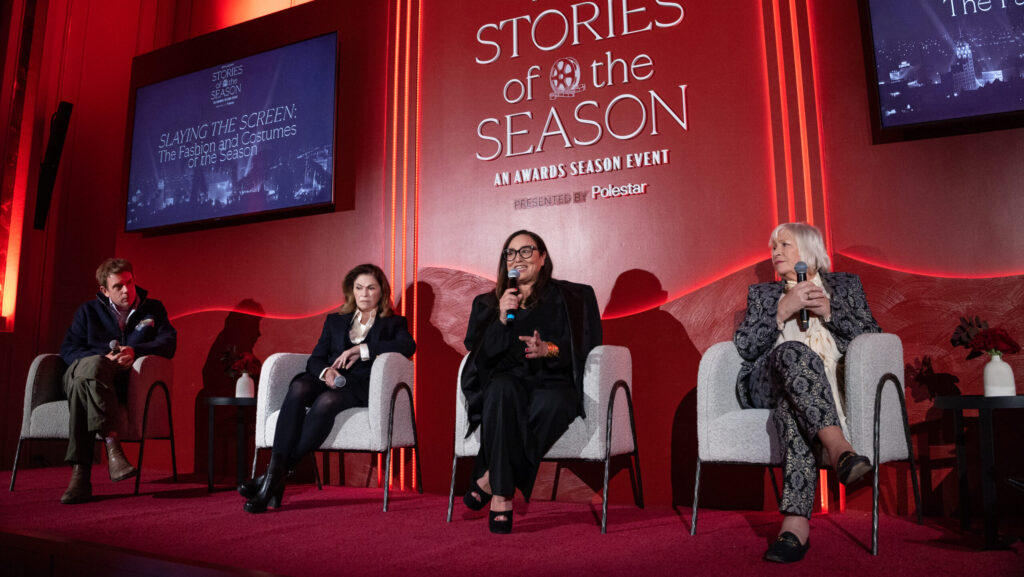
An intimate awards-season conversation with the costume designers behind some of the biggest movies of the year: Virginie Montel (‘Emilia Pérez’), Janty Yates (‘Gladiator II’), Colleen Atwood (‘Beetlejuice Beetlejuice’), and Loewe creative director Jonathan Anderson (‘Challengers’ and ‘Queer’).
Loewe creative director Jonathan Anderson, Colleen Atwood, Virginie Montel, Janty Yates speak with Puck’s Lauren Sherman.
Photo: Puck
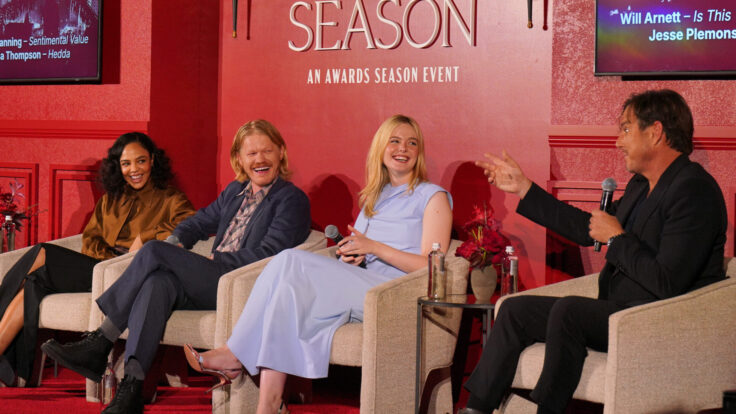
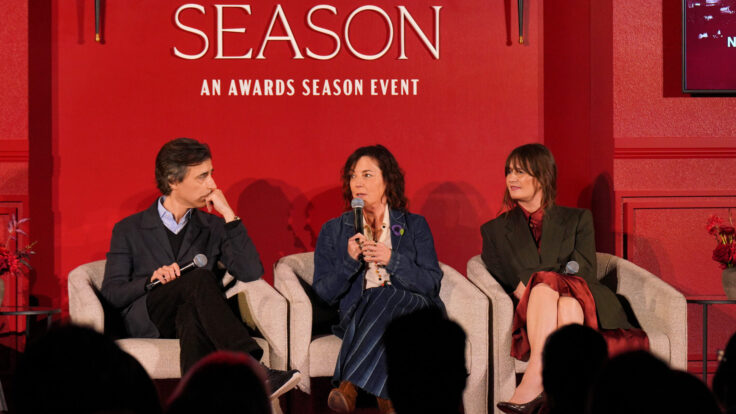
Last Friday evening, at The Brownstone in Los Angeles, in front of a packed audience of awards voters and Hollywood insiders, Puck hosted its inaugural Stories of the Season event—an elevated take on the typically dreary awards season conversation series. In the first of four panels, which included a live taping of Matt Belloni’s The Town, Puck fashion correspondent Lauren Sherman took the stage with four of the year’s most high-profile costume designers: Virginie Montel (Emilia Pérez), Janty Yates (Gladiator II), Colleen Atwood (Beetlejuice Beetlejuice), and Loewe creative director Jonathan Anderson (Challengers and Queer). The event was presented in partnership with Polestar, along with supporting sponsors Mayer Brown, Wondery, and HBO and Max.
In this lightly edited transcript, our A-list panelists reveal what it was like to collaborate with their respective filmmakers, how they balance sourcing pieces and design their own, the challenge of crafting clothes for a period film, and much more.
Lauren Sherman: Colleen, you’re a frequent collaborator with Tim Burton. But in Beetlejuice Beetlejuice, you’re returning to a world that has essentially been buried for the last 40 years. How did you expand on the original?
Colleen Atwood: Well, because I didn’t do the first Beetlejuice, I came into this going, Oh no, I’ve got to do a sequel to something I didn’t do—which was kind of weird. My first fitting was with Michael [Keaton], so we just talked about where Beetlejuice was today—40 years later, a little bit dirtier, a little bit fatter, and a little bit busier. So we started with the characterfulness of it all, and then moved on to the underworld. We just took everything that we had before, and pushed it, and evolved it, and expanded it, and took that approach to the whole film.
Janty, you worked on Gladiator II, but you were also there for the first one. So I’m curious, 24 years later, what did you keep from the first film, and what changed in terms of your vision for how ancient Romans were meant to look?
Janty Yates: I was very fortunate because this second time I worked with David Crossman, who is a military designer. The first time, I had to do the Praetorian Guard, the Roman legionaries, the Germanic tribes, and the gladiators as well. So [David] took all that off my shoulders; it was wonderful. And he greatly improved my pathetic attempts from back in 1999 and left me just diddling little bits of fabric for the civilians.
Photo: Puck
In that movie, there’s a lot of beige, dirt, etcetera—but then there are these brilliant colors that come out for certain characters. How did this compare to the House of Gucci film, where there were no restraints?
Yates: Basically, it was David’s department that [handled] the breaking down and aging, because you can’t really have anything that’s new. And he made everything from scratch, so it all had to go through huge amounts of aging, dusting, scratching, and putting little bits of rust here and there. Ridley Scott likes a bit of verdigris.
With House of Gucci, I was just so lucky because the people I was dressing were all so rich that I could go mad with fabrics and colors, and they didn’t really need that much breaking down either. But as Ridley said quite often, We’re not making a documentary. House of Gucci was a different animal because we had so much photographic evidence, and so I was able to make fake Yves Saint Laurent and fake dresses for Patrizia [Reggiani, played by Lady Gaga], because she never wore Gucci.
Virginie, you’ve been working with [Emilia Pérez director] Jacques Audiard since you were kids. With this film, you were also the artistic director. What did you and Jacques come up with? And how did you and Jacques work with Saint Laurent Productions?
Virginie Montel: Initially, the movie was supposed to be an opera, and it was a big challenge for us to imagine it another way—or working and looking for another perspective of characters, costumes, sets, etcetera. First, it was in the Mexican language and set in Mexico. So we had some travels in Mexico to get inspired, and found that the reality wasn’t enough for Emilia Pérez, and we had to build a world around it; and that’s what we’ve done with references in a studio in Paris.
It was really exciting to bring our worlds inside this box… Saint Laurent came quite late on the production part. Musicals are very involved, and they made some really nice stuff for Selena [Gomez] and Zoe [Saldaña] that are very signature from Senegal. The choreography, the dance, the singing, the sets, the costumes—it all goes together.
Have you ever had that kind of experience before, where you were commissioning an outside designer?
Montel: No, it was the first time. I think it’s quite new in the industry that fashion [companies] come to be interested in production.
Photo: Puck
Colleen Atwood
Sourcing vs. Designing
Jonathan, you have many day jobs in addition to being the costume designer for Challengers and Queer. Can you talk about how you started working with Luca Guadagnino, and also how you approach designing for film versus designing a ready-to-wear collection?
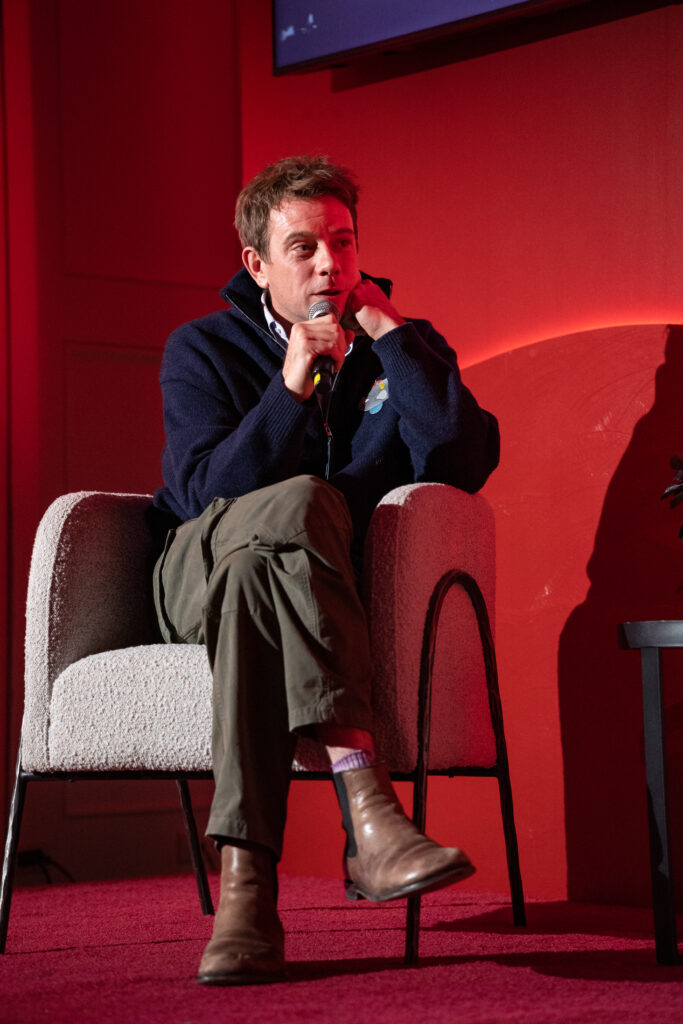
Jonathan Anderson: I met Luca maybe 10 years ago, at a hotel in Milan. We were introduced by a P.R., and what was supposed to be a 30-minute coffee meeting ended up being a dinner that went on to the early hours, talking and talking about art. Luca approached me near the end of the pandemic, and asked if I would be up for doing costumes on a film. I was worried I wasn’t gonna have a job because of the pandemic. No one was buying luxury goods at that point. So I was like, Sure, why not? About five weeks later, I was on a plane to Boston to shoot this film.
In regard to how it differs, for me, when I do a fashion show, you have to tell a story in 15 minutes. We build a giant mausoleum for it, and then we tear it all down. It’s this fast process about psychology and storytelling, which is ultimately how they both link.
For Queer, how did you go about sourcing everything, and why did you choose to do that instead of making pieces?
In the book, [William S.] Burroughs has a heavy psychological narrative. And ultimately, you’re trying to work out what is real and what’s not. I felt like the clothing needed to capture the period’s reality, so for me, when working with Daniel [Craig]and Drew [Starkey] and the rest of the cast members, I wanted this idea that they would all have suitcases behind stage where they would keep the clothing in the evening, so it was just one piece of one garment. There were no duplicates made, so there was this idea that it is all from the period. For me, it helped to have this feeling that there is another world within the book.
Photo: Puck
Jonathan Anderson
How do you all feel about sourcing versus designing pieces yourself?
Atwood: Well, for Beetlejuice Beetlejuice, I used vintage clothes from different periods… I like mixing it up; I think it’s really important. I like building stuff and mixing it in with stuff that already exists. It’s never just one or the other.
Montel: I agree. We work a lot on contemporary movies, and I also love this because you can build a character and tell or hide things based on how they look. So I make some stuff, I change some stuff. I think through costumes, and from that we’re able to build our worlds.
Yates: On Gladiator II, we had to make everything. We went to Rome to the costume houses because they have all the original, wonderful, embroidered costumes from Ben Hur, from Cleopatra, from all those huge movies that were made back in the ’60s. I was shown some of Elizabeth Taylor’s dresses from Cleopatra, and they’re awful. But I was lucky; we were able to take huge quantities of crowd costumes from there. But I agree so much with Colleen: You’ve got to mix it up.
Jonathan, how much designing and sketching did you do for Challengers?
Anderson: A lot, because I was dealing with big brands and not actually taking endorsements from them. We had to make a lot of it because some of the pieces are obviously from the early 2000s, so we couldn’t source enough. I ended up making a lot of things that I had never designed. It was like replicating things that already existed, and dealing with the bureaucracy of the big brands, discerning who was going to dress the winner. It’s a weird world in sports.
Didn't get an email? Check your spam folder and confirm the spelling of your email, and try again. If you continue to have trouble, reach out to fritz@puck.news.
Didn't get an email? Check your spam folder and confirm the spelling of your email, and try again. If you continue to have trouble, reach out to fritz@puck.news.
Member Exclusive
Get access to this story
Create a free account to preview Puck’s full offering, including exclusive articles, private emails from authors, and more.