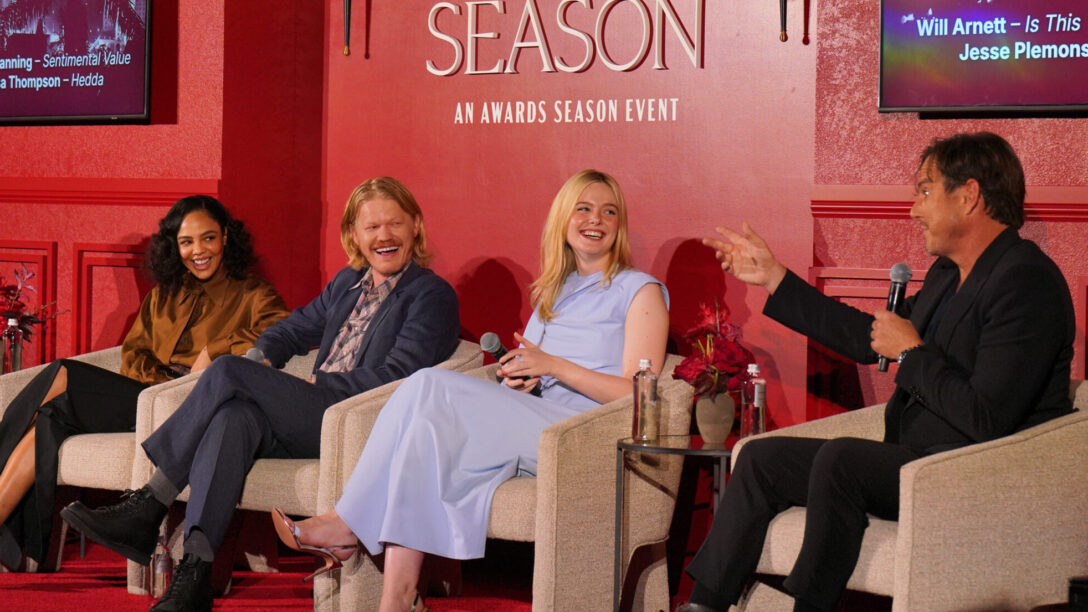
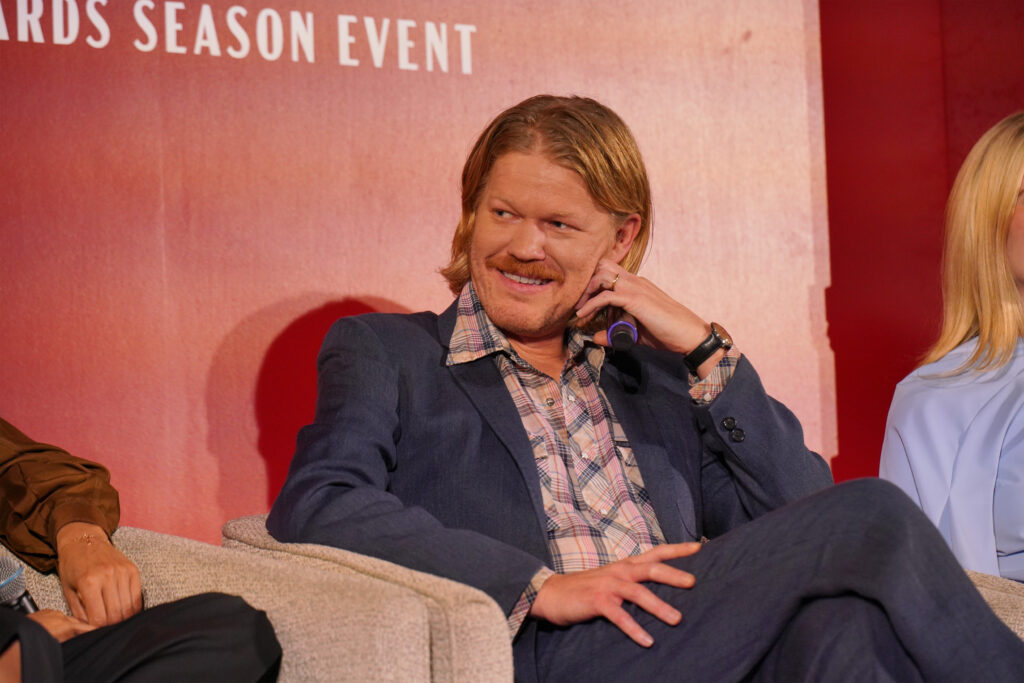
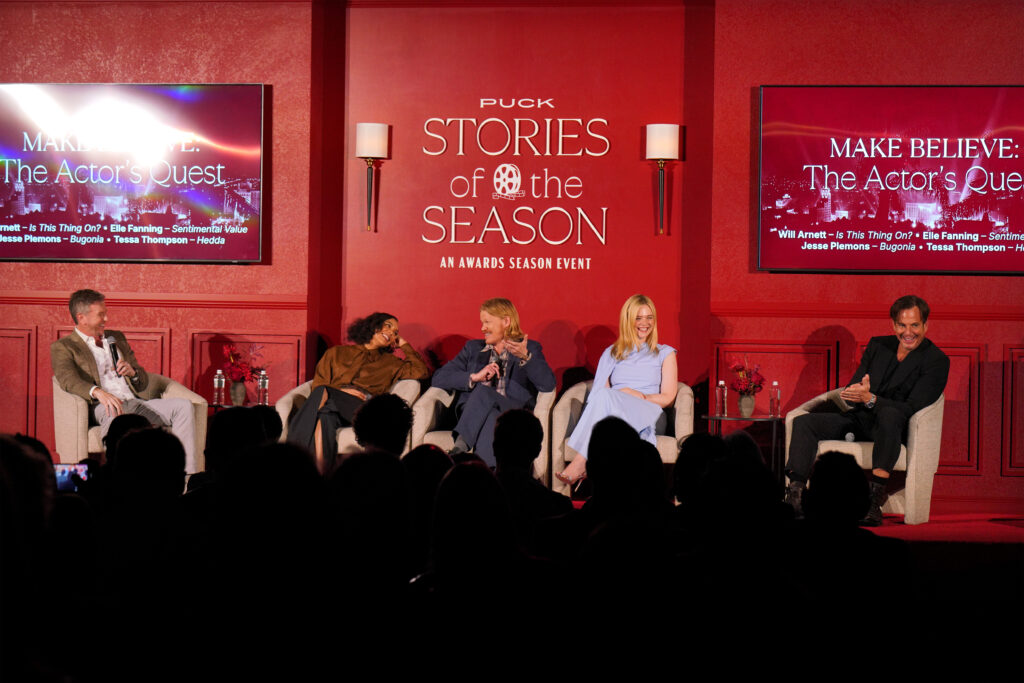
Will Arnett, Elle Fanning, Tessa Thompson, and Jesse Plemons—four of the actors behind this awards season’s most daring performances—discuss their roles and the trust it took to inhabit them.
(From left to right): Tessa Thompson, Jesse Plemons, Elle Fanning and Will Arnett talk at Stories of the Season.
All Photos: Gonzalo Marroquin/Getty Images for Puck
In front of a packed house at Puck’s fall Stories of the Season event, Peter Hamby sat down with four actors responsible for some of the year’s most dauntless roles: a floundering stand-up comic, an actor with big-time father issues, a chaos-courting hostess, and a paranoia-besieged kidnapper. Herewith, a conversation with Will Arnett (Is This Thing On?), Elle Fanning (Sentimental Value), Tessa Thompson (Hedda), and Jesse Plemons (Bugonia) about what attracted them to each project, and their shared experience of creating the psychological space to deliver truly career-defining work. The following has been edited for length and clarity.
Peter Hamby: Will, this is a departure for you, this film. It’s about stand-up, notionally, but it’s a dramatic film. Tell us about your decision to make this movie with Bradley Cooper.
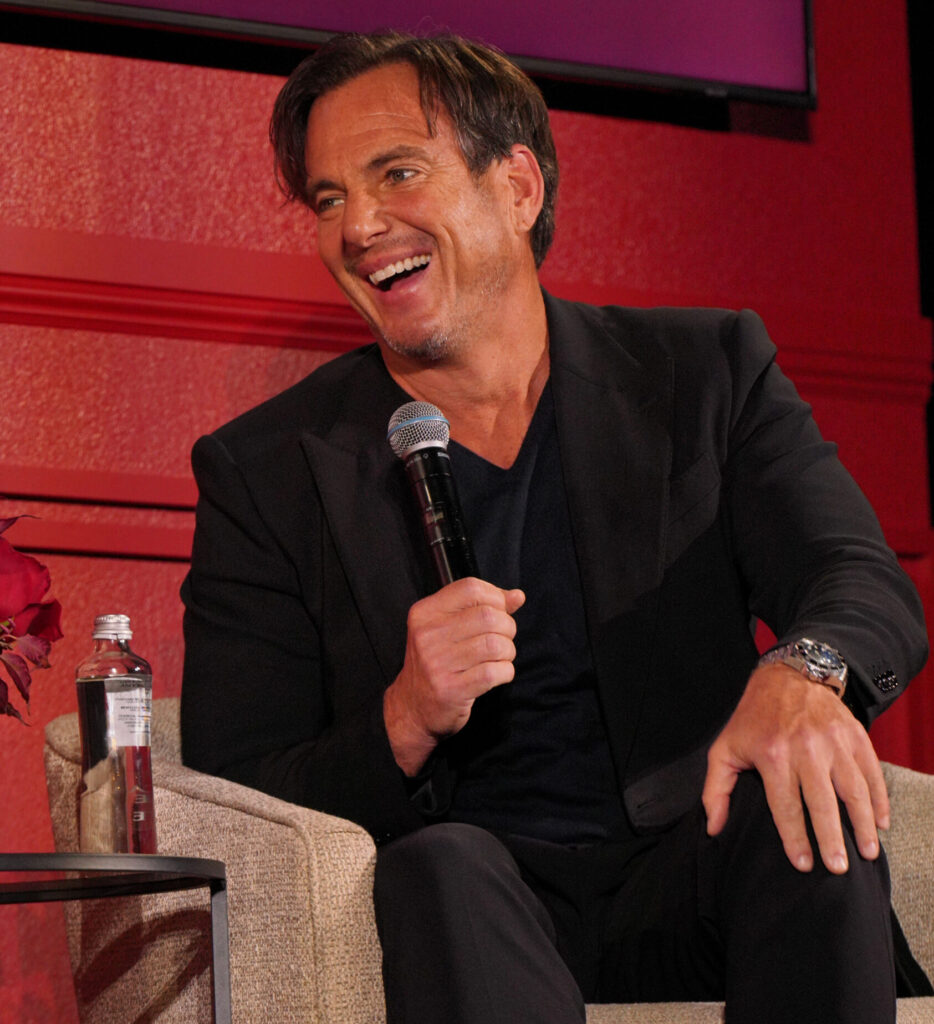
Will Arnett: It was just a story that I really connected to. I happened to meet this guy, John Bishop, who’s a massive stand-up in the U.K. We were at a lunch together on a boat in Amsterdam, on one of those canal boats. I’m not going to tell you why, it’s a long story. But he and I were sitting next to each other. Didn’t know him, and my friend said, “John, why don’t you tell Will how you became a stand-up?” And he told me this story of how he was getting divorced and he stumbled into a bar, and they had a cover charge because they were doing open mic, and he legitimately didn’t want to pay it.
Will Arnett.
He was a pharmaceutical executive. He had no connection to comedy or show business or anything. And he put his name down, because he’d had a couple of beers, and he went up, and it was the first time that he was able to kind of talk about his experience and talk about what was going on in his life. And nobody was more surprised than he was. Then he started going back, because he found that he got relief from it. There was something about that that really captivated me.
So I asked him if I could write this story about his life and he said yes. Then I kind of wanted free notes from Bradley. He was working on Maestro, and I said, “Tell me where you think we’re at.” He said, “I want to do this with you.”
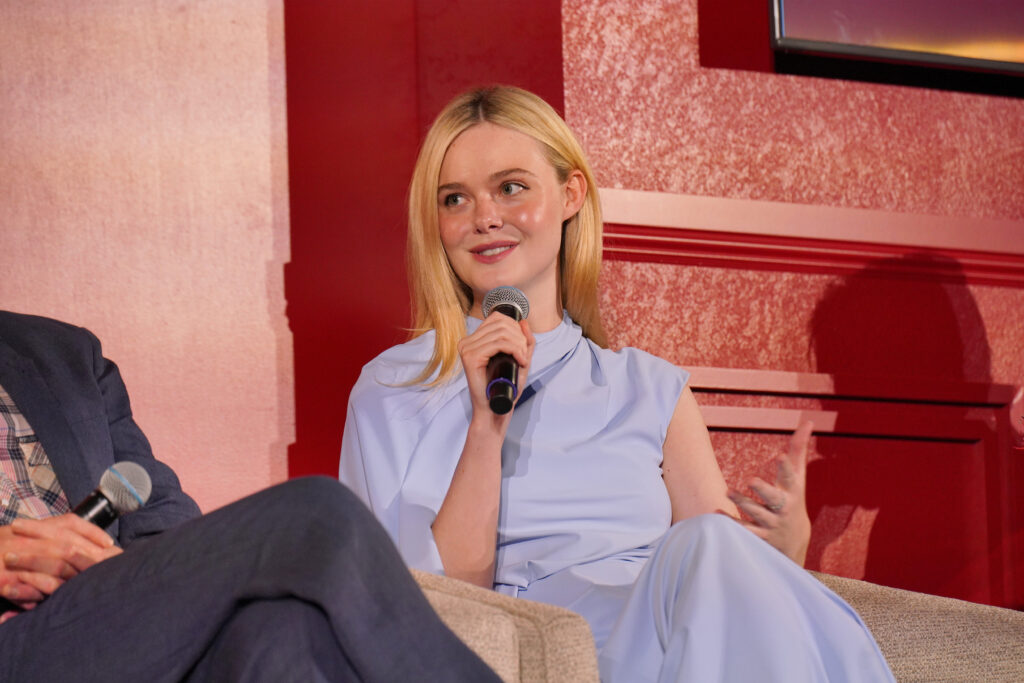
Elle Fanning.
Elle, how much of this did it feel like a hall of mirrors when you were playing this role in Sentimental Value? In some sense, how much were you playing yourself versus playing Rachel?
Elle Fanning: Definitely, obviously, there were similarities. I, myself, was going to Oslo for the first time to work with a Norwegian filmmaker, same as Rachel. She does the same thing, and we would have these rehearsals because the house is also very much a character in the movie. [Director] Joachim [Trier] loves doing rehearsals, and not in an overanalyzing way, but just we share stories and really sit down. He actually films them all as well. So we did a rehearsal of the rehearsal scene that I have. You can’t help but be kind of analyzing the way you’re sitting, or even the way that I annotate my script, versus the way that she does.
There was also something particular about the props. We were in Norway, and they had brought me some [local] Post-its and highlighters. And I was like, “But she would bring her own from America.” So they had to go get Post-its and Sharpies. And Joachim loved that. His films are very detail-oriented. At the same time, yes, there are those similarities, but she is quite a different actress than me. She does have feelings that I certainly can relate to, or have maybe felt before in my career.
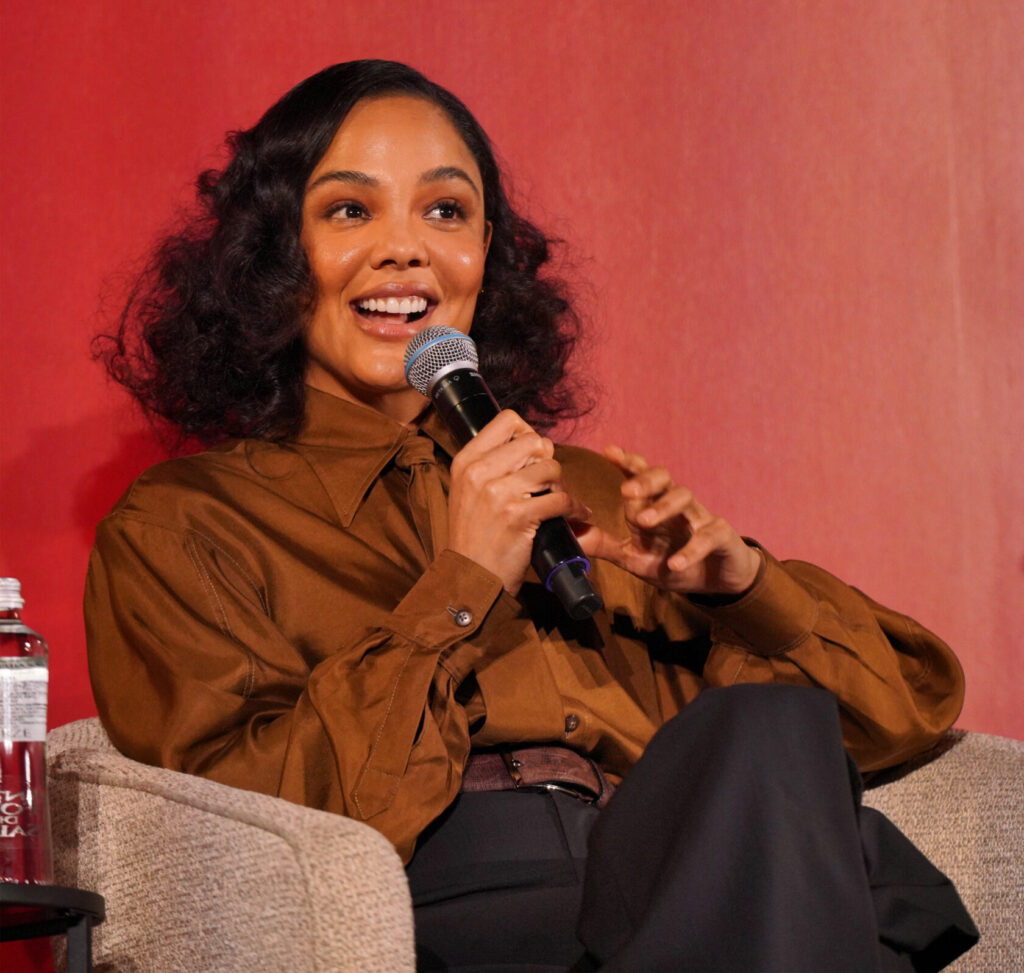
Tessa Thompson.
Tessa, this is your first film, Hedda, under your production company. This is not your first collaboration with Nia DaCosta, though. Tell us more about working with her. Would this have been made if she wasn’t involved? You guys have such a good relationship.
Tessa Thompson: I made Nia’s first film with her, which is a film called Little Woods. We made it together after meeting at the Sundance Labs. Which, if people don’t know, is an institute where filmmakers can come in and cut their teeth and make these very crude versions of scenes, shoot scenes from their films. As an actor, you can go and sort of donate your time. There’s no expectation, ever, that you’ll end up making the movie. But she asked me on the third day, “When I make this movie, will you make it with me?” She was 25 at the time, I think, and, apart from, like, Paul Thomas Anderson, she was one of the youngest people to have been on the mountain. I found her so wildly impressive and also liked her so much as a human.
We made that film together, which is a really quiet, small film, really about sisters and about access to safe healthcare and abortions as a woman, which now is even more kind of relevant than it was then. She had read Hedda Gabler in grad school, and had always been tinkering with the idea of adapting it. She called me one day and said, “Will you make it with me?”
I was sort of like, “yeah”—because I would do anything with her—but I really didn’t understand the imperative. I didn’t know then that there had been 22 versions of it. But I think if you’re going to adapt something that’s been done a lot, and that people have a real relationship with you, you have to implicate yourself in some way. Have real skin in the game.
And what she did, if you see the movie, she really took it apart and put it back together in a way that made sense to her, and hopefully in a way that makes sense to a new audience. I thought it was so inspired. But I will follow her anywhere. I really believe in what she’s trying to do, and she’s always trying to take a big swing. It’s so special to find someone you can work with that you trust so immensely. It was an instant “Yes.” And then I was properly terrified after I said it.
Jesse Plemons.
Jesse, you worked with Yorgos Lanthimos on Kinds of Kindness? Why did you want to work with him again on Bugonia?
Jesse Plemons: I loved his movies. Anytime there’s a director where, in the first few minutes of watching the film, you know exactly who made it, that’s a person that I want to work with, kind of a singular voice and vision. With Kinds of Kindness, I had such an amazing experience. It felt like kind of unlearning so many rules about storytelling and acting. He has very specific taste and specific sensibilities. He does—I think most directors who are any good—create a space that is conducive to feeling like you can take risks and experiment and fail and play. So that’s part of it, too.
When you were reading the script, what was your facial reaction to the third act? The last part, which I’ve read, you said was kind of an exhausting thing to film.
Jesse Plemons: The first time I read it, we didn’t have financing. There wasn’t a start date, so I read it, not fully believing that I was actually going to play this part. I really enjoyed it, because I was just kind of watching the movie in my head, and then I read it again once we had financing and I knew it was going to happen. It was a completely different experience once I got to that third act. In 10 pages, things go from bad to just absolute hell for [my character]. So, it was exhausting and challenging, but the exact type of challenging you’re looking for. And just crazy stakes, because he feels like the fate of the world is resting solely on his shoulders.
Didn't get an email? Check your spam folder and confirm the spelling of your email, and try again. If you continue to have trouble, reach out to fritz@puck.news.
Didn't get an email? Check your spam folder and confirm the spelling of your email, and try again. If you continue to have trouble, reach out to fritz@puck.news.
Member Exclusive
Get access to this story
Create a free account to preview Puck’s full offering, including exclusive articles, private emails from authors, and more.