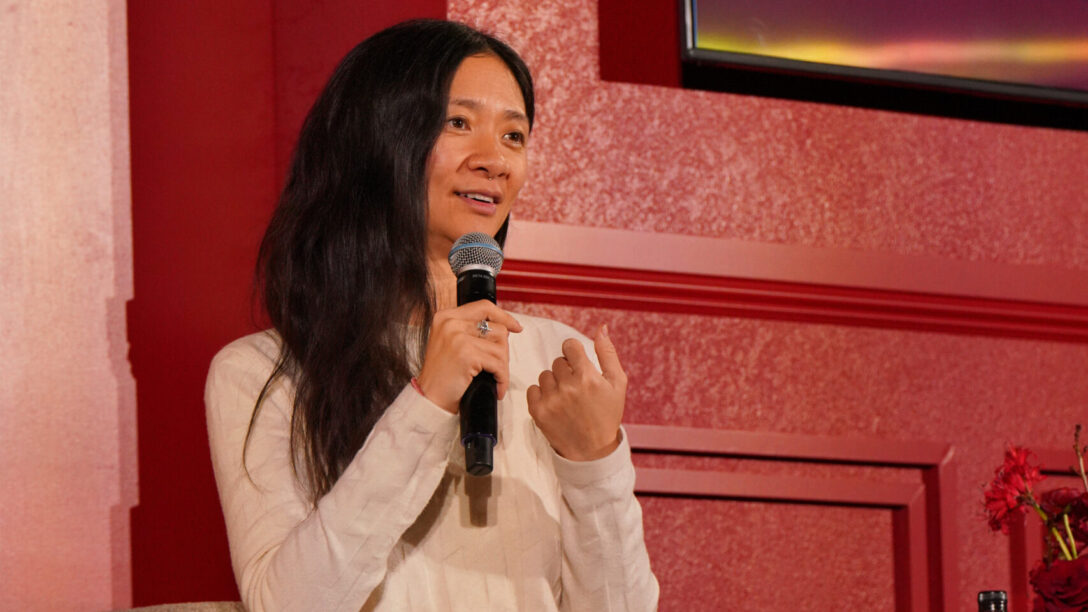
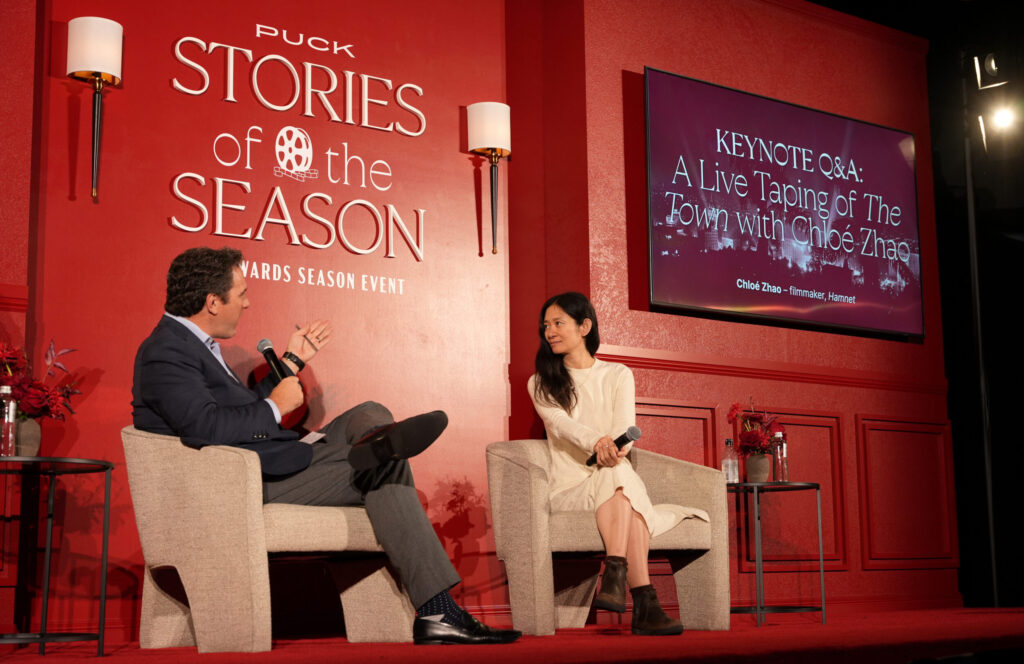
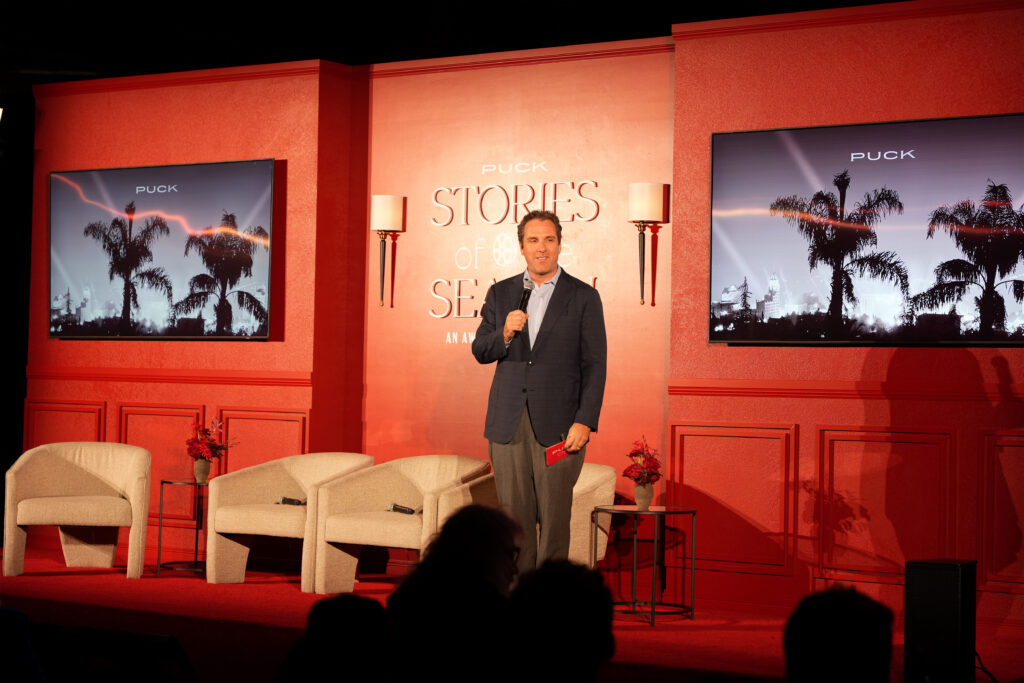
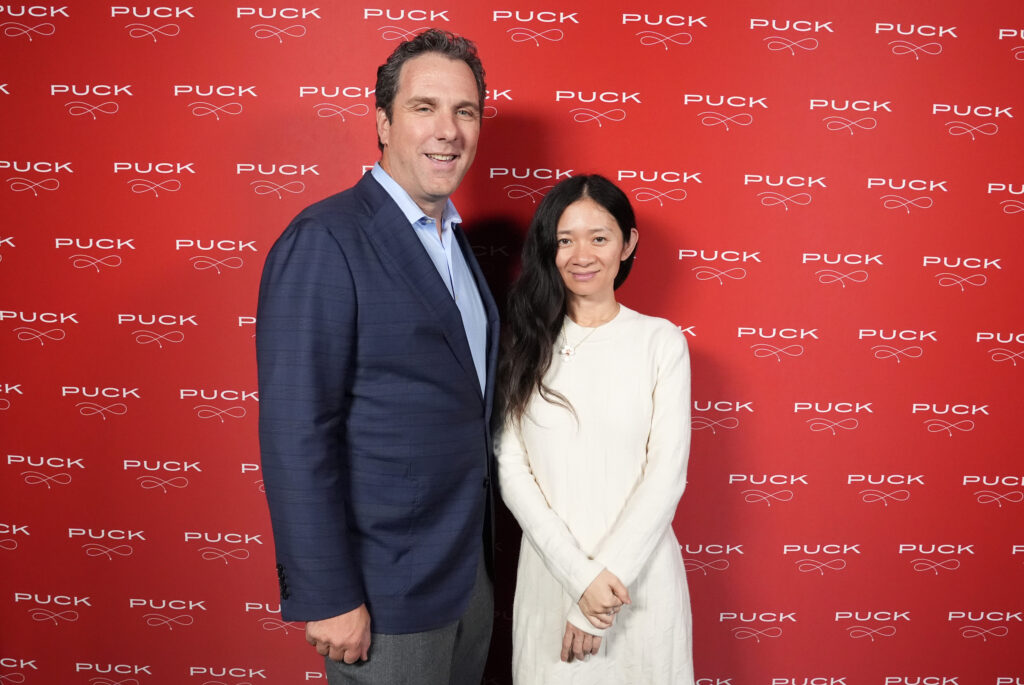
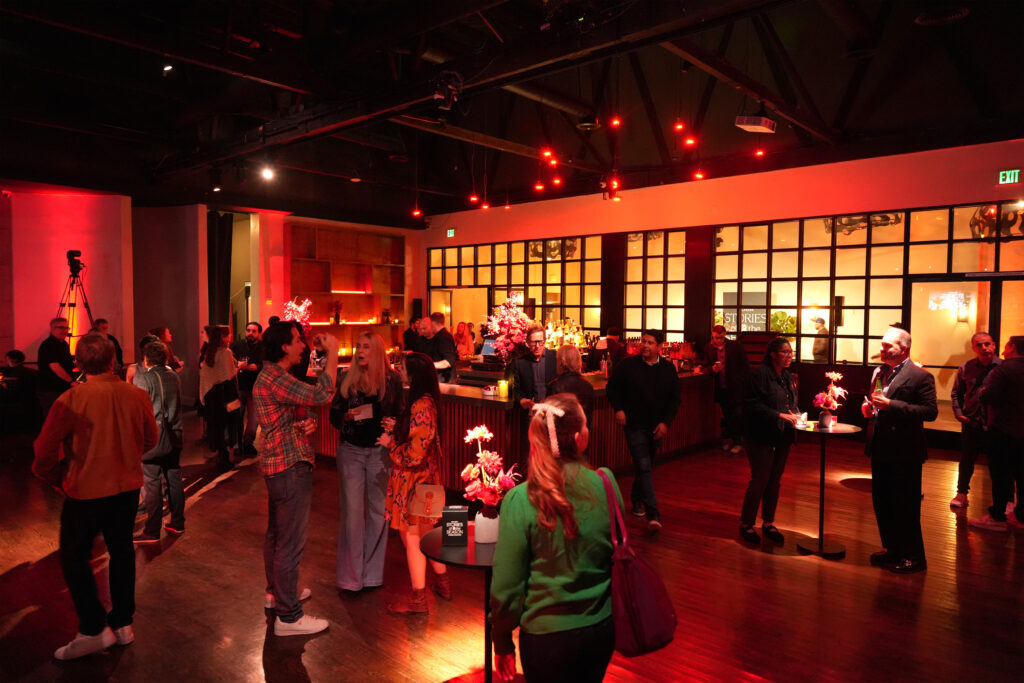
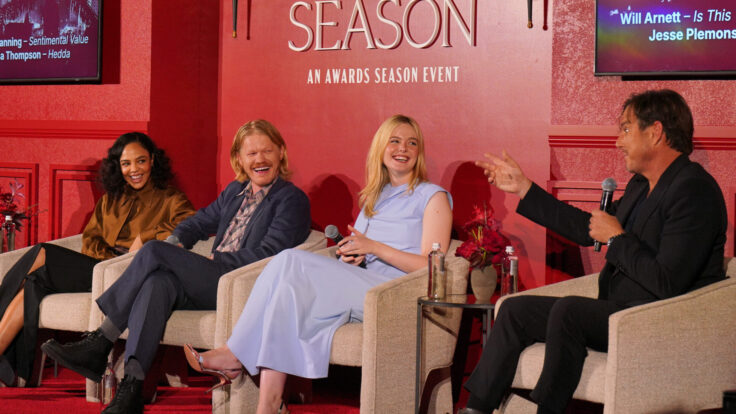
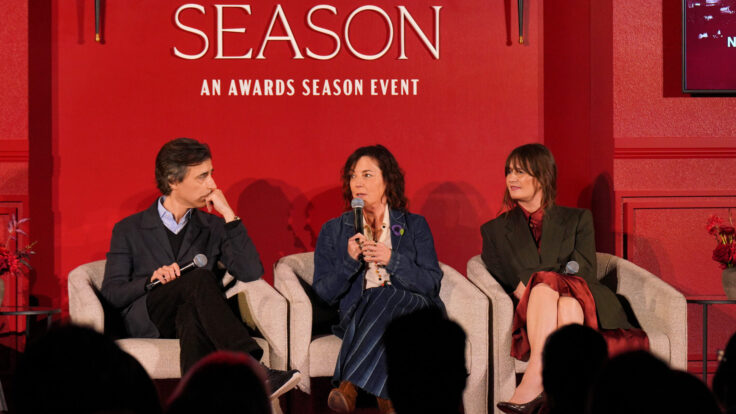
A wide-ranging keynote conversation with Chloé Zhao, the Oscar-winning ‘Hamnet’ director, at Puck’s Stories of the Season event in Los Angeles.
While ascending the heights of commercial Hollywood, Chloé Zhao largely let instinct guide her way, and now she’s working on bringing Buffy the Vampire Slayer back to TV.
Few of Hollywood’s A-list directors have enjoyed a career trajectory quite like ChloéZhao, who won her first best director Oscar in 2021 for Nomadland—only her third independent film—and then almost immediately made her Marvel debut with Eternals. Her latest film, Hamnet—starring Paul Mescal and Jessie Buckley in an adaptation of the popular Maggie O’Farrell novel, with StevenSpielberg and SamMendes as producing partners—is already being heralded as an Oscar contender.
While ascending the heights of commercial Hollywood, Zhao largely let instinct guide her way. Now, she’s working on bringing Buffy the Vampire Slayer back to TV, and has a slate of anime projects in the works. During the keynote conversation for Puck’s second annual Stories of the Season event in Los Angeles, Zhao and What I’m Hearing author Matt Belloni took the stage for a live taping of his excellent podcast, TheTown, to discuss her directorial style, the making of Hamnet, working with Spielberg, and much more. The following conversation has been lightly edited for length and clarity.
The Midlife Crisis
Matthew Belloni: You make very serious movies, but I’ve heard you’re fun.
Chloé Zhao:I have heard that you’re a bit spicy.
You can say “jerk,” it’s okay.
No, spicy is great!
The film is excellent, and I wanted to start by getting a sense of some of your influences, because you have a very distinct visual style in your filmmaking. Where did you develop that sort of emotional, contemplative style?
I would say limitation was the first influence, because we just didn’t have money to build or create my own vision. But we did have the natural world, which is free, and we did have the sunset, which is free. We also had people—whose depth is not completely free—but those are the only things I could rely on to survive as a filmmaker. So it was out of necessity.
Hamnet is very different than some of the stuff you’ve done in the past. And I’m wondering why. What spoke to you?
I feel that stories pick me as much as I pick them. I do believe that stories exist in the past, present, future, and beyond that, beyond us.
I’m curious. What does that mean?
I like being in this sweet spot between consciousness and unconsciousness, knowing and not knowing. I ask my actors to come to set every day holding that tension—and only when you hold that tension long enough does the answer occur. Sometimes in school, we learn that our vision comes from just ourselves, and that we have to try to control our environment in the best way possible to make that vision come true. I think that’s half of the equation, but the chaos and the mystery is something you can find only when you listen in stillness and wait.
When you work on yourself, when you are changing as a human being in your eternal landscape, the right story is going to come to you. And when it comes, it carries so much synchronicity that it feels like fate. And then you can decide whether you want to answer the call or not. That’s usually how I choose.
So what is it about Hamnet that chose you?
Well, I had a midlife crisis. After Nomadland and Eternals—it was a really intense 10 years when I made those films. If you look at my earlier film [career], it’s about chasing as many horizons as possible. I just wanted to capture all these treasures, but I was running from myself. I was afraid to stay still. Then after four years, I was really thrown into the underworld, which is another way of individuation—to go into the underworld and meet all your shadows, the part of you that you’re most afraid and ashamed of, and have hid since you were a little kid, but also your greatest desire and yearning. You swim in that deluge for four years and then slowly climb up. And doing that process is when Hamnet came to me.
I initially said “no” to Hamnet.
I read that. Why was that?
I was scared because to tell this story, I was going to have to look at my own mother-wound, and that’s painful. That’s probably the most primal wound you can have. But I knew that if you don’t deal with it, it’s gonna get you anyway, at some point. And so I was ready, after four years. I thought, I might as well go all in, because this is a whole lot of mother here.
Steven Spielberg is a producer on this project. Amblin [Entertainment] had optioned the book. What was his input? Can you share a piece of advice that Spielberg gave?
Sure. I won’t go into details if you haven’t seen the film, but when he read our first draft he said, I think you’re missing a scene between father and son. And that turned out to be the one when he picks up Hamnet and says, “Will you be brave,” things like that. Also in the edit, he would say, Chloé, I promise you, I know you love those things—it’s too slow. You gotta speed this part up.
You said on a panel that you completely changed the ending of this film. Why did you do that? And is that something you often do?
I’ve never gone into making a film knowing how it’s gonna end. I knew the ending on the page reads pretty good, enough to get it greenlit, but it’s not gonna work.
You just decided that?
I think most filmmakers read the script and go, How are you going to do that? It’s part of holding the tension between knowing and not knowing. If you want to use masculine-feminine terms, the masculine energy is very linear. It’s about getting from here to here, and it’s like a beam of light, powerful and unstoppable. And the feminine energy is like the black hole, it’s a spiral, and it spirals down, and when you’re in a spiral, you don’t quite know when the end is going to happen. It’s going to stop when the momentum stops. So you just have to trust. And lucky for us and Hamnet, this was a close call. This was four days before we wrapped production. We were in the Globe Theater, and we shot the ending.
Marvel Material
You did a Marvel film, which is the sort of pinnacle of commercial filmmaking. They’ve worked with a number of “indie filmmakers.” But what drew you to a Marvel project and vice versa?
For those 10 years when I was going around America and learning new ways of life and having a relationship with nature, there was something bubbling inside really intensely. The volcano reference erupted, and that was in the form of Eternals. Because Eternals at its heart is a story about a pantheon of gods having discussions about the nature of humanity. … And it was my way of trying to process all the questions I was having in those 10 years of making the first three films. Also, I love allegorical storytelling. I love mythology-building stories. I grew up in manga and anime. So it was amazing to be able to play in that world.
And so they called you, and you said, I’m interested?
No, I called them.
You called them and said this property in particular?
It might be a mutual calling. I went in at first for Black Widow, and then there was a scheduling conflict. And then when Nate Moore, my producer for Eternals, showed me the treatment, I went, Oh, wow. I get to have all these immortals, like a Greek play, to discuss humanity. And then I get to create monsters and space gods, right?
Would you do another Marvel movie?
I would, yeah. With the right story, if it chooses me.
You just did a deal with Kodansha, which is a big anime company. So tell me about what you plan to do in the anime universe?
My whole life, it’s always been a dream to be able to create and foster more connection and understanding between the East and the West. It’s very meaningful to me, to be able to be a bridge between the Japanese authors and the international filmmakers, because there has been, traditionally, some difficulties in adapting Japanese manga anime into live action. There’s a lot of loss in translation.
Before we wrap up, I have to ask: On the 1 to 10 batshit crazy scale, tell me where the 2021 Covid Oscars ranks. I mean, here you are winning best picture, and you’re not allowed to touch anyone. You’re not allowed to be within four steps of anyone. And you brought the nomads with you to the show. It’s got to just be this surreal experience.
I would say, on a more serious note, [there was] the need for connection. And this is why I do this. As a young girl, I was very lonely, so I wrote fan fiction and put them on the internet so I could read the comments and feel like I was connected to someone. So even though, in the room, we couldn’t touch each other, the more we couldn’t touch each other, the more we could feel the energy, the yearning to be with each other.
We are in a business. It can be cynical. Sometimes we can joke about it, but this work is sacred. This work has been there since the beginning to help us survive more than ever. So I am grateful for the work you all do. You as well.
Didn't get an email? Check your spam folder and confirm the spelling of your email, and try again. If you continue to have trouble, reach out to fritz@puck.news.
Didn't get an email? Check your spam folder and confirm the spelling of your email, and try again. If you continue to have trouble, reach out to fritz@puck.news.
Member Exclusive
Get access to this story
Create a free account to preview Puck’s full offering, including exclusive articles, private emails from authors, and more.