|
Welcome back to Wall Power. I’m Marion Maneker, your art world sherpa.
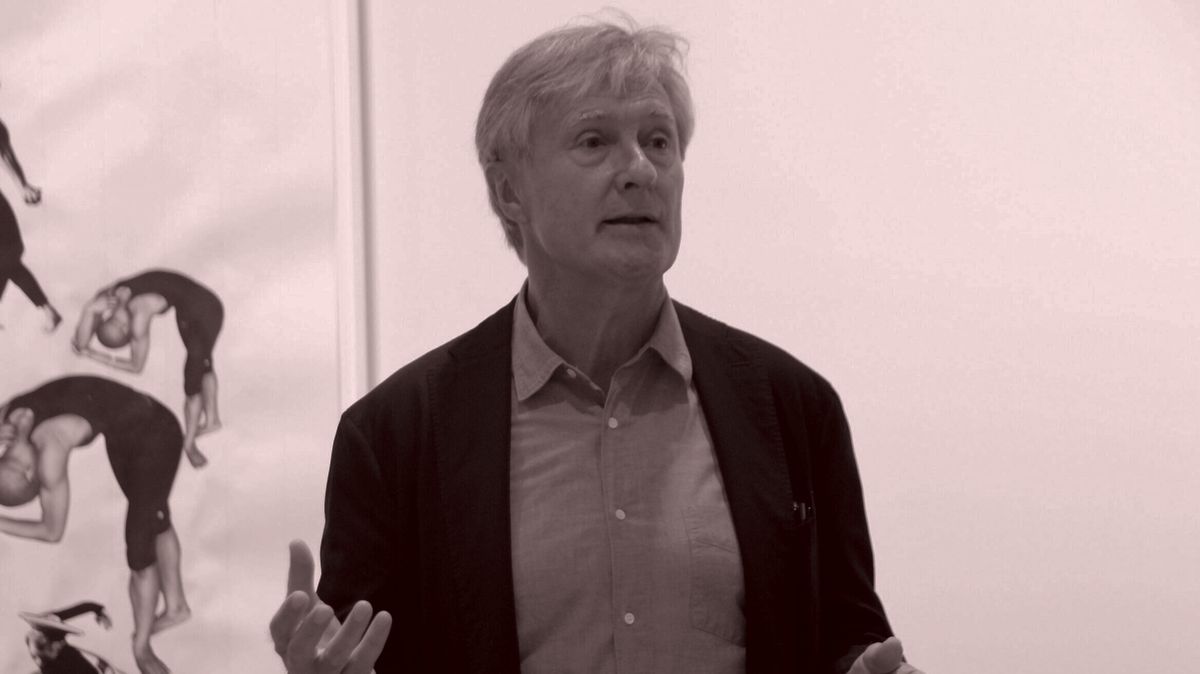
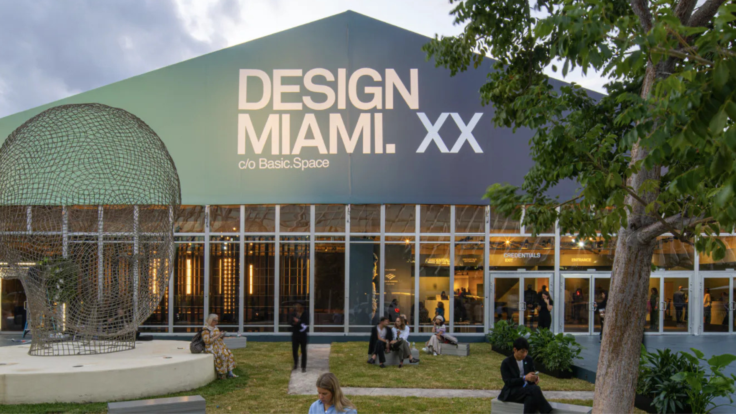
The next level of the art world game has been unlocked for the week: New York is crawling with openings, art fairs, drinks receptions, dinners, and all manner of meetings. Just about everyone who is anyone is traipsing around the island. We’ll talk a little more about that on Sunday. Until then, I went to see the new 19th Street outpost of the David Zwirner gallery earlier this week, and got a tour of the Zwirner mothership and both shows that opened in the last two days.
But first, let’s start with some sales from Frieze and TEFAF…
|
- All the sales fit to print: It’s a weird time in the market. There’s plenty of surprising optimism and even professed appetite to buy art, but none of that means anything until we see the sales figures. The real measure comes with next week’s auctions. Until then, we’re getting sales reports from both TEFAF and Frieze, as well as the seven other fairs around town. One thing to keep in mind, though: Fair reports are notoriously upbeat, and many journalists and market participants tend to discount them. I ran into one of the former who admitted he was susceptible to the conspiracy theory that the galleries are just making up the sales they report. They don’t—or at least, I hope they don’t—but what constitutes a sale at an art fair is an almost jesuitical question, since many of the sales were initiated from PDFs sent in advance and negotiations conducted before the fair opened.
|
|
|
|
A MESSAGE FROM OUR SPONSOR
|
|
|
- A sampling of sales: The biggest announced sale so far was one of Jeff Koons’s three Hulks on view at Gagosian’s Frieze booth. Another one of the works—which are all A.P.s, or artist’s proofs, that Koons himself owns—priced around $3.5 million, was on hold. Over at TEFAF, Gagosian sold out a booth of Anna Weyant’s exquisite, small still lifes. (Priced at a reasonable $90,000, for those who think $90,000 for a small painting is a bargain; there was also a larger painting of flowers priced at $300,000.)Meanwhile, Sprüth Magers sold works by Anne Imhof at the Armory, a few months after the artist’s performance piece was hosted there. A bronze went for €250,000, meaning someone came to New York to buy a work they’re going to have to ship back to Europe. Brendan Dugan’s Karma gallery sold a tiny (barely over 5 inches square) Gertrude Abercrombie, Owl for Emile, from 1958, for $350,000. (Bonhams has another Abercrombie work of similar size, Blue Shell, from 1956, estimated at $40,000. Feel free to guess where that will finally sell…) Karma also sold works by Richard Mayhew, Manoucher Yektai, Reggie Burros Hodges, Alan Saret, and Calvin Marcus for six-figure prices.
- A few more sales: James Cohan sold works by Tuan Andrew Nguyen to two different museums, the Moderna Museet in Stockholm and an unnamed U.S. institution. Pace sold all six of Adam Pendleton’s paintings for prices between $165,000 and $425,000. The gallery also sold multiple works by Lynda Benglis above $275,000. White Cube sold two works by Tracey Emin (a bronze for £1.2 million and a painting for £80,000) and one by Etel Adnan for $180,000; two sculptures by Antony Gormley for £325,000 each; a painting by Christine Ay Tjoe to an institution for $280,000; and two works by Ilana Savdie, including a new painting, for $100,000.Hauser & Wirth reported selling Lorna Simpson’s Vista (2025) and Rashid Johnson’s Soul Painting “The Jungle” (2025). Kukje Gallery sold a painting by Park Seo-Bo for more than $250,000, and a work by Kyungah Ham for $140,000. Mendes Wood DM placed Kishio Suga’s Sliced Stones installation of eight sculptures in the price range of $200,000 and above. Thaddaeus Ropac sold a work by Liza Lou for $225,000, a painting by Joan Snyder for $210,000, and a painting by David Salle for $130,000. Perrotin sold out its booth of great-looking Claire Tabouret paintings for prices from $65,000 to $200,000. And Tina Kim Gallery sold a work by Lee ShinJa for $200,000, a work by Ghada Amer for $175,000, and a textile work by Pacita Abad for $150,000.
|
|
Now let’s get to the main event…
|
|
|
|
With a new 19th Street space and growing office imprint on 20th, David Zwirner is expanding his claim on Chelsea and offering a glimpse of his global ambitions. Two new shows—the elusive, devastating Michael Armitage, and a group exhibition of ’90s phenoms—mark the occasion.
|
|
|
At the beginning of this marathon week for the art world, which already seems like a long time ago, I was leaving a press preview when I ran into an important art advisor—the kind of person nobody says no to—who mentioned having just seen the Michael Armitage show at David Zwirner’s new 19th Street gallery. Armitage has near-mythical status in the art market as a painter whose work is extremely hard to acquire. I asked the advisor how the show was. Really great, he replied, before adding with a look of rare despondency for an advisor with such clout: “I just hope I can get a painting. They want to place them all with museums first.”
The next day, I had lunch at Cookshop with Zwirner partner David Leiber, who planned to give me a tour of the new space, which completes a Zwirner superblock of sorts: adjacent outposts on 19th Street, an additional gallery on the north side of 20th, and the Zwirner offices on the south side. (The new 19th Street building is the fall-back plan the gallery announced in 2023, after a previous expansion plan on 21st Street got mired in the developer’s bankruptcy proceedings.) The point of additional exhibition space, of course, is added capacity, because each new show is an opportunity for the sales force to initiate or extend conversations with collectors. In that sense, this isn’t Zwirner launching a new expansion so much as the gallery finally achieving the footprint it has both wanted and needed since before the pandemic. (The gallery also has spaces in London, Paris, Hong Kong, and Los Angeles.)
|
|
|
|
A MESSAGE FROM OUR SPONSOR
|
|
|
|
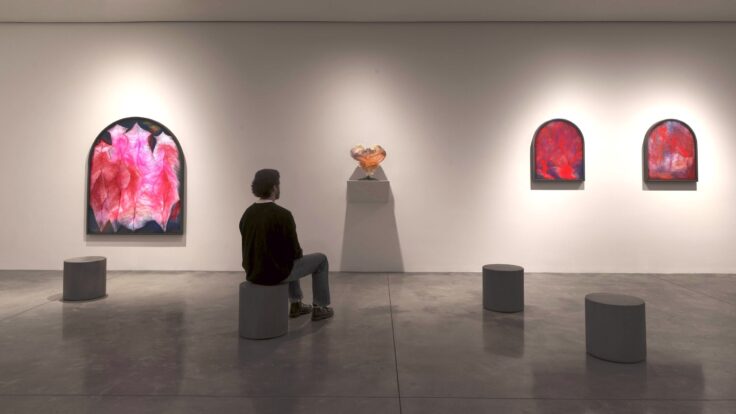
As we spoke, Leiber expressed particular pleasure with the way the architect Annabelle Selldorf diffused light throughout the gallery by using triangular baffles to modulate the intensity of the sunshine from the skylights. Selldorf also designed Zwirner’s space on 20th Street, and the new gallery feels unmistakably familiar. It uses the same glass, concrete, and teak design; the same windows and doors. Upstairs, it has an additional pod of offices, work spaces, and meeting rooms to house Zwirner’s growing force of dealers, registrars, archivists, researchers, prints publishers, publications, podcast producers, and whatever other specialists are required for a modern mega-gallery’s pursuit of global transactions.
|
|
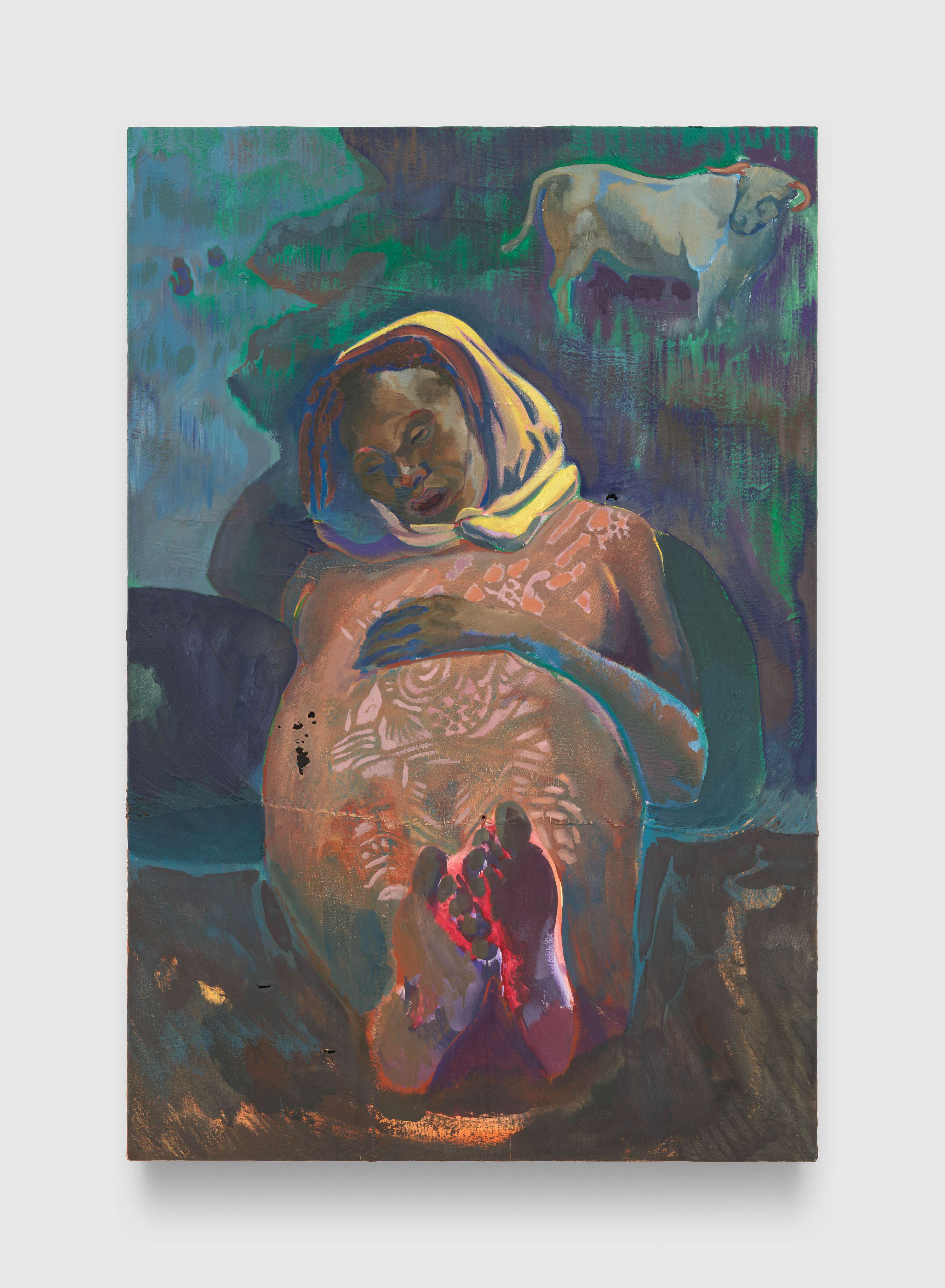
Michael Armitage’s show, Crucible, which opened today in the new gallery, consists, in part, of four bronze casts of wood carvings, originally intended for an architectural project that didn’t pan out. There are also 12 paintings, mostly in sizes that would require institutional buyers, and depicting subject matter—global migrants packed into barely seaworthy boats, figures who are bound, unhoused, or being carried naked in positions so awkward they push the limits of anatomy—too harrowing for most collectors to actually live with.
|
|
Michael Armitage, Europa (2025). Photo: Courtesy of the artist and David Zwirner
|
|
A British Kenyan, Armitage paints on Lubugo bark cloth—a traditional Ugandan fabric used in funerary rites—that is stitched together to create sheets large enough to gesso and stretch across supports. The bark has small holes, presumably caused by knots or branches, that disappear in the process of turning the bark into cloth. On top of these bark-covered stretchers are saturated pigments in deep blues, purples, and greens accented with reds, oranges, and lime yellows. In at least one of the paintings, you’ll see echoes of Paul Gauguin, and references to Mantegna’s Lamentation of Christ—you know, the one where you see Christ’s dead body from the feet looking up. In others, you see richly colored abstractions that slowly resolve into figures floating or draped in ways that seem both awkward and familiar.
This show is Armitage’s first major exhibition in New York since the Studio Museum in Harlem collaborated with MoMA on Projects 110: Michael Armitage in late 2019. That was the show that stimulated so much of the still-unsatisfied demand referenced by the art advisor I saw on Monday. Back then, much of the interest was driven by the fact that Armitage is part of the African diaspora. Here’s how MoMA explained the painter’s importance and appeal: “Armitage puts contemporary visual culture in dialogue with art history and the legacy of modernism as it veers toward—and breaks from—the West.”
|
|
|
|
Since then, as we all know, we have gone through an intense cycle of interest in artists based on their identity and background. Now we’re on the backswing of all of that. And yet the changing mood has done little or nothing to reduce Armitage’s appeal—even when his subject matter might be seen by some as out of fashion. In other words, as an artist, his talent and sincerity would seem to transcend cultural fads.
|
|
While we were in the Zwirner complex, Leiber took me over to the 20th Street gallery where David Zwirner, himself, had instigated a show of artists whose work first appeared in New York in the 1990s. The eight painters on view—John Currin, Peter Doig, Marlene Dumas, Chris Ofili, Laura Owens, Elizabeth Peyton, Luc Tuymans, and Lisa Yuskavage—were all part of the revival of figurative painting during that decade.
Many of these artists painted from photographs in response to the success and dominance of the Pictures Generation a decade earlier.
The first inklings of this project were visible at Frieze Los Angeles in February, when the Zwirner booth featured some small John Currins from the period. The response must have been encouraging. Zwirner’s agile team was able to put together some very good examples by each of these artists, borrowed from major collectors. Dallas’s Marguerite Hoffman is the only one named, but other works clearly come from big-name collections as well.
In contrast with the Armitage show, this feels less about capturing the moment in some way—another well-known dealer is working on a New York-in-the-1980s show for later this year—than about seeing the work of these artists as it was three decades ago. Lisa Yuskavage’s familiar figures are set in quite different backgrounds. Doig’s uncanny perspectives aren’t yet paired with his dreamlike colors. The work of Currin and Peyton seem almost timeless, while the vibrant, imposing Ofilis feel like running into old colleagues from a long-ago career at a party. The work is just as startling as it was in the 1990s.
|
There’s a nice profile of Arne Glimcher in The New York Times this week, pegged to the 65th anniversary of Pace gallery. The latter part of the profile dwells on some of Glimcher’s less fashionable ideas, namely his loyalty to artists like Chuck Close and former employees like Douglas Baxter. The profile also tries to triangulate Glimcher’s decision to open his own Tribeca satellite gallery. But if you’re looking for any daylight between the two generations, you won’t find it here.
Just to go back to Michael Armitage for a second. I mentioned that he might have gained attention as an identity artist in 2019 but is now fully established as a unique talent. Yesterday, New York magazine’s Rachel Corbett rehashed the whole boom-to-bust cycle for a group of African and African diaspora artists. But what she seems to leave out is how active many of these artists were in flooding the market with supply when there was excessive demand, and I’m not sure we have to see that as exploitation or, even, market failure. Many of these artists simply maximized their earnings when there was outsize demand for their work. Now that the demand has receded, they’re free to continue building their careers. Some of these artists, like Amoako Boafo, continue to sell quite well on the secondary market.
That’s all for now. Talk Sunday,
M
|
|
|
|
The ultimate fashion industry bible, offering incisive reportage on all aspects of the business and its biggest players. Anchored by preeminent fashion journalist Lauren Sherman, Line Sheet also features veteran reporter Rachel Strugatz, who delivers unparalleled intel on what’s happening in the beauty industry, and Sarah Shapiro, a longtime retail strategist who writes about e-commerce, brick-and-mortar, D.T.C., and more.
|
|
|
|
Finally, a media podcast about what’s actually happening in the media—not the oversanitized, legal-and-standards-approved version you read online. Join Dylan Byers, Puck’s veteran media reporter, as he sits down with TV personalities, moguls, pundits, and industry executives for raw, honest, sometimes salacious conversations about the business of media and its biggest egos. New episodes publish every Tuesday and Friday.
|
|
|
Need help? Review our FAQ page or contact us for assistance. For brand partnerships, email ads@puck.news.
You received this email because you signed up to receive emails from Puck, or as part of your Puck account associated with . To stop receiving this newsletter and/or manage all your email preferences, click here.
|
|
Puck is published by Heat Media LLC. 107 Greenwich St, New York, NY 10006
|
|
|
|