Hi, and welcome to Line Sheet. It’s Labor Day here in the U.S., but I hope you celebrate your
contribution to our G.D.P. by grilling and chilling, no matter where you are in the world. Of course, that may be a bit hard in Paris, where the (fabulous!) Charles Porch–Robert Denning wedding is over and the first-day-of-school vibes are strong.
In today’s issue, I have the news on the conclusion of the search for the first-ever head of editorial content at American Vogue. (Anna Wintour is preparing to make the
announcement as early as tomorrow, but I figured I’d give you an early notice.) Plus, what the messy Venice Film Festival red carpet says about the state of the fashion industry.
Programming note: Tomorrow on Fashion People, my guest is Pete Nordstrom, co-C.E.O. of his family’s department store business, which was recently taken private with the help of Mexican retail conglomerate El Puerto de Liverpool. We get into pretty much everything: holding a
family business together through four generations, the art of the high-low mix, the challenges and opportunities in multibrand retail, and plenty more. I also shared more about my Montecito shopping spree in and around the Rosewood Miramar. Listen here
and here.
Mentioned in this issue: Vogue, Anna Wintour, The Venice Film Festival, Jonathan Anderson, Dior, Alba Rohrwacher, Matthieu Blazy, Anthony Vaccarello, Chloë Sevigny, Greta Lee,
Bernard Arnault, Haider Ackermann, and many more… |
|
|
A MESSAGE FROM OUR SPONSOR |
The end of De Minimis has already redefined global commerce - and most businesses aren’t navigating it alone. A recent Swap study found
88% of companies are already seeking partners to adapt cross-border strategy, mitigate tariff exposure, and protect profitability.
Swap’s latest tariff turmoil report gives leaders the playbook to stay compliant, defend margins, and unlock global growth in the new trade era.
👉
Download the full report |
|
|
One Thing You Should Know…
|
- The
Venice Film Festival fashion emergency: In the lead-up to the 12 runway debuts coming this fashion month, the Venice Film Festival featured the first red carpet proposals from Dario Vitale’s Versace and Jonathan Anderson’s Dior couture and women’s ready-to-wear. There were also a slew of looks from Chanel that have been speculatively attributed, at least partially, to Matthieu Blazy.
Overall, the carpet was a hot mess, as is the
industry from which it sprung. Celebrity dressing has become perhaps more consequential than the runway shows themselves, and the act certainly inspires closer scrutiny by online fans and commenters. It’s a shame that it had to go down like this, but a lot of people hated a lot of what they saw.
I have little to say about the Versace
looks, which I liked. I preferred Julia Roberts’ blazer and jeans over the black dress, but that’s a matter of taste. (Elizabeth Stewart, her stylist, wields significant control over brands—and if you want Julia Roberts, you have to play by both of their rules.) Roberts appeared more than respectable. Of course, it would have been better to see the runway first. The challenge is that Vitale’s first runway show has already been postponed, with an
intimate presentation planned instead.
Vicky Krieps in custom Bottega was a strong start for Louise Trotter. As for the Chanel, it was all archival with slight tweaks
that could be attributed to Blazy, if you squinted. But Blazy needs to bring lightness to his clothes, which could be tough at a brand that deals in heavy fabrics. Tilda Swinton was a highlight; she also has a singular style.
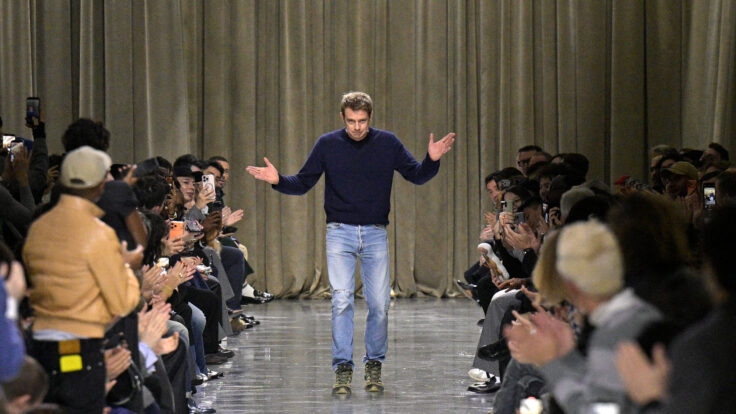
The real discussion point here, however, was the Jonathan Anderson–Dior looks, and not just the couture debut,
worn by Italian actress Alba Rohrwacher to the Jay Kelly premiere. Rohrwacher wears a lot of Prada, but has worn Loewe previously and is a good star for Anderson. I loved the draped front of the dress, but like many others, found the amplified, boosted, ultra-padded rear… unsettling.
Perhaps Anderson wanted us to cringe, and perhaps this piece was a commentary on the concave bodies emerging out of our post-Kardashian, GLP-1–injected world. Fine. But my nit to pick is with pretty much everything else. A lot of the looks—from Greta Lee’s navy
suit (probably the best effort) to Andrew Garfield’s cableknit sweater and khakis (the worst)—were wrinkled, poorly fitting, or just flat. This is not okay. Dior and Chanel are the last real couture houses in terms of the breadth of talent working in the atelier and access to
material innovation. I loved Anderson’s runway debut at Dior because it was a commentary on street style—on what kids in New York are wearing right now, inspired by the early 1980s prep of Bennington College and The Last Days of Disco. Couture can be worn on the street, but the execution must be absolutely flawless. Venice signalled a
lack of communication between Anderson’s team and the atelier. As one unrelenting critic, who is also a big fan of Jonathan’s, said to me, “Every great mind needs a setback to learn about his or her limitations, and to be able to transcend them.”
I couldn’t agree more. The hard reality of the way this all went down is that Anderson is being judged as if this were the final inning, when it’s only the first. Let’s see what he learns from this.
Anthony Vaccarello, who
was given ample time to figure himself out at Saint Laurent, delivered the best look of the festival: a black puff-ball mini with lace bike shorts, shaped from the archives and worn by Chloë Sevigny. Vaccarello wasn’t always so revered, but he had time to develop and build
confidence. Granted, Saint Laurent was in good form when he joined; there was no need to save anything. Anderson’s remit is far more difficult. But if you don’t think people are going to buy that “No Dior No Dietrich” t-shirt, you’re mistaken.
|
And now, the big Vogue news… |
|
|
As expected, Anna Wintour has chosen a longtime supplicant, imbued with a Hollywood pedigree
and a can-do disposition, to take over American Vogue—the latest and most natural step in a never-ending succession journey. |
|
|
Anna Wintour is clear-eyed, determined, and optimistic, but rarely daring. The formula for
Vogue hasn’t changed all that much during her decades of leadership. Her tenure in the Condé Nast corporate suite has been defined by choosing editorial leaders whose visions would largely fit within hers. And this balance influenced her search for the next editor of American Vogue—now called the head of editorial content.
During the process, Wintour told candidates that she was looking for a journalist whom she could empower to transform the brandinto
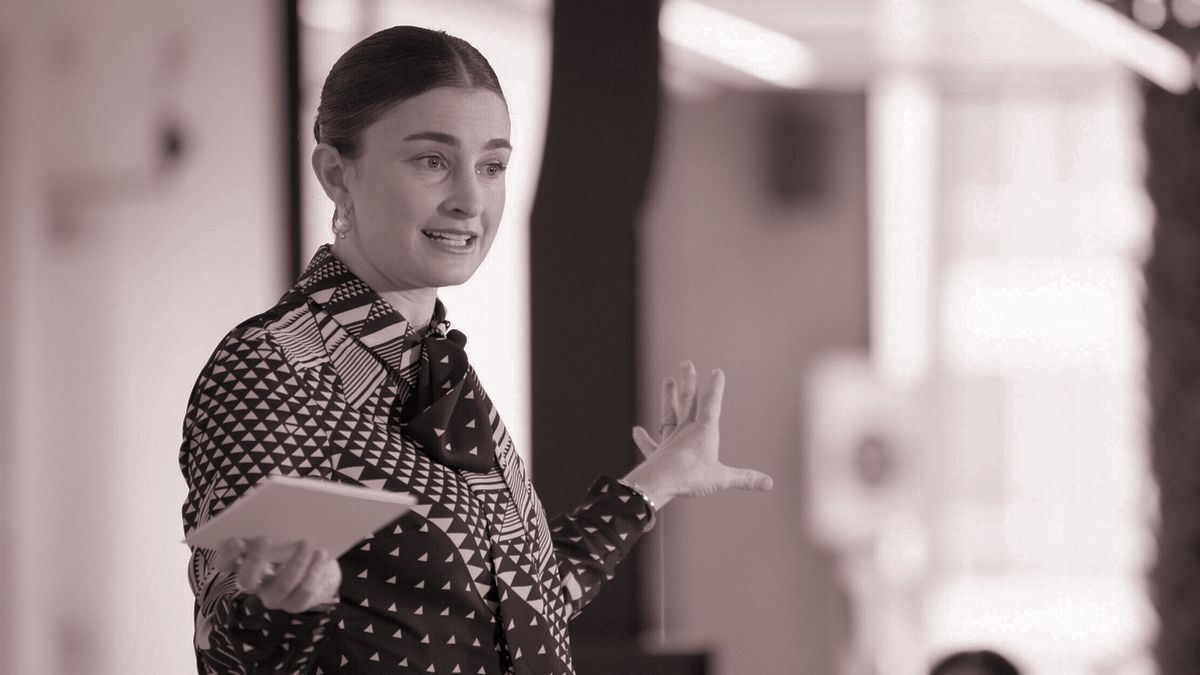
a live-action content machine while she spent more time abroad mentoring regional editorial leaders who were struggling to attract both advertisers and audiences in their respective markets. In the end, she settled on the practical, reasonable, rational choice and hired Chloe Malle, who currently runs Vogue.com, as her replacement to run American Vogue’s daily operations. Malle was my
bet from the beginning, though I don’t say that with a told-you-so smirk. Wintour doesn’t aim to provoke. She seeks solutions, and Malle is the path of least resistance. Wintour is slated to make the announcement as early as Tuesday. Reps for Condé Nast and Vogue did not immediately respond to a request for comment. Malle did not respond to a direct request for comment. |
|
|
A MESSAGE FROM OUR SPONSOR |
The end of De Minimis has reset the rules of global trade. Every U.S.-bound shipment now faces tariffs, higher costs, and compliance
pressure—making margin protection more critical than ever.
Swap’s latest tariff turmoil report gives businesses the blueprint to adapt quickly, reduce risk, and turn disruption into growth.
Inside, you’ll learn:
🌍 Impact of the De Minimis suspension on global commerce
💸 How businesses and customers are adapting to rising costs
⚠️ Risks of inaction for margins and loyalty
🚀 Five strategies to protect profits and fuel growth
👉
Download the full report |
|
|
There were, of course, a range of candidates, a handful of whom were taken seriously enough to meet multiple
times with Wintour and Roger Lynch, Condé Nast’s oft-misunderstood C.E.O. The duo made it clear to contenders that they were looking for someone with an opinion, who would push back on them, and who also understood that this was a business that needed to be more than a magazine—a worker bee who could showboat a little, too.
The names that were still being floated near the end were largely insiders: Malle, W magazine editor (and longtime Wintour acolyte)
Sara Moonves, and Nicole Phelps, who runs the tradesier Vogue Runway and Vogue Business. Moonves may be Wintour’s rightful heir apparent, with her vision and authority and connections, but returning her to the fold would have required extracting her from a company that she partly owns and placating her partners, and Wintour doesn’t like tricky. (Moonves is also said to have flat-out turned the position down because, fundamentally, it isn’t an editor-in-chief job. She did not respond to a request for comment.) Phelps was the longest shot, but will be a valuable asset to Malle as she assumes more responsibility. The only real
outsider that I’m aware of was Stella Bugbee, the editor of the Styles section at The New York Times, and I’m told she pulled out of the running in mid-August. Bugbee, an iron-willed former art director, would have been the most provocative choice—but it’s unlikely that Roger and Anna would have really gone for a foreigner.
I presume that Malle’s first responsibility will be a bit of high-touch housekeeping that requires a fair amount of institutional knowledge:
to sprinkle in a new generation of talent while sunsetting some of the old guard, all done with the tacit approval of Wintour but without implicating her. She’ll likely introduce some new creative juice as many of the magazine's stalwarts—including global creative director Raúl Martinez—lurch toward retirement. I suspect that a creative partner—someone like fast-rising stylist and creative director Carlos Nazario, who I’m told was interested in the
head-of-content position—will be recruited to refresh the visual language.
Malle’s appointment seems like a simulacrum of Mark Guiducci’s ascent at Vanity Fair—both are loyal, longtime Wintour surrogates who manifested some glamour in a meat-grinder age—but they actually have different remits. Guiducci needs to attract new advertisers and cover over a disastrous and elongated experiment, while Malle needs to not mess up relationships with advertisers and
gingerly transition many of her longtime colleagues out of roles that are no longer pertinent to the business. Malle’s management of the Lauren Sánchez cover—cajoling sources to give up additional details while managing the shoot and logistics—was a good example of how the brand can balance the whims of clients and the internet in this multichannel world. |
The Murphy
Brown of It All
|
The fashion industry will support Malle in this position, and her pedigree will add to the allure. The child
of Candice Bergen and the late auteur director Louis Malle, she arrives with pop culture bona fides. She’s also obviously smart and capable—and even funny, as displayed via her dogged (no pun intended) pursuit of Dogue, a canine sendup of the magazine, which she’s already published twice (probably once too many).
Young consumers may never grasp the profundity of Murphy Brown in the history of pop culture, or the cutesy life-imitating-art
twist from Bergen’s later turn as a Vogue editor on Sex and the City. But the fact that Malle springs from the world that made Nora Ephron and Mike Nichols famous will be compelling to the media and the industry. |
|
|
To wit: I first learned of Malle when I, too, was a little girl. My aunt, an art director in New York, was an
avid reader of W magazine and couldn’t stop talking about this 1988 cover story on Bergen, just as she was about to be catapulted into the zeitgeist by Murphy Brown. I remember my aunt calling up my mother and going on for ages about how Bergen was appalled by the tacky gold shirts
that the 3-year-olds were wearing at her daughter’s fancy nursery school. Also, my aunt added, Chloe was only given one present for Christmas, per the article. This display of patrician rebellion against the nouveau riche of the 1980s was easy to admire. Malle has a similar charm.
As for Wintour, her step back—or aside, or up, however you want to characterize it—does mean something. Whether Malle will truly succeed her in the big chair is anyone’s
guess. (A refresher: Wintour’s Vogue title is now global editorial director; she is also Condé Nast’s chief content officer.) I can guarantee that there is no one in that building, or beyond, who knows how that more consequential transition will get sorted out—not even Wintour. Perhaps Malle will take to the position and prove she is ready to forge a post-Wintour path. But Lynch and, more likely, the Condé Nast board will have to know what they want that path to be. |
What I’m Reading… and
Looking At…
|
Our guy Bernard Arnault’s family holdco, Financière Agache, acquired Cap Estel in Èze, on
the Côte d’Azur, for a reported €200 million. We are back, baby. [Monaco Life]
Haider Ackermann and his Tom Ford crew did Venice right. [Vogue]
Malique Morris
investigated how the tariffs tipped Ssense over the edge, forcing the family-run, Montreal-based retailer to file for bankruptcy protection. As in the U.S., this kind of filing allows Ssense to restructure and clear debts, but doesn’t necessarily lead to liquidation. If it does come to that, my assumption is that Ssense would offload a majority of the goods to the off-price market, as Barneys did, so don’t expect a crazier sale than normal. (Not that anyone in the U.S. would want to
bother, given…the tariffs.)
As for employee reports of mismanagement: The same could be said for every other retailer—and company, for that matter. I know the Atallahs made a lot of mistakes, and a few brands will certainly close because of the money they’ll lose in this bankruptcy, but the fundamental “mistake” is the instability of the wholesale business model. [BoF]
Everyone is freaking out that J.Crew used A.I.-generated photography on their Instagram. It’s weird, yeah, and not the right approach. (It also distracted from the very good fall women’s campaign, styled by Camilla Nickerson.) The true misstep here, though, was that they didn’t disclose it. The rest is about
to become commonplace. [Blackbird Spyplane]
From the U.S. Open: I barely know who Pierce Abernathy and Lindsay Vrckovnik are, but they look great. [Getty Images]
Giorgio Armani on How to Spend It obviously wins the September magazine cover wars.
[Financial Times]
Marie Claire hired a bunch of Substackers to write columns, which makes common sense. A few other Substackers are freaking out about it, and I still don’t understand why. Like all the best editors, Nikki Ogunnaike is good at identifying talent. This is an exchange of ideas more than anything else: Magazines did this with
“bloggers” back in the day. Then, influencers. It’s a fine idea, and also not a big deal. It’s not going to make anyone rich or poor. [Feed Me]
There are also plenty of top Substackers who used to be magazine editors, or still are. Jane Herman tapped several of them—including Nikki’s boss, Hillary Kerr, plus
Lucky’s Andrea Linett, and the Plum Sykes—to share their favorite jeans right now. It’s a fantastic mix. [Jane on Jeans]
Here’s a list of 30 countries that have “suspended or restricted shipments to the U.S.”
[USA Today] |
Until tomorrow,
Lauren
P.S.: We use affiliate links because we are a business. We may make
a couple bucks off them. |
|
|
Puck’s daily art market email, anchored by industry expert Marion Maneker, offers unparalleled access to the mega-auctions and
galleries, elite buyers and sellers, and the power players who run this opaque world. Wall Power also features Julie Brener Davich, a veteran of Christie’s and Sotheby’s, who provides unique insights into how the business really works. |
|
|
Need help? Review our FAQ page or contact us for assistance. For brand partnerships, email ads@puck.news. You received this email because you signed up to receive emails from Puck, or as part of your Puck account associated with {{customer.email}}. To stop receiving this newsletter and/or manage all your email preferences, click here. |
Puck is published by Heat Media LLC. 107 Greenwich St, New York, NY 10006 |
|
|
|