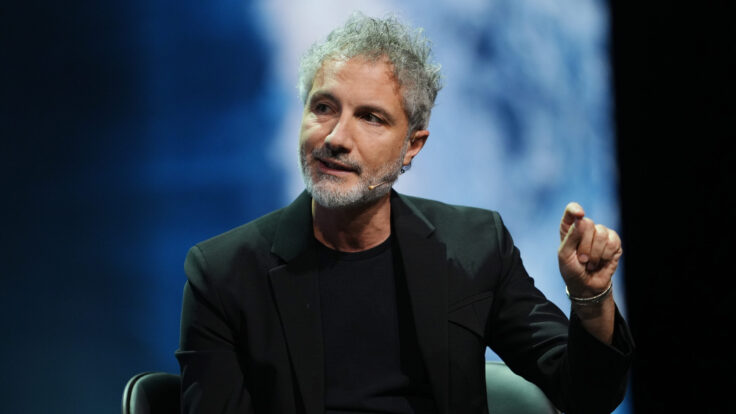
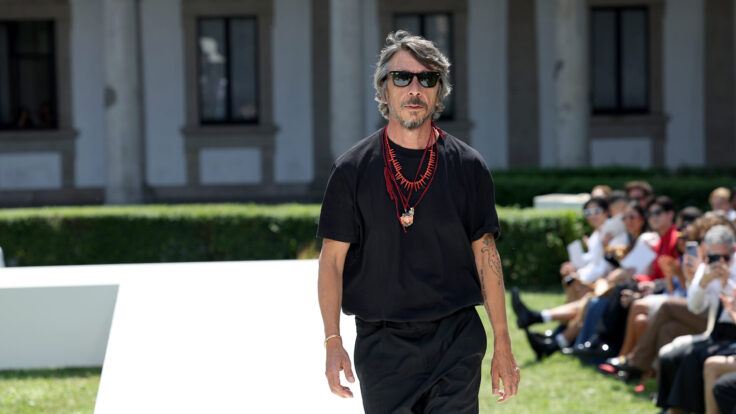
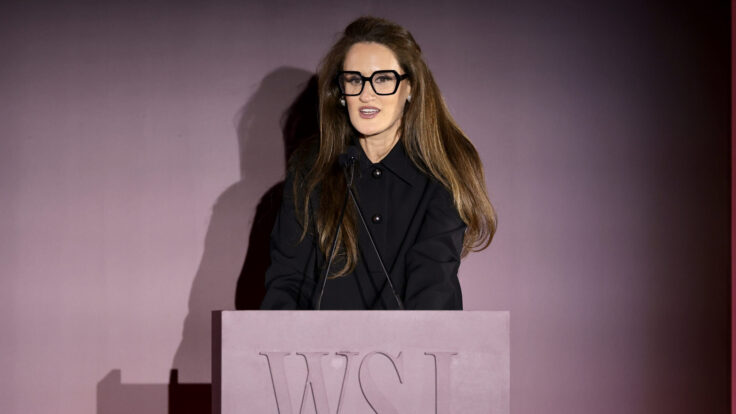
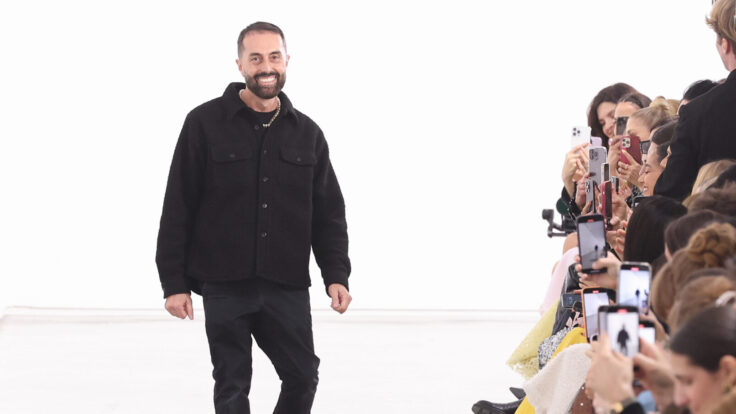
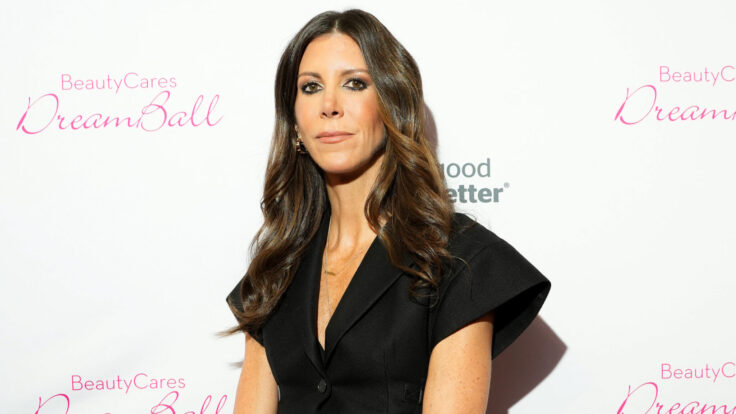
Hi, and welcome back to Line Sheet. Mark Guiducci is the new global editorial director of Vanity Fair. Just a friendly reminder that I have been tracking Mark’s progress in the race since the day Radhika Jones’s exit was announced. (Also: here, here, and here, if you’re interested in reading more.) Why he was chosen, and what it means, below.
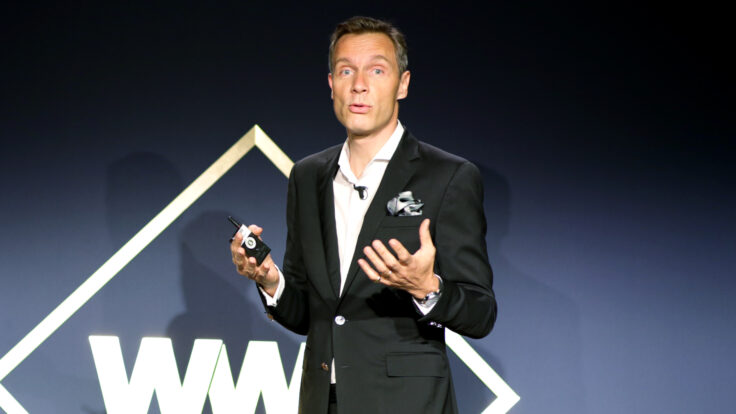
Sarah Shapiro is in the driver’s seat today with an explanation of what’s happening at comeback kid Abercrombie & Fitch, where the stock is down 50 percent this year. Per usual, Wall Street doesn’t tell the whole story, and Sarah has the scoop. Also, we’re back at WWDC, Apple’s annual developers conference, where people are more glamorous and skinnier than ever. I’m sure the fact that ex-KCD-er Matthew Bires essentially runs Apple’s events these days has something to do with it. (Love Matthew! The most discreet man alive. He’ll be so embarrassed about this.) In other Bay Area news, Sarah also explains what it means that Nordstrom is heading back to San Francisco proper.
For those of you with the Shoppies: My friend Molly, who can truly only be described as fun-loving, has a big birthday coming up, and her request is that we stay out past 10 p.m. to attend post-dinner drinks at a “very cool place.” In addition to doing this, my gift to her is to wear a “fun” outfit to match her energy. Originally, I was thinking I would source a one-shoulder top—something I’ve never, ever worn, but have aspired to wear since I saw Chloë Sevigny in Last Days of Disco. But then I found this off-the-shoulder liquid-jersey thing at Leset and decided this was the best version of the idea. It also happens to be called the “Lauren,” which I swear did not influence my decision to purchase it.
Mentioned in this issue: Mark Guiducci, Vanity Fair, Anna Wintour, Radhika Jones, Abercrombie & Fitch, Hollister, Fran Horowitz, frat boy corporate culture, TikTok, Bruce Weber, Old Navy, Prada, Miu Miu, Apple, Karl Lagerfeld, Emily Sundberg, Nordstrom, and many, many more…
|
|
|
|
A MESSAGE FROM OUR SPONSOR
|
|
For your consideration: Sponsors include Max, presenting HACKS. Starring Jean Smart and Hannah Einbinder, the new season picks up with Deborah Vance’s late-night show finally in production—and Ava Daniels stepping in as head writer, to Deborah’s dismay. Their ever-complicated relationship is pushed to new limits as they clash over creative direction and get entangled in blackmail and betrayal. Slate says HACKS has "NEVER BEEN BETTER." Emmy-eligible for Outstanding Comedy Series and all other categories. Now streaming on Max.
|
|
|
Three Things You Should Know…
|
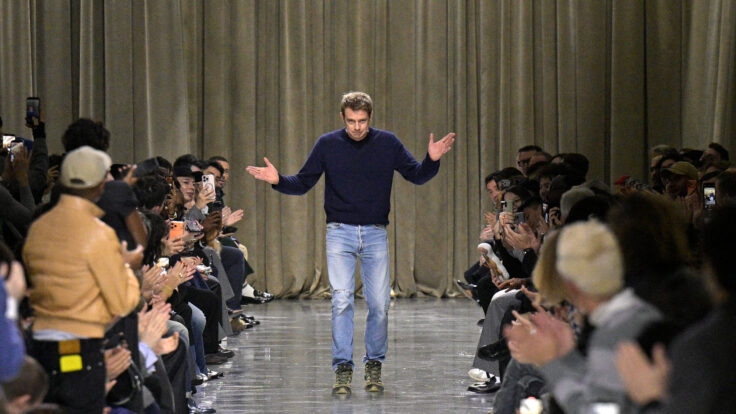
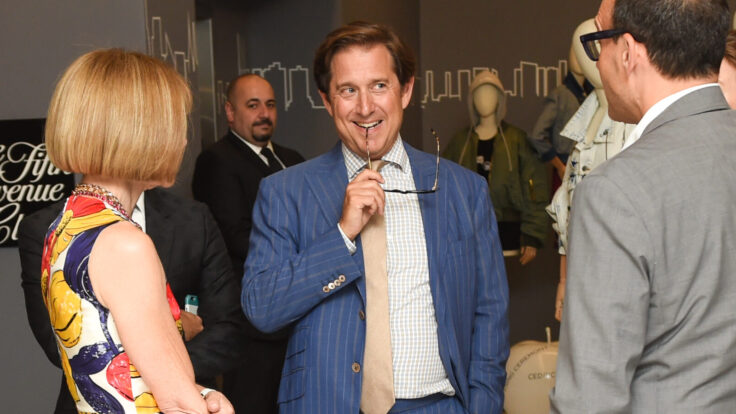
- Anna won?: The early reactions to Mark Guiducci’s appointment as global editorial director of Vanity Fair were unsurprising. The fashion people, his friends, were happy for him. The words people were surprised, confused, and disappointed—perhaps convinced that words still matter. Others rolled their eyes at the selection of yet another Anna Wintour deputy at a Condé Nast title. The closest thing to nepotism without being nepotism, they said.In retrospect, though, Guiducci was the only choice. As a former assistant at Vanity Fair, and one who has long harbored ambitions to run the magazine (since college), he’s a logical steward as it shrinks to become an appendage of Anna’s fading empire. Besides dogged ambition, Guiducci has sharp editorial instincts, and is educated (if slightly Princetonian: check him out mashing together Proust and Michael Bay in the Times), good-looking, an orchestrator, and connected enough in both Hollywood and Europe to throw parties and sell advertising. (He’s also sufficiently political, thanking Condé Nast C.E.O. Roger Lynch, Wintour, and H.R. head Stan Duncan in an Instagram post. I’m sure Stan loved that.) Guiducci doesn’t have much management experience, nor is he a story editor. But he has big ideas, and he’s loyal to Wintour, for whom he’s worked most of his career—perhaps the most important qualification.
And the idea that there was a more logical candidate, who actually wanted the job, is hilarious. (As of early last week, Genevieve Smith, the executive editor of New York magazine, was still in the running. Smith’s editing chops aside, however, her candidacy feels even more absurd now.) For Wintour, this is about the Oscars party, what it represents, and having someone in charge with the grit and tactical ability to manage it. Wintour likes to solve problems, and appointing Guiducci solves two: Vanity Fair’s lack of editorial leadership with commercial prowess, and Guiducci’s desire to do something bigger. Also this was obviously—obviously!—a cost-saving measure.
Naturally, some Vanity Fair staffers, including ones who were vying for the position, are pissed—although I’ve been told that reports of a revolt are overstated. Guiducci’s reputation—in the building, and even at Vogue—is undeniably mixed. Some people like him, and some don’t, but opinions of him have changed (for the better) as he has matured. As one Team Guiducci person within the walls of One World Trade threw back at them: “Maybe if those complaining had tried harder under Radhika Jones, we wouldn’t be here.”
Whiff of entitlement aside, these factions will have to get used to one another. Guiducci doesn’t have a team, per se, to bring with him; most of the people at Vanity Fair have nowhere to go; and Wintour will undeniably rely on Guiducci to do more with less. (Another Hollywood-adjacent staffer, executive editor Jeff Giles, left just last week.) So let’s see what they can make together given the limited budgets, tough-to-crack distribution channels, and general malaise.
The real story here is not about Guiducci, though, but Wintour. Could this appointment be the first step in her own succession planning? Of course, folks have been speculating about her eventual exit since the late 1990s… and yet she has given no indication that she is ready to step down. Wintour’s legacy will undoubtedly be defined by her longevity, but it will be diminished, to some extent, by Condé Nast’s trajectory under a string of uninspired C.E.O.s. who allowed her vision for Vogue to imbue the company’s other properties. Someone once told me that, probably about 15 years ago, Wintour lamented that she didn’t want to be the last one left in the building. And yet, that’s exactly what happened.
|
|
|
 |
Sarah Shapiro |
|
- Apple’s WWDC guest list: Apple’s annual developers conference remains a hot ticket in the Bay Area, and this year’s invite list signals how the company hopes that their tech will intersect with the culture. Tim Cook hosted a new crop of influentials—Emily Sundberg, Rachel Karten, and Oren John—at Apple’s Cupertino campus to unveil a new design and some A.I. updates. (Not exactly “one more thing”-level innovations.) Of course, Apple has leaned into fashion before. In 2014, when the Apple Watch launched, Jony Ive famously courted Anna Wintour and Karl Lagerfeld at Colette in Paris in an attempt to give the new device some industry cred, and later partnered with Hermès. The current shift from courting fashion gatekeepers to wooing culture creators signals Apple’s recognition that they need to preach well beyond the converted.If the goal was to entice Gen Z, they probably should have targeted younger influencers. With new features like Liquid Glass (a bubble-like visual treatment which makes it easier to see through apps) and a functional evolution of the long-stalled iPad that allows it to finally operate more like a laptop, Apple is mostly relying on lifestyle integration and early adoption from business and culture influencers, not just the tech elite.
- Nordstrom clears S.F.’s red tape: At last, Nordstrom is returning to San Francisco after closing their flagship at the Westfield Center in late 2023. After a long fight with local government to open on Fillmore Street in Pac Heights, a neighborhood where the shopping has vastly improved lately—Rachel Comey, Freda Salvador, Clare V., and Credo are all nearby—their Nordstrom Local concept has finally been approved.The challenge, predictably enough, was about permitting specifically Pac Heights’ ordinance against “formula retail,” which refers to businesses with more than 11 locations. Nordstrom has roughly 380 stores in the U.S., including plenty of successful ones from Stanford to Corte Madera and Walnut Creek. But this isn’t a traditional Nordstrom store; it’s essentially a pickup hub and service station for online orders that also offers returns and alterations but maintains no actual inventory. (There are currently five other Nordstrom Locals—three in L.A. and two in Manhattan.) Having an outpost in San Francisco, even in this limited format, could help Nordstrom bridge their online presence with the services that customers need locally.
Anyway, their success will depend on driving customers to shop online first, then providing enough local value to justify a larger footprint. One possible model could be the Catherine Bloom in Beverly Hills, which demonstrates how you can supercharge personal shopping services when there’s plenty of potential upscale clients nearby.
|
|
|
|
And now for the main event…
|
|
|
|
Both Abercrombie and its kid sister, Hollister, are surviving tariff shocks by ignoring the teen striptease of yore (and the toxic culture behind the scenes) and focusing on data to beat Temu and Shein at the TikTok game.
|
|
|
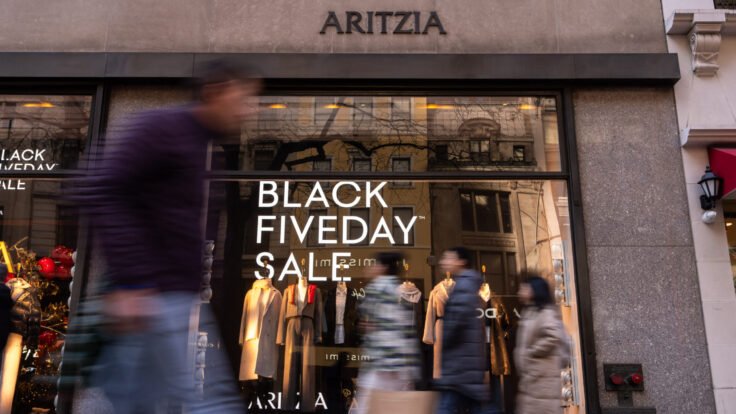
Abercrombie & Fitch Co.’s stock price may be down nearly 50 percent year-to-date, but a quick trip to the mall tells a very different story. The disconnect is especially stark at Hollister, Abercrombie’s younger, cheaper sister brand, where the stores are packed with Gen Alpha girls and boys shopping together. Hollister is hitting its stride at the moment—it’s ranked number one in apparel among teens, according to the recent Piper Sandler survey. Wall Street is rightfully worried about tariffs—the American company’s clothes aren’t exactly made in America—but A&F group’s retail
reality is actually far rosier.
It’s worth dwelling on Hollister’s comparative advantage within the parentco’s portfolio, because it tells you something about which brands are positioned to succeed, or at least suffer less, in the Trump tariff era. Like its older sibling, Hollister boasts lots of denim and has focused on more casual categories, channeling LoveShackFancy vibes with versions of the $245 smocked skirts that can meet a babysitter’s budget. Same cottagecore vibes for less, and Gen Z-Alpha is here for it.
|
|
|
|
A MESSAGE FROM OUR SPONSOR
|
|
For your consideration: Sponsors include Max, presenting HACKS. Starring Jean Smart and Hannah Einbinder, the new season picks up with Deborah Vance’s late-night show finally in production—and Ava Daniels stepping in as head writer, to Deborah’s dismay. Their ever-complicated relationship is pushed to new limits as they clash over creative direction and get entangled in blackmail and betrayal. Slate says HACKS has "NEVER BEEN BETTER." Emmy-eligible for Outstanding Comedy Series and all other categories. Now streaming on Max.
|
|
|
This is consistent with Hollister’s general strategy of keeping prices low enough that shoppers don’t have to wait for big sales to drop some cash. The haul videos that helped Shein take over TikTok and annex territory in teen wallets seem to be baked into Hollister’s social strategy at just the right moment to steal back market share. The tariff situation is a double-edged sword: Yes, it’s eating into A&F’s margins. But with the demise of the de minimis loophole, which used to exempt any imports under $800 from tariffs, Shein and Temu’s hold on the U.S. is loosening. That’s likely to drive more customers back toward American fast fashion brands, like Old Navy and Hollister, that ship directly in the U.S.
It’s probably too soon to say how it all nets out, but revenue at Hollister jumped 22 percent in Q1. And while the Abercrombie brand dipped 4 percent—an inevitable adjustment after 60 percent growth in net sales from 2021-2024—the A&F group is growing. The overall business, after all, has been enjoying the fruits of a turnaround years in the making.
|
|
After she became C.E.O. of Abercrombie & Fitch Co., in 2017, Fran Horowitz systematically dismantled everything that had previously made the group toxic—the exclusionary marketing, the Bruce Weber softcore photo shoots, the frat boy corporate culture, etcetera—and rebuilt the business around customer feedback and insights. Rather than trying to dictate what teens should wear, she used data mined from a younger audience to inform product development. She also implemented what she has repeatedly referred to as “inventory discipline” to create the kind of controlled
scarcity that drives demand, rather than the excess that results in future markdowns.
Horowitz, who previously grew Bloomingdale’s contemporary business, was also Hollister’s brand president from 2014 to 2015. The experience served her well. Within five years of her getting the top job at the parentco, Hollister actually surpassed its big sister brand, commanding 58 percent of the total company revenue. She subsequently managed to grow both brands without cannibalization: When Abercrombie embarked on its blistering three-year surge, starting in 2021, Hollister maintained steady 11 percent growth for the same three-year period. By the end of that run, revenue shares flipped without shrinking either business.
|
|
|
|
The pattern is reminiscent of the relationship between Prada and Miu Miu—each brand has its moment within the broader portfolio as the long-term corporate strategy remains steady, and management resists the urge to overload one or the other for fleeting gains. In the Abercrombie group’s case, corporate investment followed the math: The company has 54 net new Abercrombie stores over the past three years, hitting a total of 254 nationwide. Hollister, already sitting on more than 500 locations, added only a handful more. Across all brands, the 2025 plan includes 60 new stores, 40 remodels or rightsizings, and about 20 store closures. The brand with the furthest to climb (Abercrombie) was given the resources to do it.
The path forward for the parentco requires staying diligent about brand distinctions, maintaining Hollister as the trend-testing ground that feeds customers up to Abercrombie for (slightly) more-sophisticated styling at a higher price point. Single-occasion collections, like bridal parties, are opportunities to capture customers for other occasions. Inventory discipline allows both brands to chase trends quickly without overindexing on any single style. Meanwhile, at malls across America, the brands often sit side by side in retail harmony, benefiting from each other’s successes with no sharp-elbowed sister drama. Sure, the stock may be down, but the strategy seems to be working as intended.
|
What We’re Reading… and Listening to…
|
It was only a matter of time before gorpcore obsessives would “discover” fly-fishing. Honestly, I’ve been waiting for this moment since 2017 when Jenna Lyons wore a tackle vest to the Met Gala. [ Washington Post]
This issue of Kaitlin Phillips’s newsletter is just—we gotta say it—delicious. There’s everything you could want in a so-called magazine: notes on Notes to John, images of a Frank Lloyd Wright–designed jail in Marin County, a confession that she loves the Miu Miu rope sandals (we understand), and so much more. [ Gift Guide]
At lunch on Sunday, three of us threw down our Chase Sapphire Reserve cards and asked, Is there any other choice? Apparently the powers that be over there want fashion people to know the answer is an unequivocal no. Their latest campaign stars Claudia Schiffer carrying a giant card. (The shoot was styled by Leslie Fremar, whose sister, Leanne, is the chief brand officer at JPMorgan Chase & Co.) [ Instagram]
Since the Tory Burch mirror dress is the new Miu Miu khaki miniskirt, Viv Chen has an explainer on the design inspiration and Danya Issawi covered it for The Cut. [ The Cut]
|
|
Until tomorrow,
Lauren
P.S.: We are using affiliate links because we are a business. We may make a couple bucks off them.
|
|
|
|
Puck fashion correspondent Lauren Sherman and a rotating cast of industry insiders take you deep behind the scenes of this multitrillion-dollar biz, from creative director switcheroos to M&A drama, D.T.C. downfalls, and magazine mishaps. Fashion People is an extension of Line Sheet, Lauren’s private email for Puck, where she tracks what’s happening beyond the press releases in fashion, beauty, and media. New episodes publish every Tuesday and Friday.
|
|
|
|
Puck’s daily art market email, anchored by industry expert Marion Maneker, offers unparalleled access to the mega-auctions and galleries, elite buyers and sellers, and the power players who run this opaque world. Wall Power also features Julie Brener Davich, a veteran of Christie’s and Sotheby’s, who provides unique insights into how the business really works.
|
|
|
Need help? Review our FAQ page or contact us for assistance. For brand partnerships, email ads@puck.news.
You received this email because you signed up to receive emails from Puck, or as part of your Puck account associated with . To stop receiving this newsletter and/or manage all your email preferences, click here.
|
|
Puck is published by Heat Media LLC. 107 Greenwich St, New York, NY 10006
|
|
|
|